로레토의 성모 (Madonna of Loreto)
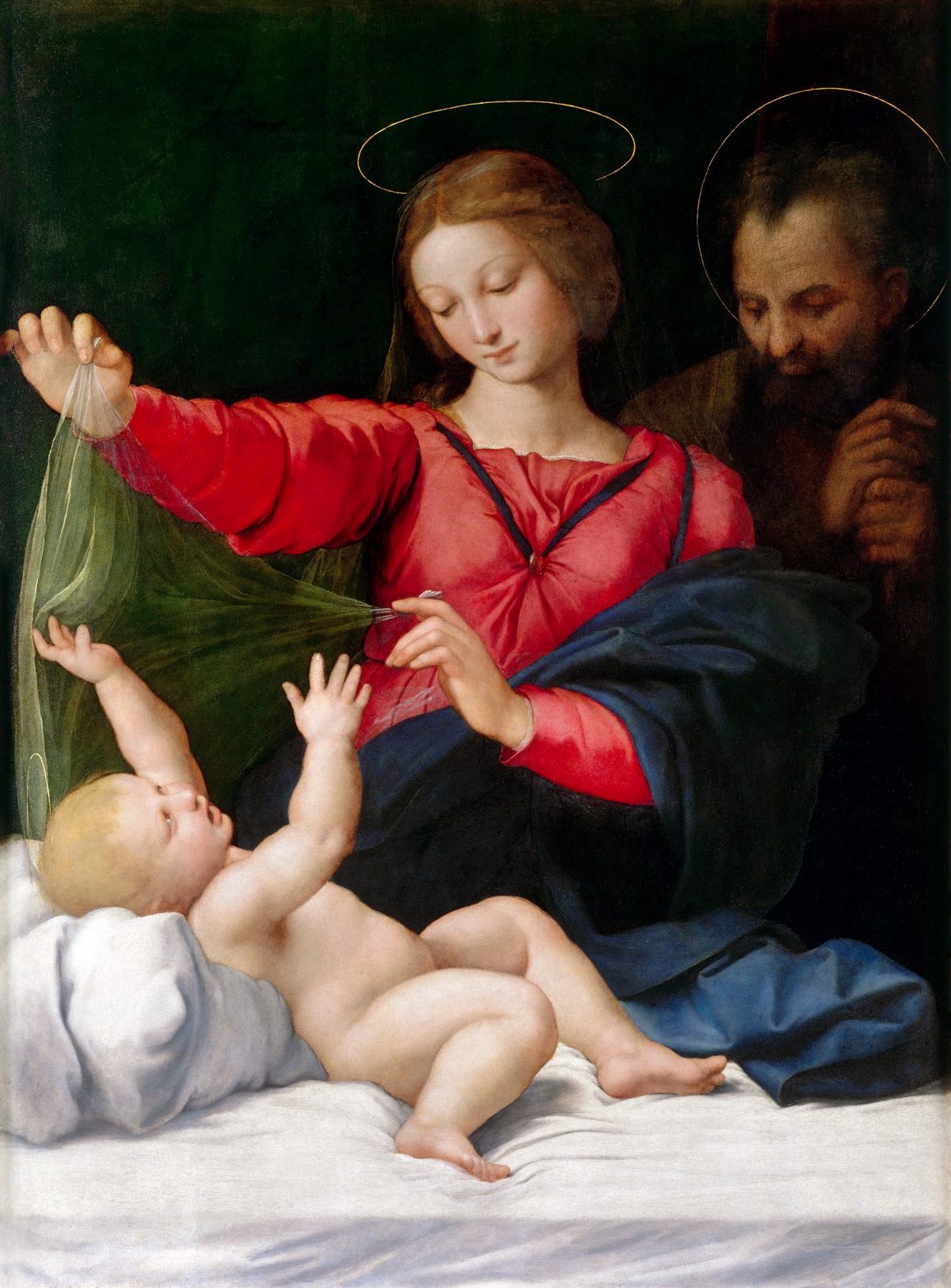
이 작품은 르네상스 전성기 거장 라파엘로 산치오(Raphael Sanzio, 1483–1520)가 1511–1512년경 로마 성당 산타 마리아 델 포폴로의 의뢰를 받아 완성한 명작 <로레토의 성모 (Madonna of Loreto / Madonna del Velo)>로, 현재 프랑스 샹티이 미술관(Musée Condé, Chantilly)에 소장되어 있습니다. 화면에는 성모 마리아와 아기 예수, 그리고 뒤편에서 조용히 이들을 지켜보는 성 요셉이 등장하여 성가족의 일상 속 거룩한 순간을 아름답게 보여줍니다.
미술사학계의 도상학적 분석에 따르면, 성모 마리아가 아기 예수 위로 끌어올리는 투명한 베일(Velo)은 매우 깊은 신학적 상징성을 가집니다. 이 베일은 아기가 태어났을 때 싸는 보자기임과 동시에 먼 훗날 예수가 십자가에서 내려졌을 때 몸을 감쌀 세마포 수의를 예시합니다. 아기 예수가 베일을 향해 천진난만하게 두 손을 뻗는 모습은 순수한 놀이처럼 보이지만, 인류의 죄를 대속하기 위한 수난과 희생을 기꺼이 받아들이겠다는 숭고한 복선을 내포하고 있습니다. 뒤편의 어두운 배경 속에서 지팡이에 기댄 채 이를 바라보는 성 요셉의 엄숙한 표정은 이러한 장엄한 신성함을 한층 더 강조합니다.
이 작품에는 감동적인 제작 비하인드와 후대의 높은 평가가 함께합니다. 교황 율리오 2세의 후원으로 그려진 이 화폭은 공개 당시 수많은 모사작이 만들어질 정도로 교황청과 예술가들 사이에서 폭발적인 찬사를 받았습니다. 특히 후대 미술사학자들은 이 작품을 라파엘로가 로마 시기 도달했던 인체 표현과 색채감의 최정점으로 평가합니다. 성모의 선명한 붉은 옷과 짙은 푸른 장막, 그리고 어두운 배경 속에서 은은하게 빛나는 아기 예수의 살결은 빛과 그림자의 조화를 완벽하게 다룬 라파엘로의 천재성을 명확히 증명합니다.
이 화폭에 빠져들다 보면 보는 이의 무의식 속에서는 섬세한 시선 연결 기전이 자연스럽게 작동합니다. 성모 마리아의 자애로운 내리깐 시선에서 시작해 그녀의 손에 들린 투명한 베일을 따라 내려가면, 아래에서 두 팔을 들어 올리는 아기 예수의 움직임으로 시선이 자연스럽게 이어집니다. 이후 다시 우측 상단의 성 요셉의 조용한 시선을 거쳐 마리아에게 돌아오는 부드러운 대각선 순환 구조가 완성됩니다. 이러한 시선의 시각적 흐름은 뇌의 무의식적 인지 영역에서 찰나의 불안을 다스리고, 포근한 가족적 온기와 함께 깊은 내면의 평정을 이끌어냅니다.
This masterpiece, titled Madonna of Loreto (or Madonna del Velo), was created around 1511–1512 by High Renaissance master Raphael Sanzio (1483–1520) and is currently preserved in the Musée Condé in Chantilly, France. Originally commissioned for the church of Santa Maria del Popolo in Rome, the painting presents the Holy Family—the Virgin Mary, the Infant Christ, and Saint Joseph—capturing a sacred and intimate domestic moment.
Art historical scholarship highlights the profound theological allegory embodied in the transparent veil that Mary gently lifts over the awakening Christ Child. While functioning as a swaddling cloth in infancy, the diaphanous veil prefigures the holy shroud that will enfold Christ’s body upon the Deposition from the Cross. The Infant’s playful reach toward the veil subtly foreshadows His ultimate acceptance of the Passion for human redemption, while Saint Joseph’s solemn gaze from the shadowed background lends a poignant, reverent depth to the scene.
Fascinating historical backstories and glowing post-Renaissance evaluations surround this iconic work. Commissioned alongside Raphael's famous portrait of Pope Julius II, the painting garnered immediate acclaim, prompting numerous contemporary replicas across Europe. Art historians revere this piece as a supreme triumph of Raphael’s Roman period, celebrating his delicate sfumato, luminous chiaroscuro, and the striking color contrast between Mary’s vibrant crimson gown, the deep blue drapery, and the radiant flesh tones of the Child.
Immersing oneself in the visual narrative activates a subtle subconscious perceptual flow. The eye originates at the Virgin’s tender, downcast gaze, follows the cascading sheer veil down to the upturned arms of the Christ Child, and then ascends toward Saint Joseph’s quiet presence before gently returning to Mary. This soft, diagonal visual loop dissolves internal tension, instilling an enduring sense of comfort and serene contemplation.
본 리뷰에서 작품을 제외한 컨텐츠의 저작권은 팔렛트제주에 있습니다.
"퍼블릭도메인 고전명화"를 제외한 모든 창작 콘텐츠는 저작권법 제4조 및 제10조에 의거하여 보호됩니다. 무단 도용시 저작권법 제136조(벌칙)에 의거, 당사의 사전 서면 승인 없는 저작권 침해 행위를 금지합니다.