옛 여주인의 방문 - A Visit from the Old Mistress
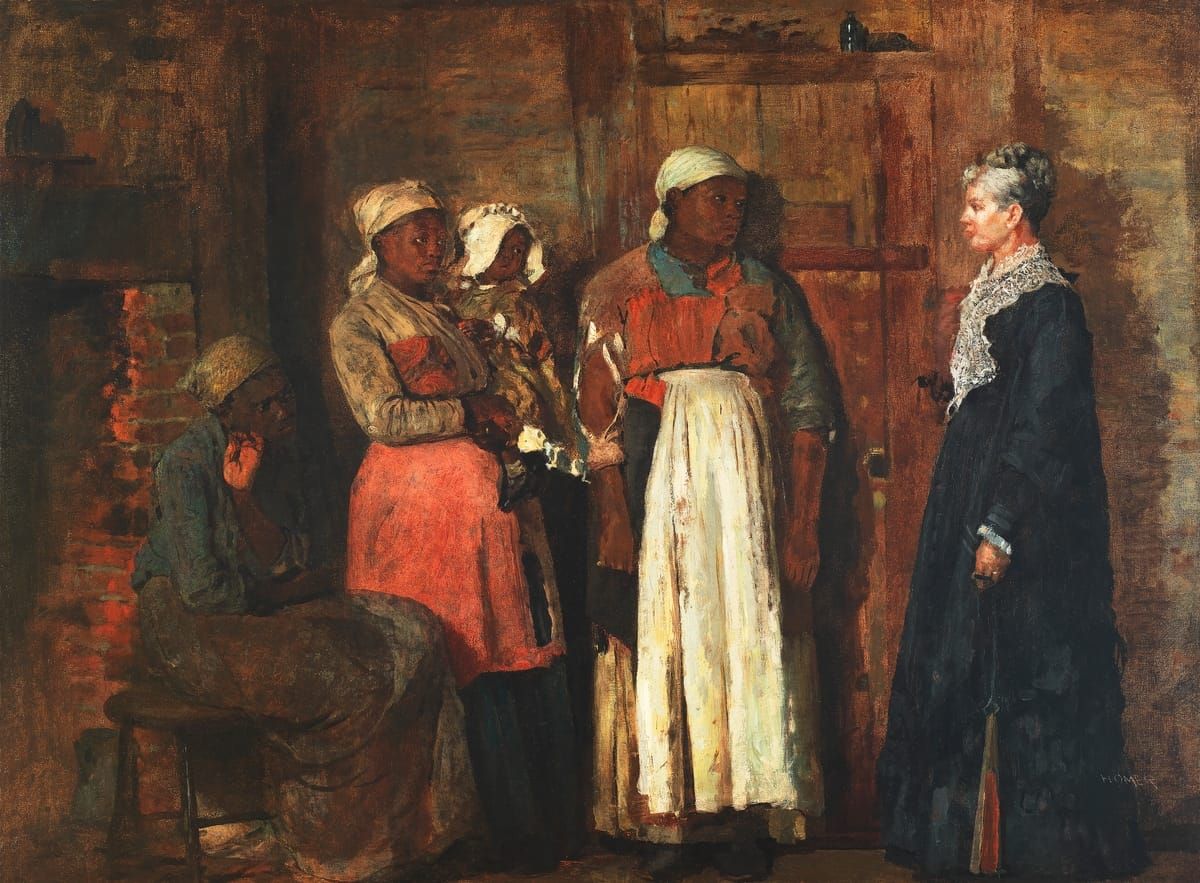
미국의 전설적인 사실주의 거장 윈슬로 호머(Winslow Homer, 1836–1910)가 1876년에 완성한 유화 명작 <옛 여주인의 방문(A Visit from the Old Mistress)>은 남북전쟁과 노예해방 이후 변화된 미국 남부의 역사적 단면과 인간적 긴장감을 가장 깊이 있고 절제된 필치로 포착해 낸 수작입니다.
이 작품은 가로 61.3cm, 세로 45.7cm 크기의 캔버스 위에 탄탄한 유화 기법으로 제작되었으며, 과거 노예 숙소였던 낡은 오두막의 벽돌 난로와 목재 벽면의 거친 질감에는 도톰한 임파스토를 밀도 있게 얹고, 인물들의 옷 주름과 눈빛 속에 흐르는 미묘한 심리적 대치 상태를 정교한 명암 대비와 글레이징으로 살려냈습니다.
현재 미국 워싱턴 D.C. 스미스소니언 미국미술관(Smithsonian American Art Museum)에 영구 소장되어 있는 이 그림은 버지니아주 피터즈버그 인근의 농가 오두막에서, 과거 노예 주인이었던 백인 여성과 해방된 흑인 가족들이 한 공간에서 마주 서서 침묵 속에 서로를 응시하는 역사적인 순간을 담고 있습니다.
이 그림 뒤에는 남북전쟁 종전 후 재건기(Reconstruction era) 남부의 복잡한 사회상을 직접 관찰했던 호머의 따뜻한 인간미와 치열한 예술적 집념이 깃들어 있습니다. 1870년대 중반 호머는 남부 버지니아를 여행하며 노예제 폐지 이후 이전의 지배-피지배 관계가 무너진 자리에서 새로운 공존의 길을 찾아야 했던 사람들의 실제 삶에 깊이 매료되었습니다.
호머는 한때 주인이었던 상복 차림의 옛 여주인이 해방된 노예 가족의 거처를 찾아왔을 때 발생하는 묵직한 공기감을 생생하게 담아내기 위해 실제 피터즈버그의 해방민 오두막에 이젤을 폈습니다.
당시 모델로 참여했던 흑인 여성들은 과거처럼 굽실거리거나 고개를 숙이지 않고, 팔짱을 끼거나 꼿꼿이 선 채 여주인의 눈을 똑바로 응시하는 당당한 태도로 포즈를 취했습니다.
작업 도중 옛 여주인 역할을 맡은 모델이 침묵의 긴장감을 견디지 못하고 "화가 양반, 이 무거운 침묵이 언제쯤 끝나오?"라고 묻자, 호머는 "이 침묵이야말로 수백 년 만에 두 세계가 대등한 인간 대 인간으로 나누는 가장 거대한 대화라네!"라며 진지하게 답했습니다. 호머는 인물들 사이에 흐르는 팽팽한 눈빛과 의연한 침묵의 순간을 단 한 순간도 놓치지 않고 캔버스 위에 정직하게 새겨 넣었습니다.
벽난로 옆 의자에 앉아 턱을 괸 채 옛 주인을 올려다보는 할머니의 관조적인 눈빛과, 아이를 품에 안은 어머니의 결연한 표정, 그리고 화면 우측 하단 흑갈색 바닥에 새겨진 'HOMER' 서명은 호머가 역사적 진실을 얼마나 깊은 경의를 담아 관찰했는지를 증명합니다.
미술사학자들은 이 작품을 1876년 미국 건국 100주년을 기념하는 해에 제작된 가장 정직하고 용기 있는 걸작으로 평가합니다.
당대 유행하던 인종차별적 캐리커처나 감상적인 동정주의를 완전히 배제하고, 해방된 흑인 여성들을 당당한 주체성과 조각적 존엄성을 지닌 인간 군상으로 묘사함으로써 미국 근대 사실주의 회화의 새로운 지평을 열었다는 극찬을 받습니다.
작품을 마주할 때 관람자의 무의식적인 시선은 인물들 사이의 보이지 않는 수평적 시선 교환을 따라 매우 긴장감 넘치고 균형 잡힌 좌우 순환 궤적을 그리며 이동합니다. 관람객의 눈길은 가장 먼저 화면 우측에서 흰색 레이스 칼라를 두르고 단정하게 서 있는 옛 여주인의 단아한 옆얼굴과 검은 드레스에 머뭅니다.
이어 시선은 여주인의 눈빛이 향하는 화면 중앙으로 이동하여, 흰 앞치마를 두르고 꼿꼿하게 선 흑인 여인의 당당한 자세와 다부진 체구, 그리고 그녀의 결연한 눈빛에 자연스럽게 가닿습니다.
중앙 여인의 굳센 양감을 확인한 시선은 화면 좌측으로 이동하여, 어린아이를 품에 안고 붉은 치마를 입은 어머니의 조용한 품위와, 벽난로 곁 나무 의자에 앉아 손으로 턱을 괸 노인의 깊은 사색 어린 눈빛을 차례로 훑어 내려갑니다.
이후 시선은 낡은 붉은 벽돌 난로의 따스한 불빛과 목조 벽면의 묵직한 질감을 거쳐, 인물들의 발치 아래로 이어지는 흙바닥의 안정된 공간감으로 내려오며 깊은 시각적 안착을 이룹니다.
이러한 유려한 시선의 순환은 관람자의 내면에 깊은 심리적 몰입감과 묵직한 정서적 안도감을 선사합니다. 어두운 오두막 안을 채우는 따뜻한 흙빛 톤과 불필요한 과장이 배제된 침묵의 공간감은, 복잡한 일상의 번잡함과 피로에 지친 현대인의 무의식에 마치 역사의 장엄한 전환점 앞에 서 있는 듯한 깊은 이완과 감각적 평온을 선물합니다.
불평등한 과거의 굴레를 벗어던지고 대등한 인격체로서 묵묵히 마주 선 인간들의 존엄한 자태는, 보는 이에게 일상의 번뇌를 내려놓고 삶의 어떤 시련 앞에서도 당당하게 자신의 자리를 지킬 수 있는 내면의 단단한 용기와 깊은 평정을 되찾아 주는 든든한 치유의 위로를 건넵니다.
A Visit from the Old Mistress
Completed in 1876 by the celebrated American realist master Winslow Homer (1836–1910), the monumental oil masterpiece A Visit from the Old Mistress stands as an extraordinary tour de force capturing the complex social landscape, human dignity, and profound psychological nuance of the American Reconstruction era with peerless historical honesty.
Measuring 61.3 cm wide by 45.7 cm high on canvas, the work showcases Homer's consummate mastery of oil technique, applying rich, tactile impasto to the weathered brick hearth and rustic wooden timber wall, while modulating the tension between figures through subtle glazing and masterful chiaroscuro.
Preserved in the permanent collection of the Smithsonian American Art Museum in Washington, D.C., this iconic painting portrays a poignant post-Civil War encounter inside a humble Virginia cabin near Petersburg, where a former slaveholder in mourning attire visits her emancipated former bondswomen, who stand in dignified equality within their own space.
Behind this powerful canvas lies Homer's firsthand observations of the reconstructed American South and an inspiring array of historical anecdotes. Visiting Virginia in the mid-1870s, Homer sought to document the quiet, unvarnished truth of a society learning to navigate newfound freedom and mutual recognition.
Setting up his easel inside an authentic freedpeople's cabin to capture the intimate daylight filtering through the doorway, Homer observed the freedwomen as they held their ground with quiet grace rather than deferential subservience.
When the model portraying the visitor felt the weight of the silence and asked how long the tension must last, Homer replied with quiet conviction that this solemn silence represented the first true, equal dialogue between two worlds in centuries.
Homer painted with urgent focus, capturing the firm, direct gazes of the emancipated women and the complex, unspoken history lingering in the air.
The seated elder resting her chin in contemplation beside the glowing brick fireplace, the mother cradling her child in the warm shelter of her arms, and the sharp signature 'HOMER' inscribed in the lower right floor serve as living testaments to Homer's profound empathy and objective vision.
Art historians celebrate this painting as one of the defining cultural monuments of the American Centennial year of 1876, extolling its radical departure from racial caricatures and sentimental melodrama in favor of genuine human agency and monumental presence.
When engaging with the painting, the viewer's unconscious gaze undertakes an intensely stabilizing and reflective visual journey. The eye is initially drawn to the former mistress standing on the right, taking in her lace collar, pale features, and somber black mourning attire.
The gaze then travels across the narrow, charged void between the figures, meeting the erect, statuesque presence of the freedwoman standing in the center with her hands folded over her crisp white apron.
Tracing the gentle arc of the figures to the left, the viewer's attention embraces the mother in her warm rose-colored apron holding her child, before descending toward the seated matriarch resting thoughtfully beside the hearth.
Finally, sweeping across the warm terracotta tones of the rustic brick fireplace and the grounded timber floorboards, the eye settles into the deep rhythmic stability of the domestic sanctuary.
This rhythmic visual journey fosters profound psychological reassurance, deep focus, and emotional stillness within the observer. The tactile immersion in warm earthen tones and quiet interior light acts as an intuitive emotional balm, dispelling ambient modern fatigue and soothing inner tension.
By presenting a world defined by moral fortitude, mutual dignity, and unvarnished truth, Homer offers the observer a comforting sanctuary of mindfulness, inspiring a deep sense of resilience, inner equilibrium, and enduring peace.
본 리뷰에서 작품을 제외한 컨텐츠의 저작권은 팔렛트제주에 있습니다.
"퍼블릭도메인 고전명화"를 제외한 모든 창작 콘텐츠는 저작권법 제4조 및 제10조에 의거하여 보호됩니다. 무단 도용시 저작권법 제136조(벌칙)에 의거, 당사의 사전 서면 승인 없는 저작권 침해 행위를 금지합니다.