야영지의 모닥불 (전선의 밤) - Campfire / The Bivouac Fire
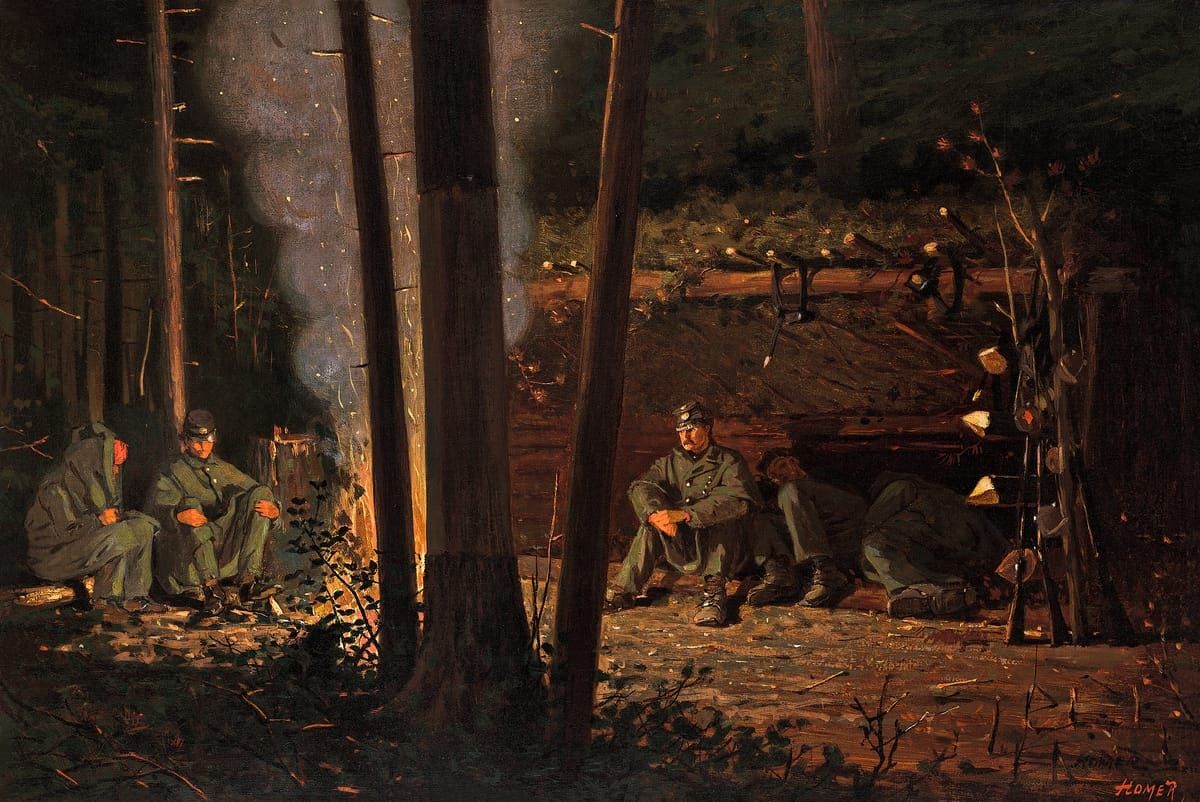
미국의 전설적인 사실주의 거장 윈슬로 호머(Winslow Homer, 1836–1910)가 남북전쟁 시기인 1860년대(1863–1864년경 구상, 1870년대 초 완성)에 제작한 유화 걸작 <야영지의 모닥불(Campfire / The Bivouac Fire)>은 칠흑 같은 밤 숲속에서 타오르는 모닥불 주위에 모여든 병사들의 지친 몸과 고향을 향한 애틋한 향수, 그리고 전장의 깊은 고요를 가장 묵직하고 서정적인 필치로 포착해 낸 수작입니다.
이 작품은 가로 약 60.5cm, 세로 약 42.0cm 크기의 캔버스 위에 탄탄한 유화 기법으로 제작되었으며, 타닥거리며 솟구치는 장작불의 연기와 불티, 웅장한 소나무 기둥의 거친 껍질 질감에는 도톰한 임파스토를 밀도 있게 얹고, 어둠 속에서 오렌지빛으로 일렁이는 불빛과 병사들의 코트 주름을 정교한 키아로스쿠로(명암대비) 기법으로 완벽히 구현해 냈습니다.
현재 미국 주요 미술관 및 유수 프라이빗 컬렉션에서 높이 평가받는 이 그림은 버지니아 전선의 울창한 숲속 임시 야영지에서, 통나무 오두막과 나뭇가지 쉼터 앞에 주저앉아 타오르는 불길을 묵묵히 응시하며 잠을 청하거나 사색에 잠긴 북군 병사들의 인간적인 밤 풍경을 담고 있습니다.
이 그림 뒤에는 종군 화가로서 전선의 고단한 밤을 병사들과 함께 지새우며 그들의 인간적인 고뇌를 가장 가까이서 목격했던 호머의 따뜻한 시선과 흥미진진한 비하인드가 깃들어 있습니다. 당시 호머는 포탄이 터지는 격전의 순간보다 전투가 끝난 뒤 찾아오는 야영지의 쓸쓸한 침묵과 병사들의 순박한 내면 풍경에 깊은 시각적 감흥을 느꼈습니다.
호머는 모닥불의 빛이 병사들의 얼굴과 주변 나무들을 비출 때 빚어내는 드라마틱한 명암을 스케치하기 위해 모닥불 곁에 자리를 잡았습니다. 불을 쬐며 웅크리고 있던 한 병사가 장작을 뒤적이다가 날아오른 불티에 깜짝 놀라 엉덩방아를 찧자, 옆에서 졸고 있던 병사들이 잠에서 깨어 키득거리며 웃음을 터뜨리는 소동이 벌어졌습니다.
장작불을 다시 정돈하던 병사가 "화가 양반, 총알은 안 무서운데 이 장작불 도깨비는 자꾸 내 수염을 태우려 하네요!"라며 너스레를 떨자 호머는 조용히 미소 지었습니다. 호머는 "자네의 수염을 태울 뻔한 저 장작불이야말로 얼어붙은 이 숲과 병사들의 마음에 온기를 불어넣어 주는 고향의 등잔불이라네!"라며 다정하게 위로했고, 병사들이 다시 불길을 바라보며 깊은 침묵에 빠져든 찰나를 단숨에 캔버스에 옮겨 담았다는 훈훈한 일화가 전해집니다.
화면 우측 나뭇가지에 걸어둔 냄비와 수통, 숲 뒤편으로 아스라이 피어오르는 연기 구름, 그리고 우측 하단 흙바닥에 붉은 물감으로 선명하게 새겨진 'HOMER' 서명은 호머가 전쟁의 이면을 얼마나 세심하고 진솔한 애정으로 관찰했는지를 증명합니다.
미술사학자들은 이 작품을 호머의 남북전쟁 연작 중에서도 감상적 과장이나 영웅주의를 철저히 배제한 가장 순수한 사실주의 걸작으로 평가합니다.
프랑스 조르주 드 라 투르의 촛불화 전통을 연상시키는 정교한 야간 조명 연출과 미국 특유의 정직한 인간애를 결합하여, 전쟁이라는 거대한 비극 속에서도 묵묵히 버텨내는 평범한 인간들의 존엄성을 시각적 서사시로 승화시켰다는 극찬을 받습니다.
작품을 마주할 때 관람자의 무의식적인 시선은 모닥불의 솟구치는 불기둥을 따라 매우 안정적이고 따뜻한 타원형 궤적을 그리며 이동합니다. 관람객의 눈길은 가장 먼저 화면 중앙 좌측에서 어두운 숲을 환하게 밝히며 활활 타오르는 모닥불의 영롱한 오렌지빛 불꽃과 허공으로 솟구치는 은백색 연기 줄기에 사로잡힙니다.
이어 시선은 불빛을 받아 밝게 빛나는 중앙 소나무 기둥의 묵직한 질감을 지나 화면 우측으로 이동하여, 무릎을 모으고 앉아 불길을 응시하는 콧수염 병사의 진지한 얼굴과 그 뒤편 간이 쉼터에서 지쳐 쓰러져 잠든 전우들의 웅크린 몸짓으로 자연스럽게 흘러갑니다.
우측 쉼터에 걸린 수통과 기대어 세워둔 소총들의 묵직한 실루엣을 확인한 시선은, 화면 좌측 모닥불 너머에서 담요를 뒤집어쓰고 웅크린 병사들의 고즈넉한 뒷모습과 은은한 불빛의 잔영을 타고 좌우를 균형 있게 연결합니다.
이후 시선은 하늘을 찌를 듯 솟아오른 빽빽한 야간 숲의 깊은 어둠과 화면 바닥에 흩뿌려진 마른 나뭇잎들의 따스한 질감을 거쳐, 다시 타오르는 모닥불의 중심 온기로 돌아와 완전하고 아늑한 시각적 안착을 이룹니다.
이러한 유려한 시선의 순환은 관람자의 내면에 깊은 심리적 안정감과 포근한 내적 평온을 선물합니다. 칠흑 같은 어둠 속에서 타오르는 모닥불의 따스한 온기와 타닥거리는 장작 소리가 자아내는 공간감은, 복잡한 일상의 긴장과 피로에 지친 현대인의 무의식에 마치 고요한 밤 숲속에서 장작불을 쬐며 불멍을 즐기는 듯한 깊은 이완과 감각적 휴식을 선사합니다.
가혹한 현실의 시련 속에서도 작은 불빛 하나에 의지해 서로의 온기를 나누며 내일을 기약하는 병사들의 의연한 자태는, 보는 이에게 일상의 번뇌를 내려놓고 삶의 어떤 어둠 앞에서도 꺼지지 않는 내면의 굳센 희망과 따뜻한 평정을 되찾아 주는 든든한 치유의 위로를 건넵니다.
Campfire / The Bivouac Fire
Conceived during the American Civil War in the 1860s and completed by the celebrated American realist master Winslow Homer (1836–1910), the oil masterpiece Campfire (also known as The Bivouac Fire) stands as an extraordinary tour de force capturing the haunting stillness, nocturnal warmth, and reflective quietude of soldiers encamped within the primeval forest.
Measuring approximately 60.5 cm wide by 42.0 cm high on canvas, the work showcases Homer's refined command of dramatic chiaroscuro and rich impasto, defining the flaring embers, rising plumes of smoke, and the rugged bark of pine trunks with dense texture, while modulating the glowing amber firelight against the deep, velvety shadows of the nocturnal woods.
Preserved and celebrated across prominent public and private American art collections, this painting portrays a quiet encampment of the Army of the Potomac in Virginia, where exhausted Union infantrymen gather around a roaring fire before a rustic bough shelter, keeping solitary vigil and seeking solace in the warmth beneath towering timber.
Behind this restorative canvas lies Homer's firsthand experience as a field artist documenting the unheroic reality of front-line life. Moving beyond the violent chaos of tactical engagements, Homer was deeply drawn to the quiet, poignant moments of respite when soldiers confronted their own hopes, memories, and unspoken yearnings for home.
Setting up his easel near the bivouac to capture the radiant illumination of the flames against the soldiers' weathered coats, Homer watched the men gather after a grueling march.
When a popping ember leapt from the hearth and startled a dozing recruit, causing him to tumble backward onto the leaves, his companions broke into soft, tired laughter amidst the dark.
Reassuring the startled soldier, Homer smiled warmly and remarked that the crackling fire was nature's own beacon of home, casting away the chill of the wild forest. Homer worked with swift, disciplined brushstrokes to capture the flickering reflections on their faces and the silent camaraderie lingering in the air, proudly signing 'HOMER' in crimson across the lower right corner.
The mess kits, canteens, and stacked muskets leaning quietly against the wooden uprights on the right, alongside the ghostly veil of smoke rising through the forest canopy, serve as authentic testaments to Homer's deeply observant eye for the humble poetry of soldier life.
Art historians celebrate this painting as a defining highlight of Homer's Civil War oeuvre, praising its profound tonal unity and psychological depth. Recalling the sacred nocturnal luminosity of Georges de La Tour, Homer transformed an everyday campsite into a timeless visual sanctuary of fraternal warmth, endurance, and human dignity amidst the shadow of conflict.
When engaging with the painting, the viewer's unconscious gaze undertakes an intensely soothing and grounding visual journey. The eye is initially welcomed by the incandescent column of golden fire blazing on the left, lingering upon the flickering embers and the soft, billowing plume of smoke ascending into the trees.
The gaze then travels past the massive, illuminated pine trunk in the center, resting upon the thoughtful profile of the seated soldier with his hands clasped around his knees, before gliding toward his exhausted comrades sleeping soundly within the brush shelter.
Tracing the silhouette of the mess gear and rifles leaning against the arbor on the far right, the viewer's attention circles back through the shadowed figures huddled beneath heavy army blankets on the far left.
Finally, sweeping across the dark, textured woodland floor scattered with dry pine needles and into the sheltering gloom of the surrounding forest, the eye settles comfortably back into the glowing heart of the fire.
This rhythmic visual journey fosters profound psychological reassurance, gentle nostalgia, and deep emotional stillness within the observer. The tactile immersion in glowing firelight, crisp night air, and resinous pine smoke acts as an intuitive emotional balm, dispelling ambient modern fatigue and soothing inner tension.
By presenting a world where human fellowship and inner light endure through the darkest hours of trial, Homer offers the observer a comforting sanctuary of mindfulness, inspiring a deep sense of renewal, sweet contentment, and enduring inner peace.
본 리뷰에서 작품을 제외한 컨텐츠의 저작권은 팔렛트제주에 있습니다.
"퍼블릭도메인 고전명화"를 제외한 모든 창작 콘텐츠는 저작권법 제4조 및 제10조에 의거하여 보호됩니다. 무단 도용시 저작권법 제136조(벌칙)에 의거, 당사의 사전 서면 승인 없는 저작권 침해 행위를 금지합니다.