야영지의 모닥불 - Camp Fire
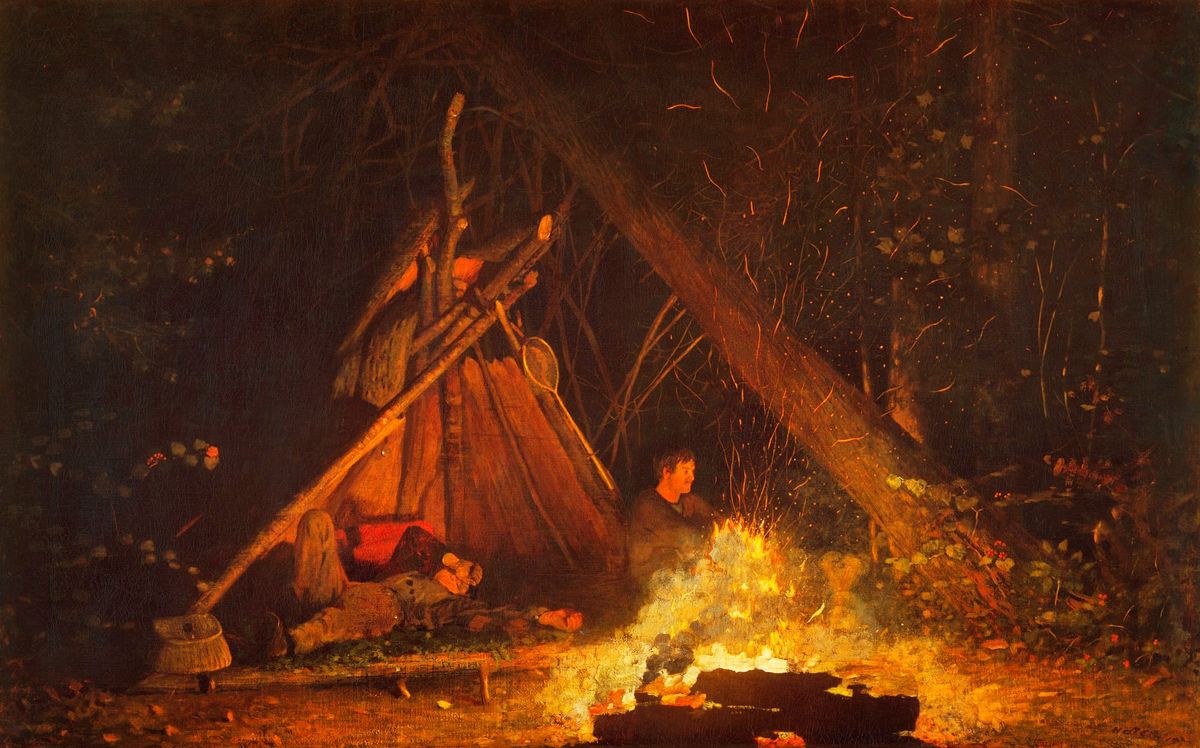
미국의 전설적인 사실주의 거장 윈슬로 호머(Winslow Homer, 1836–1910)가 1880년에 완성한 유화 명작 <야영지의 모닥불(Camp Fire)>은 칠흑 같은 원시림의 어둠과 활활 타오르는 모닥불의 원초적인 빛을 강렬하게 대비시킨 걸작입니다.
이 작품은 가로 96.5cm, 세로 60.3cm 크기의 캔버스 위에 짙은 유화 물감을 두텁게 쌓아 올린 임파스토(impasto)와 섬세한 글레이징(glazing) 기법을 혼용하여 제작되었습니다. 타닥타닥 타오르는 불꽃의 생생한 열기와 밤하늘로 솟구치는 수많은 불티, 그리고 숲속 나무 껍질의 거친 질감을 탁월한 명암 대비인 키아로스쿠로(chiaroscuro) 기법으로 완벽하게 구현했습니다.
현재 미국 뉴욕 메트로폴리탄 미술관(The Metropolitan Museum of Art)에 소장되어 있는 이 그림은 뉴욕주 북부 애디론댁(Adirondacks) 산맥의 깊은 숲속 야영지에서 통나무와 나뭇가지로 엮은 간이 쉼터(Lean-to) 곁에 모닥불을 피워놓고 휴식을 취하는 두 남자의 고요하고도 아늑한 밤 풍경을 담고 있습니다.
이 작품 뒤에는 애디론댁의 야생과 캠핑 생활을 지독하게 사랑했던 호머의 인간적인 열정과 흥미진진한 에피소드가 깃들어 있습니다. 1870년대부터 복잡한 뉴욕 사교계를 떠나 애디론댁을 찾던 호머는 현지 가이드들과 숲속 캠프에서 침식을 함께하며 문명과 단절된 고독한 휴식을 즐겼습니다.
호머는 밤이 깊어지면 모닥불 주위에 둘러앉아 타오르는 불꽃을 넋을 잃고 바라보며 스케치북을 펼치곤 했습니다. 당시 동행했던 사냥 가이드들은 호머가 활활 타오르는 불길 너머로 날아오르는 불티의 궤적을 실시간으로 포착하기 위해 모닥불 바로 앞까지 바짝 다가가 얼굴이 벌겋게 익고 옷자락에 불똥이 튀어 구멍이 숭숭 뚫릴 때까지 붓질을 멈추지 않았던 괴짜 화가로 기억했습니다.
가이드들이 불길이 너무 뜨겁다며 뒤로 물러서라고 소리치면, 호머는 "이 살아있는 불꽃의 춤이야말로 숲의 진짜 심장 박동이다"라며 오히려 통나무를 더 던져 넣으라고 유쾌하게 재촉했다는 일화가 전해집니다. 화면 속 통나무 쉼터 옆에 세워진 눈신발(스노슈)과 낚시 바구니는 호머가 하루 종일 숲속을 누비며 사냥과 낚시, 야외 스케치를 즐겼던 실제 캠프 현장의 생생한 소품들입니다.
미술사학자들은 이 작품을 호머의 애디론댁 연작 중에서도 자연의 빛과 어둠을 가장 드라마틱하고 신비롭게 포착한 유화의 정점으로 평가합니다. 인간을 집어삼킬 듯 웅장한 밤의 원시림 속에서도 한 줌의 불빛이 만들어내는 따스한 온기와 안식처의 가치를 극적으로 묘사하여, 19세기 미국 회화사에서 자연주의적 숭고미를 완성한 기념비적 명작으로 찬사를 받습니다.
작품을 마주할 때 관람자의 무의식적인 시선은 매우 따뜻하고 생동감 넘치는 원형 순환 궤적을 그리며 이동합니다. 관람객의 눈길은 가장 먼저 화면 하단에서 눈부신 황금빛과 주황빛으로 타오르는 모닥불의 강렬한 중심과 그 위로 춤추듯 피어오르는 수많은 불티의 궤적에 가닿습니다.
이어 시선은 불빛을 받아 붉게 물든 쉼터 안쪽으로 이동하여, 편안하게 누워 다리를 뻗고 휴식을 취하는 남자의 붉은 셔츠와 바닥에 깔린 솔잎 잠자리에 머뭅니다. 이후 시선은 불꽃 너머에 웅크리고 앉아 불을 쬐고 있는 또 다른 동료의 실루엣을 지나, 화면을 대각선으로 든든하게 받치고 있는 거대한 쓰러진 통나무와 그 뒤로 아득하게 펼쳐진 칠흑 같은 밤 숲의 깊은 어둠으로 확장됩니다.
이러한 유려한 시선의 순환은 관람자의 내면에 깊은 심리적 안정감과 무장해제된 평온을 선사합니다. 어둠에 둘러싸인 고요한 숲속에서 활활 타오르는 모닥불의 시각적 온기는, 복잡한 일상의 소음과 차가운 긴장감에 지친 현대인의 무의식에 마치 따뜻한 불가에 둘러앉아 있는 듯한 깊은 '불멍'의 카타르시스와 포근한 위로를 제공합니다.
거대한 야생의 어둠 속에서도 든든한 쉼터와 밝은 불꽃에 기대어 온전한 쉼을 누리는 인물들의 모습은, 보는 이에게 번잡한 잡념을 태워 없애고 내면의 따뜻한 중심과 잃어버렸던 원초적인 회복의 에너지를 되찾게 해 줍니다.
Camp Fire
Completed in 1880 by the legendary American realist master Winslow Homer (1836–1910), the oil masterpiece Camp Fire stands as an extraordinary tour de force capturing the dramatic interplay between the primeval darkness of the wilderness and the radiant warmth of a crackling blaze.
Measuring 96.5 cm wide by 60.3 cm high on canvas, the work showcases Homer's masterful handling of dense impasto and rich glazing, employing a dramatic chiaroscuro to render the kinetic energy of leaping sparks, incandescent embers, and the weathered textures of the surrounding forest.
Preserved in the prestigious permanent collection of The Metropolitan Museum of Art in New York, this painting masterfully depicts a nocturnal campsite in the Adirondack Mountains of upstate New York, where two companions find restful shelter within a rustic timber lean-to beside a roaring fire.
Behind this captivating canvas lies Homer's deep affection for rustic wilderness life and a delightful array of personal anecdotes. From the 1870s onward, seeking respite from the demanding social world of Manhattan, Homer frequently retreated to the Adirondacks, immersing himself in the rugged camaraderie of local guides and woodsmen.
Homer was utterly entranced by the visual poetry of campfires burning deep in the primeval night. Local guides fondly remembered the artist leaning extraordinarily close to the raging blaze to capture the exact trajectory of rising sparks, completely unbothered even as flying embers singed his coat and the intense heat flushed his face.
When his companions urged him to step back to avoid scorching his clothes, Homer playfully insisted on feeding more dry pine logs to the hearth, declaring that the dancing fire was the very heartbeat of the wild night. The fishing creel and snowshoe resting beside the lean-to serve as authentic testaments to the daily sporting rituals Homer passionately pursued in the North Woods.
Art historians celebrate this painting as a supreme achievement in Homer's outdoor oeuvre, extolling its atmospheric depth and expressive handling of light. By contrasting the immense, enveloping mystery of the nocturnal woods with the fragile yet triumphant sanctuary created by the fire, Homer elevated a genre camping scene into a profound visual meditation on human endurance, warmth, and the sublime natural world.
When engaging with the painting, the viewer's unconscious gaze undertakes an inherently restorative and comforting visual journey. The eye is initially drawn to the incandescent blaze glowing at the lower center, following the mesmerizing dance of golden flames and the delicate spray of sparks ascending into the dark canopy.
The gaze then travels into the warm, illuminated sanctuary of the lean-to, lingering upon the reclining figure stretched out comfortably in a bright red shirt upon a bed of fresh spruce boughs. Moving across to the companion seated quietly on the right, the viewer's attention follows the massive diagonal trunk framing the shelter before settling into the velvety, silent depths of the ancient trees.
This rhythmic visual journey fosters profound psychological reassurance and deep emotional warmth within the observer. The luminous firelight glowing against the nocturnal forest acts as a natural mental tonic, dispelling ambient stress and modern anxiety with the soothing cadence of a primal hearth.
By presenting a sacred haven of warmth, companionship, and tranquility carved out of the wilderness, Homer offers the observer a comforting sanctuary of mindfulness, inspiring a deep sense of renewal, sweet contentment, and enduring inner peace.
본 리뷰에서 작품을 제외한 컨텐츠의 저작권은 팔렛트제주에 있습니다.
"퍼블릭도메인 고전명화"를 제외한 모든 창작 콘텐츠는 저작권법 제4조 및 제10조에 의거하여 보호됩니다. 무단 도용시 저작권법 제136조(벌칙)에 의거, 당사의 사전 서면 승인 없는 저작권 침해 행위를 금지합니다.