울타리 곁의 밀어 (목장의 연인들) - At the Fence / Rustic Courtship
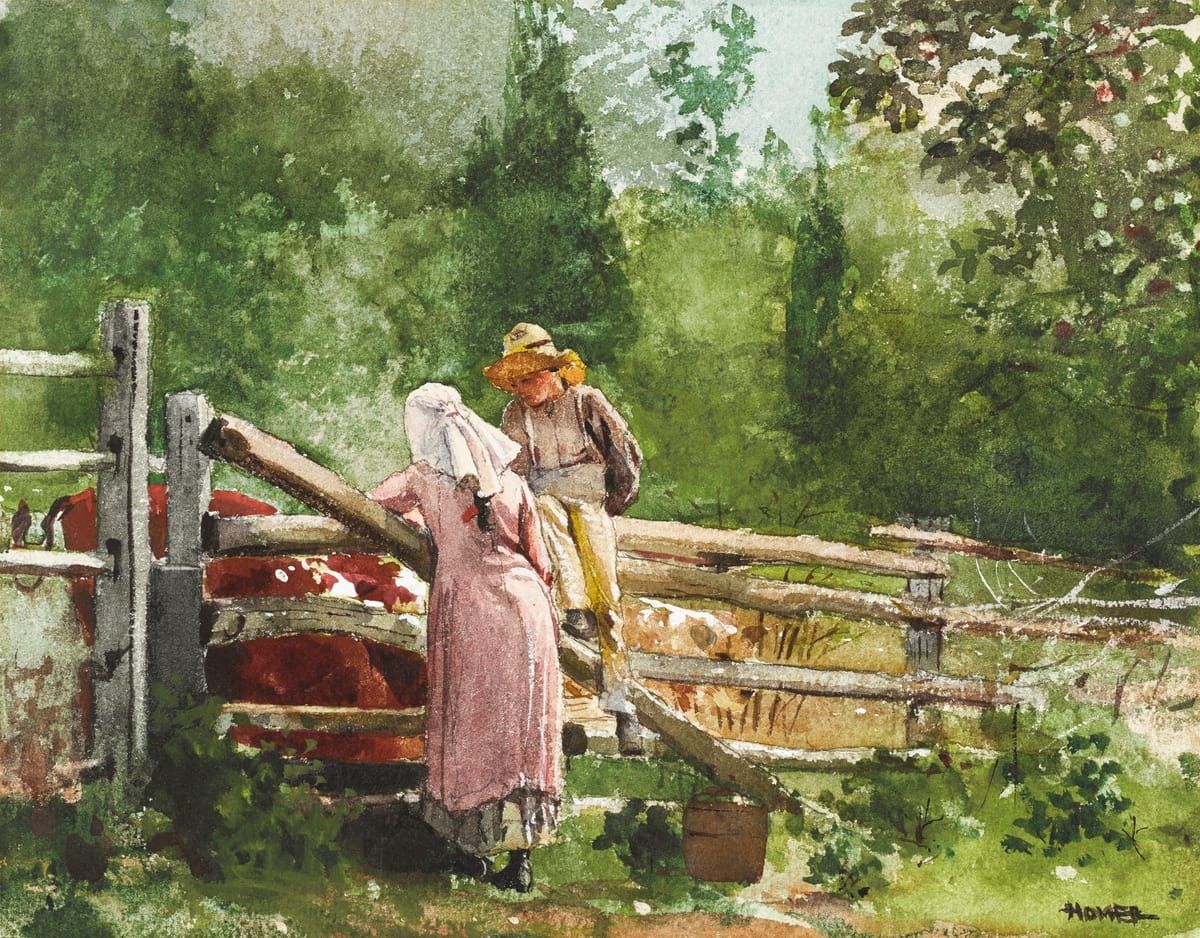
미국의 전설적인 사실주의 거장 윈슬로 호머(Winslow Homer, 1836–1910)가 1878년경(또는 1879년)에 완성한 수채화 명작 <울타리 곁의 밀어(At the Fence / Rustic Courtship / On the Fence)>는 싱그러운 여름 녹음이 우거진 목장 울타리에서 만난 두 시골 청춘의 풋풋한 설렘과 목가적인 서정을 가장 맑고 따뜻한 필치로 포착해 낸 수작입니다.
이 작품은 가로 약 30.5cm, 세로 약 24.5cm 크기의 고급 워브 종이 위에 흑연 연필로 인물들과 통나무 울타리의 정갈한 형태를 잡은 후, 투명 수채 물감의 촉촉한 번짐으로 짙푸른 나뭇잎과 풀밭을 칠하고, 종이 본연의 밝은 흰 여백과 섬세한 긁어내기 기법을 통해 여인의 흰 보닛과 햇살에 달궈진 울타리 나무의 거친 결을 극대화한 혼합 수채 기법으로 제작되었습니다.
현재 미국 주요 미술관 및 유수 프라이빗 컬렉션에서 소중히 다루어지는 이 그림은 뉴욕주 또는 매사추세츠주의 평화로운 시골 목장에서, 밀짚모자를 쓴 소년이 나무 울타리 위에 걸터앉아 젖짜기를 마치고 다가온 분홍빛 드레스 차림의 소녀와 얼굴을 마주하며 다정한 대화를 나누는 정겨운 여름 한때를 담고 있습니다.
이 그림 뒤에는 복잡한 도시 생활을 떠나 시골 마을의 소박하고 풋풋한 일상에 깊이 매료되었던 호머의 따뜻한 인간미와 흥미진진한 비하인드가 깃들어 있습니다. 1870년대 후반 호머는 여름마다 뉴욕주 호튼빌이나 시골 목장을 찾아다니며 자연의 품에서 살아가는 젊은이들의 진솔한 삶을 캔버스에 담는 일에 흠뻑 빠져 있었습니다.
호머는 울타리에 걸터앉은 소년과 부끄러운 듯 울타리에 기댄 소녀의 자연스러운 자세를 스케치하기 위해 목장 한쪽에 자리를 잡았습니다. 한창 작업을 이어가던 중 울타리 너머에 있던 붉은 암소가 호기심 어린 눈으로 다가와 긴 혀를 내밀어 소년의 밀짚모자를 핥으려 하자 소년이 화들짝 놀라 울타리 뒤로 넘어질 뻔한 유쾌한 소동이 벌어졌습니다.
소녀가 그 모습을 보고 보닛을 매만지며 까르르 웃음을 터뜨리자, 호머는 "잠깐, 그대로 있게! 소조차 질투하게 만든 자네들의 풋풋한 웃음이야말로 오늘 아침 햇살이 이 목장에 선물한 가장 완벽한 사랑의 시(詩)라네!"라며 호탕하게 웃었습니다. 호머는 연인의 나른하면서도 설레는 순간을 놓칠세라 신나게 붓을 놀렸고, 풀밭 아래 놓인 나무 양동이와 화면 우측 하단에 'HOMER'라는 서명을 힘차게 남겼다는 다정한 일화가 전해집니다.
울타리 너머에서 평화롭게 풀을 뜯는 붉은 암소의 듬직한 실루엣과 화면 우측 상단 탐스럽게 영근 능금나무 가지, 그리고 발치에 놓인 작은 우유통은 호머가 전원의 생생한 정취를 얼마나 진솔하고 세심한 애정으로 관찰했는지를 증명합니다.
미술사학자들은 이 작품을 호머가 1870년대 후반에 도달한 수채화 야외 광선 연구의 백미이자, 미국 목가적 리얼리즘의 진수를 보여주는 대표 걸작으로 평가합니다.
프랑스 바르비종파의 서정성을 미국 고유의 맑고 신선한 공기감으로 재해석하여, 청춘의 풋풋한 사랑과 자연의 풍요로운 질서를 과장 없는 사실적 시선과 시각적 안식처로 승화시켰다는 극찬을 받습니다.
작품을 마주할 때 관람자의 무의식적인 시선은 나무 울타리의 대각선을 따라 매우 안정적이고 포근한 원형 궤적을 그리며 이동합니다. 관람객의 눈길은 가장 먼저 화면 중앙에서 흰 머리수건을 두르고 분홍빛 드레스를 입은 채 울타리에 다정하게 기댄 소녀의 우아한 뒷모습에 머뭅니다.
이어 시선은 소녀가 올려다보는 울타리 위의 밀짚모자 소년에게로 이동하여, 턱을 살포시 괸 채 소녀를 다정하게 응시하는 소년의 발그레한 얼굴과 장난기 어린 눈빛으로 자연스럽게 이어집니다.
두 사람의 따뜻한 눈맞춤을 확인한 시선은 소년이 걸터앉은 묵직한 통나무 울타리의 거친 결을 타고 좌측으로 이동해, 울타리 너머에서 한가로이 풀을 뜯는 붉은 암소의 듬직한 실루엣을 훑어 내려갑니다.
이후 시선은 발치 아래 풀밭에 놓인 작은 나무통과 싱그러운 풀잎의 질감을 거쳐, 화면 상단을 풍성하게 감싸 안은 짙푸른 녹음의 원시림과 탐스러운 사과나무 가지로 상승하며 깊고 아늑한 시각적 안착을 이룹니다.
이러한 유려한 시선의 순환은 관람자의 내면에 깊은 심리적 안정감과 포근한 향수를 선물합니다. 싱그러운 풀 내음과 부드러운 여름바람, 그리고 따스한 햇살을 머금은 목장의 공간감은, 복잡한 일상의 번잡함과 피로에 지친 현대인의 무의식에 마치 시골 목장 울타리 곁에 서서 맑은 공기를 들이마시는 듯한 깊은 이완과 감각적 휴식을 제공합니다.
바쁜 세상의 속도에서 벗어나 대자연의 품속에서 서로의 마음에 귀를 기울이는 젊은 연인들의 순수한 자태는, 보는 이에게 일상의 번뇌를 내려놓고 삶의 가장 소박하고 맑은 행복과 내면의 깊은 평정을 되찾아 주는 든든한 치유의 위로를 건넵니다.
At the Fence / Rustic Courtship
Completed circa 1878 by the celebrated American realist master Winslow Homer (1836–1910), the watercolor masterpiece At the Fence (also known as Rustic Courtship / On the Fence) stands as an extraordinary tour de force capturing the sun-drenched innocence, pastoral romance, and quiet enchantment of nineteenth-century American rural youth.
Measuring approximately 30.5 cm wide by 24.5 cm high on fine wove paper, the work showcases Homer's consummate mastery of transparent watercolor, applying fluid wet-on-wet washes of viridian, sap green, and ochre across the sheltering orchard foliage, while modulating the rough grain of the wooden split-rail fence, the delicate white sunbonnet, and the warm pink calico dress with crisp paper reserves and subtle scraping.
Preserved and celebrated across prominent public and private American art collections, this painting portrays a bucolic summer afternoon on an upstate New York farm, where a young farm boy in a broad straw hat perches along a split-rail pasture fence, sharing tender words with a young maiden leaning against the timber after chores under the lush shade of the orchard.
Behind this idyllic watercolor lies Homer's genuine affection for countryside retreats during the late 1870s. Leaving his Manhattan studio for the summer months, Homer sought out working farms in the Hudson Valley to record the unvarnished harmony between youthful courtship and the fertile land.
Setting up his field stool near the pasture edge to record the interplay of dappled sunlight and rustic affection, Homer watched the young pair converse across the fence.
When a large reddish-brown milk cow grazing behind the rails ambled over and nudged the boy's straw hat with curious affection, the youth scrambled to keep his balance on the narrow rail.
As the maiden burst into ringing laughter beneath her white bonnet, Homer laughed heartily with them, declaring that even the pasture cattle were charmed by their sweet company. Homer urged them to hold their unposed postures, swiftly laying down fluid touches of pink, amber, and deep green before the afternoon light could shift, proudly signing 'HOMER' in the lower right margin.
The gentle silhouette of the red cow standing quietly behind the rails, the fruit-laden branches of the apple tree arching overhead, and the wooden milking bucket resting in the clover serve as authentic testaments to Homer's deeply observant eye for the humble poetry of agrarian life.
Art historians celebrate this painting as a defining highlight of Homer's late 1870s watercolor oeuvre, praising its extraordinary compositional intimacy and breezy tonal naturalism. By capturing the tender innocence of country courtship free from sentimentality or theatricality, Homer elevated an everyday farmyard meeting into a timeless visual sanctuary of pastoral abundance and youthful peace.
When engaging with the painting, the viewer's unconscious gaze undertakes an inherently soothing and grounding visual journey. The eye is initially drawn to the graceful back of the young woman in the center foreground, lingering upon her white bonnet, rosy pink gown, and tender posture leaning against the rail.
The gaze then travels upward across the wooden beam toward the boy seated on the fence, meeting his sun-browned face, broad straw hat, and affectionate downward glance.
Tracing the horizontal and diagonal rhythm of the weathered cedar rails, the viewer's attention discovers the rich russet form of the cow standing contentedly in the pasture on the left, before descending past the wooden bucket resting in the green grass.
Finally, ascending into the lush, velvety canopy of dense summer trees and dappled orchard foliage overhead, the eye embraces the boundless tranquility and pastoral warmth of the countryside sanctuary.
This rhythmic visual journey fosters profound psychological reassurance, gentle nostalgia, and deep emotional stillness within the observer. The tactile immersion in warm sunshine, fragrant summer grass, and unhurried breezes acts as an intuitive emotional balm, dispelling ambient modern fatigue and soothing inner tension.
By presenting an idyllic world where innocent affection blossoms in pure harmony with the rhythm of nature, Homer offers the observer a comforting sanctuary of mindfulness, inspiring a deep sense of renewal, sweet contentment, and enduring inner peace.
본 리뷰에서 작품을 제외한 컨텐츠의 저작권은 팔렛트제주에 있습니다.
"퍼블릭도메인 고전명화"를 제외한 모든 창작 콘텐츠는 저작권법 제4조 및 제10조에 의거하여 보호됩니다. 무단 도용시 저작권법 제136조(벌칙)에 의거, 당사의 사전 서면 승인 없는 저작권 침해 행위를 금지합니다.