소라잡이 다이버들 - Sponge Divers, Bahamas (Conch Divers)
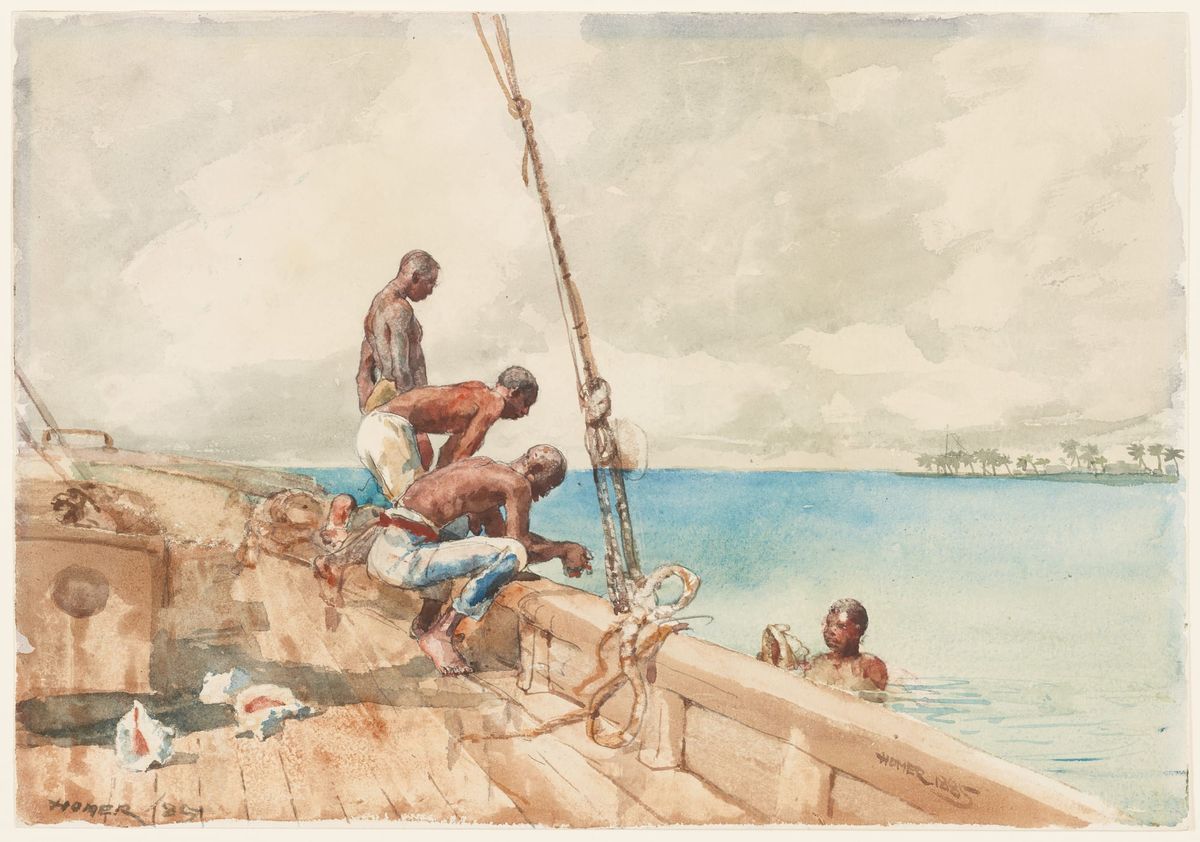
미국 사실주의 미술의 독보적인 거장 윈슬로 호머(Winslow Homer, 1836–1910)가 1885년에 완성한 기념비적인 수채화 걸작입니다. 현재 미국 오하이오주 신시내티 미술관(Cincinnati Art Museum)에 소장되어 있으며, 두꺼운 직조 화지 위에 흑연 연필 소묘와 투명 수채물감(Watercolor and graphite on wove paper)으로 제작된 실제 크기는 세로 약 35.6cm, 가로 50.8cm의 가로형 규격입니다.
호머는 카리브해의 강렬한 햇살과 투명한 바다를 표현하기 위해 전통적인 여백 기법(Reserve)과 젖은 번짐(Wet-on-wet)을 완벽하게 구사했습니다. 바하마의 에메랄드빛 바다는 맑은 청록색과 세룰리안 블루를 묽게 펴 바르는 워시 기법으로 투명도를 극대화했고, 배의 갑판 위에 흩어져 있는 대형 소라 껍데기의 반짝이는 광택은 흰 물감을 덧칠하지 않고 도톰한 화지 본연의 흰색을 그대로 남겨두는 여백 기법으로 처리했습니다. 구릿빛으로 그을린 잠수부들의 근육질 체구는 따스한 적갈색과 번트 시에나 톤의 과감한 터치로 빚어내어, 햇빛을 받아 반짝이는 젖은 피부의 질감과 역동성을 탁월하게 포착했습니다.
이 작품의 배경은 1884년 겨울부터 1885년 초까지 호머가 머물렀던 바하마 나소(Nassau)의 청정 해역입니다. 당시 호머는 잡지 센추리 매거진(The Century Magazine)의 삽화 작업을 의뢰받아 카리브해로 떠났으나, 관광지의 겉모습 대신 바다에 삶을 바치는 현지 흑인 해녀와 잠수부들의 생생한 노동 현장에 매료되었습니다.
비하인드 스토리로, 당시 바하마의 소라잡이와 해면 채취 잠수부들은 산소통이나 현대적인 잠수 장비 하나 없이 맨몸으로 깊은 바다에 뛰어들어 소라와 해면을 건져 올리는 위험한 작업을 매일 반복했습니다. 호머는 이들의 뛰어난 잠수 기술과 강인한 신체에 깊은 존경심을 느껴, 흔들리는 작은 슬루프선에 직접 올라타 파도를 맞아가며 스케치북을 펼쳤습니다. 물속에서 막 머리를 내민 잠수부가 건져 올린 거대한 핑크빛 소라를 배 위의 동료들에게 건네는 찰나의 순간을 호머는 단숨에 낚아챘습니다. 후대 미술사학자들과 평론가들은 이 작품을 두고 "19세기 서양 미술이 지녔던 유색인종에 대한 편견과 희화화를 완전히 타파하고, 바다와 맞서 싸우는 노동자의 숭고한 존엄성과 자연의 찬란한 빛을 완벽한 조형미로 담아낸 수채화 예술의 불후의 명작"이라 극찬했습니다.
관람자의 무의식적 시선은 화면 우측 하단의 맑은 에메랄드빛 바닷물 속에서 갓 솟아올라 소라를 건네는 잠수부의 젖은 얼굴과 눈빛에 가장 먼저 닿습니다. 물살을 가르고 올라온 인물의 생생한 시선은 보는 이에게 즉각적인 현장감과 시각적 몰입감을 형성합니다.
이어서 시선은 갑판 난간을 짚고 몸을 숙여 소라를 받아내려는 세 선원의 긴장된 근육과 대각선으로 솟은 돛대의 굵은 밧줄을 타고 힘차게 상승합니다. 이후 화면 좌측 갑판에 놓인 하얗게 빛나는 소라 껍데기들을 거쳐, 저 멀리 야자수가 늘어선 평화로운 산호섬과 옅은 구름이 감도는 하늘로 시원하게 확장됩니다. 투명한 청록색 바다의 청량감과 굳건하게 서로를 돕는 선원들의 유기적인 조화는 뇌파를 안정적인 알파파 상태로 유도하며, 일상의 피로와 답답함을 단숨에 씻어내고 따뜻한 남국의 바다 한가운데서 시원한 바닷바람을 맞는 듯한 깊은 심리적 해방감과 활력을 선사합니다.
Sponge Divers, Bahamas (Conch Divers)
Completed in 1885 by Winslow Homer (1836–1910), a paramount figure of American Realism, this landmark watercolor masterwork is preserved in the permanent collection of the Cincinnati Art Museum in Ohio. Rendered in transparent watercolor and graphite on heavy wove paper, the balanced horizontal work measures approximately 35.6 cm in height by 50.8 cm in width.
Homer skillfully captured the radiant tropical atmosphere and crystalline Caribbean tide by fusing fluid wet-on-wet washes with the classic reserve technique. The luminous turquoise sea was laid in with buoyant, transparent washes of cerulean and viridian, while the glistening white highlights of the conch shells scattered across the sun-bleached deck were achieved without opaque white gouache, allowing the raw paper base to radiate ambient sunlight. The sun-bronzed anatomy of the Bahamian divers was sculpted with decisive strokes of burnt sienna and rich ochre, conveying the glistening sheen of sea-soaked skin under the tropical glare.
The composition originated during Homer's winter sojourn in Nassau, Bahamas, between late 1884 and early 1885. Commissioned to illustrate an article for The Century Magazine, Homer quickly looked beyond picturesque resort scenes to observe the vital daily labor of the local Afro-Caribbean divers navigating the coral reefs.
An engaging behind-the-scenes narrative surrounds Homer’s encounter: without modern diving apparatus or goggles, these local mariners made repeated free dives into shark-patrolled depths to harvest sea sponges and giant queen conchs. Profoundly inspired by their aquatic athleticism, courage, and physical poise, Homer chartered local sloops to paint alongside the crew in the open sea. He captured the split-second exchange as a surfacing diver hands up a freshly gathered conch to his companions leaning over the gunwale. Art historians universally celebrate this Bahamas series as a historic turning point in American art, praising Homer's refusal to rely on contemporary racial stereotypes and admiring his honest tribute to human dignity and the untamed brilliance of nature.
The viewer's subconscious gaze immediately connects with the head and shoulders of the diver emerging from the azure water in the lower right, clutching a conch shell. His direct, focused presence instantly awakens the spectator's senses, drawing the eye into the warm tropical setting.
The gaze then travels upward along the taut muscular rhythm of the three crewmen leaning over the wooden rail, guided by the bold diagonal mast and coiled rigging rising toward the clouds. It then sweeps across the sunlit shells on the deck before resting upon the distant silhouette of palm trees fringing the coral horizon. The refreshing dominance of turquoise water paired with the steadfast cooperation of the mariners soothes mental fatigue, instilling an invigorating sense of emotional liberation, vitality, and restorative inner calm.
본 리뷰에서 작품을 제외한 컨텐츠의 저작권은 팔렛트제주에 있습니다.
"퍼블릭도메인 고전명화"를 제외한 모든 창작 콘텐츠는 저작권법 제4조 및 제10조에 의거하여 보호됩니다. 무단 도용시 저작권법 제136조(벌칙)에 의거, 당사의 사전 서면 승인 없는 저작권 침해 행위를 금지합니다.