소라고둥 잠수부들 (바하마 나소의 바다 다이버들) - Conch Divers / Sponge Divers, Bahamas
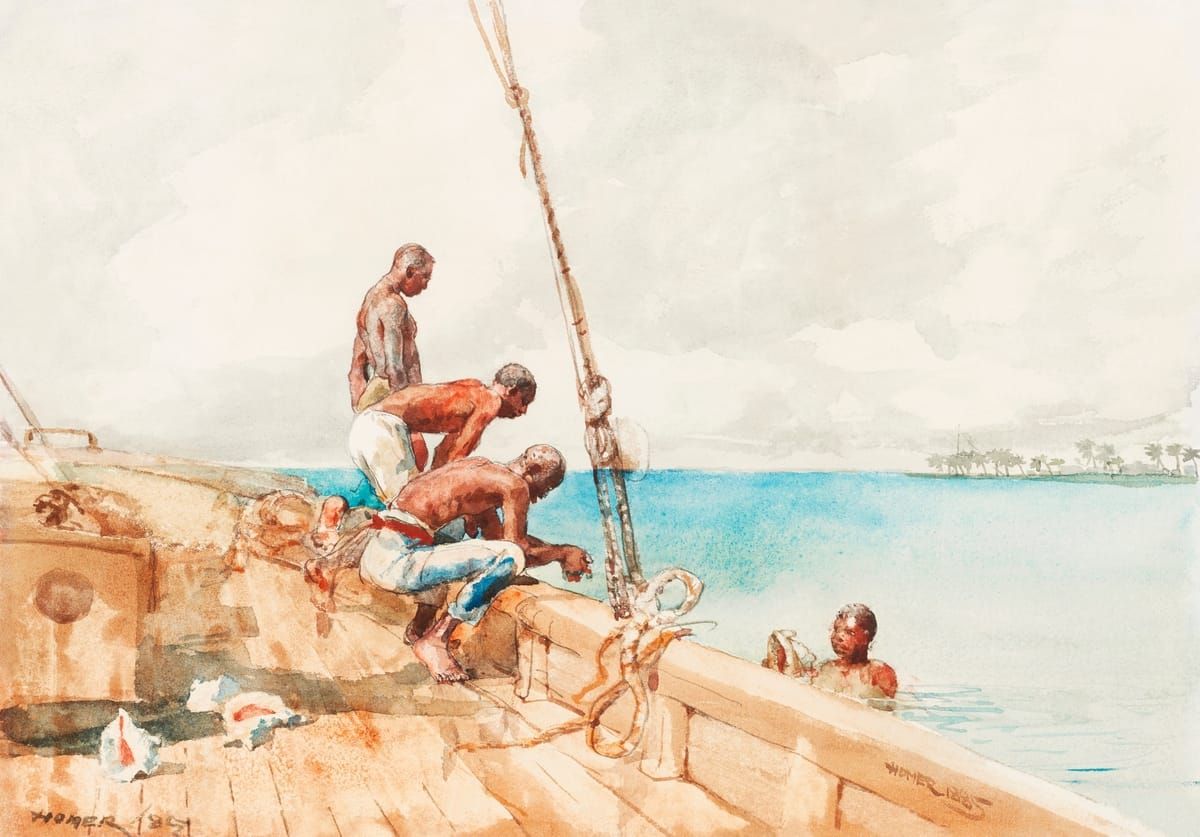
미국의 전설적인 사실주의 거장 윈슬로 호머(Winslow Homer, 1836–1910)가 1885년에 완성한 수채화 명작 <소라고둥 잠수부들(Conch Divers / Sponge Divers, Bahamas)>은 눈이 시리도록 투명한 카리브해의 에메랄드빛 바다와 눈부신 햇살 아래, 목조 슬루프선 갑판에서 바닷속 소라고둥을 건져 올리는 다이버를 맞이하는 어부들의 역동적인 긴장감과 조각 같은 신체미를 가장 청량하고 대담한 필치로 포착해 낸 수작입니다.
이 작품은 가로 약 54.6cm, 세로 약 35.6cm(약 21.5 x 14인치) 크기의 고급 워브 종이 위에 흑연 연필로 인물들의 근육질 체형과 뱃전, 돛줄의 각도를 정갈하게 잡은 후, 투명 수채 물감의 유려한 번짐과 스며듦으로 터키블루빛 바다와 은은한 하늘을 칠하고, 종이 본연의 밝고 투명한 흰 여백을 절묘하게 남겨두어 햇살을 받아 하얗게 빛나는 갑판의 나무 질감과 소라고둥 껍질의 화사한 분홍빛 반사광을 극대화한 혼합 수채 기법으로 완성되었습니다.
현재 미국 뉴욕 메트로폴리탄 미술관(The Metropolitan Museum of Art)을 비롯한 유수 미술관 컬렉션에서 높이 평가받는 이 그림은 바하마 나소(Nassau) 인근 산호초 바다에서, 햇볕에 그을린 세 명의 선원이 뱃전에 기대어 물속에서 커다란 핑크 소라고둥(Conch)을 쥐고 고개를 내민 잠수부 청년을 내려다보며 수확물을 건네받으려는 찰나의 생생한 현장감을 담고 있습니다.
이 그림 뒤에는 북부의 매서운 겨울을 피해 1884년 말부터 1885년 초까지 바하마 제도를 방문했던 호머가 열대 해양의 강렬한 태양광선과 흑인 해양 노동자들의 건강하고 당당한 육체미에 깊은 예술적 충격을 받았던 치열한 열정과 흥미진진한 비하인드가 깃들어 있습니다. 당시 호머는 수면 아래로 잠수해 맨몸으로 해산물을 채취하는 잠수부들의 용기와 순수한 생명력에 깊이 매료되어 있었습니다.
호머는 물살을 가르고 솟구쳐 오르는 잠수부의 생생한 표정과 갑판에 떨어지는 바닷물의 투명한 물방울을 담기 위해 배 한쪽에 자리를 잡고 스케치를 이어갔습니다. 물속에서 소라고둥을 치켜들고 올라오던 잠수부가 뱃전을 잡으려다 미끄러운 해초에 손이 미끄러져 다시 물속으로 풍덩 빠지자, 갑판 위에서 손을 뻗고 있던 선원이 "어이, 고둥을 바다에 다시 돌려주려는 게냐!"라며 소리를 질러 일제히 유쾌한 웃음바다가 되는 소동이 벌어졌습니다.
물 위로 다시 머리를 내민 잠수부가 고둥을 흔들며 씩 웃자, 그 모습을 지켜보던 호머는 껄껄 웃음을 터뜨렸습니다. 호머는 "잠깐, 그대로 가만히 있게! 바닷물을 털어내며 솟아오른 자네의 그 단단한 어깨와 햇살 아래 번뜩이는 소라고둥이야말로 오늘 아침 카리브해가 내 종이 위에 선물한 가장 눈부신 생명의 보석이라네!"라며 환호했습니다. 호머는 어부들의 살아 숨 쉬는 근육의 긴장감과 에메랄드빛 바다를 놓칠세라 신나게 붓을 놀렸고, 화면 좌측 하단과 뱃전 우측에 'HOMER 1885' 서명을 힘차게 새겨 넣었다는 감동적인 일화가 전해집니다.
갑판 구석에 놓인 큼직한 소라고둥 껍질의 화사한 안쪽 분홍빛과 하늘 높이 뻗은 돛대의 팽팽한 밧줄 매듭, 그리고 화면 우측 수평선 너머로 아스라이 줄지어 선 야자수 섬의 고즈넉한 풍경은 호머가 열대 바다의 진솔한 현장감을 얼마나 깊은 애정으로 관찰했는지를 증명합니다.
미술사학자들은 이 작품을 호머가 1885년 바하마 여행을 통해 이룩한 수채화 기법의 절대적인 정점이자, 인체의 고전적 조형미와 야외 직사광선의 광학적 효과를 가장 완벽하게 융합한 근대 수채화의 역사적 최고 걸작으로 평가합니다.
프랑스 인상주의의 색채 연구를 뛰어넘어 투명 수채화의 여백과 물 번짐만으로 열대 바다의 눈부신 투명도를 완벽히 구현했으며, 바다와 더불어 살아가는 해양 노동자들의 건강한 삶을 어떠한 왜곡이나 과장 없이 인간 본연의 숭고한 존엄성으로 승화시켰다는 극찬을 받습니다.
작품을 마주할 때 관람자의 무의식적인 시선은 갑판의 대각선 구도와 인물들의 시선을 따라 매우 시원하고 역동적인 대각선 및 타원형 순환 궤적을 그리며 이동합니다. 관람객의 눈길은 가장 먼저 화면 중앙에서 붉은 허리띠와 푸른 바지를 입고 뱃전에 웅크려 앉아 물가를 응시하는 선원의 단단한 등 근육과 집중된 자세에 머뭅니다.
이어 시선은 그의 곁에서 고개를 숙이고 있는 동료 선원들과 우뚝 서서 바다를 내려다보는 남자의 듬직한 실루엣을 지나, 그들이 일제히 응시하고 있는 화면 우측 하단의 물속 잠수부와 그가 쥐고 있는 분홍빛 소라고둥으로 자연스럽게 미끄러져 내려갑니다.
물속에서 건져 올린 청량한 수확물을 확인한 시선은 눈이 번쩍 뜨이도록 맑고 투명한 터키블루빛 카리브해의 수평선을 가로질러, 우측 먼 곳에 신기루처럼 떠 있는 평화로운 야자수 섬의 푸른 능선을 훑고 지나갑니다.
이후 시선은 하늘 높이 곧게 솟아오른 돛대와 굵은 밧줄의 날렵한 수직선을 타고 화면 상단의 맑고 서늘한 대기감으로 상승한 뒤, 눈부신 햇살을 받아 은백색으로 빛나는 갑판 바닥과 좌측 구석의 소라고둥 껍질을 거쳐 다시 힘차게 꿈틀거리는 어부들의 생생한 근육으로 돌아와 깊고 아늑한 시각적 안착을 이룹니다.
이러한 유려한 시선의 순환은 관람자의 내면에 깊은 심리적 정화와 가슴 뻥 뚫리는 시원한 해방감을 선물합니다. 화면 가득 쏟아지는 찬란한 열대 태양빛과 에메랄드빛 바다가 자아내는 광활한 공간감은, 복잡한 일상의 번잡함과 피로에 지친 현대인의 무의식에 묵은 스트레스와 답답함을 단숨에 씻어내는 짜릿한 카타르시스와 감각적 활력을 선사합니다.
깊고 푸른 바다를 터전 삼아 서로를 굳게 믿고 의지하며 자연의 풍요로운 결실을 당당하게 길어 올리는 어부들의 건강하고 순수한 자태는, 보는 이에게 일상의 번뇌를 내려놓고 삶의 어떤 거친 파도 앞에서도 중심을 잃지 않는 내면의 굳센 용기와 맑은 평정을 되찾아 주는 든든한 치유의 위로를 건냅니다.
Conch Divers / Sponge Divers, Bahamas
Completed in 1885 by the celebrated American realist master Winslow Homer (1836–1910), the watercolor masterpiece Conch Divers (also known as Sponge Divers, Bahamas) stands as an extraordinary tour de force capturing the crystalline luminescence, physical vitality, and heroic grace of Caribbean seafaring divers with peerless chromatic brilliance.
Measuring approximately 54.6 cm wide by 35.6 cm high on fine wove paper, the work showcases Homer's consummate mastery of transparent watercolor during his historic first journey to the Bahamas, laying down fluid wet-on-wet washes of brilliant turquoise, cerulean, and raw umber across the tropical shallows, while utilizing untouched white paper reserves to articulate the blinding reflection of equatorial sunlight striking the wooden deck, the rigging, and the glistening pink lip of the freshly harvested conch shell.
Preserved and celebrated across prominent public and private American art collections, including The Metropolitan Museum of Art in New York, this iconic painting portrays an anchored sloop off Nassau, where three sun-bronzed mariners lean attentively over the sunlit gunwale to receive a gleaming conch shell from a young diver emerging from the transparent ocean waters beneath a breezy sky.
Behind this restorative watercolor lies Homer's pivotal winter journey from late 1884 to early 1885, when the artist sought respite from northern blizzards and found himself utterly captivated by the unvarnished nobility and athletic composure of Bahamian divers who worked in pure harmony with the dangerous coral reefs.
Setting up his field stool directly aboard the wooden vessel to record the muscular tension of the crew and the fluid optics of the shallows, Homer watched the diving proceed.
When the diver breaking the surface with a prize conch slipped on a submerged spar and splashed backward into the turquoise swell, the men leaning over the rail shouted out with teasing laughter, warning him not to let the sea claim back its treasure.
As the laughing youth surfaced once more and held the dripping shell high in the air, Homer laughed heartily with the crew. He declared across the deck that the diver's glistening shoulders and the radiant shell catching the morning glare were the finest verse of living poetry the Caribbean sun could ever grant an artist's paper. Homer worked with electric speed to apply fluid touches of cobalt, vermilion, and burnt sienna before the salt spray could dry, proudly inscribing 'HOMER 1885' across both the lower deck and the outer rail.
The gleaming conch shells resting on the sun-bleached deck planks on the left, the taut hemp stays ascending into the pale sky, and the distant line of palm-fringed coral cays along the horizon serve as authentic testaments to Homer's deeply observant eye for the humble grandeur of island life.
Art historians celebrate Conch Divers as a defining summit of nineteenth-century American watercolor painting, praising its monumental classical balance and radical handling of direct outdoor light. By portraying black fishermen with absolute physical dignity and monumental gravity, Homer elevated an everyday maritime harvest into a timeless visual sanctuary of mutual trust, physical fortitude, and serene peace.
When engaging with the painting, the viewer's unconscious gaze undertakes an intensely invigorating and stabilizing visual journey. The eye is initially welcomed by the sunlit silhouette of the seated fisherman in the center, lingering upon his red sash, blue trousers, and the powerful musculature of his arched back.
The gaze then travels along the downward angle of his attention past his standing companions, descending directly to the head of the diver treading water and holding aloft the golden-pink conch shell on the lower right.
Sweeping across the luminous expanse of brilliant turquoise sea stretching toward the distant low-lying cay of palms, the viewer's attention ascends along the vertical thrust of the mainmast into the breezy, vaporous sky above.
Finally, gliding down the sun-bleached grain of the foredeck and taking in the bright shells resting in the left foreground, the eye settles comfortably back into the calm, anchored fellowship of the crew.
This rhythmic visual journey fosters profound psychological reassurance, sensory awakening, and deep emotional stillness within the observer. The tactile immersion in warm sunshine, crystal-clear seawater, and unhurried coastal rhythms acts as an intuitive emotional balm, dispelling ambient modern fatigue and soothing inner tension.
By presenting an idyllic world where purposeful labor and mutual trust flourish in pure harmony with the rhythm of the ocean tides, Homer offers the observer a comforting sanctuary of mindfulness, inspiring a deep sense of renewal, sweet contentment, and enduring inner peace.
본 리뷰에서 작품을 제외한 컨텐츠의 저작권은 팔렛트제주에 있습니다.
"퍼블릭도메인 고전명화"를 제외한 모든 창작 콘텐츠는 저작권법 제4조 및 제10조에 의거하여 보호됩니다. 무단 도용시 저작권법 제136조(벌칙)에 의거, 당사의 사전 서면 승인 없는 저작권 침해 행위를 금지합니다.