스쿼럴 아일랜드의 바다 풍경 - Marine Coast, Squirrel Island
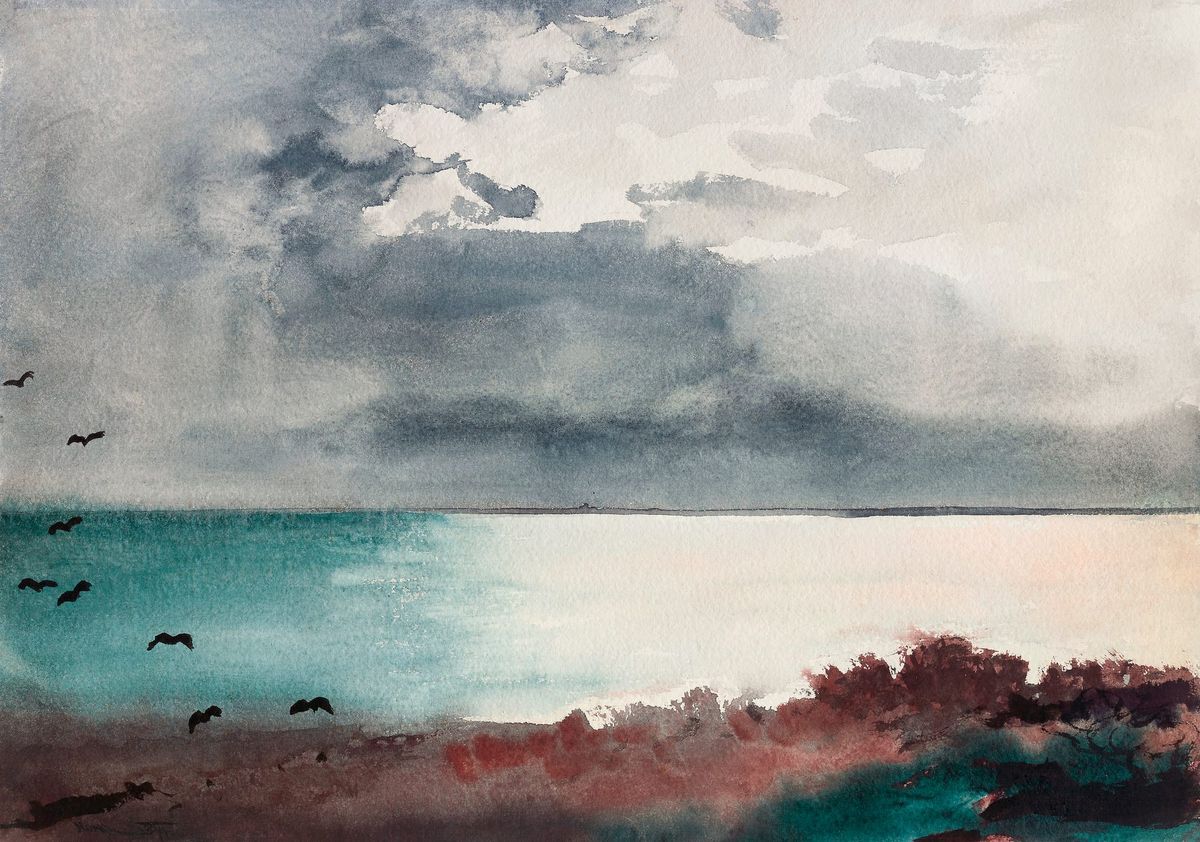
미국 사실주의 미술의 거장 윈슬로 호머(Winslow Homer, 1836–1910)가 1897년경 완성한 수채화 명작 <스쿼럴 아일랜드의 바다 풍경(Marine Coast, Squirrel Island)>은 바다와 하늘, 그리고 거친 대지가 마주하는 순간의 서늘하고 웅장한 대기감을 극대화한 대표작입니다.
이 작품은 가로 50.8cm, 세로 35.6cm 크기의 고급 워브 종이 위에 흑연 연필로 윤곽을 살짝 잡은 후, 투명 수채 물감을 흠뻑 적셔 번지게 하는 웨트 온 웨트(wet-on-wet) 기법과 물감을 닦아내어 종이 본연의 흰색을 살리는 리프팅(lifting) 및 블로팅 기법을 능숙하게 구사하여 제작되었습니다.
현재 미국 시카고 미술관(The Art Institute of Chicago)에 소장되어 있는 이 그림은 메인주 해안가의 작은 섬인 스쿼럴 아일랜드에서 바라본 바다 위로 거대한 먹구름이 낮게 드리우고, 그 아래로 날아오르는 바닷새들과 에메랄드빛 해안이 펼쳐지는 순간을 대담한 색채 대비로 포착하고 있습니다.
이 그림에는 메인주의 거친 해안선과 고독을 지독하게 사랑했던 호머의 인간적인 일화가 깃들어 있습니다. 평소 메인주의 프라우츠 넥 절벽 위에 홀로 작업실을 짓고 세상과의 접촉을 최소화하던 호머는 이웃 섬인 스쿼럴 아일랜드의 한적한 풍경에 매료되어 종종 배를 타고 건너가 야외 스케치를 즐겼습니다.
호머는 날씨가 맑고 온화한 날보다는 바다 안개가 자욱하게 피어오르거나 폭풍이 몰아치기 직전의 극적인 날씨를 유독 좋아했습니다. 어느 날 갑작스러운 돌풍과 소나기가 쏟아지자 주변 사람들은 그에게 서둘러 처마 밑으로 피하라고 소리쳤지만, 호머는 오히려 흠뻑 젖은 붓을 들고 빗속으로 뛰어나가 하늘의 먹구름과 파도의 번짐을 캔버스 위에 담아내며 이제야 진짜 바다의 얼굴이 드러났다고 아이처럼 환호했다는 일화가 전해집니다.
후대의 미술사학자들은 이 작품을 호머의 후기 수채화 중에서도 대담한 추상성과 원숙한 회화적 표현력이 돋보이는 수작으로 평가합니다. 복잡한 세부 묘사를 과감하게 생략하고, 화면을 수평선으로 대담하게 분할하여 하늘의 묵직한 먹빛과 바다의 청록색, 전경의 붉은 흙빛을 강렬하게 대비시킴으로써 20세기 현대 수채화의 새로운 지평을 열었다는 찬사를 받습니다.
작품을 마주할 때 관람자의 무의식적인 시선은 매우 차분하면서도 광활한 파노라마 곡선을 그리며 이동합니다. 관람객의 눈길은 가장 먼저 화면 상단을 묵직하게 짓누르고 있는 드라마틱한 먹구름과 그 틈새로 아스라이 스며 나오는 은은한 빛줄기에 머뭅니다.
이어 시선은 화면 좌측에서 낮게 날갯짓을 하며 날아오르는 검은 바닷새들의 무리를 따라 자연스럽게 내려와, 투명한 에메랄드빛으로 반짝이는 청록색 수면과 수평선 너머의 고요한 흰 여백으로 확장됩니다. 바다의 맑은 빛을 훑은 시선은 마침내 화면 하단에 묵직하게 자리 잡은 붉은 갈색의 해안 관목과 짙은 청록빛 대지로 내려와 완벽한 시각적 균형과 안정감을 찾게 됩니다.
이러한 유려한 시선의 순환은 관람자의 내면에 깊은 심리적 정화와 깊은 내적 평온을 불러일으킵니다. 거친 폭풍의 기운과 고요한 수면의 빛이 교차하는 화면 속 풍경은 복잡한 일상과 스트레스로 가득 찬 현대인의 마음에 서늘하고 청량한 바닷바람을 불어넣어 줍니다.
비바람이 걷히며 서서히 밝아오는 수평선의 빛과 자유롭게 날아가는 새들의 날갯짓은, 어떠한 혼돈과 폭풍우 속에서도 결국 평온이 찾아온다는 깊은 안도감과 내면의 중심을 회복시켜 주는 따뜻한 치유의 에너지를 선사합니다.
Marine Coast, Squirrel Island
Executed around 1897 by the renowned American realist master Winslow Homer (1836–1910), Marine Coast, Squirrel Island stands as a tour de force of watercolor expression, capturing the raw atmospheric grandeur where ocean, tempest, and wild coastlines converge.
Measuring 50.8 cm wide by 35.6 cm high on heavy wove paper, the work exemplifies Homer's consummate watercolor technique, featuring expansive wet-on-wet washes, deliberate wiping and blotting to expose the pristine white ground, and rhythmic brushwork that evokes the shifting light of the North Atlantic.
Preserved in the esteemed permanent collection of The Art Institute of Chicago, this painting presents a panoramic view from Squirrel Island off the coast of Maine, portraying brooding squall clouds hanging low over an emerald shoreline as a flock of coastal birds skims effortlessly above the tide.
Behind this majestic view lies Homer's celebrated affinity for solitude and the dramatic coastal weather of Maine. Living in self-imposed seclusion in his rugged studio at Prouts Neck, Homer frequently sailed to neighboring Squirrel Island, drawn by its pristine isolation and dramatic vistas.
He famously favored volatile weather over placid summer sunshine, waiting eagerly for impending tempests and rolling fog banks. According to local lore, when a sudden maritime squall forced vacationers to scramble for shelter, Homer charged toward the rocky bluffs with his watercolor kit, exclaiming that only in the fury of the storm did the ocean reveal its true and sublime character.
Art historians universally acclaim this piece as a modern milestone in Homer's late career, highlighting its daringly pared-down composition and resonant tonal harmonies. By dividing the pictorial space into bold horizontal bands of storm-laden greys, radiant turquoise, and earthy russets, Homer anticipated twentieth-century modernist landscapes, distilling nature's monumental power into its most elemental forms.
When engaging with the painting, the viewer's unconscious gaze follows an expansive, liberating pathway. The eye is initially drawn to the dramatic turbulence of the bruised, rain-heavy clouds in the upper register, drifting toward the delicate translucency where the sky begins to clear.
The gaze then travels downward alongside the gentle flight path of the seabirds in the lower left, sweeping across the luminous expanse of pale emerald water and the quiet serenity of the open horizon. Descending further, the viewer's focus anchors naturally upon the rich, textured tones of russet ground and deep malachite foliage along the shoreline, grounding the composition in profound spatial harmony.
This rhythmic visual journey fosters an enduring sense of mental clarity and emotional equilibrium. The atmospheric tension of the approaching storm balanced by the incandescent light on the water serves as a natural catalyst for psychological restoration, sweeping away inner restlessness and ambient stress.
By presenting a world where storm and stillness peacefully coexist, Homer offers the observer a tranquil sanctuary of resilience, inspiring a deep-seated inner calm and a renewed sense of clarity amidst the shifting tides of life.
본 리뷰에서 작품을 제외한 컨텐츠의 저작권은 팔렛트제주에 있습니다.
"퍼블릭도메인 고전명화"를 제외한 모든 창작 콘텐츠는 저작권법 제4조 및 제10조에 의거하여 보호됩니다. 무단 도용시 저작권법 제136조(벌칙)에 의거, 당사의 사전 서면 승인 없는 저작권 침해 행위를 금지합니다.