사슴을 모는 사냥꾼 (애디론댁 호수의 추적) - Hound and Hunter / Adirondacks
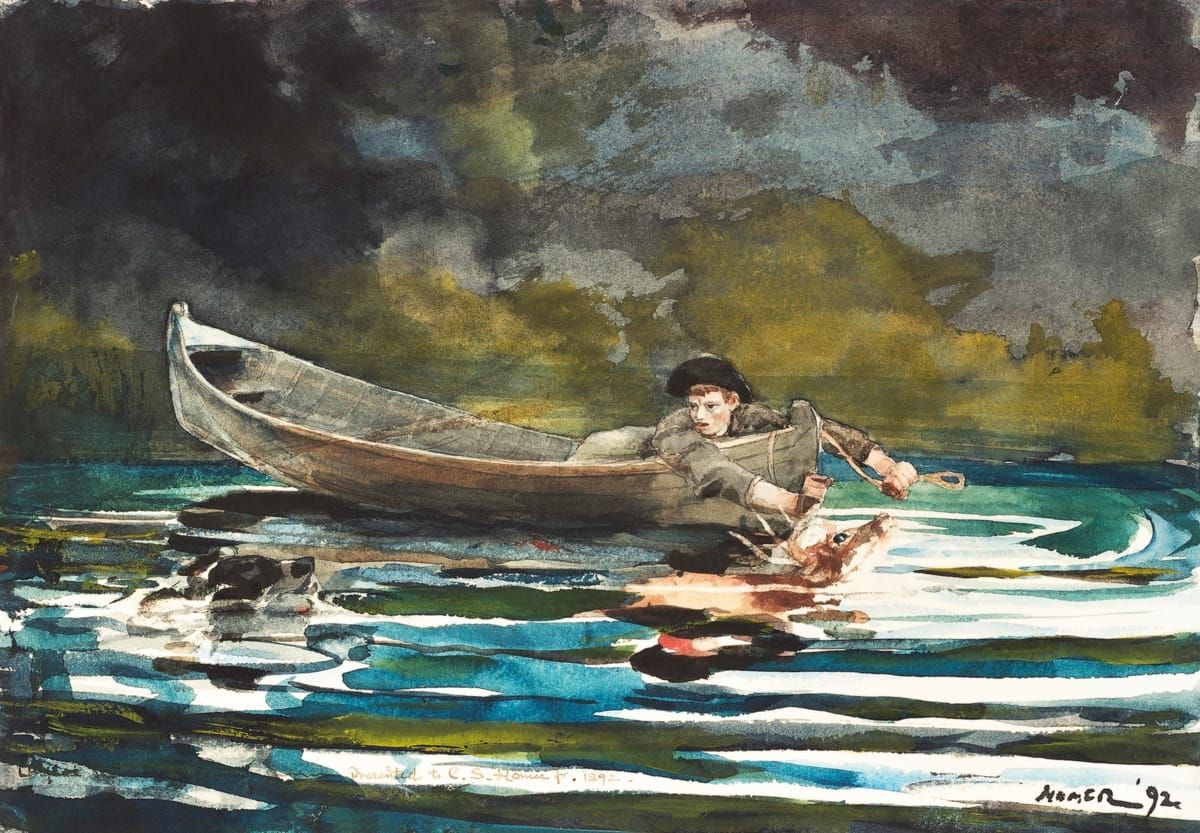
미국의 전설적인 사실주의 거장 윈슬로 호머(Winslow Homer, 1836–1910)가 1892년에 완성한 수채화 걸작 <사슴을 모는 사냥꾼(Hound and Hunter / Adirondacks)>은 짙은 먹구름과 울창한 숲 그늘이 드리워진 호수 위에서 나룻배를 탄 어린 사냥꾼이 물에 빠진 사슴의 뿔을 붙잡고 호숫가를 향해 끌어당기는 긴박한 순간과 원시림의 야생적 숨결을 가장 맑고 대담한 필치로 포착해 낸 수작입니다.
이 작품은 가로 약 50.8cm, 세로 약 35.6cm(약 20 x 14인치) 크기의 고급 워브 종이 위에 흑연 연필로 보트와 인물, 헤엄치는 사슴과 사냥개의 역동적인 윤곽을 정갈하게 잡은 후, 투명 수채 물감의 유려한 번짐과 스며듦으로 먹빛 하늘과 청록색 호수의 물결을 칠하고, 종이 본연의 밝은 흰 여백을 절묘하게 남겨두어 수면 위로 눈부시게 퍼져나가는 은빛 포말과 보트의 선체를 극대화한 혼합 수채 기법으로 완성되었습니다.
현재 미국 주요 미술관 및 유수 프라이빗 컬렉션에서 높이 평가받는 이 그림은 뉴욕주 북부 애디론댁(Adirondacks) 산악 지대의 호수에서, 당시 성행하던 '사냥개 몰이 사냥(Dogging)' 기법을 묘사하고 있으며, 물속으로 뛰어든 사슴을 향해 보트를 저어간 소년이 한 손으로 뿔을 쥐고 다른 손으로 밧줄을 다잡는 가운데 충직한 사냥개가 물살을 가르며 다가오는 생생한 찰나를 담고 있습니다.
이 그림 뒤에는 애디론댁의 노스 우즈 클럽에 머물며 사냥과 낚시, 그리고 북미 야생의 거친 생태계를 직접 체험했던 호머의 깊은 관찰력과 흥미진진한 비하인드가 깃들어 있습니다. 당시 호머는 인간과 자연, 그리고 야생 동물이 생존을 두고 마주치는 드라마틱한 긴장감에 깊은 시각적 매료를 느끼고 있었습니다.
호머는 물살을 가르는 나룻배의 요동과 사슴의 애절한 눈빛을 담아내기 위해 호숫가 바위턱에 이젤을 세웠습니다. 모델을 서주던 소년이 물속의 사슴 모형을 붙잡으려 보트 뱃전에 몸을 깊게 숙이다가 중심을 잃고 호숫물 속으로 풍덩 빠지는 유쾌한 소동이 벌어졌습니다.
물속에서 허우적거리다 배를 잡고 기어오른 소년이 머리를 털며 "호머 아저씨, 사슴을 잡으려다 제가 물고기 밥이 될 뻔했습니다!"라며 껄껄 웃자, 호머 역시 큰 소리로 웃음을 터뜨렸습니다. 호머는 "잠깐, 그대로 가만히 있게! 물에 젖은 채 배를 꽉 잡고 있는 자네의 그 단단한 팔뚝과 찰랑이는 물빛이야말로 오늘 아침 원시림이 내 종이 위에 선물한 가장 진솔한 야생의 숨결이라네!"라며 환호했습니다. 호머는 소년의 생생한 표정과 호수의 물그림자를 놓칠세라 신나게 붓을 놀렸고, 화면 우측 하단에 'HOMER 92' 서명을, 하단 여백 중앙에는 형 찰스 호머에게 헌정하는 친필 글귀를 정성스레 새겨 넣었다는 훈훈한 일화가 전해집니다.
화면 상단을 묵직하게 덮은 짙은 먹구름과 숲의 어두운 실루엣, 보트 좌측 뒤편에서 머리만 내민 채 헤엄쳐 오는 충직한 사냥개의 모습, 그리고 물결 위에 반사된 짙은 청록빛 그림자의 디테일은 호머가 북미 산림의 현장감을 얼마나 진솔하고 세심한 애정으로 관찰했는지를 증명합니다.
미술사학자들은 이 작품을 호머가 1890년대 초반 애디론댁 시절에 이룩한 수채화 기법의 절대적인 정점이자, 훗날 완성된 동명의 대형 유화 걸작의 모태가 된 기념비적 수작으로 평가합니다.
프랑스 인상주의의 색채 효과를 뛰어넘어 투명 수채화의 유동성과 여백을 활용해 물살의 역동성과 거친 야생의 긴장감을 완벽히 형상화했으며, 자연 속에서 벌어지는 생명의 드라마를 어떠한 감상적 과장 없이 인간과 대자연의 본원적 대화로 승화시켰다는 극찬을 받습니다.
작품을 마주할 때 관람자의 무의식적인 시선은 보트의 완만한 호와 물결의 수평선을 따라 매우 긴장감 넘치면서도 매끄러운 타원형 순환 궤적을 그리며 이동합니다. 관람객의 눈길은 가장 먼저 화면 중앙 우측에서 챙 모자를 쓰고 뱃전에 몸을 숙여 사슴의 뿔을 꽉 쥔 소년의 집중된 눈빛과 단단한 어깨 근육에 머뭅니다.
이어 시선은 소년의 손끝을 타고 물속에서 가쁜 숨을 몰아쉬며 헤엄치는 사슴의 젖은 털과 뿔을 거쳐, 수면 위로 맑고 투명하게 일렁이는 은백색 물보라의 층위로 자연스럽게 미끄러져 내려옵니다.
수면을 가르는 은빛 파문을 확인한 시선은 화면 좌측 물살 속에서 고개를 내밀고 열심히 헤엄쳐 오는 검은 사냥개의 귀여운 얼굴과 가볍게 물 위에 떠 있는 하얀 보트의 날렵한 이물로 이동합니다.
이후 시선은 화면 상단을 묵직하게 짓누르는 짙은 먹구름과 호숫가를 둘러싼 황금빛 가을 숲의 서늘한 대기감을 만끽한 뒤, 깊고 푸른 호수의 옥빛 반영을 타고 다시 사슴과 눈을 맞추는 소년의 결연한 자세로 돌아와 깊고 아늑한 시각적 안착을 이룹니다.
이러한 유려한 시선의 순환은 관람자의 내면에 깊은 심리적 정화와 가슴 뛰는 카타르시스를 선물합니다. 화면 가득 펼쳐지는 서늘한 원시림의 공기와 차가운 호숫물이 자아내는 광활한 공간감은, 복잡한 일상의 번잡함과 피로에 지친 현대인의 무의식에 묵은 스트레스와 답답함을 단숨에 씻어내는 짜릿한 해방감과 감각적 활력을 선사합니다.
대자연의 거친 품속에서 순간의 호흡에 온 신경을 집중하며 당당하게 삶을 마주하는 사냥꾼과 야생의 의연한 조화는, 보는 이에게 일상의 번뇌를 내려놓고 삶의 어떤 거센 물결 앞에서도 흔들림 없이 중심을 지켜낼 수 있는 내면의 단단한 용기와 맑은 평정을 되찾아 주는 든든한 치유의 위로를 건냅니다.
Hound and Hunter / Adirondacks
Completed in 1892 by the celebrated American realist master Winslow Homer (1836–1910), the watercolor masterpiece Hound and Hunter (also known as Adirondacks) stands as an extraordinary tour de force capturing the kinetic tension, primal wilderness drama, and shimmering aquatic luminescence of the North Woods with peerless chromatic vigor.
Measuring approximately 50.8 cm wide by 35.6 cm high on fine wove paper, the work showcases Homer's consummate command of transparent watercolor during his celebrated Adirondack retreats, laying down fluid wet-on-wet washes of deep charcoal, viridian, and raw umber across the brooding skies and wooded ridges, while utilizing bold reserves of untouched white paper to articulate the blinding ribbons of water wake and the sunlit gunwale of the skiff.
Preserved and celebrated across prominent public and private American art collections, this painting portrays a dramatic autumn morning on an Adirondack lake in upstate New York, where a young hunter leaning far over the side of his wooden boat grasps the antlers of a swimming deer driven into the water by trailing hounds beneath a storm-laden northern sky.
Behind this electrifying watercolor lies Homer's firsthand experience at the North Woods Club, where he spent autumns observing the rugged practices of local woodsmen. Far from offering sentimental parlor illustration, Homer was deeply drawn to the visceral, unadorned truth of survival and the primal dialogue between man, hound, and wild game in the primeval forest.
Setting up his field stool along the lake shore to study the physics of water displacement and the taut anatomy of the hunter, Homer observed the staging of the scene.
When the youth demonstrating the maneuver leaned too far over the cedar gunwale and lost his balance, tumbling headfirst into the chilly mountain waters, the surrounding forest rang with hearty laughter.
Clambering back aboard while shaking the mountain water from his hair, the boy joked that the deer had nearly taken the boat for itself, prompting Homer to laugh with warm resonance. Homer remarked that the youth's resolute grip and the glistening ripples around the hull were the truest living poetry nature could ever grant an artist's paper. Homer worked with swift, electric washes to capture the fluid wake of the approaching hound and the emerald depths of the water, proudly inscribing 'HOMER 92' in the lower right foreground alongside an affectionate dedication to his brother Charles Savage Homer.
The dense wall of storm clouds rolling across the mountain ridge, the determined head of the hound paddling faithfully in the left wake, and the calligraphic ripples reflecting the forest canopy serve as authentic testaments to Homer's deeply observant eye for the epic reality of wilderness life.
Art historians celebrate this painting as a defining pinnacle of Homer's mature watercolor oeuvre and the vital developmental study that preceded his famous 1892 oil painting of the same theme. By capturing the raw energy of the hunt free from melodrama, Homer elevated a rugged sporting reality into a timeless visual sanctuary of instinctual harmony, physical fortitude, and sublime peace.
When engaging with the painting, the viewer's unconscious gaze undertakes an intensely invigorating and stabilizing visual journey. The eye is initially welcomed by the sun-drenched form of the young hunter in the center right, lingering upon his dark cap, focused profile, and the muscular extension of his arms gripping the antlers.
The gaze then cascades smoothly downward into the water, tracing the wet, glistening head of the swimming buck and the sparkling white wake carving through the emerald lake.
Sweeping toward the left across the rhythmic bands of turquoise water, the viewer's attention discovers the paddling hound making its way toward the boat before taking in the sleek white bow of the skiff.
Finally, ascending into the brooding expanse of dark storm clouds framing the upper forest canopy, the eye settles comfortably back into the balanced, anchored equilibrium of the boat and hunter.
This rhythmic visual journey fosters profound psychological reassurance, cathartic release, and deep emotional stillness within the observer. The tactile immersion in crisp mountain air, cool lake water, and untamed forest silence acts as an intuitive emotional balm, dispelling ambient modern fatigue and soothing inner tension.
By presenting an idyllic world where instinct and focus exist in pure harmony with the raw rhythm of nature, Homer offers the observer a comforting sanctuary of mindfulness, inspiring a deep sense of renewal, inner fortitude, and enduring peace.
본 리뷰에서 작품을 제외한 컨텐츠의 저작권은 팔렛트제주에 있습니다.
"퍼블릭도메인 고전명화"를 제외한 모든 창작 콘텐츠는 저작권법 제4조 및 제10조에 의거하여 보호됩니다. 무단 도용시 저작권법 제136조(벌칙)에 의거, 당사의 사전 서면 승인 없는 저작권 침해 행위를 금지합니다.