사슴들의 안식처 - The Two Guides (Deer in the Adirondacks)
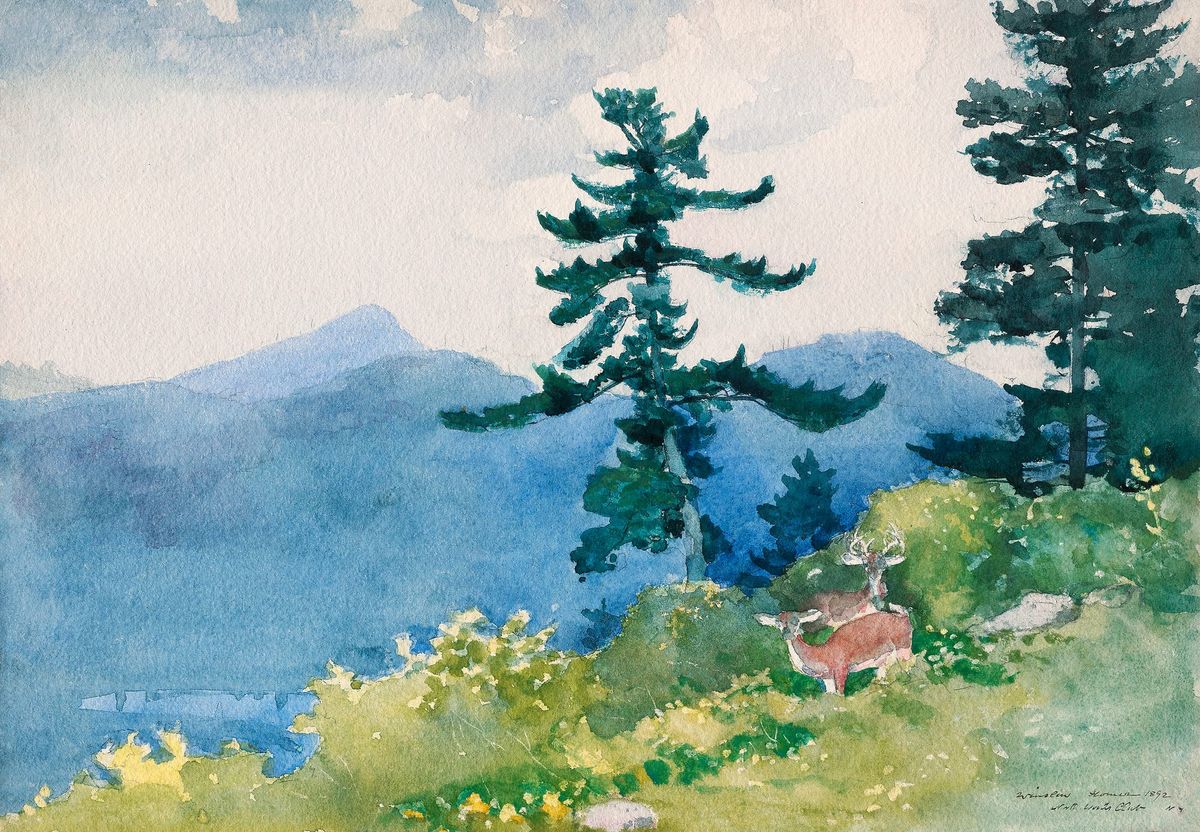
미국의 위대한 사실주의 거장 윈슬로 호머(Winslow Homer, 1836–1910)가 1892년에 완성한 수채화 명작 <사슴들의 안식처(The Two Guides / Deer in the Adirondacks)>는 애디론댁 산맥의 청량한 공기와 야생 동물의 은밀한 평화를 가장 맑고 투명한 색채로 포착해 낸 수작입니다.
이 작품은 가로 50.8cm, 세로 35.6cm 크기의 고급 워브 종이 위에 흑연 연필로 윤곽을 부드럽게 잡은 후, 투명 수채 물감을 겹겹이 스며들게 하는 웨트 온 웨트(wet-on-wet) 기법과 물감을 부분적으로 닦아내어 햇살의 투명함을 살리는 블로팅 기법, 그리고 종이의 흰 여백을 여과 없이 드러내는 방식으로 제작되었습니다.
현재 미국 시카고 미술관(The Art Institute of Chicago)에 소장되어 있는 이 그림은 뉴욕주 북부 애디론댁 산맥의 노스 리버 클럽 인근 고지대에서, 맑은 코발트블루빛 산세를 배경으로 소나무 언덕 풀숲에 자리 잡은 두 마리의 사슴이 인기척을 느끼고 조용히 고개를 드는 찰나의 순간을 담고 있습니다.
이 그림 뒤에는 애디론댁의 원시림과 야생의 생명들을 지독하게 아꼈던 호머의 따뜻하고 인간적인 에피소드가 깃들어 있습니다. 당시 애디론댁 숲에는 도시에서 온 사냥꾼들이 맹견을 풀어 사슴을 호수로 몰아넣고 무자비하게 쏘아 죽이는 몰이 사냥(hounding)이 성행하고 있었습니다.
사냥 클럽의 회원이었음에도 불구하고 생명을 파괴하는 잔혹한 방식에 깊은 분노를 느꼈던 호머는 현지 가이드들에게 동물들을 무분별하게 사냥하지 말 것을 자주 당부하곤 했습니다.
어느 화창한 날, 호머는 숲속 깊은 능선에서 소나무 그늘 아래 한가로이 풀을 뜯던 암사슴과 수사슴을 마주쳤습니다. 총을 든 사냥꾼 대신 화구 상자를 멘 화가를 발견한 사슴들이 경계심을 풀고 호기심 어린 눈망울로 그를 바라보자, 호머는 숨을 죽인 채 자리에 주저앉아 바람에 흔들리는 소나무와 사슴들의 고요한 눈빛을 종이 위에 번져 나가는 푸른 물감으로 정성스럽게 담아냈습니다.
훗날 미술사학자들은 이 작품을 호머가 남긴 애디론댁 수채화 연작 중에서도 자연에 대한 깊은 경외감과 생명 존중의 시선이 가장 순수하게 빛나는 걸작으로 평가합니다. 웅장한 푸른 산세와 바람을 맞으며 우뚝 선 고독한 소나무, 그리고 화면 구석에서 숨 쉬는 작은 사슴들의 조화는 인간의 탐욕이 닿지 않은 태고의 순수성을 완벽한 미적 균형으로 승화시켰다는 극찬을 받습니다.
작품을 마주할 때 관람자의 무의식적인 시선은 매우 편안하고 입체적인 시각적 순환을 경험합니다. 관람객의 눈길은 가장 먼저 화면 중앙에서 푸른 하늘을 향해 당당하게 뻗어 있는 짙푸른 소나무의 수직적인 실루엣과 그 뒤로 아득하게 펼쳐진 맑은 능선에 닿습니다.
이어 시선은 화면 우측 하단의 싱그러운 연두빛 풀밭으로 미끄러져 내려가, 수풀 사이에 평화롭게 몸을 숨긴 채 맑은 눈을 반짝이는 두 마리 사슴의 부드러운 갈색 털과 하얀 뿔에 머뭅니다. 이후 시선은 화면 좌측으로 완만하게 번져 나가는 코발트빛 산봉우리와 투명한 구름 사이를 여유롭게 훑으며 광활한 자연의 공간감 속으로 확장됩니다.
이러한 유려한 시선의 이동은 관람자의 내면에 깊은 심리적 안정감과 맑은 정서적 정화를 불러일으킵니다. 복잡한 도심의 소음과 피로에 짓눌린 현대인의 무의식에 애디론댁 고원 지대의 서늘하고 깨끗한 피톤치드 공기가 스며들며 굳어 있던 긴장감을 부드럽게 이완시켜 줍니다.
어떤 위협도 없이 안전한 숲속 안식처에서 평온한 시간을 누리는 사슴들의 모습은, 바쁜 일상을 살아가는 이들에게 모든 번민을 잠시 내려놓고 내면의 순수한 평정과 따뜻한 쉼을 회복할 수 있는 치유의 에너지를 선사합니다.
The Two Guides (Deer in the Adirondacks)
Completed in 1892 by the celebrated American realist master Winslow Homer (1836–1910), the watercolor masterpiece The Two Guides (Deer in the Adirondacks) stands as an exquisite testament to the atmospheric clarity of the Adirondack wilderness and the quiet sanctuary of its native creatures.
Measuring 50.8 cm wide by 35.6 cm high on heavy wove paper, the work showcases Homer's consummate watercolor technique through luminous wet-on-wet washes, delicate blotting, and the masterful preservation of the bare white ground to convey crisp mountain air and shifting sunlight.
Preserved in the prestigious permanent collection of The Art Institute of Chicago, this painting captures an intimate moment near the North River Club in upstate New York, where two white-tailed deer rest on a sunlit slope beneath a lone pine against majestic cobalt peaks.
Behind this tranquil landscape lies Homer's deep reverence for the primeval forest and his affectionate bond with the living creatures of the wild. During this period, the Adirondacks were frequently overrun by aggressive hunting parties utilizing hounds to drive exhausted deer into lakes for effortless shooting, a commercialized practice that deeply unsettled Homer.
Although an avid outdoorsman and club member, Homer consistently advocated for the preservation of wildlife and frequently urged local woodsmen to treat the native fauna with respect.
According to regional lore, Homer encountered this pair of deer resting peacefully in an open clearing high above the valleys. Instead of reaching for a sporting rifle, the solitary artist quietly unstrapped his watercolor kit, captivated by the absolute stillness of the animals as they met his gaze with gentle curiosity amidst the sun-dappled pine boughs.
Art historians celebrate this watercolor as one of the purest and most poetically balanced compositions of Homer's mature period. The harmonious interplay between the resilient vertical evergreen, the ethereal indigo mountain ridges, and the delicate vulnerability of the resting deer transcends traditional genre painting, offering a profound visual meditation on untouched nature and ecological peace.
When engaging with the painting, the viewer's unconscious gaze undertakes an inherently restorative and grounding visual journey. The eye is initially drawn to the sculptural pine tree anchoring the center of the composition, before drifting toward the expansive indigo gradients of the distant peaks.
The gaze then travels gently down into the luminous yellow-green mosses of the foreground ridge, discovering the warm russet tones and alert, graceful forms of the two deer resting securely among the foliage. Sweeping outward across the broad washes of the blue valley, the viewer's attention settles into the open sky, enveloped by a sense of boundless natural space.
This rhythmic visual journey fosters profound psychological tranquility and mental clarity within the observer. The serene mountain vista and atmospheric washes act as a natural emotional filter, gently dissolving latent tension and replacing ambient stress with crisp alpine stillness.
By depicting wild creatures existing in complete safety and serene repose, Homer offers the observer a comforting sanctuary of mindfulness, inviting modern minds to discover inner equilibrium, gentle restoration, and enduring peace.
본 리뷰에서 작품을 제외한 컨텐츠의 저작권은 팔렛트제주에 있습니다.
"퍼블릭도메인 고전명화"를 제외한 모든 창작 콘텐츠는 저작권법 제4조 및 제10조에 의거하여 보호됩니다. 무단 도용시 저작권법 제136조(벌칙)에 의거, 당사의 사전 서면 승인 없는 저작권 침해 행위를 금지합니다.