사냥꾼 - The Hunter
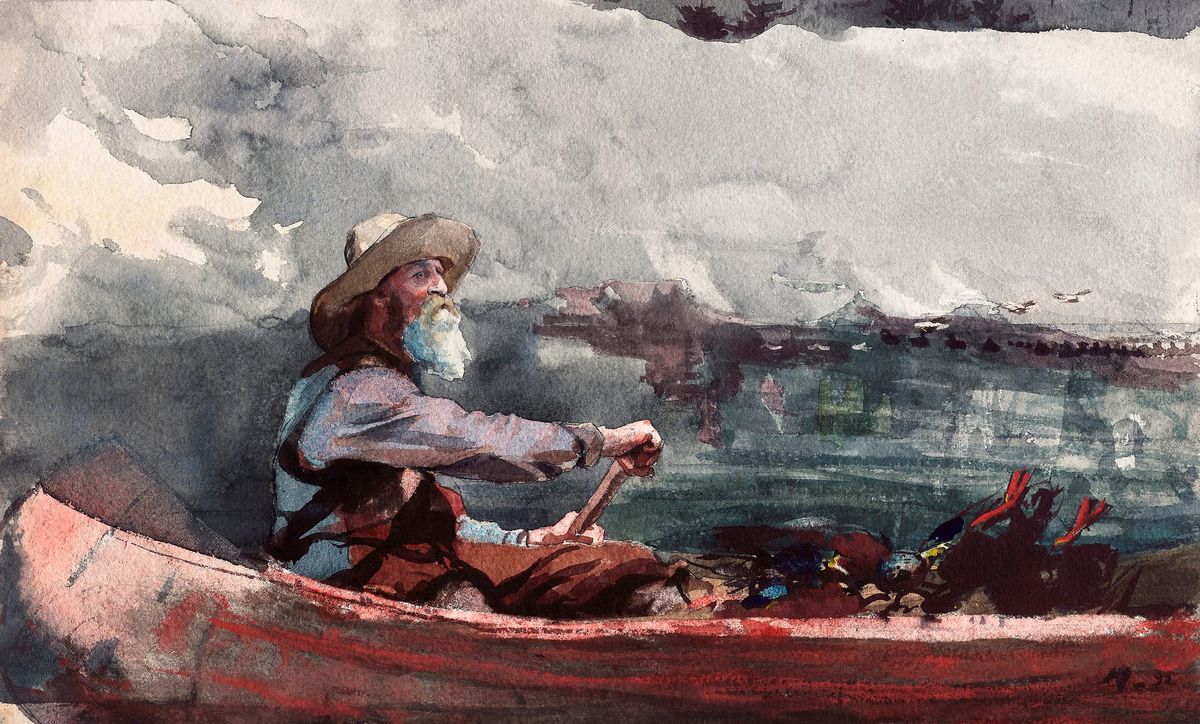
미국의 전설적인 사실주의 화가 윈슬로 호머(Winslow Homer, 1836–1910)가 1892년에 완성한 수채화 명작 <사냥꾼(The Hunter)>은 애디론댁(Adirondacks) 숲의 깊은 고요와 야생의 삶을 살아가는 베테랑 사냥꾼의 숭고한 침묵을 담아낸 걸작입니다.
이 작품은 가로 50.8cm, 세로 35.6cm 크기의 두툼한 고급 워브 종이 위에 연필로 최소한의 골격을 잡은 후, 투명 수채 물감을 촉촉하게 스며들게 하는 웨트 온 웨트(wet-on-wet) 기법과 물감을 긁어내어 질감을 살리는 스크래칭, 닦아내기(blotting) 기법을 자유자재로 구사하여 제작되었습니다.
현재 미국 시카고 미술관(The Art Institute of Chicago)에 소장되어 있는 이 그림은 잔잔하게 안개가 피어오르는 애디론댁 호수 위에서 붉은 카누를 탄 백발의 늙은 사냥꾼이 방금 사냥한 야생 오리들을 뱃머리에 싣고 조용히 노를 저어 나아가는 순간을 포착하고 있습니다.
이 그림 속 주인공은 호머가 뉴욕주 북부 노스 리버 낚시 클럽에 머물 때마다 깊은 우정을 나누었던 현지 산림 가이드이자 노련한 사냥꾼 오빌 톰슨(Orville Thompson)입니다. 호머는 대도시의 화려한 사교 생활을 끔찍이 싫어했던 반면, 숲의 냄새와 야생의 법칙을 온몸으로 체득한 톰슨과 같은 순박한 가이드들과는 막역한 친구로 지냈습니다.
호머의 숲속 캠프 생활에는 재미있는 일화가 많습니다. 호머는 낚시와 사냥을 떠날 때마다 무거운 수채화 화구 상자를 절대 손에서 놓지 않았는데, 톰슨이 호수 위에서 오리 떼를 발견하고 긴장하여 총을 겨누는 찰나에도 호머는 카누가 흔들리든 말든 아랑곳하지 않고 물에 젖은 종이 위에 신들린 듯 붓을 놀려 톰슨을 당황하게 만들곤 했습니다.
사냥을 마친 후 뱃머리에 놓인 오리의 깃털 색채와 호수의 물안개, 그리고 톰슨의 하얀 턱수염에 쏟아지는 아침 햇살을 본 호머는 "잠깐 그대로 멈추게, 오빌! 지금 이 순간은 사냥총보다 내 붓이 더 급하네!"라고 외치며 카누 위에서 즉석 스케치를 완성했다는 유쾌한 일화가 전해집니다.
미술사학자들은 이 작품을 호머의 애디론댁 수채화 연작 중에서도 인간과 자연의 공존을 가장 우아하고 밀도 높게 표현한 백미로 꼽습니다. 잿빛 하늘의 묵직한 구름과 에메랄드빛 수면, 그리고 카누의 붉은 톤과 오리 깃털의 선명한 푸른빛이 만들어내는 완벽한 색채의 화음은 미국 사실주의 미술의 정점을 보여줍니다.
작품을 감상할 때 관람자의 무의식적인 시선은 매우 안정적이고 깊이 있는 대각선 궤적을 그리며 이동합니다. 관람객의 눈길은 가장 먼저 화면 좌측에서 햇빛을 받아 하얗게 빛나는 사냥꾼의 멋진 턱수염과 그의 낡은 밀짚모자, 그리고 노를 쥔 다부진 손에 머뭅니다.
이어 시선은 그가 타고 있는 붉은 목조 카누의 유려한 능선을 따라 우측 하단으로 자연스럽게 미끄러져 내려가며, 뱃머리에 놓인 야생 오리의 붉은 다리와 푸른빛 깃털의 생생한 색채를 마주합니다. 이후 시선은 호수 너머로 아득하게 펼쳐진 짙푸른 숲의 그림자와 하늘을 가득 메운 몽환적인 잿빛 먹구름으로 부드럽게 상승하여 공간 전체를 포용합니다.
이러한 유려한 시선의 순환은 관람자의 내면에 깊은 심리적 해방감과 내적 고요를 선물합니다. 카누를 타고 안개 자욱한 호수를 미끄러지듯 나아가는 사냥꾼의 차분한 옆모습은 복잡한 일상의 번잡함과 피로에 지친 현대인의 마음에 깊은 숲속의 서늘하고 맑은 공기를 불어넣어 줍니다.
자연에 맞서 소란을 피우지 않고 물결의 흐름에 몸을 맡긴 채 조용히 하루를 일구어 가는 인물의 묵직한 자태는, 보는 이에게 번민을 내려놓고 삶의 본질적인 평온을 마주하게 하는 숭고한 치유의 위로를 전합니다.
The Hunter
Executed in 1892 by the celebrated American realist master Winslow Homer (1836–1910), the watercolor masterpiece The Hunter stands as an evocative tour de force capturing the primeval stillness of the Adirondack wilderness and the quiet dignity of a veteran woodsman.
Measuring 50.8 cm wide by 35.6 cm high on heavy wove paper, the work showcases Homer's consummate watercolor technique through fluid wet-on-wet washes, deliberate blotting, and delicate surface scraping that brilliantly conveys atmospheric moisture and shifting mountain light.
Preserved in the prestigious permanent collection of The Art Institute of Chicago, this painting masterfully portrays a silver-bearded hunter guiding his reddish canoe across a mist-laden lake, carrying his harvested waterfowl in the bow after an early morning pursuit.
The central protagonist is Orville Thompson, an experienced Adirondack guide with whom Homer formed a close and enduring camaraderie during his stays at the North River Game and Trout Club. While Homer shunned the pretentious social circles of major cities, he found genuine kinship among rustic woodsmen who lived in complete harmony with the cycles of the forest.
Camp life in the Adirondacks was filled with lively and humorous moments between the painter and his wilderness companions. Homer famously carried his portable watercolor box alongside his rifle and fishing gear; whenever Thompson spotted wild game on the water and prepared to shoot, Homer was often already frantically applying wet washes to his paper, completely unbothered by the swaying canoe.
According to local accounts, upon seeing the dramatic reflection of the morning light across the mist, Thompson's weathered beard, and the vibrant plumage of the waterfowl, Homer shouted for him to freeze in place, joking that his brush was far more urgent than any hunting rifle at that precise second.
Art historians universally acclaim this watercolor as a supreme achievement in Homer's mature career, praising its exquisite chromatic balance. The subtle interplay between the bruised silver-grey sky, the deep emerald forest reflections, the warm vermilion canoe, and the iridescent sapphire tones of the duck feathers elevates the scene into a monumental meditation on nature and human existence.
When engaging with the painting, the viewer's unconscious gaze undertakes an inherently restorative and grounding visual journey. The eye is initially drawn to the hunter's profile illuminated by gentle sunlight, resting upon his distinguished white beard, weathered hat, and hands grasping the paddle.
The gaze then travels smoothly along the sweeping curve of the wooden canoe toward the lower right, discovering the rich textures and brilliant accents of the harvested game resting peacefully in the hull. Rising naturally from the water, the viewer's attention drifts across the deep shadowed tree line and into the luminous, vaporous clouds dominating the upper sky.
This rhythmic visual journey fosters profound psychological tranquility and emotional stillness within the observer. The serene passage of the canoe across silent mountain waters gently soothes internal tension, offering a restorative mental refuge akin to breathing crisp forest air at daybreak.
By portraying a solitary figure moving in effortless harmony with the untamed elements, Homer invites the viewer to step away from modern turmoil, offering a profound sanctuary of mindfulness, quiet fortitude, and enduring inner peace.
본 리뷰에서 작품을 제외한 컨텐츠의 저작권은 팔렛트제주에 있습니다.
"퍼블릭도메인 고전명화"를 제외한 모든 창작 콘텐츠는 저작권법 제4조 및 제10조에 의거하여 보호됩니다. 무단 도용시 저작권법 제136조(벌칙)에 의거, 당사의 사전 서면 승인 없는 저작권 침해 행위를 금지합니다.