표류 후 - After the Hurricane, Bahamas
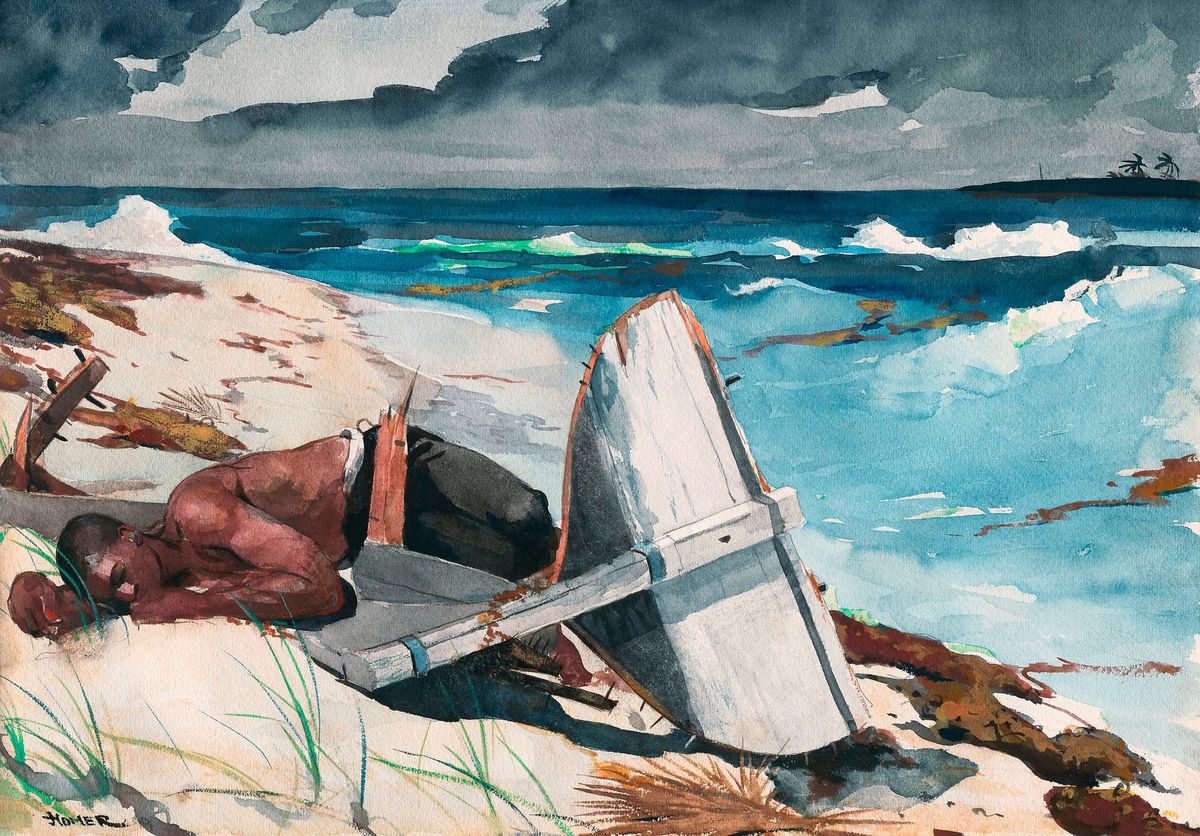
미국의 대표적인 사실주의 거장 윈슬로 호머(Winslow Homer, 1836–1910)가 1899년에 완성한 투명 수채화 걸작 <표류 후(After the Hurricane, Bahamas)>는 카리브해의 잔혹한 폭풍우와 한 인간의 끈질긴 생명력이 마주하는 순간을 극적으로 담아낸 대표작입니다.
이 작품은 가로 54.3cm, 세로 37.9cm 크기의 두툼한 고급 워브 종이 위에 연필 스케치 없이 대담하게 붓을 대어 투명 수채 물감의 농담을 살리고, 물감을 긁어내거나 닦아내는 기법을 자유자재로 구사하여 제작되었습니다.
현재 미국 시카고 미술관(The Art Institute of Chicago)에 소장되어 있는 이 그림은 격렬한 허리케인이 휩쓸고 지나간 바하마의 해변에 산산조각 난 배의 잔해와 함께 기적적으로 모래사장에 떠밀려와 깊은 잠 혹은 탈진에 빠진 흑인 선원의 모습을 담고 있습니다.
이 작품은 호머의 대표작인 유화 <멕시코 만류>의 서사적 결말과도 밀접하게 연결되어 있어 미술사적으로 매우 흥미로운 비하인드를 지니고 있습니다. 메트로폴리탄 미술관에 걸린 <멕시코 만류>에서 부서진 배 위에서 상어 떼에 둘러싸인 채 표류하던 남자의 운명을 두고 당대 관람객들이 죽었는지 살았는지를 따지며 집요하게 편지를 보내자, 호머는 그 남자가 폭풍우를 견뎌내고 무사히 해변에 닿아 편히 쉬고 있다는 유쾌한 안도감을 이 수채화를 통해 시각적으로 증명해 보였습니다.
호머는 매서운 겨울 추위를 피해 바하마의 나소에 머물며 허리케인이 지나간 직후의 해변을 거닐곤 했습니다. 그는 현지 어부들이 폭풍에 부서진 목선을 수습하고 거친 파도 속에서도 살아남는 강인한 생명력에 깊은 경외심을 느꼈습니다.
호머는 부서진 뱃머리의 나무 파편과 모래사장에 파묻힌 잔해들을 화폭에 담기 위해 젖은 모래 위에 직접 앉아 그림을 그렸는데, 햇볕에 빠르게 마르는 수채 물감의 성질을 이용해 부서지는 파도의 포말과 모래의 눈부신 백색을 종이의 여백으로 남겨두는 천재적인 감각을 발휘했습니다.
미술사학자들은 이 작품을 호머가 구사한 수채화 기법의 절대적 정점으로 평가합니다. 하늘을 짓누르는 어두운 먹구름과 에메랄드빛 카리브해의 투명한 파도, 그리고 눈부신 백사장의 강렬한 색채 대비는 자연의 파괴적인 위력과 그 뒤에 찾아오는 고요한 생명의 안식을 완벽한 균형으로 포착했다는 격찬을 받습니다.
작품을 마주할 때 관람자의 무의식적인 시선은 매우 극적이면서도 안도감을 주는 궤적을 그리며 움직입니다. 관람객의 눈길은 가장 먼저 화면 좌측 하단에 단단한 근육을 지닌 채 모래사장에 엎드려 있는 선원의 붉은 갈색 피부와 평온하게 감긴 눈에 가닿습니다.
이어 시선은 그를 지탱하고 있는 부서진 뱃머리의 하얀 판자와 날카롭게 부러진 나무 파편을 따라 대각선으로 상승한 뒤, 배경에 짙게 깔린 묵직한 회색 먹구름과 거칠게 포말을 일으키는 푸른 파도로 확장됩니다. 위태로웠던 바다의 흔적을 훑은 시선은 다시 잔잔하게 밀려드는 에메랄드빛 해변의 물결을 타고 내려와 모래밭에 돋아난 싱그러운 초록빛 풀잎들로 이어집니다.
이러한 유려한 시선의 순환은 관람자의 내면에 깊은 카타르시스와 심리적 안도감을 불러일으킵니다. 화면을 가득 채운 난파의 흔적에도 불구하고, 거친 사투 끝에 마침내 단단한 대지에 닿아 숨을 고르는 주인공의 모습은 관람객의 무의식 속에 잠재된 피로와 긴장감을 눈 녹듯 씻어내 줍니다.
삶의 거센 풍파와 절체절명의 위기 속에서도 끝내 살아남아 평온한 대지 위에 몸을 뉘인 선원의 모습은, 치열한 일상을 견뎌내는 현대인들에게 어떤 시련도 결국 지나가고 안식의 순간이 찾아온다는 묵직한 위로와 내면의 치유를 선사합니다.
After the Hurricane, Bahamas
Executed in 1899 by the eminent American realist master Winslow Homer (1836–1910), the watercolor masterpiece After the Hurricane, Bahamas represents an extraordinary tour de force that captures the raw fury of nature alongside the indomitable resilience of the human spirit.
Measuring 54.3 cm wide by 37.9 cm high on heavy wove paper, the work showcases Homer's virtuoso watercolor technique through saturated wet-on-wet washes, deliberate scraping, and the masterful preservation of the bare white paper to depict the incandescent Caribbean surf and sand.
Preserved in the prestigious permanent collection of The Art Institute of Chicago, this painting dramatically portrays a solitary Black mariner who, having survived a catastrophic tropical storm, lies exhausted yet alive upon the sunlit sands beside the wreckage of his shattered boat.
This work carries a fascinating art historical narrative closely linked to Homer's iconic oil painting The Gulf Stream. When anxious patrons and critics incessantly pestered Homer regarding the ultimate fate of the sailor adrift among sharks in the open ocean, this breathtaking watercolor served as an evocative testament that the voyager had indeed survived the tempest and reached the safety of the shore.
Seeking respite from the harsh northern winters, Homer spent considerable time in Nassau, Bahamas, wandering the coastlines in the immediate wake of violent tropical hurricanes. He felt a profound reverence for the local fishermen who faced the perilous Atlantic with quiet dignity and unyielding courage.
Homer painted directly upon the storm-swept beaches, capturing the fleeting transitions of coastal light. Rather than relying on heavy opaque pigments, he brilliantly reserved the white ground of the paper to render the glare of the coral beach and the frothing crests of the receding breakers.
Art historians universally celebrate this watercolor as one of the supreme pinnacles of Homer's mature oeuvre. The dramatic tonal contrast between the bruised storm clouds, the luminous turquoise sea, and the warm flesh tones of the castaway elevates the scene beyond mere reportage, transforming it into a timeless monument to human survival and existential endurance.
When engaging with the painting, the viewer's unconscious gaze undertakes a deeply restorative and reassuring psychological journey. The eye is initially drawn to the reclining mariner in the lower left, whose powerful physique and resting profile emanate profound relief and organic stillness.
The gaze then travels along the jagged diagonal of the broken white hull, ascending toward the retreating thunderheads on the horizon and sweeping across the churning ribbons of cobalt and emerald water. After confronting the lingering energy of the sea, the viewer's focus descends gently onto the delicate green blades of coastal grass and warm coral sands in the foreground.
This rhythmic visual journey instills an enduring sense of emotional release and mental stillness. While the remnants of wreckage bear witness to a harrowing struggle, the mariner's safe arrival upon solid ground acts as a profound psychological anchor, dispelling latent anxiety and ambient stress.
By framing survival as a moment of tranquil repose rather than tragic defeat, Homer offers the observer a comforting sanctuary of resilience, gently reminding us that even after the most devastating storms of life, peace, grounding, and renewal inevitably await.
본 리뷰에서 작품을 제외한 컨텐츠의 저작권은 팔렛트제주에 있습니다.
"퍼블릭도메인 고전명화"를 제외한 모든 창작 콘텐츠는 저작권법 제4조 및 제10조에 의거하여 보호됩니다. 무단 도용시 저작권법 제136조(벌칙)에 의거, 당사의 사전 서면 승인 없는 저작권 침해 행위를 금지합니다.