오래된 밑동 - The Old Squaw
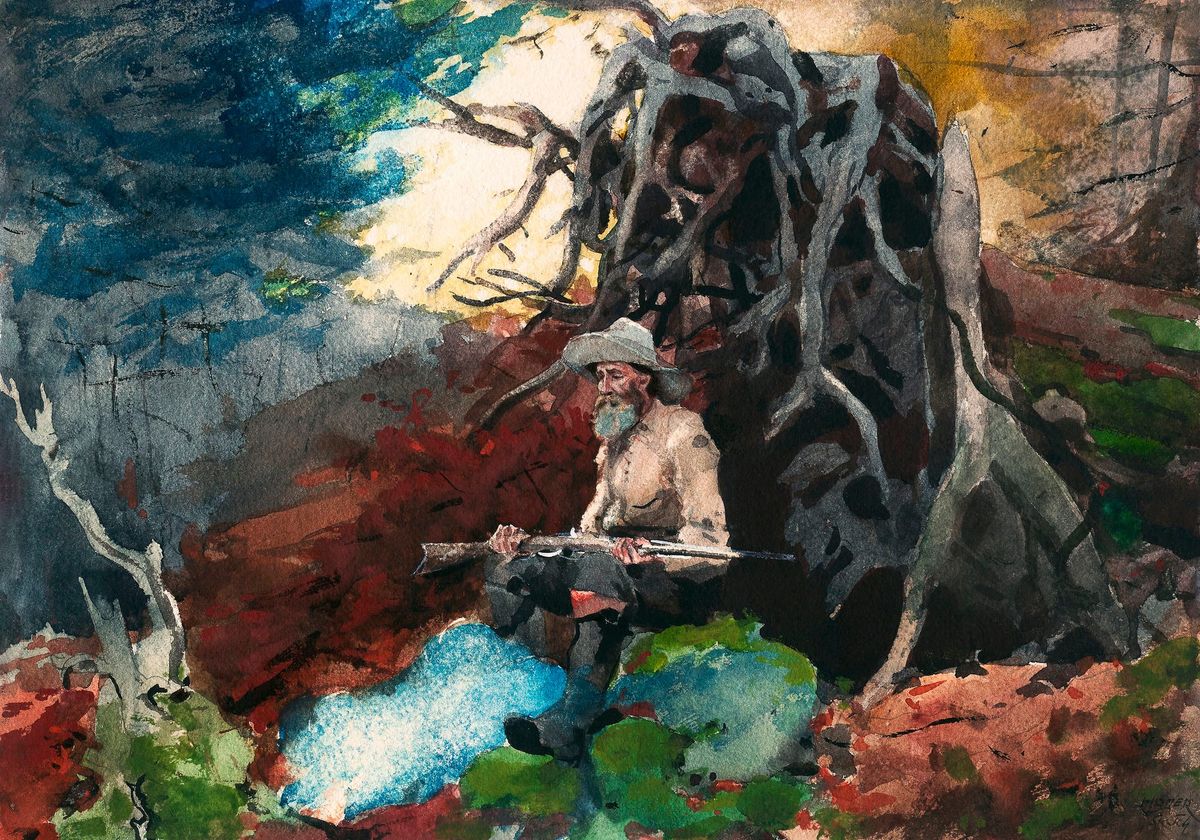
미국의 전설적인 사실주의 화가 윈슬로 호머(Winslow Homer, 1836–1910)가 1892년에 완성한 수채화 명작 <오래된 밑동(The Old Squaw)>은 애디론댁(Adirondacks) 숲의 원시적인 야생미와 한 노련한 사냥꾼의 숨결을 완벽하게 포착한 대표작입니다.
이 작품은 가로 50.8cm, 세로 35.6cm 크기의 고급 워브 종이 위에 연필 스케치 후 투명 수채 물감을 겹겹이 스며들게 하는 농밀한 수채 기법과 불투명 과슈, 그리고 종이 표면을 긁어내어 질감을 살리는 스크래칭 기법을 능숙하게 구사하여 제작되었습니다.
현재 미국 시카고 미술관(The Art Institute of Chicago)에 소장되어 있는 이 그림은 폭풍우에 뿌리째 뽑힌 거대한 고목의 그루터기 아래에 걸터앉아 소총을 무릎에 얹은 채 조용히 숲의 기척을 살피는 나이 든 사냥꾼의 사색적인 순간을 담고 있습니다.
작품 속 주인공은 호머가 애디론댁 숲을 찾을 때마다 가장 신뢰했던 전설적인 현지 산림 가이드 오빌 톰슨(Orville Thompson)입니다. 1889년부터 뉴욕주 북부의 노스 리버 클럽 회원으로 활동하던 호머는 화려한 도심의 사교계를 완전히 뒤로하고, 이처럼 거칠고 순박한 현지 사냥꾼들과 숲속 캠프에서 침식을 함께하며 우정을 나누었습니다.
당시 호머는 숲속 깊은 곳으로 들어갈 때마다 무거운 화구 상자와 낚싯대, 사냥총을 한꺼번에 짊어지고 다녔는데, 톰슨을 비롯한 현지 가이드들은 이 유명한 뉴욕 화가가 비바람이 몰아치거나 모기 떼가 극성을 부리는 험악한 숲속에서도 미동조차 없이 바위 위에 앉아 스케치에만 몰두하는 모습에 혀를 내둘렀다고 회고했습니다.
호머는 톰슨에게 특별한 포즈를 요구하지 않고 자연스럽게 숲과 하나가 되어 쉬고 있는 모습을 포착했습니다. 쓰러진 고목의 엉킨 뿌리와 사냥꾼의 하얗게 센 수염, 낡은 사냥복이 절묘하게 어우러지는 광경을 보며 호머는 거친 야생 속에서 나이 들어가는 인간과 자연의 장엄한 동화에 깊은 전율을 느꼈습니다.
미술사학자들은 이 작품을 호머의 원숙기 수채화 중에서도 색채의 깊이와 공간 구성이 가장 뛰어난 걸작 중 하나로 평가합니다. 푸른빛이 감도는 숲의 그늘과 타오르는 듯한 붉은 단풍, 이끼 낀 바위의 질감을 맑은 수채 번짐으로 대비시키며, 단순한 풍속화를 넘어 숲의 순환과 세월의 무게를 은유하는 숭고한 서사시로 끌어올렸습니다.
작품을 마주할 때 관람자의 무의식적인 시선은 매우 차분하고 입체적인 나선형 경로를 따라 움직입니다. 관람객의 눈길은 가장 먼저 화면 정중앙에서 밝은 햇살을 머금고 있는 사냥꾼의 모자와 흰 턱수염, 그리고 그의 무릎 위에 정갈하게 놓인 긴 소총의 수평선에 가닿습니다.
이어 시선은 그의 등 뒤로 거대하게 솟아오른 기괴하고 힘찬 고목의 뿌리를 타고 올라가 화면 상단의 짙푸른 숲의 공기와 스며드는 빛을 마주하게 됩니다. 위쪽의 웅장한 자연을 훑은 시선은 다시 사냥꾼의 발아래에 깔린 푸른 이끼 낀 바위와 화면 좌우를 가득 메운 붉은 낙엽의 따뜻한 색채로 내려와 자연스러운 안착을 이룹니다.
이러한 유려한 시선의 순환은 관람자의 내면에 깊은 심리적 안도감과 원초적인 평온을 선사합니다. 복잡한 소음과 시각적 과부하에 짓눌린 현대인의 무의식에 울창한 숲이 품고 있는 차분한 침묵과 피톤치드의 서늘한 공기가 스며들어 복잡한 잡념을 정화해 줍니다.
자연에 맞서 정복하려 들지 않고, 거대한 나무 밑동 아래에서 조용히 숲의 숨소리에 귀를 기울이는 노인의 평온한 자태는 보는 이로 하여금 깊은 내적 쉼과 삶의 중심을 되찾는 단단한 위로를 느끼게 합니다.
The Old Squaw
Completed in 1892 by the celebrated American realist master Winslow Homer (1836–1910), the watercolor masterpiece The Old Squaw represents a pinnacle of American landscape painting, capturing the primeval vitality of the Adirondack wilderness alongside the seasoned soul of a veteran woodsman.
Measuring 50.8 cm wide by 35.6 cm high on heavy wove paper, the work showcases Homer's virtuoso technical brilliance through layers of fluid, luminous watercolor washes, refined opaque gouache, and delicate surface scraping that texturizes the rugged elements.
Preserved in the permanent collection of The Art Institute of Chicago, this painting masterfully depicts an aging hunter resting beneath the massive root system of an upturned tree, his rifle balanced calmly across his knees as he listens to the quiet rhythms of the deep forest.
The central figure in the painting is Orville Thompson, an experienced local guide whom Homer deeply trusted during his frequent expeditions into the Adirondack Mountains. Having joined the North River Game and Trout Club in 1889, Homer retreated entirely from urban society to share rustic cabin life with these humble, resilient woodsmen.
Homer often ventured into the untamed backcountry carrying his heavy painting gear, fishing tackle, and sporting rifle. Local guides fondly recalled how the distinguished New York artist would sit completely motionless on damp boulders amidst biting wind or swarming insects, entirely absorbed in capturing the fleeting shifts of mountain light.
Rather than staging an artificial pose, Homer captured Thompson in a moment of organic repose. Observing how the tangled, weathered roots of the fallen cedar mirrored the hunter's silver beard and rustic attire, Homer found profound inspiration in the quiet harmony between aging humanity and the enduring cycles of nature.
Art historians celebrate this watercolor as one of the finest achievements of Homer's mature period, extolling his dramatic interplay between luminous cobalt shadows, fiery autumn foliage, and moss-laden earth. The painting transcends traditional sporting imagery, evolving into an evocative meditation on time, survival, and the dignified spirit of the American wilderness.
When engaging with the painting, the viewer's unconscious gaze undertakes an inherently grounding and restorative journey. The eye is initially drawn to the hunter's sunlit profile, his silver beard, and the steady horizontal line of the rifle resting quietly in his hands.
The gaze then ascends through the dramatic, sculptural roots of the ancient stump, drifting into the cool, shadowed canopy and warm ambient light above. Sweeping downward through the rich, fiery russets of the forest floor, the viewer's attention settles upon the vivid turquoise and mossy stones beneath the hunter's feet, establishing a profound sense of compositional balance.
This rhythmic visual journey fosters deep psychological tranquility and mental clarity within the observer. The serene atmosphere of the ancient woods gently diffuses ambient anxiety, providing a mental refuge akin to taking a deep breath of fresh mountain air amidst primeval stillness.
By portraying a solitary man at peace within the vast quietude of the wild, Homer invites the viewer to step away from modern turmoil, offering a profound sanctuary of mindfulness, inner resilience, and enduring contemplation.
본 리뷰에서 작품을 제외한 컨텐츠의 저작권은 팔렛트제주에 있습니다.
"퍼블릭도메인 고전명화"를 제외한 모든 창작 콘텐츠는 저작권법 제4조 및 제10조에 의거하여 보호됩니다. 무단 도용시 저작권법 제136조(벌칙)에 의거, 당사의 사전 서면 승인 없는 저작권 침해 행위를 금지합니다.