오두막 앞의 아이들과 해바라기 (해바라기가 핀 남부의 오두막) - Children in front of a Cabin with Sunflowers / A Visit from the Old Mistress Study (Cabin Door)
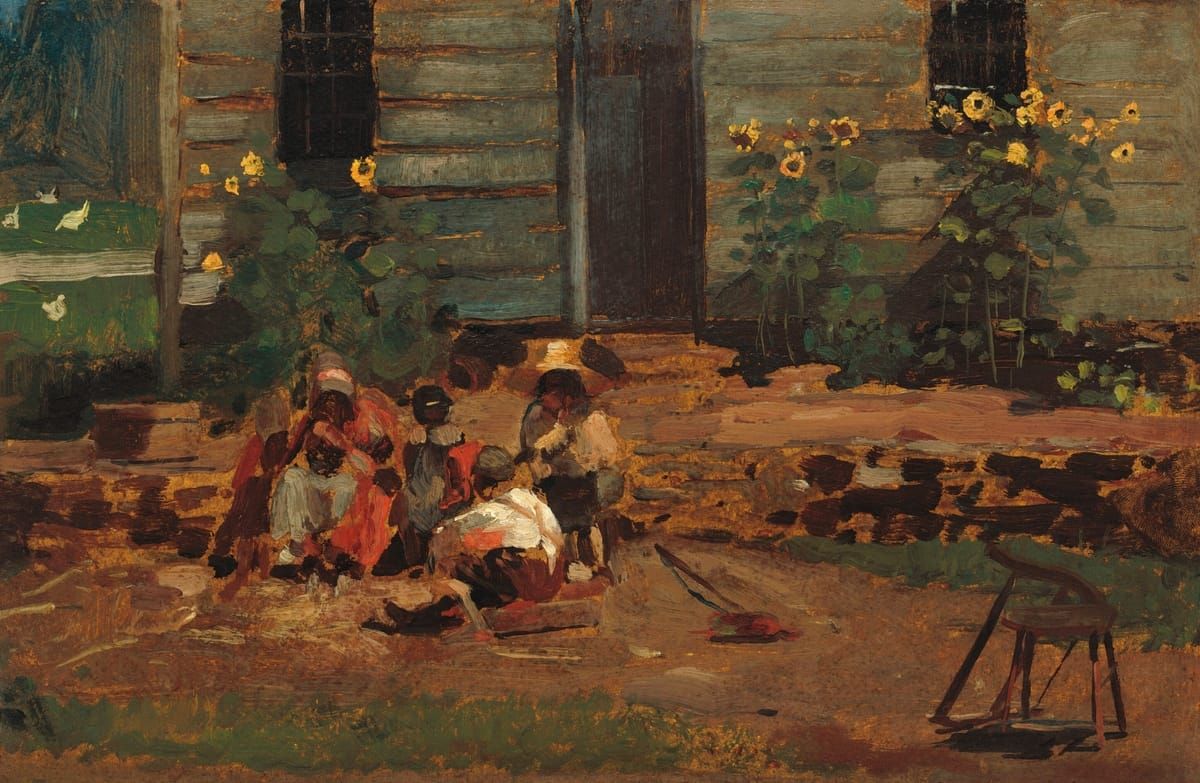
미국의 전설적인 사실주의 거장 윈슬로 호머(Winslow Homer, 1836–1910)가 1876년경(남부 재건 시대 연작 시기)에 완성한 유화 소품 걸작 <오두막 앞의 아이들과 해바라기(Children in front of a Cabin with Sunflowers / Cabin Door)>는 따스한 남부의 햇살이 쏟아지는 목조 통나무집 앞마당에서 활짝 핀 노란 해바라기를 배경으로 옹기종기 모여 앉아 정다운 시간을 보내는 흑인 가족과 아이들의 평화롭고 소박한 일상을 가장 진솔하고 따뜻한 필치로 포착해 낸 수작입니다.
이 작품은 가로 약 30.5cm, 세로 약 20.3cm(패널 크기에 따라 약 31 x 21cm 내외) 크기의 목판 패널 또는 캔버스 위에 탄탄한 정통 유화 기법으로 제작되었으며, 회갈색 통나무 벽면의 거친 질감과 돌담, 흙마당에는 도톰한 임파스토를 밀도 있게 얹고, 잎사귀 사이로 눈부시게 피어난 샛노란 해바라기 꽃송이들과 아이들의 옷자락에 부서지는 빛을 대담한 색면 구성과 절제된 명암 대비로 완벽히 구현해 냈습니다.
현재 미국 주요 미술관 및 유수 프라이빗 컬렉션에서 소중히 다루어지는 이 그림은 남북전쟁 후 재건 시대(Reconstruction Era) 버지니아주 피터즈버그 인근의 소박한 농가 마당에서, 보닛을 쓴 어머니와 아이들이 돌계단 아래 모래마당에 둥글게 둘러앉아 담소를 나누고, 오두막 창가에는 탐스러운 해바라기들이 햇살을 머금고 만발한 정겨운 여름 한때를 담고 있습니다.
이 그림 뒤에는 1870년대 중반 남부를 찾아 해방된 흑인들의 순박하고 진실한 삶을 직접 관찰하며 기록했던 호머의 깊은 휴머니즘과 흥미진진한 비하인드가 깃들어 있습니다. 당시 호머는 백인 중심 사회의 편견 어린 시선을 배제하고, 대지의 품에서 가정을 일구며 살아가는 흑인 공동체의 따뜻한 온기와 일상의 존엄성을 캔버스에 담는 일에 깊이 몰두했습니다.
호머는 오두막 벽면을 비추는 부드러운 오후 햇살과 노란 해바라기 꽃의 조화를 포착하기 위해 마당 한구석에 야외 화구 상자를 펼쳐놓고 자리를 잡았습니다.
바닥에 옹기종기 모여 앉아 포즈를 취하던 아이들이 화가의 붓질을 신기하게 바라보다가, 마당 한쪽에 뒹굴던 작은 나뭇가지를 주워 흙바닥에 그림을 흉내 내며 키득거리자 작은 소동이 벌어졌습니다.
어머니가 아이들을 가볍게 꾸짖으며 자세를 바로잡으려 하자, 그 모습을 지켜보던 호머는 껄껄 웃음을 터뜨렸습니다. 호머는 "괜찮습니다, 그대로 두십시오! 해바라기 아래 흙바닥에 둘러앉은 아이들의 그 천진난만한 웃음과 호기심이야말로 오늘 남부의 태양이 내 캔버스 위에 선물한 가장 아름다운 희망의 꽃송이입니다!"라며 다정하게 격려했습니다. 호머는 아이들의 자연스러운 웅크림과 마당 구석에 놓인 낡은 나무의자의 소박한 정취를 놓칠세라 신나게 붓을 놀렸다는 훈훈한 일화가 전해집니다.
오두막 벽을 타고 높게 자라난 탐스러운 해바라기 군락과 화면 좌측 창가의 싱그러운 덩굴 식물, 그리고 화면 우측 전경에 무심한 듯 놓인 목조 의자의 정갈한 배치는 호머가 소박한 전원생활의 일상을 얼마나 진솔하고 세심한 애정으로 관찰했는지를 증명합니다.
미술사학자들은 이 작품을 호머가 1870년대 중반에 완성한 남부 연작 중에서도 전원적 서정성과 따뜻한 가족애가 가장 응축된 숨은 보석으로 평가합니다.
프랑스 바르비종파의 서정적 사실주의를 미국 남부의 풍토에 맞게 독창적으로 재해석했으며, 어둡고 고단한 역사적 배경 속에서도 잃지 않는 인간 본연의 따스한 연대와 평화를 완벽한 시각 언어로 승화시켰다는 극찬을 받습니다.
작품을 마주할 때 관람자의 무의식적인 시선은 오두막의 수평 통나무 벽을 따라 매우 안정적이고 포근한 원형 및 역삼각 순환 궤적을 그리며 이동합니다. 관람객의 눈길은 가장 먼저 화면 중앙 하단의 흙마당에서 붉고 흰 옷을 입고 둥글게 모여 앉은 아이들과 어머니의 다정한 실루엣에 머뭅니다.
이어 시선은 아이들의 밝은 옷자락을 타고 화면 우측 상단으로 이동하여, 통나무 벽면을 배경으로 샛노랗게 피어난 해바라기 꽃송이들의 싱그러운 리듬과 짙푸른 잎사귀들의 풍성한 볼륨감으로 자연스럽게 이어집니다.
해바라기의 화사한 온기를 확인한 시선은 오두막 중앙의 어두운 출입문과 창문을 지나 화면 좌측 창가를 푸르게 감싸 안은 싱그러운 덩굴 숲의 서늘한 그늘을 훑고 지나갑니다.
이후 시선은 화면 우측 전경에 정갈하게 자리 잡은 소박한 나무의자의 듬직한 형태와 따스한 햇볕이 내려앉은 황토빛 흙바닥을 거쳐, 다시 정답게 모여 앉은 가족들의 포근한 온기로 돌아와 깊고 아늑한 시각적 안착을 이룹니다.
이러한 유려한 시선의 순환은 관람자의 내면에 깊은 심리적 안정감과 포근한 계절의 향수를 선물합니다. 흙 내음 가득한 마당과 탐스러운 노란 해바라기, 그리고 소박한 오두막이 빚어내는 아늑한 공간감은, 복잡한 일상의 번잡함과 피로에 지친 현대인의 무의식에 마치 따스한 여름날 시골집 마당 그늘에 앉아 휴식을 취하는 듯한 깊은 이완과 감각적 평온을 선사합니다.
세상의 번잡함을 잊은 채 대자연과 가족의 품속에서 서로의 온기를 나누며 소박한 행복을 일구어가는 사람들의 건강한 모습은, 보는 이에게 일상의 번뇌를 내려놓고 삶의 가장 소박하고 맑은 행복과 내면의 깊은 평정을 되찾아 주는 든든한 치유의 위로를 건냅니다.
Children in front of a Cabin with Sunflowers / A Visit from the Old Mistress Study (Cabin Door)
Completed circa 1876 by the celebrated American realist master Winslow Homer (1836–1910), the luminous oil study Children in front of a Cabin with Sunflowers (also known as Cabin Door) stands as an extraordinary tour de force capturing the sun-drenched domestic peace, rustic simplicity, and tender human warmth of post-Civil War southern life with profound empathy.
Measuring approximately 30.5 cm wide by 20.3 cm high on prepared panel or canvas, the work showcases Homer's refined mastery of direct oil technique, applying thick, tactile impasto to the weathered log cabin wall, stone steps, and sun-baked earth, while articulating the brilliant yellow blossoms of the tall sunflowers, the calico clothing, and the leafy vines with vibrant tonal harmony.
Preserved and celebrated across prominent public and private American art collections, this painting portrays a quiet morning in rural Virginia during the Reconstruction Era, where an African American mother in a sunbonnet and her young children gather upon the warm dirt yard before their log home, nestled beside clusters of blooming sunflowers under the gentle southern light.
Behind this restorative canvas lies Homer's pivotal journey to the South in the mid-1870s, where he sought to record the unvarnished humanity and everyday dignity of freed families. Looking beyond the historical upheaval of the era, Homer recognized that the true resilience of the human spirit was revealed in the quiet domestic fellowship shared within the shelter of home.
Setting up his small paint box directly in the yard to capture the interplay of direct morning sunlight and textured timber, Homer observed the family at rest.
When the children sitting in the sand began playfully sketching figures on the ground with dry twigs, giggling among themselves as their mother gently tried to settle their poses, the quiet homestead echoed with cheerful amusement.
Delighted by the natural charm of the scene, Homer laughed warmly, reassuring the mother that the children's spontaneous joy beneath the sunflowers was the most genuine poetry of hope nature could ever offer an artist's brush. Homer swiftly applied rich strokes of cadmium yellow, vermilion, and burnt umber to record the unposed gathering, immortalizing the humble wooden chair and the quiet dignity of the cabin yard.
The radiant sunflowers climbing against the dark logs, the lush green foliage screening the left window, and the solitary rustic chair resting on the right serve as authentic testaments to Homer's deeply observant eye for the humble beauty of rural living.
Art historians celebrate this painting as an exquisite highlight of Homer's southern genre studies, praising its compositional intimacy and rich atmospheric truth. By translating an everyday domestic moment into a timeless study of familial love and natural abundance, Homer created an enduring visual sanctuary of pastoral harmony, quiet resilience, and contemplative peace.
When engaging with the painting, the viewer's unconscious gaze undertakes an inherently soothing and grounding visual journey. The eye is initially welcomed by the warm, clustered silhouette of the family seated in the lower center, lingering upon their colorful garments, relaxed postures, and intimate circle.
The gaze then travels upward toward the right, following the vibrant vertical rhythms of the golden sunflowers blooming in profusion against the weathered gray siding.
Tracing the horizontal grain of the timber facade across the doorway to the left, the viewer's attention meets the cool, refreshing emerald vines sheltering the window before descending back into the yard.
Finally, sweeping past the solitary wooden chair resting in the warm sunlight on the right and exploring the textured dirt foreground, the eye settles comfortably back into the sheltered, anchored presence of the family.
This rhythmic visual journey fosters profound psychological reassurance, gentle nostalgia, and deep emotional stillness within the observer. The tactile immersion in warm sunshine, fragrant garden blossoms, and unhurried country breezes acts as an intuitive emotional balm, dispelling ambient modern fatigue and soothing inner tension.
By presenting an idyllic world where familial affection flourishes in pure harmony with the rhythm of flourishing nature, Homer offers the observer a comforting sanctuary of mindfulness, inspiring a deep sense of renewal, sweet contentment, and enduring inner peace.
본 리뷰에서 작품을 제외한 컨텐츠의 저작권은 팔렛트제주에 있습니다.
"퍼블릭도메인 고전명화"를 제외한 모든 창작 콘텐츠는 저작권법 제4조 및 제10조에 의거하여 보호됩니다. 무단 도용시 저작권법 제136조(벌칙)에 의거, 당사의 사전 서면 승인 없는 저작권 침해 행위를 금지합니다.