낫을 가는 사람 (베어낸 풀밭) - The Scythe / The Reaper
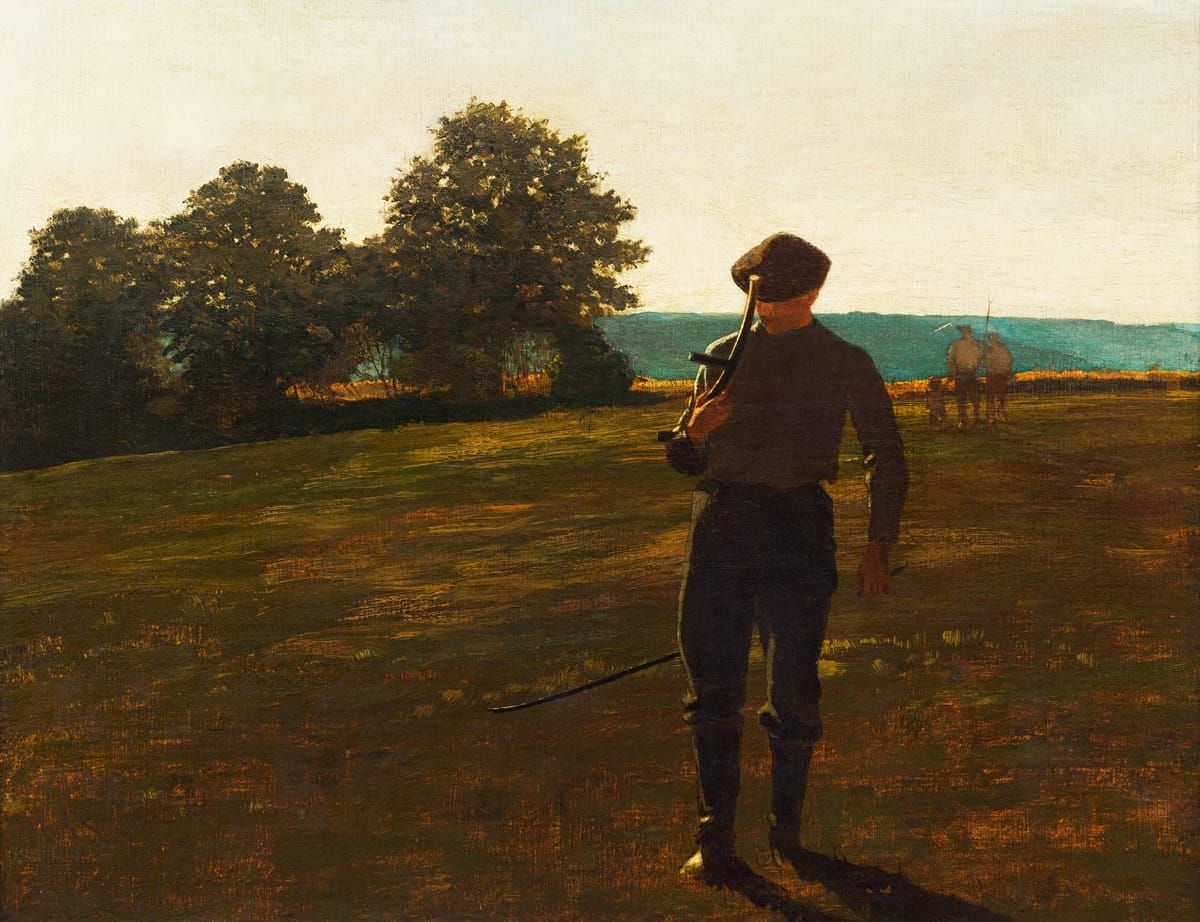
미국의 전설적인 사실주의 거장 윈슬로 호머(Winslow Homer, 1836–1910)가 1867년에 완성한 유화 명작 <낫을 가는 사람(The Scythe / The Reaper / Haymaker)>은 황혼 무렵의 고요한 들판에서 하루의 노동을 마무리하며 묵묵히 낫을 숫돌에 가는 농부의 숭고한 침묵을 가장 깊이 있는 서정미로 포착해 낸 수작입니다.
이 작품은 가로 약 55.9cm, 세로 약 35.6cm 크기의 캔버스 위에 제작되었으며, 지는 해의 따스한 역광을 받아 짙은 그림자를 드리운 대지와 황금빛으로 물든 수평선의 대기감을 부드러운 유화 임파스토와 정교한 명암 조절로 완성해 냈습니다.
현재 미국 뉴욕 메트로폴리탄 미술관(The Metropolitan Museum of Art) 및 유수 개인 컬렉션 연구 아카이브에서 중요하게 다루어지는 이 그림은 뉴욕주 또는 뉴잉글랜드의 완만한 언덕 풀밭에서 모자를 깊게 눌러쓴 채 낫을 점검하는 고독한 농부의 실루엣과, 저 멀리 하루 일과를 마치고 집으로 발걸음을 옮기는 일꾼들의 평화로운 순간을 담고 있습니다.
이 그림에는 남북전쟁 종전 직후 프랑스 파리 유학을 다녀온 호머가 조국 미국의 순박하고 성실한 흙의 생명력에 바친 인간적인 애정과 흥미진진한 비하인드가 깃들어 있습니다. 1867년 호머는 전쟁의 상흔을 치유하듯 뉴욕 근교 농촌에 머물며 땀 흘려 일하는 농부들의 정직한 하루를 관찰하는 일에 몰두했습니다.
호머는 노을이 길게 드리우는 늦은 오후, 풀을 다 베어낸 들판 한가운데 홀로 서서 숫돌을 꺼내 낫날을 스걱스걱 가는 농부의 리드미컬한 소리에 깊이 매료되었습니다. 호머는 현장의 빛과 그림자를 담기 위해 들판에 이젤을 펴고 서둘러 붓을 움직였습니다.
당시 낫을 갈던 농부는 화가가 자신을 그리는 것을 보고 "화가 양반, 하루 종일 허리 한번 못 펴고 풀을 베었더니 온몸이 쑤시는데, 멋진 모델처럼 보이나요?"라며 쑥스러운 듯 웃었습니다.
호머는 붓질을 멈추지 않은 채 "자네가 하루의 땀을 씻어내며 낫을 가는 이 순간이야말로 이 거대한 대지가 품은 가장 고귀하고 장엄한 기도라네!"라고 격려하며, 해 질 녘 역광 속에 드리워진 농부의 듬직한 실루엣을 화폭에 단숨에 새겨 넣었다는 따뜻한 일화가 전해집니다.
화면 우측 멀리 쇠스랑을 어깨에 메고 석양빛을 받으며 언덕을 넘어가는 동료 농부들의 작은 실루엣과, 좌측에 짙푸른 그늘을 드리운 울창한 나무들은 호머가 농촌의 평온한 해질녘 풍경을 얼마나 세심한 애정으로 관찰했는지를 증명합니다.
미술사학자들은 이 작품을 남북전쟁 이후 황폐해진 미국의 정신을 치유하고 대지의 평화로운 질서를 회복하려는 시대적 염원을 담은 기념비적 걸작으로 평가합니다.
프랑스 바르비종파 장 프랑수아 밀레의 농민화 전통을 훌륭히 소화하면서도, 미국 고유의 투명하고 광활한 야외 광선 연구를 결합하여 평범한 농부의 일상을 영원한 인간 존엄의 상징으로 승화시켰다는 찬사를 받습니다.
작품을 마주할 때 관람자의 무의식적인 시선은 매우 차분하고 안정적인 수직 및 수평 순환 궤적을 그리며 이동합니다. 관람객의 눈길은 가장 먼저 화면 중앙에서 부드러운 역광을 받으며 모자를 깊게 눌러쓴 채 낫을 쥐고 있는 농부의 묵직한 실루엣과 그의 발치 아래 길게 드리워진 짙은 그림자에 머뭅니다.
이어 시선은 농부의 손끝에 닿아 있는 낫의 유려한 은빛 곡선을 따라 내려가 들판의 풀밭을 훑은 뒤, 화면 우측 저 멀리 황금빛 저녁노을을 받으며 걸어가는 동료 일꾼들의 따스한 실루엣으로 자연스럽게 미끄러져 갑니다.
이후 시선은 수평선 너머로 아득하게 펼쳐진 푸른 산등성이와 맑은 은빛 하늘을 지나, 화면 좌측에 병풍처럼 솟아 있는 짙은 녹색 나무 군락의 서늘한 그늘을 거쳐 다시 농부의 듬직한 어깨로 돌아와 완벽한 시각적 안착을 이룹니다.
이러한 유려한 시선의 순환은 관람자의 내면에 깊은 심리적 안정감과 무장해제된 평온을 선사합니다. 풀 내음 가득한 들판과 하루를 마무리하는 황혼의 고요한 공간감은, 복잡한 일상의 소음과 끝없는 경쟁에 지친 현대인의 무의식에 마치 고요한 저녁 들판에 서서 맑은 바람을 깊게 들이마시는 듯한 깊은 이완과 감각적 안식을 제공합니다.
정직하게 땀 흘린 하루를 매듭짓고 대지의 품에서 고요히 호흡하는 농부의 의연한 자태는, 보는 이에게 번잡한 걱정을 내려놓고 삶의 가장 소박하고 진실한 행복과 내면의 깊은 평정을 되찾아 주는 든든한 치유의 위로를 건넵니다.
The Scythe / The Reaper
Completed in 1867 by the legendary American realist master Winslow Homer (1836–1910), the oil masterpiece The Scythe (also known as The Reaper / Haymaker) stands as an extraordinary tour de force capturing the sun-dappled quietude, earthly dignity, and meditative rhythm of nineteenth-century American agricultural life at dusk.
Measuring approximately 55.9 cm wide by 35.6 cm high on canvas, the work showcases Homer's sensitive handling of oil technique, contrasting the long, cool shadows of twilight across the mown pasture with the warm golden illumination radiating along the distant horizon through fluid, disciplined brushwork.
Preserved and celebrated across prominent American collections including archives affiliated with The Metropolitan Museum of Art, this painting powerfully portrays a solitary farmer pausing in the center of an expansive meadow to whet his scythe, while his fellow workers retreat along the far ridge beneath the fading evening sky.
Behind this restorative canvas lies Homer's deep appreciation for the healing power of the agrarian landscape immediately following the close of the Civil War. Returning from Paris in 1867, Homer sought the uncorrupted simplicity of rural New York and New England, finding profound solace in the honest labor of countryside folk.
Setting up his easel directly upon the stubble of the harvested field, Homer was captivated by the rhythmic scraping of the whetstone against the steel blade echoing in the quiet evening air.
The tired mower, noticing the master recording his likeness against the setting sun, jokingly asked if a weary laborer covered in sweat and dust made for a fitting subject of fine art.
Homer smiled warmly, replying that the honest pause of a man sharpening his blade after a long day of honest toil was as sacred and monumental as any historic monument, rapidly laying down deep earth tones to capture the figure's solid, backlit silhouette upon the soil.
The distant companions carrying their forks over their shoulders and the dense woodland grove anchoring the left flank serve as authentic testaments to Homer's deeply observant eye for the peaceful cadence of pastoral America.
Art historians celebrate this painting as a pivotal jewel of Homer's early post-war oeuvre, praised for its exquisite synthesis of Barbizon naturalism and distinctly American plein-air luminosity. By celebrating the quiet nobility of rural labor without sentimentality, Homer elevated an ordinary end-of-day country ritual into a timeless visual sanctuary of human peace and fertile abundance.
When engaging with the painting, the viewer's unconscious gaze undertakes an inherently soothing and grounding visual journey. The eye is initially welcomed by the commanding, dark silhouette of the farmer in the center, lingering upon the downward tilt of his hat and the tactile concentration of his hands upon the tool.
The gaze then travels downward along the long, dark shadow stretching toward the viewer, sliding across the mown meadow before drifting toward the distant workers silhouetted against the glowing horizon on the right.
Ascending naturally across the soft blue mountain ridge and luminous pale sky, the viewer's attention sweeps past the leafy canopy of mature trees resting quietly on the left, settling comfortably back into the warm, earthy carpet of the evening field.
This rhythmic visual journey fosters profound psychological reassurance, gentle nostalgia, and deep emotional stillness within the observer. The tactile immersion in twilight hush and freshly cut grass acts as an intuitive emotional balm, dispelling ambient modern fatigue and cooling inner tension.
By presenting a world embraced by honest simplicity, unhurried stillness, and benevolent twilight light, Homer offers the observer a comforting sanctuary of mindfulness, inspiring a deep sense of renewal, sweet contentment, and enduring inner peace.
본 리뷰에서 작품을 제외한 컨텐츠의 저작권은 팔렛트제주에 있습니다.
"퍼블릭도메인 고전명화"를 제외한 모든 창작 콘텐츠는 저작권법 제4조 및 제10조에 의거하여 보호됩니다. 무단 도용시 저작권법 제136조(벌칙)에 의거, 당사의 사전 서면 승인 없는 저작권 침해 행위를 금지합니다.