날아오르는 흰뺨검둥오리 (오리 사냥) - Right and Left
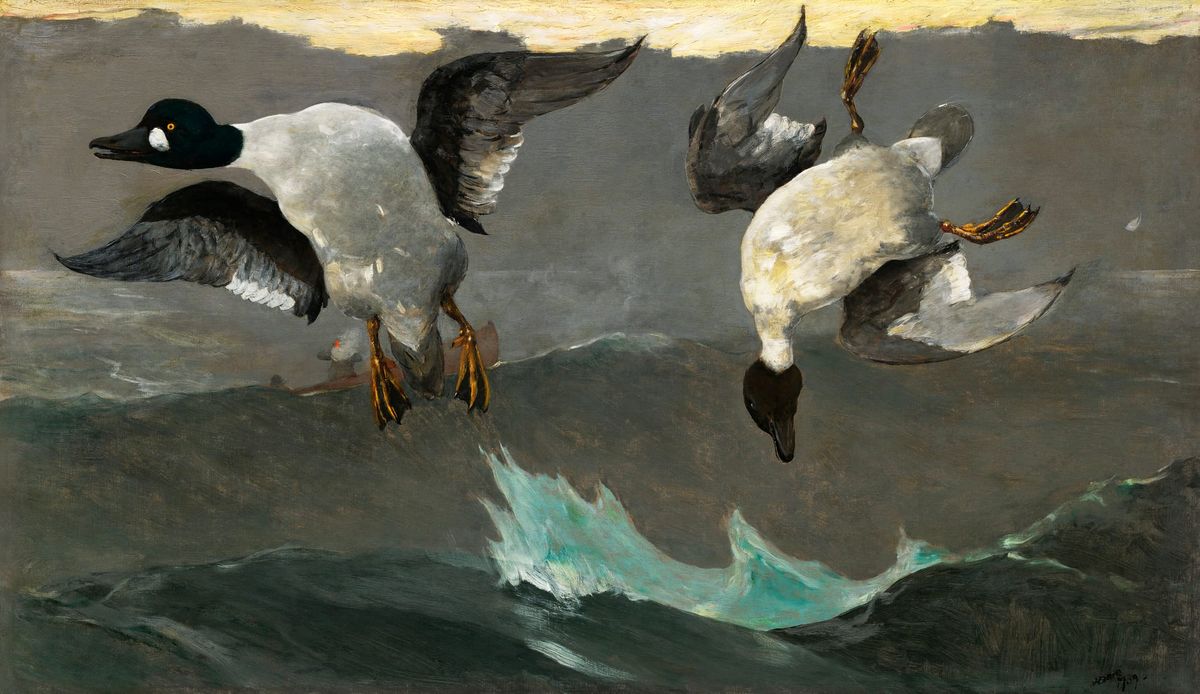
미국의 전설적인 사실주의 거장 윈슬로 호머(Winslow Homer, 1836–1910)가 생애 말년인 1909년에 완성한 기념비적 유화 걸작 <오리 사냥(Right and Left)>은 거친 겨울 바다 위를 가로지르는 야생 오리의 역동적인 비행과 사냥의 긴박한 찰나를 가장 대담하고 압도적인 조형미로 담아낸 대표작입니다.
이 작품은 가로 122.9cm, 세로 71.8cm 크기의 캔버스 위에 묵직한 유화 기법으로 제작되었으며, 겨울 파도에서 솟구치는 청록빛 물보라와 오리의 깃털 질감에 두터운 임파스토를 밀도 있게 얹고, 어두운 납빛 하늘과 수평선의 화약 연기를 정교한 명암 대비로 완벽하게 구현했습니다.
현재 미국 워싱턴 D.C. 국립미술관(National Gallery of Art)에 소장되어 있는 이 그림은 메인주 연안의 차가운 바다 위에서 수평선 너머 사냥꾼이 연달아 쏜 두 발의 총성(오른쪽 총열과 왼쪽 총열) 속에서, 한 마리는 필사적으로 날아오르고 다른 한 마리는 총에 맞아 거꾸로 곤두박질치는 절체절명의 순간을 포착하고 있습니다.
이 그림에는 평생을 대자연의 숭고한 생명력에 바쳤던 늙은 거장의 놀라운 통찰력과 흥미진진한 비하인드가 깃들어 있습니다. 1908년 겨울, 메인주 프라우츠 넥의 절벽 화실에서 바다를 관찰하던 호머는 강풍을 뚫고 물 위를 스치듯 날아가는 흰뺨검둥오리(Goldeneye)의 비행 속도와 깃털의 탄력에 깊이 매료되었습니다.
호머는 날아가는 새의 정확한 해부학적 구조와 깃털의 각도를 연구하기 위해 현지 사냥꾼에게 갓 잡은 오리를 구해달라고 부탁했습니다. 그는 화실 천장에 철사로 오리를 매달아 날개를 활짝 펼치게 한 뒤, 몇 날 며칠 동안 깃털 사이에 맺히는 빛과 그림자를 집요하게 관찰했습니다.
호머의 친구가 화실에 들렀다가 공중에 매달린 박제 오리와 씨름하며 땀을 흘리는 70대의 노화가를 보고 "선생님, 이 추운 겨울에 새들과 서커스를 하십니까?"라고 묻자, 호머는 "이 녀석들은 단순한 새가 아니라 대서양의 칼바람을 가르는 살아있는 화살이라네!"라며 호탕하게 웃었다는 유쾌한 일화가 전해집니다.
화면 좌측 파도 너머로 아스라이 보이는 사냥꾼의 작은 보트와 총구에서 피어오르는 붉은 섬광, 그리고 수평선에 떠 있는 작은 포말은 호머가 현장의 생생한 긴장감을 얼마나 치밀하게 계산하여 배치했는지를 증명합니다.
미술사학자들은 이 작품을 호머의 예술적 여정을 통틀어 가장 혁신적이고 현대적인 걸작으로 평가합니다.
관람자가 사냥꾼의 총구 바로 앞이자 오리의 비행 궤적 한가운데 서 있는 듯한 파격적인 1인칭 시점을 구사하여, 생과 사가 교차하는 찰나의 순간을 영원한 자연의 드라마로 승화시켰다는 극찬을 받습니다.
작품을 마주할 때 관람자의 무의식적인 시선은 매우 긴장감 넘치고 입체적인 나선형 궤적을 그리며 이동합니다. 관람객의 눈길은 가장 먼저 화면 좌측 상단에서 선명한 노란 눈을 번뜩이며 힘차게 날갯짓하는 오리의 단단한 부리와 은백색 가슴 깃털에 가닿습니다.
이어 시선은 물살을 차고 오르는 오리의 주황빛 물갈퀴를 지나, 화면 하단에서 보석처럼 투명하게 솟구쳐 오르는 에메랄드빛 파도의 날카로운 물보라로 자연스럽게 미끄러져 갑니다.
물의 운동성을 훑은 시선은 화면 우측에서 총에 맞아 머리를 아래로 향한 채 거꾸로 추락하는 두 번째 오리의 비극적이면서도 우아한 회전 궤적을 타고 상승한 뒤, 저 멀리 잿빛 바다 위에서 붉은 섬광을 뿜어내는 사냥꾼의 보트와 옅은 저녁노을을 거쳐 화면 전체로 확장됩니다.
이러한 유려한 시선의 순환은 관람자의 내면에 깊은 심리적 몰입감과 강렬한 정서적 각성을 선사합니다. 차가운 겨울 바다와 거센 파도가 빚어내는 야생의 생생한 공기감은, 복잡한 일상의 피로와 나태함에 젖어 있던 현대인의 무의식에 번갯불처럼 맑고 선명한 카타르시스를 불어넣어 줍니다.
생존의 거친 파도 속에서도 온 힘을 다해 창공을 가르는 생명체의 굳센 에너지는, 보는 이에게 일상의 번뇌를 떨쳐내고 내면의 단단한 용기와 삶을 향한 강인한 의지를 되찾아 주는 깊은 치유의 위로를 건넵니다.
Right and Left
Completed in 1909 by the legendary American realist master Winslow Homer (1836–1910), the monumental oil masterpiece Right and Left stands as an extraordinary tour de force capturing the visceral drama of survival, the aerodynamics of flight, and the primeval power of the open sea with peerless visual audacity.
Measuring 122.9 cm wide by 71.8 cm high on canvas, the work showcases Homer's consummate mastery of oil technique, applying thick, tactile impasto to the translucent turquoise crests of crashing surf and the downy plumage of the waterfowl, contrasted against the somber charcoal sky and vaporous gunpowder smoke along the horizon.
Preserved in the prestigious permanent collection of the National Gallery of Art in Washington, D.C., this painting powerfully portrays a brace of common goldeneye ducks caught in the perilous split-second between the double discharge of a hunter's shotgun—the right and left barrels—one bird desperately climbing into the gale while the other tumbles headlong toward the icy swells.
Behind this hauntingly kinetic canvas lies the aging master's relentless quest for authentic wildlife observation and a delightful array of personal anecdotes. During the winter of 1908 at his cliffside studio in Prouts Neck, Maine, Homer became utterly transfixed by the sheer velocity of migrating waterfowl braving North Atlantic blizzards.
Determined to depict the precise anatomical tension of wings cutting through coastal turbulence, Homer secured freshly taken ducks from local wildfowlers, suspending them from his studio rafters with fine wires to study the spread of feathers under changing light.
When a visiting friend encountered the septuagenarian master meticulously adjusting wires in the freezing studio and joked about running a private bird circus, Homer laughed heartily, replying that these majestic creatures were living arrows launched against the oceanic winds, demanding nothing less than absolute truth in paint.
The minute silhouette of the hunting skiff veiled in gunsmoke on the distant horizon and the crimson spark of the muzzle flash attest to Homer's remarkable ability to integrate cinematic narrative tension within a stark marine environment.
Art historians celebrate Right and Left as the supreme intellectual and visual culmination of Homer's late career. By placing the viewer directly in the line of fire and within the immediate flight path of the ducks, Homer dissolved the traditional barrier between spectator and subject, creating a revolutionary composition that prefigured twentieth-century modernism.
When engaging with the painting, the viewer's unconscious gaze undertakes an intensely thrilling yet grounding visual journey. The eye is initially seized by the vivid golden eye and crisp white cheek patch of the ascending drake on the left, lingering upon the muscular thrust of its wings.
The gaze then cascades downward along the splayed orange webs of its feet, catching the brilliant eruption of foaming turquoise spray surging from the dark water below.
Ascending naturally across the dramatic downward spiral of the falling duck on the right, the viewer's attention sweeps toward the tiny, smoke-wreathed skiff in the distance before rising into the pale, vaporous glow along the upper horizon.
This rhythmic visual journey fosters profound psychological reassurance, sensory awakening, and deep emotional clarity within the observer. The crisp, untamed coastal atmosphere acts as an intuitive emotional tonic, sweeping away ambient modern stress and accumulated inner fatigue.
By presenting a world defined by raw kinetic energy, primal instincts, and unadorned truth, Homer offers the observer a comforting sanctuary of mindfulness, inspiring a deep sense of resilience, inner equilibrium, and enduring peace.
본 리뷰에서 작품을 제외한 컨텐츠의 저작권은 팔렛트제주에 있습니다.
"퍼블릭도메인 고전명화"를 제외한 모든 창작 콘텐츠는 저작권법 제4조 및 제10조에 의거하여 보호됩니다. 무단 도용시 저작권법 제136조(벌칙)에 의거, 당사의 사전 서면 승인 없는 저작권 침해 행위를 금지합니다.