멕시코 만류 - The Gulf Stream
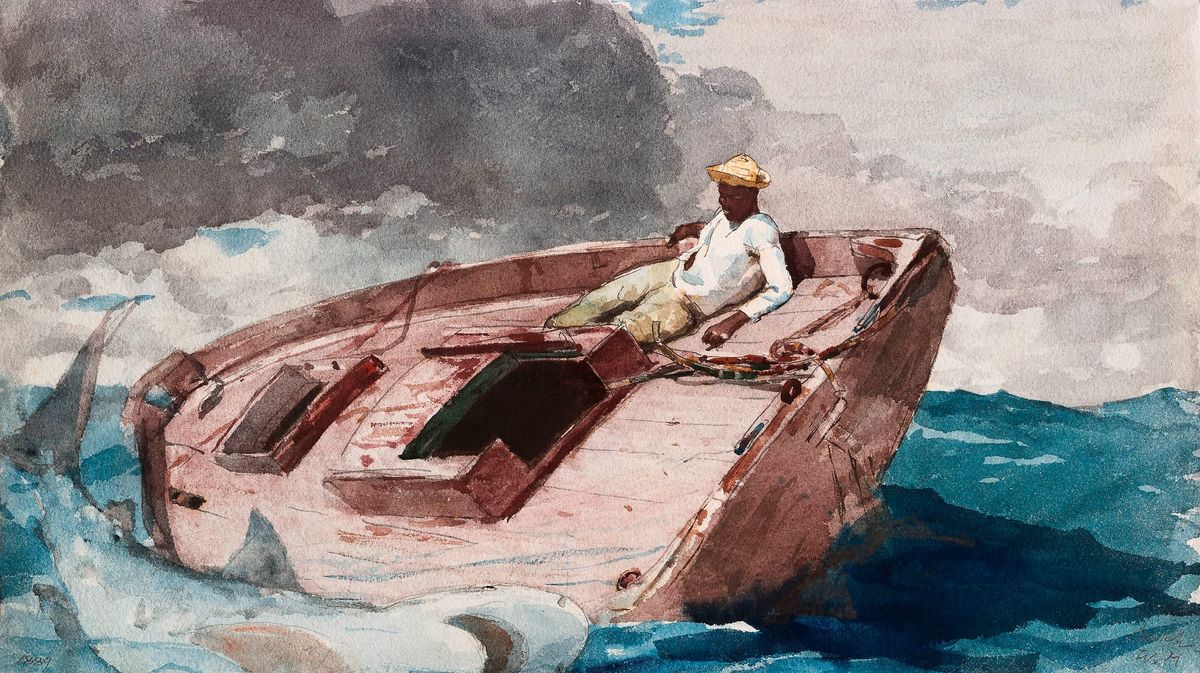
미국의 사실주의 거장 윈슬로 호머(Winslow Homer, 1836–1910)가 1889년에 완성한 수채화 작품 <멕시코 만류(The Gulf Stream)>는 메트로폴리탄 미술관에 소장된 동명의 유명한 유화 대작(1899년)을 탄생시킨 결정적인 모태이자, 그 자체로 완벽한 조형미를 갖춘 명작입니다. 이 작품은 가로 50.9cm, 세로 28.8cm 크기의 두툼한 아이보리색 워브 종이 위에 연필로 정교한 밑그림을 그린 뒤 투명 수채 물감과 불투명 과슈를 덧바르고, 물감을 닦아내는 블로팅(blotting) 기법을 자유자재로 구사하여 제작되었습니다. 현재 미국 시카고 미술관(The Art Institute of Chicago)에 소장되어 있는 이 그림은 매서운 파도와 상어가 득실거리는 바다 위에서 부러진 돛단배에 몸을 기댄 채 표류하는 한 흑인 선원의 절체절명의 순간을 생생하게 포착하고 있습니다.
이 그림 뒤에는 호머의 고독한 예술혼과 흥미진진한 인간적 일화들이 가득합니다. 평소 메인주의 거친 해안가 프라우츠 넥에 은둔하며 바다를 관찰하던 호머는 혹독한 겨울 추위를 피해 바하마의 나소로 여행을 떠났습니다. 그곳에서 그는 카리브해의 눈부신 에메랄드빛 바다 이면에 도사린 난파선과 거친 상어 떼의 생태에 깊은 영감을 받았습니다. 특히 1814년 폭풍우를 만나 바다를 표류하다 비극을 맞이했다는 바하마의 전설 맥케이브의 저주(McCabe's Curse)와 당시 카리브해 사탕수수 무역선의 고단한 현실이 호머의 상상력을 자극했습니다.
작품이 발표된 직후 관람객들과 화상들은 절망적인 조난 상황에 경악하며 화가에게 결말을 끈질기게 캐물었습니다. 저 가엾은 남자가 결국 흉포한 상어 떼의 밥이 되었는지, 아니면 기적적으로 구출되었는지 묻는 편지가 빗발치자, 평소 무뚝뚝하고 냉소적인 성격이었던 호머는 자신의 미술상인 크뇌들러에게 편지를 보내 퉁명스럽고도 유쾌한 일침을 놓았습니다. 그는 부서진 배 위에서 모진 고생을 하던 저 남자는 얼마 지나지 않아 지나가던 배에 무사히 구조되었으며, 지금은 고향으로 돌아가 가족들과 아주 행복하게 잘 살고 있으니 호들갑을 떠는 숙녀분들은 부디 안심하고 발 뻗고 주무시라는 농담 섞인 답장을 남겨 당대 사람들의 지나친 감상주의를 꼬집었습니다.
미술사적으로 이 작품은 당시 미국 백인 중심 화단에서 흑인을 희화화하거나 무기력한 피해자로 묘사하던 관습을 완전히 깨부순 혁신적인 걸작으로 평가받습니다. 호머는 남북전쟁 이후의 인종적 긴장과 불안 속에서도 거대한 운명과 자연의 폭력 앞에 당당히 맞서는 한 인간의 숭고한 존엄성을 탁월하게 형상화했습니다. 호머는 종이의 하단부를 과감하게 잘라내어 상어의 흰 배와 지느러미가 관람객의 눈앞까지 바짝 다가오도록 연출했으며, 물감을 긁어내고 닦아내어 카리브해의 격랑과 물보라가 뿜어내는 생생한 운동감을 완성했습니다.
작품을 마주할 때 관람자의 무의식적인 시선은 매우 극적이면서도 치유적인 경로를 따릅니다. 관람객의 눈길은 가장 먼저 부서진 갑판에 비스듬히 누워 있는 선원의 단단한 체구와 무심한 듯 차분한 표정에 머뭅니다. 이어 시선은 배 주위를 서늘하게 맴도는 거대한 상어의 형체와 좌측 하단의 날카로운 지느러미를 거쳐, 하늘을 뒤덮은 묵직한 먹구름과 격동하는 푸른 파도로 확장됩니다. 위기의 요소들을 차례로 훑은 시선은 자연스럽게 다시 선원의 초연한 자세와 햇빛을 받아 반짝이는 밀짚모자로 돌아와 안착합니다.
이러한 시선의 순환은 관람자의 내면에 깊은 심리적 안도감과 내적 평정을 불러일으킵니다. 화면 속 풍경은 당장이라도 배가 전복될 것 같은 극한의 위기를 담고 있지만, 주인공이 보여주는 흔들림 없는 태도와 침착함은 관람객의 무의식 속에 잠재된 불안과 스트레스를 잠재우는 강력한 심리적 방파제 역할을 합니다. 거대한 자연의 위력 앞에서 공포에 질려 비명을 지르는 대신 삶의 파도를 묵묵히 응시하는 인물의 모습은, 관람자에게 어떠한 삶의 역경 속에서도 중심을 잃지 않는 내면의 회복탄력성과 숭고한 카타르시스를 선물합니다.
The Gulf Stream
Completed in 1889 by the American realist master Winslow Homer (1836–1910), the watercolor masterpiece The Gulf Stream served as the definitive study and inspirational cornerstone for his celebrated 1899 oil painting of the same title, currently housed at The Metropolitan Museum of Art. Executed on moderately thick ivory wove paper measuring 50.9 cm wide by 28.8 cm high, the work demonstrates Homer's virtuoso technical brilliance through graphite underdrawing layered with transparent and opaque watercolors, further enriched by deliberate blotting and scraping techniques. Now preserved in the permanent collection of The Art Institute of Chicago, this painting captures with extraordinary vitality a solitary Black sailor stranded aboard a dismasted vessel amidst turbulent waters and circling sharks.
Behind this dramatic composition lies Homer's solitary artistic spirit and a delightful array of human anecdotes. To escape the harsh, unforgiving winters of his coastal studio in Prouts Neck, Maine, Homer embarked on journeys to Nassau in the Bahamas. There, he became deeply fascinated by the perilous realities lurking beneath the idyllic turquoise waters of the Caribbean, drawing inspiration from local shipwrecks, the aggressive behavior of pelagic sharks, and the legendary Bahamian tale of Captain McCabe's Curse, in which a stranded mariner succumbed to the tempestuous sea.
Upon the exhibition of the theme, viewers and art dealers were so overwhelmed by the harrowing tension that they persistently bombarded Homer with inquiries regarding the sailor's ultimate fate. Pestered by constant questions about whether the unfortunate man was devoured by the predators or saved, the famously blunt and reserved artist fired back a wry, sarcastic letter to his art dealer, M. Knoedler & Co. Homer sardonically remarked that the unfortunate man who had been so terribly annoyed on his broken boat was eventually rescued by a passing vessel and was now back home living happily ever after, so the anxious ladies could finally sleep in peace, brilliantly mocking the overly melodramatic sentimentality of his contemporaries.
Art historians celebrate this watercolor as a revolutionary milestone in American art, as it radically dismantled contemporary conventions that typically rendered Black subjects through caricature or passive victimization. Amidst the racial tensions and socio-political anxieties of post-Civil War America, Homer elevated his protagonist into a monumental emblem of stoic human dignity facing cosmic adversity. By audaciously cropping the bottom edge of the paper, the artist thrust the pale belly and predatory fins of the shark directly into the viewer's immediate space, while utilizing masterful blotting techniques to convey the kinetic frenzy of the churning foam.
When engaging with the painting, the viewer's unconscious gaze undertakes a profoundly transformative psychological journey. The eye is initially drawn to the reclining sailor, whose relaxed physical posture and contemplative countenance project an uncanny serenity. From there, the gaze travels downward across the menacing shark silhouettes in the immediate foreground, ascends toward the ominous, bruised storm clouds hovering on the horizon, and sweeps across the brilliant turquoise swell before returning to the steadfast center of the boat and the sunlit straw hat.
This rhythmic visual movement fosters a profound sense of emotional composure and sublimity. While the narrative depicts imminent mortal peril, the protagonist's unflinching stoicism serves as a psychological anchor that mitigates the viewer's innate anxiety. By portraying an individual who neither panics nor surrenders to despair in the presence of overwhelming natural forces, Homer imparts an enduring sense of resilience and tranquil fortitude, inviting the observer to discover inner calm amidst life's most turbulent tempests.
본 리뷰에서 작품을 제외한 컨텐츠의 저작권은 팔렛트제주에 있습니다.
"퍼블릭도메인 고전명화"를 제외한 모든 창작 콘텐츠는 저작권법 제4조 및 제10조에 의거하여 보호됩니다. 무단 도용시 저작권법 제136조(벌칙)에 의거, 당사의 사전 서면 승인 없는 저작권 침해 행위를 금지합니다.