크로케 경기 - Croquet Scene
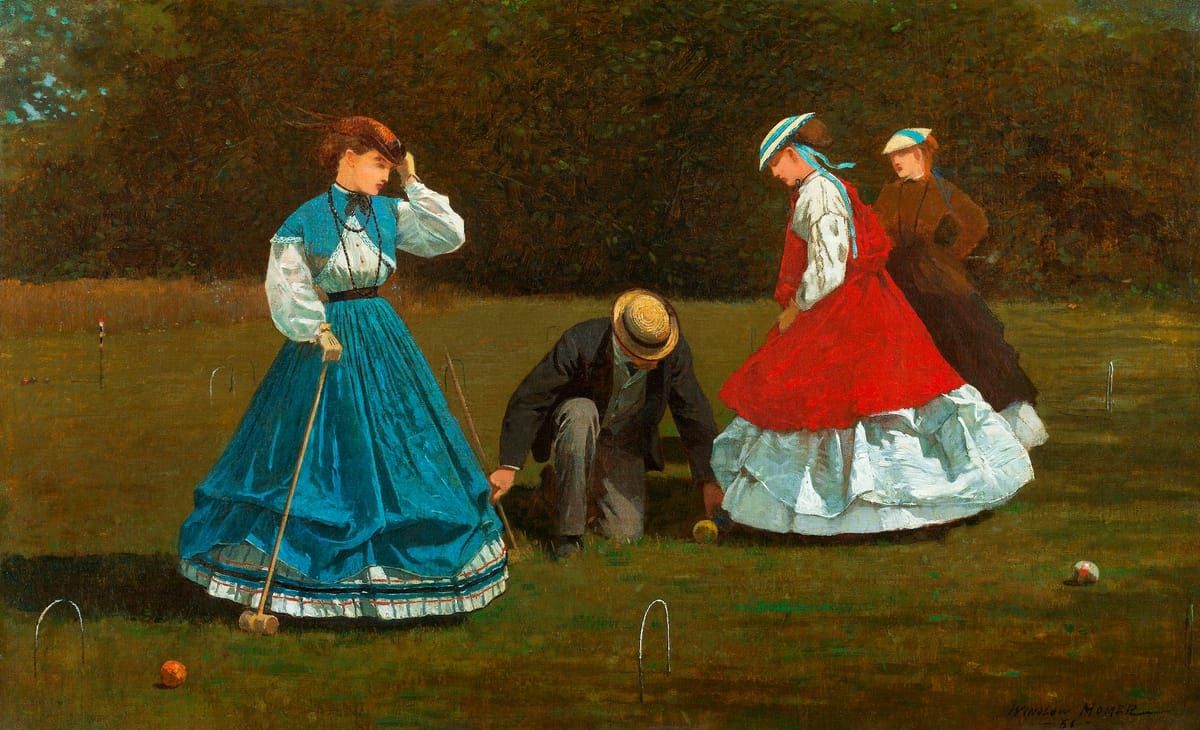
미국의 위대한 사실주의 거장 윈슬로 호머(Winslow Homer, 1836–1910)가 1866년에 완성한 유화 걸작 <크로케 경기(Croquet Scene)>는 남북전쟁 직후 미국 사회에 불어닥친 새로운 여가 문화와 청춘들의 미묘한 연애 심리를 가장 눈부신 야외 광선으로 포착해 낸 대표작입니다.
이 작품은 가로 66.0cm, 세로 40.3cm 크기의 캔버스 위에 정교한 유화 기법으로 제작되었으며, 야외에서 쏟아지는 직사광선과 그늘의 명암을 맑고 선명한 색채의 대비로 구현하고 드레스 자락의 주름과 잔디의 질감을 섬세한 붓 터치로 살려냈습니다.
현재 미국 시카고 미술관(The Art Institute of Chicago)에 소장되어 있는 이 그림은 푸른 잔디밭 위에서 당시 상류층과 중산층 사이에서 선풍적인 인기를 끌던 야외 스포츠인 크로케를 즐기며, 공의 위치를 맞추거나 순서를 기다리는 젊은 남녀들의 한가롭고도 긴장감 넘치는 한때를 담고 있습니다.
이 그림에는 전후 미국 사회의 풍속 변화와 호머의 예리하면서도 유쾌한 인간적 관찰력이 깃들어 있습니다. 크로케는 1860년대 미국에 도입되자마자 엄청난 열풍을 일으켰는데, 그 이유는 엄격한 빅토리아 시대 규범 속에서 남녀가 보호자 없이 야외에서 자연스럽게 대화하고 어울릴 수 있었던 거의 유일한 합법적 사교 스포츠였기 때문입니다.
당시 호머는 여름 휴양지였던 매사추세츠주 벨몬트의 친척 집 정원에서 젊은 남녀들이 크로케를 빌미로 펼치는 은근한 '밀당'과 연애 심리에 깊은 흥미를 느꼈습니다.
특히 남성이 무릎을 꿇고 공의 위치를 바로잡아주는 핑계로 여성의 드레스 자락 근처에 손을 뻗고, 푸른 드레스를 입은 여인이 모자를 매만지며 모른 척 시선을 피하는 모습은 당대 젊은이들 사이의 풋풋한 유혹과 심리전을 완벽하게 보여줍니다.
호머가 이젤을 펴고 스케치를 할 때, 포즈를 취하던 친척 여성들은 거추장스러운 크리놀린 페티코트 드레스를 입고 땡볕 아래 서 있느라 땀을 뻘뻘 흘렸습니다. 여인들이 언제 끝나느냐며 원성을 쏟아내자, 호머는 "조금만 참게! 당신들의 화려한 드레스와 붉은 망토가 햇빛을 받아 이토록 아름답게 빛나는데 어떻게 붓을 멈추겠소!"라며 너스레를 떨었다는 유쾌한 일화가 전해집니다.
미술사학자들은 이 작품을 호머의 초기 야외 유화 중에서도 빛과 색채의 다채로운 실험이 가장 빛나는 수작으로 평가합니다.
프랑스 인상주의 화가들이 본격적인 활동을 펼치기 전이었음에도 불구하고, 눈부신 태양 아래 선명하게 대비되는 강렬한 터키석 블루와 선홍색 드레스의 색채 배합, 그리고 화면 전체를 가로지르는 산뜻한 녹음의 조화는 미국 야외 풍경화의 현대적 출발을 알린 기념비적 걸작으로 찬사를 받습니다.
작품을 마주할 때 관람자의 무의식적인 시선은 잔디밭 위의 공과 인물들을 잇는 경쾌한 지그재그 궤적을 그리며 이동합니다. 관람객의 눈길은 가장 먼저 화면 좌측에서 햇살을 머금고 찬란하게 빛나는 터키석 블루 드레스의 여인과 그녀가 단정하게 쥐고 있는 나무 말렛(타구봉)에 가닿습니다.
이어 시선은 그녀의 발치 아래 놓인 주황색 공과 잔디 위의 흰색 후프(말통)를 지나, 화면 중앙에서 무릎을 꿇고 공을 조정하고 있는 밀짚모자를 쓴 남성의 숙인 자세로 부드럽게 미끄러져 갑니다.
이후 시선은 남성의 손길이 닿아 있는 곳에서 강렬한 대비를 이루는 우측 여인의 선홍색 숄과 눈부신 흰색 스커트 자락으로 옮겨간 뒤, 배경의 짙푸른 녹음과 저 멀리 서 있는 갈색 옷의 여인을 거쳐 다시 평화로운 잔디밭으로 내려와 안정적인 시각적 안착을 이룹니다.
이러한 유려한 시선의 순환은 관람자의 내면에 깊은 심리적 해방감과 청량한 설렘을 불어넣어 줍니다. 맑은 여름날의 잔디밭 위에서 펼쳐지는 정갈한 게임과 인물들의 단아한 자태는 복잡한 일상의 번잡함과 피로에 지친 현대인의 무의식에 한 줄기 시원한 바람 같은 쾌적함과 평온한 안식을 선사합니다.
전쟁의 상처를 딛고 화창한 햇살 아래서 소박한 놀이와 대화를 즐기는 젊은이들의 활기찬 모습은, 보는 이로 하여금 복잡한 번민을 내려놓고 삶의 순수한 즐거움과 일상 속 설레는 활력을 되찾게 하는 따뜻한 치유의 위로를 건넵니다.
Croquet Scene
Completed in 1866 by the legendary American realist master Winslow Homer (1836–1910), the oil masterpiece Croquet Scene stands as an extraordinary tour de force capturing the vibrant leisure culture and subtle romantic tensions of post-Civil War American youth under brilliant natural sunlight.
Measuring 66.0 cm wide by 40.3 cm high on canvas, the work showcases Homer's consummate mastery of outdoor illumination, articulating the crisp contrast between direct sun and cool shade, the sculptural folds of voluminous crinoline dresses, and the lush texture of the lawn through fresh, assertive brushwork.
Preserved in the prestigious permanent collection of The Art Institute of Chicago, this painting masterfully portrays a fashionable group of young men and women playing croquet, a recreational craze of the 1860s, paused in an engaging moment of measurement, competition, and flirtatious interaction.
Behind this radiant canvas lies Homer's sharp, humorous observation of shifting American social manners. Introduced to the United States shortly before the war, croquet quickly became an unprecedented sensation, serving as one of the few socially sanctioned outdoor activities where young men and unmarried women could mingle and converse without strict chaperonage.
While staying with cousins in Belmont, Massachusetts during the summer, Homer was thoroughly amused by the intricate courtships and unspoken rivalries unfolding across the lawn.
He captured the nuanced choreography of the game: a young gentleman gallantly kneeling on the turf under the pretext of adjusting a ball near a lady's voluminous skirt, while a poised woman in a radiant blue gown adjusts her hat, pretending nonchalance amidst the quiet romantic overture.
During the posing sessions, Homer's cousins frequently complained about standing under the sweltering afternoon sun burdened by heavy petticoats. The artist cheerfully laughed off their protests, insisting that the way the sunlight illuminated the vivid scarlet cape and turquoise fabric was far too splendid for him to put down his palette.
Art historians celebrate this painting as a pioneering landmark in American plein-air art.
Created even before French Impressionism gained international momentum, Homer's fearless use of saturated primaries—juxtaposing brilliant cyan and fiery vermilion against deep forest foliage—revolutionized American genre painting, elevating everyday recreation into a timeless visual monument of modern optimism.
When engaging with the painting, the viewer's unconscious gaze undertakes an inherently lively and restorative visual journey. The eye is initially drawn to the incandescent turquoise gown on the left, lingering upon the lady's elegant posture and the wooden mallet held lightly in her gloved hand.
The gaze then descends to the orange ball and white wicket on the turf, before traveling diagonally toward the kneeling gentleman in the center adjusting his yellow sphere.
Moving naturally to the right, the viewer's attention meets the dazzling scarlet and white dress of the standing lady, ascends through the soft shadows of the background trees, and takes in the distant figures before returning to the expansive green lawn.
This rhythmic visual journey fosters profound psychological reassurance, lighthearted nostalgia, and emotional tranquility within the observer. The pristine summer atmosphere and unhurried grace of the scene act as an intuitive emotional tonic, gently dispelling ambient stress and modern fatigue.
By presenting a world embraced by radiant sunshine, innocent recreation, and subtle human connection, Homer offers the observer a comforting sanctuary of mindfulness, inspiring a deep sense of renewal, sweet contentment, and enduring inner peace.
본 리뷰에서 작품을 제외한 컨텐츠의 저작권은 팔렛트제주에 있습니다.
"퍼블릭도메인 고전명화"를 제외한 모든 창작 콘텐츠는 저작권법 제4조 및 제10조에 의거하여 보호됩니다. 무단 도용시 저작권법 제136조(벌칙)에 의거, 당사의 사전 서면 승인 없는 저작권 침해 행위를 금지합니다.