컬러코츠의 어부들 - Fishermen on the Beach, Cullercoats
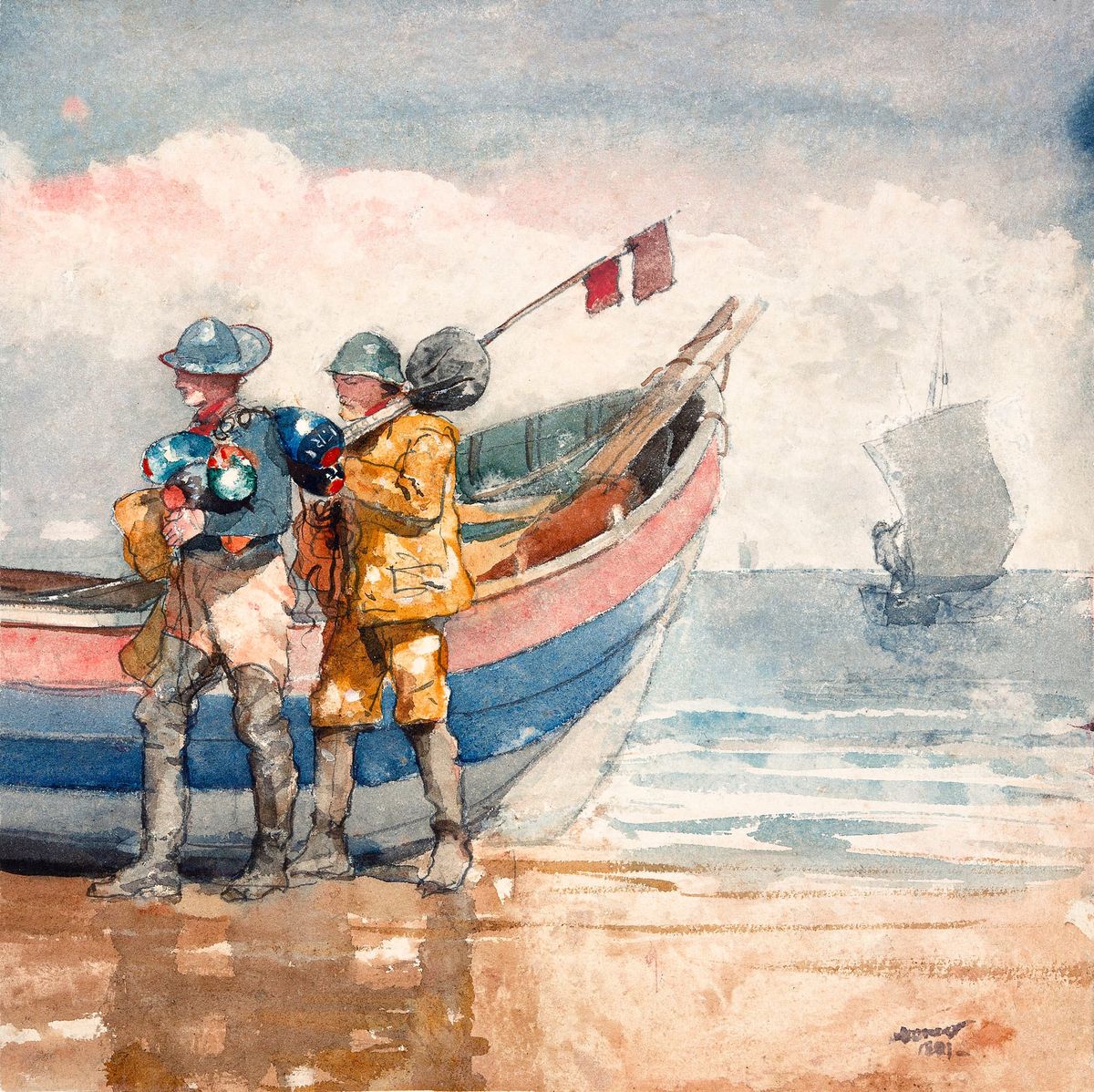
미국의 전설적인 사실주의 거장 윈슬로 호머(Winslow Homer, 1836–1910)가 1881년에 완성한 수채화 명작 <컬러코츠의 어부들(Fishermen on the Beach, Cullercoats)>은 그의 예술 세계가 심오한 성숙기로 진입했음을 알리는 기념비적인 작품입니다.
이 작품은 가로 33.7cm, 세로 33.3cm 크기의 고급 워브 종이 위에 연필로 꼼꼼하게 기초 윤곽을 잡은 후, 투명 수채 물감의 번짐을 살린 웨트 온 웨트(wet-on-wet) 기법과 물감을 긁어내거나 닦아내어 하이라이트를 주는 정교한 수채 기법으로 제작되었습니다.
현재 미국 시카고 미술관(The Art Institute of Chicago)에 소장되어 있는 이 그림은 영국 북동부 요크셔 해안의 외딴 어촌 마을인 컬러코츠의 축축한 모래사장에서, 출항을 준비하며 화려한 부표와 그물을 챙기는 두 어부의 묵직한 일상을 따뜻하고 생동감 넘치는 필치로 포착하고 있습니다.
이 그림에는 화려한 뉴욕 화단의 명성을 뒤로하고 바다 사나이들의 거친 삶 속으로 과감하게 뛰어들었던 호머의 인간적인 열정과 흥미진진한 비하인드가 깃들어 있습니다. 1881년 봄, 호머는 메마른 도시 생활에 염증을 느끼고 영국 컬러코츠로 건너가 작은 오두막을 얻어 약 20개월 동안 은둔하듯 지냈습니다.
처음에 마을 어부들은 말수가 적고 늘 화구 상자를 들고 다니는 이 낯선 미국인을 의아하게 여겼으나, 호머가 거센 북해의 비바람 속에서도 물러서지 않고 자신들과 똑같이 젖은 장화를 신은 채 해변을 누비자 마음의 문을 활짝 열었습니다.
특히 어부들이 바다에 띄우는 둥근 유리 부표와 가죽 부표에 칠해진 알록달록한 원색들은 호머의 시선을 단숨에 사로잡았습니다. 호머는 어부들이 짙은 방수 모자인 사우스웨스터(Sou'wester)를 눌러쓰고 부표를 품에 안은 모습을 보며 "이 거친 바다 위에 이토록 사랑스럽고 강렬한 보석 같은 색채가 숨어 있을 줄은 몰랐다"며 감탄을 금치 못했습니다.
현지 어부들은 작업복에 물감을 묻혀가며 열심히 붓질을 하는 호머를 위해 흔쾌히 어선 옆에 서서 포즈를 취해주었고, 스케치가 끝난 뒤에는 갓 잡아 올린 싱싱한 청어를 호머의 화구 통 옆에 툭 던져주며 끈끈한 바다 사나이들의 우정을 나누었습니다.
미술사학자들은 이 작품을 호머의 회화 인생에서 가장 결정적인 도약대로 평가합니다. 이전까지 미국 시골의 밝고 목가적인 일상을 주로 그렸던 호머는 컬러코츠에서의 경험을 통해 거친 자연에 당당히 맞서는 노동자들의 실존적 숭고미와 인간적인 존엄성을 깊이 있게 다루는 세계적인 거장으로 거듭나게 되었습니다.
작품을 마주할 때 관람자의 무의식적인 시선은 매우 따뜻하고 리드미컬한 안정의 궤적을 그리며 이동합니다. 관람객의 눈길은 가장 먼저 화면 좌측에 선 두 어부의 품에 안긴 화려하고 반짝이는 원색의 부표들과 노란색 우비의 경쾌한 색감에 머뭅니다.
이어 시선은 물기 젖은 모래사장에 길게 비치는 어부들의 단단한 장화 그림자와 붉은빛, 푸른빛 줄무늬가 선명한 목조 어선의 유려한 곡선을 따라 오른쪽으로 부드럽게 미끄러져 갑니다. 배의 깃대를 타고 올라간 시선은 저 멀리 수평선 위에서 하얀 돛을 펼치고 파도를 가르는 범선의 아늑한 실루엣을 지나, 은은한 핑크빛 노을과 부드러운 먹구름이 감도는 하늘로 확장됩니다.
이러한 유려한 시선의 순환은 관람자의 내면에 깊은 심리적 온기와 내적 평안을 불러일으킵니다. 거친 바다로 나아가는 긴장된 순간임에도 불구하고, 화사한 부표의 색채와 단단하게 서 있는 두 어부의 든든한 등장은 복잡한 일상과 피로에 지친 현대인의 무의식에 포근한 안정감과 삶을 지탱하는 묵직한 지지력을 선사합니다.
서로를 의지하며 묵묵히 삶의 터전으로 나아갈 채비를 마친 어부들의 당당한 모습은, 보는 이로 하여금 거친 세상의 파도 앞에서도 중심을 잃지 않는 건강한 생명력과 따스한 내면의 위로를 선물합니다.
Fishermen on the Beach, Cullercoats
Executed in 1881 by the legendary American realist master Winslow Homer (1836–1910), the watercolor masterpiece Fishermen on the Beach, Cullercoats stands as a profound milestone marking the artist's decisive stylistic and thematic maturation.
Measuring 33.7 cm wide by 33.3 cm high on heavy wove paper, the work showcases Homer's refined mastery of watercolor technique, combining deliberate graphite underdrawing with fluid wet-on-wet washes, delicate blotting, and sharp surface scratching to articulate natural highlights and coastal moisture.
Preserved in the prestigious permanent collection of The Art Institute of Chicago, this painting captures an intimate and evocative scene along the rugged shores of Cullercoats, England, where two fishermen prepare for the open sea alongside a colorful coble boat on the tide-washed sands.
Behind this composition lies Homer's extraordinary personal immersion into the daily lives of the Yorkshire fishing community. In the spring of 1881, weary of the commercial art scene in New York, Homer retreated to the remote North Sea village of Cullercoats, establishing a humble studio where he remained for nearly twenty months.
Initially regarded as an eccentric outsider, Homer quickly earned the admiration and deep trust of the local mariners by braving the stinging ocean mists and freezing winds alongside them, sketching relentlessly along the wet shingle beaches.
Homer was particularly enchanted by the vivid, hand-painted floats and colorful buoys carried by the fishermen, which contrasted strikingly against their weathered oilskins and traditional sou'wester caps. He remarked with genuine delight on how these vibrant nautical tools introduced radiant gems of color into an otherwise somber North Sea atmosphere.
The generous seamen willingly posed beside their beached boats, often gifting the quiet American painter freshly caught herring at the end of a long day of outdoor sketching, forging a warm and enduring bond of mutual respect.
Art historians universally recognize the Cullercoats period as the critical crucible of Homer's career. Transcending the lighthearted, pastoral genre scenes of his earlier American period, Homer embraced a monumental vision that celebrated human resilience, existential labor, and the quiet heroism of ordinary working lives.
When engaging with the painting, the viewer's unconscious gaze undertakes an inherently comforting and grounded visual journey. The eye is immediately captivated by the vibrant cluster of colorful buoys cradled in the fisherman's arms, highlighted by the bright ochre coat of his companion.
The gaze then descends into the glossy reflections pooling on the wet sand beneath their sturdy sea boots, before traveling along the sweeping horizontal bands of the blue and coral wooden hull. Ascending toward the mast and fluttering flags, the viewer's attention drifts across the pale blue tide toward the solitary sailing vessel on the horizon, settling into the soft, rose-tinted clouds above.
This rhythmic visual journey fosters a profound sense of psychological security and emotional equilibrium within the observer. The grounding presence of the two steadfast companions combined with the luminous coastal atmosphere acts as a mental balm, dissolving daily stress and latent anxiety.
By portraying honest labor infused with quiet camaraderie and vibrant color, Homer offers the observer a comforting sanctuary of mindfulness, instilling a deep sense of enduring strength, hope, and peaceful reassurance.
본 리뷰에서 작품을 제외한 컨텐츠의 저작권은 팔렛트제주에 있습니다.
"퍼블릭도메인 고전명화"를 제외한 모든 창작 콘텐츠는 저작권법 제4조 및 제10조에 의거하여 보호됩니다. 무단 도용시 저작권법 제136조(벌칙)에 의거, 당사의 사전 서면 승인 없는 저작권 침해 행위를 금지합니다.