즐거운 나의 집 (전선의 군악대와 고향 생각) - Home, Sweet Home
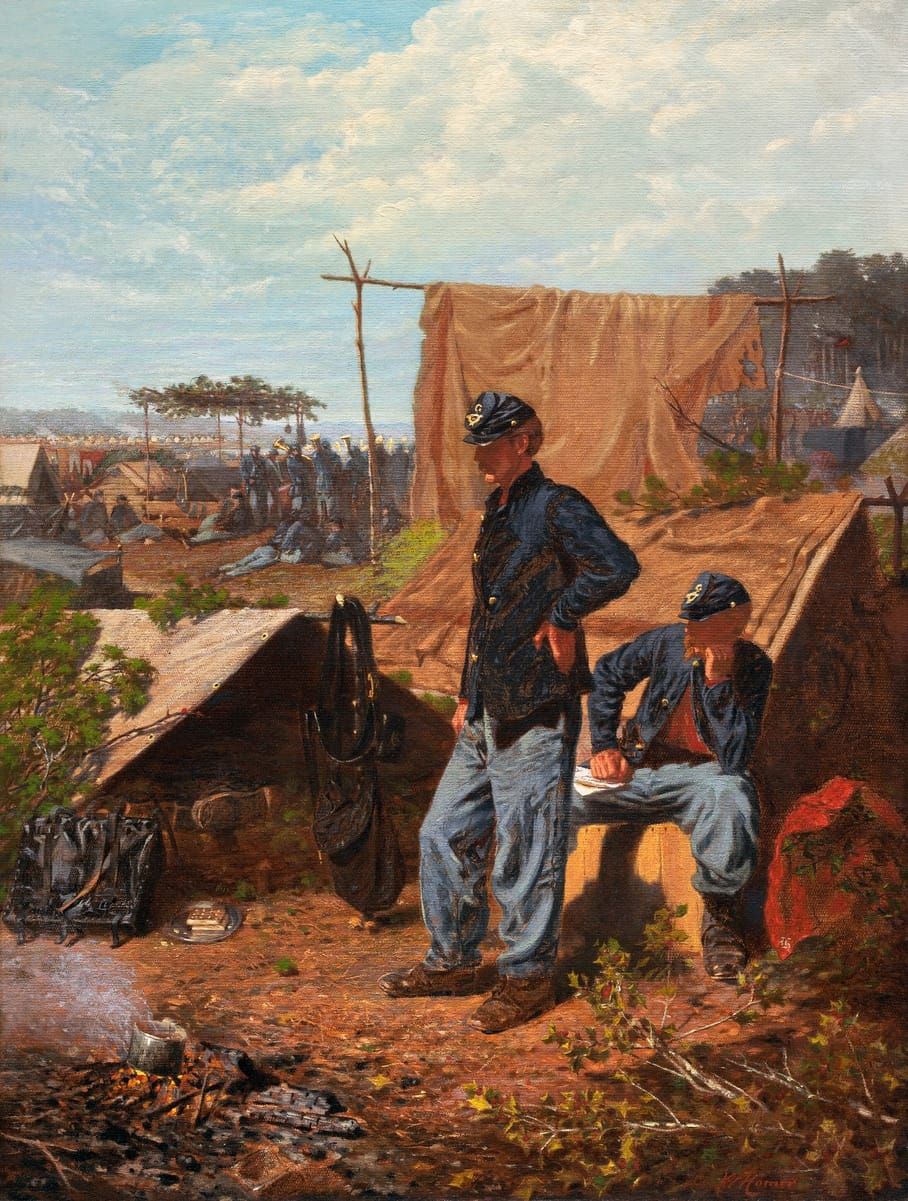
미국의 전설적인 사실주의 거장 윈슬로 호머(Winslow Homer, 1836–1910)가 1863년에 완성한 초기 유화 대표작 <즐거운 나의 집(Home, Sweet Home)>은 남북전쟁의 긴장감이 감도는 버지니아 전선의 임시 막사촌에서 울려 퍼지는 군악대의 선율을 들으며 고향에 두고 온 가족과 따스한 보금자리를 그리워하는 두 북군 병사의 애틋한 향수와 인간적인 고뇌를 가장 진솔하고 가슴 뭉클한 필치로 포착해 낸 수작입니다.
이 작품은 가로 약 54.6cm, 세로 약 75.6cm(약 21.5 x 29.5인치)의 웅장한 세로형 캔버스 위에 정교한 정통 유화 기법으로 제작되었으며, 거친 흙바닥과 모닥불의 숯검정, 그리고 임시 천막으로 쓰인 누더기 담요의 빳빳한 질감에는 도톰한 임파스토를 밀도 있게 얹고, 짙푸른 북군 군복에 내려앉은 찬란한 오후 햇살과 저 멀리 맑게 트인 하늘에 피어오른 뭉게구름의 대기감을 섬세한 명암 대비와 사실적인 붓 터치로 완벽히 구현해 냈습니다.
현재 미국 워싱턴 D.C. 국립미술관(National Gallery of Art)에 소장되어 있는 이 그림은 1862년 버지니아주 요크타운 포위 공격 당시의 야영지를 배경으로, 천막 앞에 한 손을 허리에 얹고 우두커니 서서 먼 곳을 응시하는 병사와 나무 상자에 걸터앉아 편지를 손에 쥔 채 턱을 괴고 깊은 상념에 잠긴 병사, 그리고 저 멀리 언덕 위에서 '즐거운 나의 집(Home, Sweet Home)'을 연주하는 군악대의 모습을 담고 있습니다.
이 그림 뒤에는 종군 화가로서 전선의 참상과 병사들의 일상을 가장 가까이서 지켜보았던 호머의 깊은 휴머니즘과 흥미진진한 비하인드가 깃들어 있습니다. 당시 호머는 포탄이 터지는 영웅적인 전투 장면보다도, 고향에 대한 그리움과 전쟁의 피로를 온몸으로 견뎌내던 평범한 청년들의 진솔한 감정이야말로 남북전쟁의 가장 비극적이면서도 숭고한 진실이라고 믿었습니다.
호머는 모닥불 연기가 피어오르는 막사 앞의 차분한 분위기와 병사들의 자연스러운 자세를 스케치하기 위해 모닥불 맞은편 흙바닥에 화구 상자를 펼쳤습니다. 깊은 생각에 잠겨 포즈를 취하던 상자 위의 병사가 끓고 있던 작은 냄비의 커피 냄새에 코를 킁킁거리다 턱을 괴고 있던 손이 미끄러져 모자가 벗겨지는 바람에 옆에 서 있던 동료가 쿡쿡 웃음을 터뜨리는 유쾌한 소동이 벌어졌습니다.
모자를 주워 쓰며 쑥스러운 듯 털털하게 웃는 병사를 보며 호머는 환하게 웃었습니다. 호머는 "잠깐, 그대로 가만히 있게! 저 멀리 울려 퍼지는 군악대 나팔 소리에 귀를 기울이며 고향의 어머니와 따스한 화롯가를 떠올리는 자네들의 그 그윽한 눈빛이야말로 오늘 남부의 햇살 아래서 피어난 가장 거룩한 생명의 시라네!"라며 격려했고, 병사들의 정겨운 실루엣과 바닥의 작은 양철 주전자를 놓칠세라 신나게 붓을 놀려 화면 우측 하단 흙바닥 속에 'W. Homer' 서명을 힘차게 새겨 넣었다는 감동적인 일화가 전해집니다.
화면 좌측 전경의 낡은 가죽 배낭과 딱딱한 건빵(Hardtack)이 담긴 접시, 나뭇가지에 걸린 총집과 붉은 모포, 그리고 화면 뒤편 언덕 그늘에 옹기종기 모여 앉아 군악대의 연주를 경청하는 수많은 장병들의 생생한 디테일은 호머가 전선의 현장감을 얼마나 진솔하고 세심한 애정으로 관찰했는지를 증명합니다.
미술사학자들은 이 작품을 호머가 1863년 국립 디자인 아카데미에 출품하여 화단과 평단의 열광적인 찬사를 받으며 전업 화가로서의 입지를 확고히 굳힌 초기 최고 명작으로 평가합니다.
당시 비평가들은 "이 그림은 단순한 전쟁 풍속화가 아니라 남과 북을 막론하고 모든 미국인의 가슴을 울리는 진정한 영혼의 찬가"라고 극찬했으며, 영웅주의적 과장을 배제하고 전쟁의 참호 속에서도 꺾이지 않는 인간 본연의 그리움과 평화에 대한 갈망을 숭고한 시각 언어로 승화시켰다는 높은 평가를 받습니다.
작품을 마주할 때 관람자의 무의식적인 시선은 인물들의 듬직한 수직 구도와 천막의 삼각형을 따라 매우 안정적이고 포근한 타원형 순환 궤적을 그리며 이동합니다. 관람객의 눈길은 가장 먼저 화면 중앙에서 모자를 비스듬히 쓰고 짙푸른 군복을 입은 채 먼 곳을 응시하는 우뚝 선 병사의 단단한 어깨와 집중된 얼굴에 머뭅니다.
이어 시선은 그의 발아래로 길게 드리워진 짙고 따스한 그림자를 타고 화면 우측으로 이동하여, 나무 상자에 걸터앉아 편지를 쥐고 고향 생각에 잠긴 동료 병사의 고요한 실루엣과 붉은 담요의 따스한 색채로 자연스럽게 미끄러져 내려옵니다.
두 병사의 깊은 교감을 확인한 시선은 화면 좌측 전경으로 흘러가, 피어오르는 연기를 머금은 작은 모닥불과 낡은 가죽 배낭, 그리고 군용 건빵이 놓인 양철 접시의 소박한 질감을 훑고 지나갑니다.
이후 시선은 천막 지지대를 타고 화면 좌측 상단 언덕으로 올라가, 푸른 나뭇가지 차양 아래서 나팔을 불며 음악을 연주하는 군악대와 그 주변에 편안히 누워 휴식을 취하는 장병들의 정겨운 대열을 지나, 화면 상단에 눈부시게 펼쳐진 청명한 하늘과 뭉게구름의 광활한 대기감 속으로 시원하게 상승한 뒤, 다시 고향을 그리는 두 병사의 굳건한 자세로 돌아와 깊고 아늑한 시각적 안착을 이룹니다.
이러한 유려한 시선의 순환은 관람자의 내면에 깊은 심리적 안정감과 뭉클한 정서적 안도감을 선물합니다. 타닥타닥 타오르는 모닥불의 온기와 귓가에 울리는 듯한 아련한 음악 소리, 그리고 맑은 하늘이 자아내는 여유로운 공간감은, 복잡한 일상의 번잡함과 피로에 지친 현대인의 무의식에 마치 지친 하루를 마치고 따뜻한 집으로 돌아와 휴식을 취하는 듯한 깊은 이완과 감각적 평온을 선사합니다.
거친 전쟁터의 비바람 속에서도 가장 순수한 사랑과 희망을 마음속에 품고 내일을 묵묵히 준비하는 병사들의 건강하고 의연한 자태는, 보는 이에게 일상의 번뇌를 내려놓고 삶의 가장 소중한 안식처와 내면의 깊은 평정을 되찾아 주는 든든한 치유의 위로를 건냅니다.
Home, Sweet Home
Completed in 1863 by the celebrated American realist master Winslow Homer (1836–1910), the monumental early oil masterpiece Home, Sweet Home stands as an extraordinary tour de force capturing the poignant nostalgia, quiet resilience, and profound human dignity of Union soldiers stationed along the Virginia front with peerless emotional truth.
Measuring approximately 54.6 cm wide by 75.6 cm high on canvas, the work showcases Homer's consummate command of oil technique, applying thick, tactile impasto to the sun-baked campsite soil, the charred campfire embers, and the weathered canvas shelter, while articulating the radiant afternoon sunlight illuminating the infantrymen's dark regulation blue uniforms, the cartridge box, and the billowing cumulus clouds with crisp atmospheric precision.
Preserved in the prestigious permanent collection of the National Gallery of Art in Washington, D.C., this iconic painting portrays an encampment of the Army of the Potomac during the Siege of Yorktown, where two soldiers pause before their crude pup tent—one standing in quiet reverie with hand on hip and the other seated upon a hardtack crate, chin in hand, holding a letter—as a regimental brass band plays the beloved melody of 'Home, Sweet Home' on the distant ridge.
Behind this historic canvas lies Homer's firsthand experience as a battlefield artist who shared the mud, hunger, and homesickness of the troops. Looking far beyond sensationalized battlefield charges, Homer recognized that the true moral heartbeat of the Civil War lay in the quiet, reflective moments when young soldiers clung to memories of hearth and kin.
Setting up his easel near the smoky hearth to record the natural postures of the men and the interplay of deep shadows against the dusty ground, Homer observed the scene.
When the seated soldier lost in thought over his letter leaned too heavily upon his hand and knocked his forage cap onto the dirt as the coffee pot began to bubble, his companion chuckled aloud, breaking the solemn quiet with friendly warmth.
As the soldier retrieved his cap with a sheepish grin, Homer laughed heartily in return, remarking that their quiet contemplation amidst the distant brass strains was the truest living poetry of devotion an artist could ever welcome onto his canvas. Homer swiftly applied rich strokes of indigo, raw umber, and glowing white to capture the unposed dignity of the men, proudly inscribing 'W. Homer' across the earthen shadows in the lower right foreground.
The battered leather knapsack resting on the lower left, the plate containing hardtack crackers beside the small tin boiler, and the crowd of soldiers resting beneath the arbor in the distance listening to the band serve as authentic testaments to Homer's deeply observant eye for the humble poetry of soldier life.
Art historians celebrate Home, Sweet Home as Homer's definitive artistic breakthrough at the National Academy of Design in 1863, praising its psychological depth, structural harmony, and universal resonance. Acclaimed by contemporary critics as a profound national hymn that transcended factional strife, the painting elevated the everyday hardships of the common soldier into a timeless visual sanctuary of enduring love, moral fortitude, and restorative peace.
When engaging with the painting, the viewer's unconscious gaze undertakes an inherently soothing and grounding visual journey. The eye is initially welcomed by the sun-drenched silhouette of the standing infantryman in the center, lingering upon his peaked cap, regulation coat, and quiet, outward contemplation.
The gaze then glides downward along the long shadow cast across the earthen floor to the companion seated upon the wooden crate, taking in his thoughtful posture, resting hand, and the warm accent of the red blanket draped nearby.
Sweeping toward the left across the foreground, the viewer's attention meets the steaming tin cup over the campfire, the tin plate of hardtack, and the heavy leather pack before rising along the timber posts of the tent.
Finally, ascending toward the distant camp arbor where the regimental band plays beneath the vast, sunlit blue sky, the eye embraces the broad spatial expanse before settling comfortably back into the anchored, resolute presence of the soldiers.
This rhythmic visual journey fosters profound psychological reassurance, gentle nostalgia, and deep emotional stillness within the observer. The tactile immersion in warm sunshine, wood smoke, and unhurried campsite melody acts as an intuitive emotional balm, dispelling ambient modern fatigue and soothing inner tension.
By presenting a world where human love and the yearning for home remain unbowed amidst the trials of life, Homer offers the observer a comforting sanctuary of mindfulness, inspiring a deep sense of renewal, sweet contentment, and enduring inner peace.
본 리뷰에서 작품을 제외한 컨텐츠의 저작권은 팔렛트제주에 있습니다.
"퍼블릭도메인 고전명화"를 제외한 모든 창작 콘텐츠는 저작권법 제4조 및 제10조에 의거하여 보호됩니다. 무단 도용시 저작권법 제136조(벌칙)에 의거, 당사의 사전 서면 승인 없는 저작권 침해 행위를 금지합니다.