전투 전날 밤의 야영 - The Bivouac Fire on the Potomac
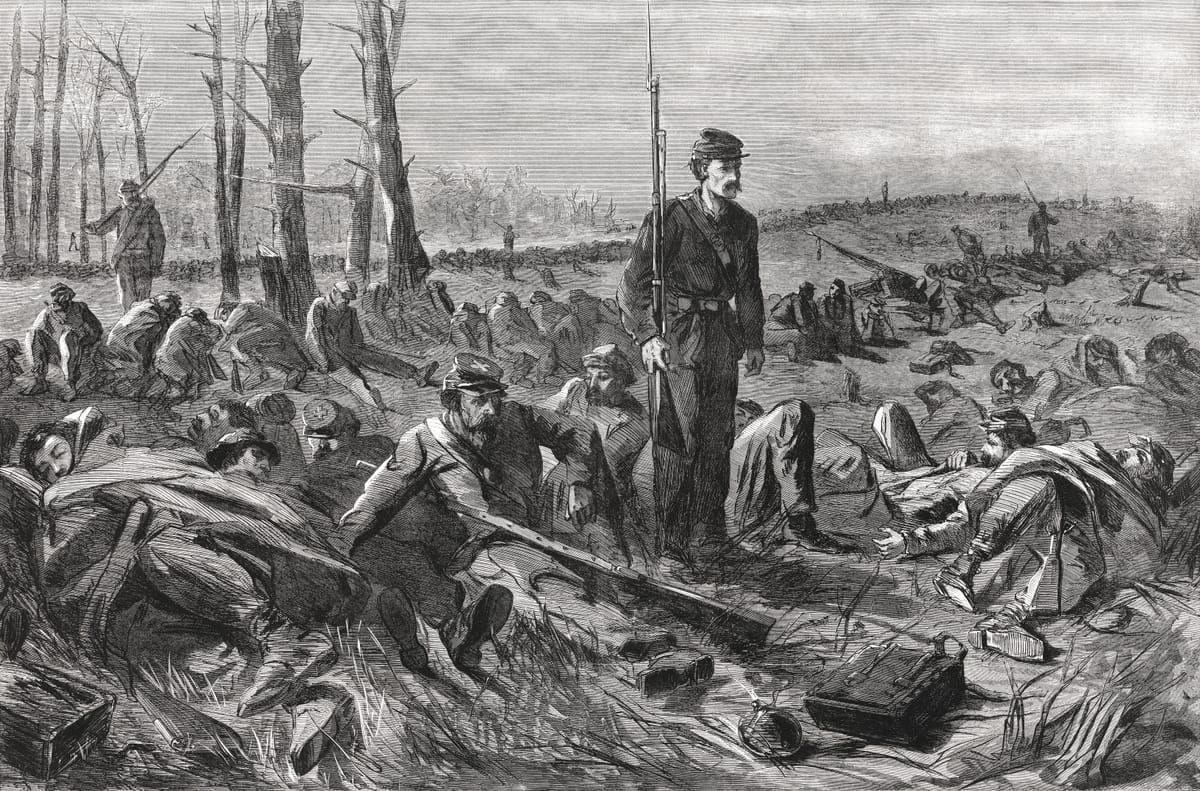
미국의 전설적인 사실주의 거장 윈슬로 호머(Winslow Homer, 1836–1910)가 1862년에 발표한 목판화 명작 <전투 전날 밤의 야영(The Bivouac Fire on the Potomac / The Army of the Potomac - A Bivouac)>은 미국 남북전쟁의 참혹한 포화 속에서도 인간적인 온기와 병사들의 진솔한 숨결을 가장 사실적으로 포착해 낸 역사적 기록화입니다.
이 작품은 가로 52.5cm, 세로 35.0cm 크기의 목판 인쇄용 종이 위에 정교하게 선을 새겨 넣은 목판화(Wood engraving) 기법으로 제작되었으며, 당대 최고의 시사 주간지였던 하퍼스 위클리(Harper's Weekly)를 통해 대중에게 공개되었습니다.
현재 미국 메트로폴리탄 미술관(The Metropolitan Museum of Art) 및 국회도서관 등에 소장되어 있는 이 판화는 버지니아주 포토맥 전선에서 결전을 앞둔 북군 병사들이 황량한 들판에 모포를 깔고 지친 몸을 누인 채 잠을 청하거나 서로 웅크려 기대어 있는 야영지의 새벽 풍경을 담고 있습니다.
이 그림에는 남북전쟁 당시 종군 화가로 포토맥 군단에 직접 합류했던 20대 청년 호머의 생생한 현장 경험과 인간적인 비하인드가 가득합니다. 당시 다른 화가들이 지휘관들의 웅장한 기마 돌격이나 영웅적인 전투 장면만을 과장되게 그릴 때, 호머는 진흙투성이 군복을 입은 사병들의 텐트 속으로 들어가 그들의 진짜 삶을 스케치북에 담았습니다.
전선에서 병사들과 똑같이 딱딱한 비스킷인 하드택(Hardtack)을 씹고 젖은 땅바닥에서 모포 한 장으로 밤을 지새우던 호머는, 병사들이 전투의 공포를 잊기 위해 장작불 주위에 모여 고향 노래를 부르고 낡은 편지를 꺼내 읽는 모습에 깊은 감동을 받았습니다.
특히 호머는 총탄이 빗발치는 낮보다 적막이 감도는 차가운 새벽녘에 병사들의 인간적인 고뇌와 그리움이 가장 짙게 드러난다는 사실을 간파했습니다. 그는 장전된 소총을 단단히 쥐고 꼿꼿이 선 보초병의 굳은 표정과, 그 발치 아래에서 어린아이처럼 웅크려 단잠에 빠진 전우들의 모습을 대비시키며 전쟁터의 무거운 긴장감과 연대감을 탁월하게 포착했습니다.
미술사학자들은 이 작품을 호머가 위대한 미국 리얼리즘의 개척자로 우뚝 서게 된 출발점으로 평가합니다. 영웅주의적 환상을 걷어내고 죽음의 문턱에 선 평범한 청년들의 고단함과 형제애를 정직하게 기록함으로써, 미국 시각 예술사에서 전쟁을 다루는 패러다임을 바꾼 기념비적인 명작으로 찬사를 보냅니다.
작품을 마주할 때 관람자의 무의식적인 시선은 매우 입체적이고 서사적인 궤적을 그리며 움직입니다. 관람객의 눈길은 가장 먼저 화면 중앙에 긴 총검을 하늘 높이 세운 채 굳건하게 서 있는 보초병의 키 큰 실루엣과 그의 결연한 눈빛에 닿습니다.
이어 시선은 그의 발아래 땅바닥에 거친 모포를 둘러쓰고 누워 있는 부상병들과 피로에 지쳐 잠든 병사들의 수평적인 무리로 자연스럽게 내려갑니다. 흩어진 가방과 수통, 장전된 총기들을 차례로 훑은 시선은 좌측의 앙상한 겨울 숲과 우측 언덕 너머로 아득하게 펼쳐진 거대한 군단의 능선으로 확장되며 전장의 광활한 공간감을 인식하게 합니다.
이러한 유려한 시선의 순환은 관람자의 내면에 깊은 심리적 안도감과 뭉클한 공감을 불러일으킵니다. 어둡고 삭막한 전장의 분위기 속에서도 전우들을 지키기 위해 묵묵히 밤을 지새우는 보초병의 든든한 존재감은, 복잡한 일상의 불안과 고독에 지친 현대인의 무의식에 강력한 보호막과 심리적 지지대를 형성해 줍니다.
내일의 운명을 알 수 없는 거친 상황 속에서도 서로의 온기에 기대어 고요히 안식을 취하는 병사들의 모습은, 삶의 치열한 전선에서 살아가는 우리에게 서로를 보듬는 연대의 가치와 내면의 깊은 평온을 되찾아 주는 따뜻한 치유의 울림을 선사합니다.
The Bivouac Fire on the Potomac
Published in 1862 by the legendary American realist master Winslow Homer (1836–1910), the wood engraving masterpiece The Bivouac Fire on the Potomac (The Army of the Potomac - A Bivouac) stands as an extraordinary historical visual narrative capturing the authentic human spirit and quiet fraternity of soldiers amidst the harrowing turmoil of the American Civil War.
Measuring 52.5 cm wide by 35.0 cm high on paper, this refined wood engraving was masterfully executed for Harper's Weekly, the nation's leading illustrated journal of the era, introducing groundbreaking realism to the American public.
Preserved in the esteemed permanent collections of The Metropolitan Museum of Art and the Library of Congress, this print dramatically portrays Union soldiers of the Army of the Potomac resting on a frost-bitten field in Virginia on the eve of battle, wrapped in coarse woolen blankets while a steadfast sentry stands guard.
Behind this poignant image lies the authentic frontline experience of young Homer, who served as a special artist embedded directly within the Union regiments. While contemporary illustrators indulged in theatrical, romanticized battle charges and glorified commanders on horseback, Homer chose to live alongside the common infantrymen in the mud and trenches.
Sharing the meager rations of hardtack and enduring freezing nights on the bare earth, Homer developed a profound reverence for the quiet dignity and resilience of ordinary recruits. He observed how the men gathered closely to sing nostalgic songs, mend worn uniforms, and re-read cherished letters from home to stave off the terror of impending combat.
Homer recognized that the true essence of the war lay not in sensational gunfire, but in the vulnerable, contemplative stillness of dawn. By contrasting the towering, vigilant sentinel clutching his bayoneted musket with the exhausted comrades sleeping curled at his feet, Homer immortalized the profound tension between protective duty and fragile human endurance.
Art historians universally acclaim this work as the definitive foundation of Homer's celebrated career in American realism. By stripping away patriotic melodrama and presenting an unvarnished testament to brotherhood and fatigue, Homer revolutionized war documentation, elevating journalistic engraving into enduring, monumental fine art.
When engaging with the print, the viewer's unconscious gaze undertakes a deeply resonant and grounding visual journey. The eye is initially drawn to the vertical silhouette of the sentinel standing resolutely at the center, his bayonet piercing the pale horizon as he keeps watch.
The gaze then descends to the scattered foreground, wandering across the weary soldiers wrapped in heavy cloaks, pausing over discarded canteens, cartridge boxes, and grounded rifles. Sweeping outward toward the stark, bare trees on the left and the distant, crowded bivouac lines stretching across the hills, the viewer takes in the vast, solemn theater of war.
This rhythmic visual journey fosters profound psychological reassurance and emotional empathy within the observer. The steadfast sentinel acts as a subconscious anchor of safety and vigilance, offering a protective presence that dispels inner anxiety and feelings of vulnerability.
By showcasing individuals who find solace and rest in mutual warmth despite the uncertainty of the morrow, Homer offers a timeless sanctuary of fortitude, inspiring a deep sense of connection, inner stillness, and compassionate resilience amidst life's most challenging trials.
본 리뷰에서 작품을 제외한 컨텐츠의 저작권은 팔렛트제주에 있습니다.
"퍼블릭도메인 고전명화"를 제외한 모든 창작 콘텐츠는 저작권법 제4조 및 제10조에 의거하여 보호됩니다. 무단 도용시 저작권법 제136조(벌칙)에 의거, 당사의 사전 서면 승인 없는 저작권 침해 행위를 금지합니다.