정원의 숙녀 (제라늄 꽃을 가꾸는 여인) - Lady in a Garden / In the Garden
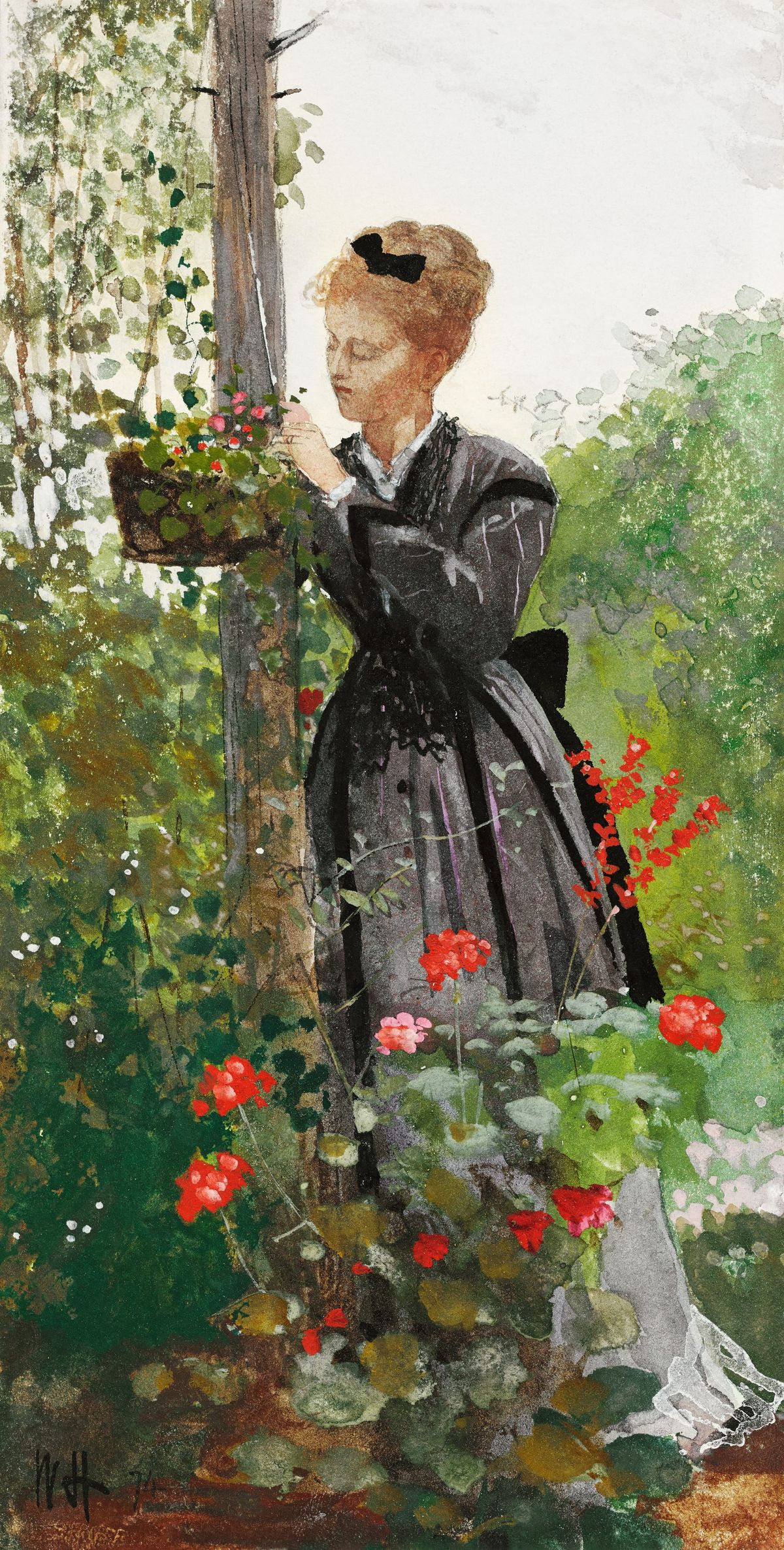
미국의 전설적인 사실주의 거장 윈슬로 호머(Winslow Homer, 1836–1910)가 1876년에 완성한 수채화 명작 <정원의 숙녀(Lady in a Garden / In the Garden)>는 싱그러운 여름 녹음과 붉은 제라늄 꽃들이 만발한 정원에서 화초를 정성스레 손질하는 젊은 여인의 단아하고 청초한 자태를 가장 우아하고 서정적인 필치로 포착해 낸 수작입니다.
이 작품은 가로 약 24.8cm, 세로 약 50.2cm의 세로형 구도를 지닌 고급 워브 종이 위에 흑연 연필로 인물의 윤곽과 정원의 구조를 섬세하게 잡은 후, 투명 수채 물감의 촉촉한 번짐과 스며듦으로 풍성한 나뭇잎의 녹음을 표현하고, 종이 본연의 밝은 흰 여백과 얇은 불투명 물감 터치를 활용해 여인의 목깃과 드레스의 하얀 레이스 장식, 그리고 붉은 제라늄 꽃잎의 생생한 색채감을 극대화한 혼합 수채 기법으로 제작되었습니다.
현재 미국 주요 미술관 및 유수 프라이빗 컬렉션에서 높이 평가받는 이 그림은 뉴욕 근교 또는 뉴잉글랜드의 고즈넉한 정원에서, 검은 리본을 머리에 꽂고 줄무늬가 은은하게 감도는 우아한 흑회색 드레스를 입은 숙녀가 나무 기둥에 걸린 걸이형 화분을 매만지며 고요한 사색에 잠겨 있는 여름날의 한때를 담고 있습니다.
이 그림 뒤에는 1870년대 중반 미국 근대 여성들의 우아하고 자율적인 일상 풍경에 깊은 시각적 매료를 느꼈던 호머의 따뜻한 시선과 흥미진진한 비하인드가 깃들어 있습니다. 당시 호머는 번잡한 도시 화실을 벗어나 자연과 교감하는 여성들의 꾸밈없는 동작을 화폭에 담는 일에 흠뻑 빠져 있었습니다.
호머는 짙은 녹음 속에서 붉은 제라늄과 여인의 검은 드레스가 빚어내는 세련된 색채 대비를 포착하기 위해 정원 나무 그늘 아래에 이젤을 세웠습니다. 포즈를 취하던 여인이 걸이형 화분의 꽃송이를 다듬다가 갑자기 날아든 호기심 많은 꿀벌 한 마리에 깜짝 놀라 찻잔 같은 작은 화분을 떨어뜨릴 뻔한 유쾌한 소동이 벌어졌습니다.
여인이 놀란 가슴을 쓸어내리며 "화가 선생님, 벌들이 제 드레스 속으로 숨어들까 봐 꽃을 제대로 만질 수가 없네요!"라며 부끄러운 듯 미소를 짓자, 호머는 "잠깐, 그대로 계십시오! 벌조차 진짜 꽃인 줄 알고 날아들게 만든 당신의 그 단아한 손끝과 뺨의 온기야말로 오늘 아침 햇살이 이 정원에 허락한 가장 아름다운 생명력입니다!"라며 호탕하게 웃었습니다. 호머는 여인의 섬세한 손동작과 붉은 제라늄 꽃밭의 화사한 조화를 놓칠세라 신나게 붓을 놀렸고, 화면 좌측 하단에 'WH 76'이라는 모노그램 서명을 힘차게 새겨 넣었다는 다정한 일화가 전해집니다.
나무 기둥을 타고 올라가는 덩굴식물의 싱그러운 잎사귀들과 드레스 자락 아래로 탐스럽게 피어난 붉은 제라늄 군락, 그리고 햇살을 받아 맑게 빛나는 정원 뒤편의 은은한 대기감은 호머가 자연과 인간의 조화를 얼마나 세심하고 진솔한 애정으로 관찰했는지를 증명합니다.
미술사학자들은 이 작품을 호머가 1870년대 중반에 도달한 야외 광선 연구와 세로형 평면 구성의 대표적인 수작으로 평가합니다.
일본 우키요에 판화의 세로형 구도에서 영향을 받은 현대적인 조형 감각과 프랑스 인상주의를 앞서는 맑은 야외 채광 묘사를 완벽히 결합하여, 여성의 정적인 아름다움과 대자연의 생명력을 미국 고유의 맑고 서정적인 시각 언어로 승화시켰다는 극찬을 받습니다.
작품을 마주할 때 관람자의 무의식적인 시선은 인물의 단정한 수직선을 따라 매우 차분하고 안정적인 S자형 순환 궤적을 그리며 이동합니다. 관람객의 눈길은 가장 먼저 화면 상단 중앙에서 검은 리본을 머리에 얹고 조용히 눈을 내리깐 숙녀의 단아한 옆모습과 투명한 피부에 머뭅니다.
이어 시선은 화초를 부드럽게 감싸 쥔 여인의 섬세한 손끝과 나무 기둥에 매달린 걸이형 화분의 아기자기한 붉은 꽃망울을 타고, 드레스의 맵시 있는 허리선과 검은 리본 매듭으로 자연스럽게 미끄러져 내려옵니다.
여인의 우아한 옷자락을 확인한 시선은 화면 하단을 화사하게 채운 붉은 제라늄 꽃들의 생생한 색채와 싱그러운 초록 잎사귀들을 차례로 훑어 내려가며, 드레스 밑단으로 은은하게 퍼지는 하얀 레이스의 부드러운 질감에 닿습니다.
이후 시선은 정원 좌우를 가득 메운 짙푸른 녹음의 시원한 그늘과 화면 우측 상단으로 아스라이 쏟아져 내리는 맑은 햇살의 대기감을 거쳐, 다시 여인의 지적인 얼굴과 고요한 눈빛으로 돌아와 완전하고 아늑한 시각적 안착을 이룹니다.
이러한 유려한 시선의 순환은 관람자의 내면에 깊은 심리적 안정감과 포근한 내적 평온을 선물합니다. 싱그러운 풀 내음과 붉은 꽃잎이 전하는 화사한 생명력, 그리고 서늘한 나무 그늘이 자아내는 정원의 공간감은, 복잡한 일상의 긴장과 피로에 지친 현대인의 무의식에 마치 조용한 여름 정원에 서서 맑은 공기를 깊게 들이마시는 듯한 깊은 이완과 감각적 휴식을 선사합니다.
세상의 번잡한 소란에서 벗어나 꽃과 나무를 가꾸며 자연과 다정한 교감을 나누는 여인의 의연한 자태는, 보는 이에게 일상의 번뇌를 내려놓고 삶의 가장 소박하고 아름다운 행복과 내면의 깊은 평정을 되찾아 주는 든든한 치유의 위로를 건냅니다.
Lady in a Garden / In the Garden
Completed in 1876 by the celebrated American realist master Winslow Homer (1836–1910), the watercolor masterpiece Lady in a Garden (also known as In the Garden) stands as an extraordinary tour de force capturing the sun-drenched tranquility, refined elegance, and gentle intimacy of nineteenth-century American botanical leisure.
Measuring approximately 24.8 cm wide by 50.2 cm high on fine wove paper, the work showcases Homer's refined command of transparent watercolor within an elongated vertical format, laying down fluid wet-on-wet washes of viridian and sap green across the verdant foliage, while contrasting the delicate black velvet bow, the striped charcoal day dress, and the brilliant scarlet geranium blossoms with crisp paper reserves and subtle gouache accents.
Preserved and celebrated across prominent public and private American art collections, this painting portrays a graceful young woman standing beside a rustic wooden arbor in a peaceful New York or New England garden, gently tending to a hanging basket of trailing flowers amidst clusters of blooming geraniums under the soft daylight.
Behind this captivating watercolor lies Homer's deep appreciation for the quiet domestic poetry of rural and suburban retreats during the Centennial year of 1876. Moving away from bustling urban environments, Homer sought out tranquil country estates to record the unvarnished grace of modern women in harmony with cultivated nature.
Setting up his portable easel within the cool garden bower to capture the interplay of direct sunlight and leafy shadow, Homer observed his model tending to the plants.
When a wandering honeybee buzzed near the hanging basket, causing the startled woman to catch the mossy planter just before it tipped, she laughed with bashful embarrassment.
As the woman remarked that the garden insects were determined to disrupt her dignified composure, Homer smiled warmly and replied that the curious bee was merely paying homage to the natural grace of her hands and the living warmth of her presence. Homer rapidly applied fluid washes of red, charcoal, and emerald before the shifting sunbeams could fade, proudly inscribing the monogram 'WH 76' in the lower left margin.
The climbing vines embracing the weathered wooden post, the vibrant clusters of scarlet geraniums framing the lower foreground, and the soft white flounces peeking beneath the hem of her walking skirt serve as authentic testaments to Homer's deeply observant eye for botanical freshness and feminine poise.
Art historians celebrate this painting as a defining highlight of Homer's mid-1870s watercolor oeuvre, praising its modern compositional daring and atmospheric lightness. Influenced by the vertical elegance of Japanese woodblock prints, Homer harmonized the disciplined structure of portraiture with the organic spontaneity of outdoor light, elevating an everyday horticultural pastime into a timeless visual sanctuary of pastoral purity and contemplative peace.
When engaging with the painting, the viewer's unconscious gaze undertakes an inherently soothing and grounding visual journey. The eye is initially welcomed by the refined profile of the young woman in the upper register, lingering upon the black ribbon tied in her auburn hair and her serene, downward gaze.
The gaze then travels along the delicate curve of her fingers tending to the hanging basket, cascading gently down the tailored folds of her dark striped gown and the broad black sash resting at her waist.
Descending through the radiant red blossoms of the geraniums bursting across the lower foreground, the viewer's attention meets the crisp white lace trimming her skirt before resting upon the mossy ground.
Finally, sweeping upward through the lush, dappled green canopy of surrounding garden foliage and the soft, sun-warmed atmosphere beyond, the eye settles comfortably back into the calm, anchored presence of the lady.
This rhythmic visual journey fosters profound psychological reassurance, sensory awakening, and deep emotional stillness within the observer. The tactile immersion in fragrant blossoms, cool garden shade, and unhurried summer breezes acts as an intuitive emotional balm, dispelling ambient modern fatigue and soothing inner tension.
By presenting an idyllic world where human gentleness exists in pure harmony with the rhythm of flourishing nature, Homer offers the observer a comforting sanctuary of mindfulness, inspiring a deep sense of renewal, sweet contentment, and enduring inner peace.
본 리뷰에서 작품을 제외한 컨텐츠의 저작권은 팔렛트제주에 있습니다.
"퍼블릭도메인 고전명화"를 제외한 모든 창작 콘텐츠는 저작권법 제4조 및 제10조에 의거하여 보호됩니다. 무단 도용시 저작권법 제136조(벌칙)에 의거, 당사의 사전 서면 승인 없는 저작권 침해 행위를 금지합니다.