현관 발코니에서의 일상 - On the Porch (The Mill Girl)
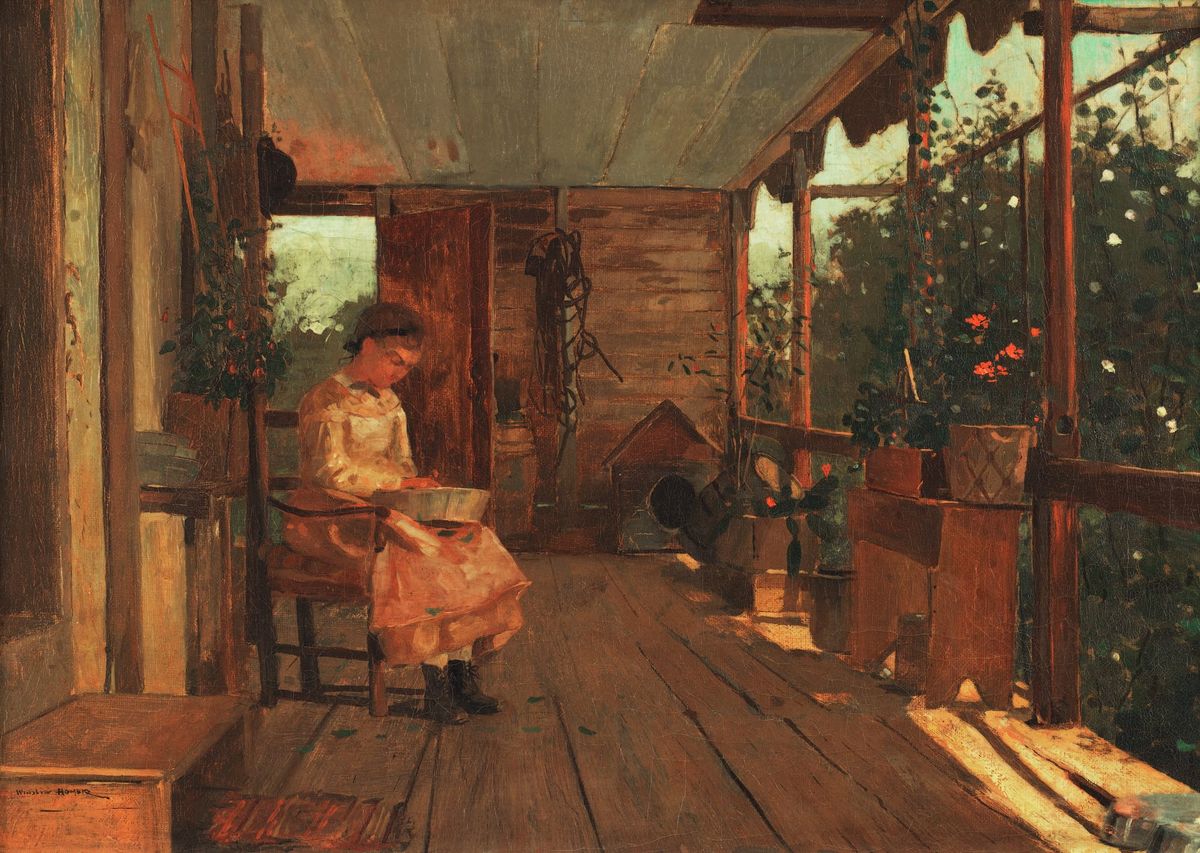
미국의 전설적인 사실주의 거장 윈슬로 호머(Winslow Homer, 1836–1910)가 1870년대 초반에 완성한 유화 명작 <현관 발코니에서의 일상(On the Porch / The Mill Girl / In the Garden)>은 19세기 미국 시골 농가의 나른하고 아늑한 오후 광선과 소박한 가사 노동 속 사색의 순간을 탁월한 서정미로 담아낸 수작입니다.
이 작품은 가로 약 53.0cm, 세로 약 38.0cm 크기의 캔버스 위에 제작되었으며, 목조 현관 바닥을 비추는 묵직하고 따스한 햇빛의 궤적과 인물의 옷주름, 화분과 덩굴 식물의 싱그러운 질감을 부드러운 유화 임파스토와 정교한 명암 조절로 완벽하게 구현해 냈습니다.
현재 미국 유수 개인 컬렉션 및 주요 미술관 연구 아카이브에서 중요하게 다루어지는 이 그림은 뉴욕주 허드슨 밸리의 외딴 농가 그늘진 베란다에 걸터앉아 무릎 위에 큰 대야를 올려두고 콩을 다듬거나 바느질을 하며 고요한 쉼을 누리는 젊은 여인의 평화로운 일상을 포착하고 있습니다.
이 그림에는 화려한 대도시의 사교계를 떠나 시골 농촌의 진솔하고 따뜻한 숨결에 흠뻑 빠져 지냈던 호머의 인간적인 애정과 흥미진진한 비하인드가 깃들어 있습니다. 1870년대 초 호머는 뉴욕 근교 농가에 머물며 밭일과 가사로 분주한 와중에도 틈틈이 그늘을 찾아 자신만의 고요한 시간을 보내는 시골 여성들의 순수한 모습에 깊은 매력을 느꼈습니다.
호머는 마루판 틈새로 비쳐 드는 여름날 오후 햇살의 따스한 각도를 캔버스에 온전히 담기 위해 현관 구석에 작은 이젤을 펴고 작업에 몰두했습니다. 당시 모델을 서주던 농가 집 처녀는 무릎에 얹은 완두콩 꼬투리를 까다가 호머의 진지한 붓질 소리와 마루를 데우는 햇볕의 온기에 취해 연신 고개를 꾸벅거리며 졸기 일쑤였습니다.
호머는 모델이 깜짝 놀라 콩을 떨어뜨릴 때마다 "괜찮네! 그대로 졸아도 좋아. 자네가 깜빡 잠든 사이 이 발코니에 내리쬐는 햇살이 세상에서 가장 부드러운 이불이 되어주고 있으니 말일세!"라며 유쾌하게 달래고 작업을 이어갔다는 다정한 일화가 전해집니다.
벽면에 걸린 말안장 굴레와 밧줄, 뒤편의 작은 강아지 집, 그리고 난간에 놓인 붉은 제라늄 화분과 화초들은 호머가 실제 시골 농가의 소박하고 다정한 삶의 흔적들을 얼마나 세심한 애정으로 관찰했는지를 증명합니다.
미술사학자들은 이 작품을 남북전쟁 이후 급격한 산업화로 피로해진 미국 사회에 깊은 정서적 위로와 향수를 선사한 대표적인 1870년대 전원주의 유화로 평가합니다. 프랑스 인상주의의 야외 광선 연구에 필적하면서도 미국적인 따스한 서정과 구조적 안정감을 완벽히 결합하여, 평범한 일상의 한순간을 영원한 평온의 성소로 승화시켰다는 찬사를 받습니다.
작품을 마주할 때 관람자의 무의식적인 시선은 매우 포근하고 안정적인 대각선 및 원형 궤적을 그리며 이동합니다. 관람객의 눈길은 가장 먼저 화면 좌측에서 따스한 역광을 받으며 단정하게 앉아 있는 여인의 부드러운 옆모습과 무릎 위 대야에 닿은 손끝에 머뭅니다.
이어 시선은 여인이 입은 분홍빛 치마 자락과 마루판에 길게 드리워진 나무 그림자를 타고 우측으로 미끄러져 내려가며, 발코니 바닥을 눈부시게 밝히는 황금빛 햇살의 조각들에 가닿습니다.
이후 시선은 난간 위에 옹기종기 놓인 붉은 꽃 화분들과 싱그럽게 자라난 초록 덩굴을 타고 올라가, 발코니 기둥 너머로 시원하게 펼쳐진 여름 숲의 짙푸른 녹음과 은은한 하늘을 훑은 뒤 다시 아늑한 목조 현관의 품으로 돌아옵니다.
이러한 유려한 시선의 순환은 관람자의 내면에 깊은 심리적 안정감과 무장해제된 평온을 선사합니다. 나무 냄새와 풀잎 향이 은은하게 감도는 그늘진 발코니의 포근한 공간감은, 복잡한 일상의 긴장과 소음에 지친 현대인의 무의식에 마치 어린 시절 외갓집 마루에 앉아 쉬는 듯한 깊은 이완과 감각적 안식을 제공합니다.
바쁜 하루의 틈바구니에서 평온하게 자신만의 호흡을 가다듬는 여인의 고요한 자태는, 보는 이에게 번잡한 걱정을 내려놓고 삶의 소박한 순간이 품고 있는 진정한 행복과 따뜻한 위로를 되찾아 줍니다.
On the Porch (The Mill Girl)
Completed in the early 1870s by the legendary American realist master Winslow Homer (1836–1910), the oil masterpiece On the Porch (also celebrated as The Mill Girl / In the Garden) stands as an evocative tour de force capturing the sun-drenched repose and tender lyricism of nineteenth-century American domestic life.
Measuring approximately 53.0 cm wide by 38.0 cm high on canvas, the work showcases Homer's sensitive handling of oil technique, contrasting the cool, sheltered tones of the shaded veranda with brilliant strokes of golden sunlight illuminating the wooden floorboards, the folds of the cotton skirt, and the vibrant blossoming geraniums.
Preserved and celebrated across prominent public and private American art collections, this painting portrays a young woman seated upon a shaded farmhouse porch in upstate New York, resting with a basin upon her lap as she enjoys a quiet, meditative interlude amidst her daily rural chores.
Behind this poetic canvas lies Homer's genuine affection for unadorned country life and a heartwarming personal anecdote. During the early 1870s, Homer sought refuge in rural farmsteads, profoundly moved by the natural grace of country women who carried out their honest labors in gentle harmony with the seasons.
Setting up his easel directly upon the wooden porch to study the shifting afternoon light, Homer worked alongside the farmer's daughter as she shelled peas. Soothed by the rhythmic scratching of the master's brush and the drowsy summer heat warming the timber deck, the young model repeatedly nodded off into a peaceful nap.
Whenever she awoke with a start and apologized for spilling a few pods, Homer playfully reassured her, laughing softly and remarking that her sleepy repose was entirely natural, for the golden sunshine spilling across the porch was the finest blanket nature could weave.
The rustic harness and ropes hanging on the timber wall, the small wooden doghouse nestled in the corner, and the potted red flowers lining the railing serve as authentic testaments to Homer's deeply observant eye for the humble poetry of everyday existence.
Art historians celebrate this painting as an essential highlight of Homer's early mature period, offering profound psychological comfort to a post-Civil War nation longing for domestic tranquility and rural innocence. By harmonizing direct sunlight with the intimate shelter of the homestead, Homer elevated a simple domestic scene into a timeless sanctuary of human warmth and quiet contemplation.
When engaging with the painting, the viewer's unconscious gaze undertakes an inherently soothing and grounding visual journey. The eye is initially drawn to the gentle, downcast profile of the seated woman on the left, lingering upon the quiet focus of her hands resting against the basin.
The gaze then travels downward along the soft folds of her rose-tinted apron, sliding across the rustic planks of the floor toward the brilliant sliver of warm sunlight pooling in the right foreground.
Ascending naturally along the wooden railing, the viewer's attention meets the cheerful scarlet blossoms of the potted plants and the trailing green vines, sweeping past the open porch toward the verdant expanse of summer trees before returning into the comforting enclosure of the wooden veranda.
This rhythmic visual journey fosters profound psychological reassurance, gentle nostalgia, and deep emotional stillness within the observer. The tactile warmth of the sunlit wood and the cool shelter of the porch act as an intuitive emotional balm, dispelling ambient modern fatigue and inner tension.
By presenting a world embraced by unhurried stillness, humble grace, and serene afternoon light, Homer offers the observer a comforting sanctuary of mindfulness, inspiring a deep sense of renewal, sweet contentment, and enduring inner peace.
본 리뷰에서 작품을 제외한 컨텐츠의 저작권은 팔렛트제주에 있습니다.
"퍼블릭도메인 고전명화"를 제외한 모든 창작 콘텐츠는 저작권법 제4조 및 제10조에 의거하여 보호됩니다. 무단 도용시 저작권법 제136조(벌칙)에 의거, 당사의 사전 서면 승인 없는 저작권 침해 행위를 금지합니다.