호박 밭에서 (가을의 수확) - For to Be a Farmer's Boy / The Pumpkin Patch
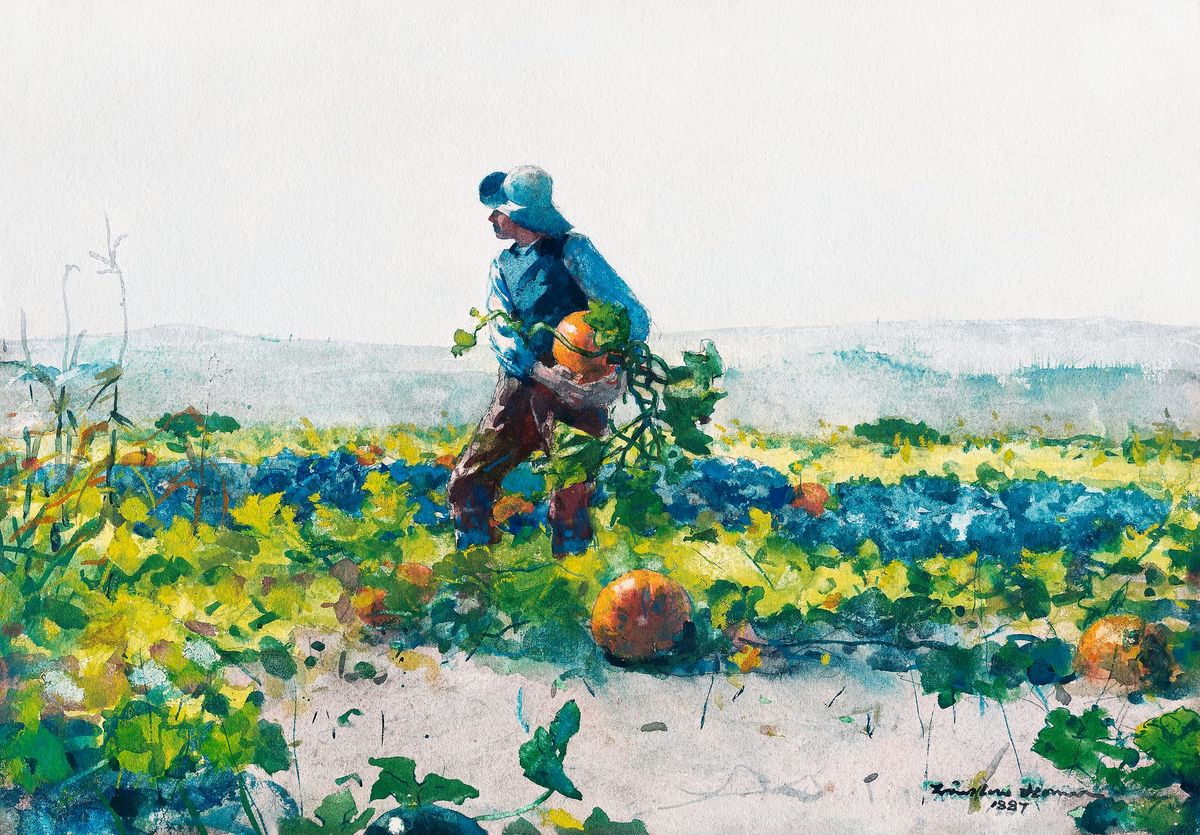
미국의 전설적인 사실주의 거장 윈슬로 호머(Winslow Homer, 1836–1910)가 1887년에 완성한 수채화 명작 <호박 밭에서(For to Be a Farmer's Boy / The Pumpkin Patch)>는 눈부신 가을 햇살 아래 드넓은 밭에서 탐스럽게 익은 커다란 주황빛 호박을 품에 안고 걸어가는 시골 소년의 소박하고 활기찬 노동을 가장 맑고 서정적인 필치로 포착해 낸 수작입니다.
이 작품은 가로 약 50.8cm, 세로 약 35.6cm 크기의 고급 워브 종이 위에 흑연 연필로 소년의 다부진 걸음걸이와 밭고랑의 윤곽을 경쾌하게 잡은 후, 투명 수채 물감의 유려한 번짐과 스며듦으로 싱그러운 초록 잎사귀와 청명한 가을 하늘을 칠하고, 종이 본연의 밝은 흰 여백과 날카로운 긁어내기 기법을 활용해 햇살에 빛나는 백색 모자와 탐스러운 호박 껍질의 입체감을 극대화한 혼합 수채 기법으로 완성되었습니다.
현재 미국 시카고 미술관(The Art Institute of Chicago)에 소장되어 있는 이 그림은 가을 수확철을 맞이한 뉴욕주 근교의 평화로운 농장에서, 챙이 넓은 흰 모자와 푸른 셔츠를 입은 소년이 넝쿨째 뜯어낸 묵직한 호박을 가슴에 품고 저 멀리 지평선을 바라보며 걸어가는 풍요롭고 한가로운 계절의 순간을 담고 있습니다.
이 그림 뒤에는 대도시의 번잡함을 벗어나 전원생활의 건강하고 진솔한 일상에 깊이 매료되었던 호머의 따뜻한 시선과 흥미진진한 비하인드가 깃들어 있습니다. 작품의 원래 제목인 '농부의 아이가 되기 위해(For to Be a Farmer's Boy)'는 당시 미국과 영국에서 널리 불리던 오랜 전통 민요의 구절에서 따온 것으로, 흙을 일구며 정직하게 살아가는 삶에 대한 호머의 깊은 애정과 존경이 담겨 있습니다.
호머는 가을빛이 가득 찬 밭고랑 사이에서 햇살을 받아 빛나는 호박의 탐스러운 색채를 담기 위해 밭두렁에 자리를 잡고 스케치를 시작했습니다.
호박을 품에 안고 걷던 소년이 넝쿨에 발이 걸려 기우뚱거리다 호박을 떨어뜨릴 뻔하자, 당황한 표정으로 호박을 꼭 끌어안으며 가쁜 숨을 몰아쉬는 유쾌한 소동이 벌어졌습니다.
그 모습을 본 호머는 껄껄 웃음을 터뜨리며 "그대로 안고 있게! 호박을 놓치지 않으려는 자네의 그 다부진 팔과 반짝이는 눈빛이야말로 대지가 오늘 아침 내 종이 위에 선물한 가장 풍성한 결실이라네!"라며 소년을 격려했습니다. 호머는 소년의 건강한 실루엣과 밭고랑 사이에 뒹구는 둥근 호박들을 번개처럼 종이 위에 포착해 냈고, 화면 우측 하단에 'Winslow Homer 1887' 서명을 힘차게 새겨 넣었다는 다정한 일화가 전해집니다.
밭고랑 사이에 점점이 흩어져 탐스럽게 익어가는 황금빛 호박들과 싱그럽게 뻗어나간 짙푸른 넝쿨 잎사귀, 그리고 저 멀리 부드러운 안개처럼 아스라이 펼쳐진 푸른 구릉 지대의 지평선은 호머가 북미 전원의 생생한 가을 정취를 얼마나 진솔하고 세심한 애정으로 관찰했는지를 증명합니다.
미술사학자들은 이 작품을 호머가 1880년대 후반에 완성한 수채화 연작 중에서도 조형적 활력과 색채의 투명성이 절정에 달한 걸작으로 평가합니다.
프랑스 인상주의의 야외 광선 연구를 뛰어넘어 투명 수채화의 맑은 여백을 활용해 가을 태양빛의 눈부신 광학적 효과를 완벽히 구현했으며, 소년의 건강한 노동과 대지의 풍요로운 결실을 미국 고유의 맑고 서정적인 시각 언어로 승화시켰다는 극찬을 받습니다.
작품을 마주할 때 관람자의 무의식적인 시선은 전경의 호박 넝쿨을 따라 매우 안정적이고 경쾌한 대각선 및 원형 순환 궤적을 그리며 이동합니다. 관람객의 눈길은 가장 먼저 화면 중앙 상단에서 햇살을 가득 받아 은백색으로 빛나는 모자를 쓰고 고개를 돌려 수평선을 바라보는 소년의 듬직한 옆모습에 머뭅니다.
이어 시선은 소년의 가슴팍에 묵직하게 안겨 있는 탐스러운 주황빛 호박과 길게 늘어진 초록빛 넝쿨 줄기를 타고 내려와, 화면 중앙 아래 흙바닥 위에 둥글게 자리 잡은 또 하나의 커다란 황금빛 호박으로 자연스럽게 미끄러져 갑니다.
호박의 싱그러운 온기를 확인한 시선은 밭고랑을 따라 좌우로 풍성하게 뻗어나간 짙푸른 호박잎과 노란 꽃잎의 활기찬 물결을 훑고, 화면 뒤편의 맑고 투명한 하늘과 은은한 가을 안개가 감도는 푸른 지평선으로 시원하게 상승합니다.
이후 시선은 화면 우측 구석에서 따스하게 빛나는 또 다른 호박의 둥근 양감과 밭둑의 흙길을 거쳐 다시 호박을 든 소년의 굳건한 발걸음으로 돌아와 완전하고 아늑한 시각적 안착을 이룹니다.
이러한 유려한 시선의 순환은 관람자의 내면에 깊은 심리적 안정감과 풍요로운 계절의 충만함을 선물합니다. 싱그러운 흙 내음과 따스한 가을 햇살, 그리고 주황빛 호박들이 자아내는 목가적인 공간감은, 복잡한 일상의 번잡함과 피로에 지친 현대인의 무의식에 마치 풍요로운 시골 밭둑에 서서 맑은 가을바람을 깊게 들이마시는 듯한 깊은 이완과 감각적 휴식을 선사합니다.
대지의 품속에서 정직한 땀방울로 자연의 풍요로운 결실을 수확하며 씩씩하게 걸어가는 소년의 건강한 자태는, 보는 이에게 일상의 번뇌를 내려놓고 삶의 가장 소박하고 따뜻한 행복과 내면의 깊은 평정을 되찾아 주는 든든한 치유의 위로를 건냅니다.
For to Be a Farmer's Boy / The Pumpkin Patch
Completed in 1887 by the celebrated American realist master Winslow Homer (1836–1910), the watercolor masterpiece For to Be a Farmer's Boy (also widely known as The Pumpkin Patch) stands as an extraordinary tour de force capturing the sun-drenched abundance, agrarian innocence, and crisp seasonal poetry of nineteenth-century American rural youth.
Measuring approximately 50.8 cm wide by 35.6 cm high on fine wove paper, the work showcases Homer's consummate mastery of transparent watercolor, laying down fluid wet-on-wet washes of brilliant viridian, cerulean, and glowing cadmium orange across the sunlit patch, while utilizing crisp paper reserves and sharp scraping to articulate the sun-bleached hat, the sprawling pumpkin vines, and the radiant autumn daylight.
Preserved in the prestigious permanent collection of The Art Institute of Chicago, this iconic painting portrays a crisp autumn morning on an upstate New York farm, where a young farm boy wearing a broad white sun hat and blue vest cradles a hefty orange pumpkin trailing its leafy vine, striding through the fertile field beneath a pale, luminous sky.
Behind this restorative watercolor lies Homer's lifelong affection for rural simplicity and the honest dignity of pastoral life. The original title derives from a beloved old English and American folk ballad celebrating the virtuous and independent life of a country boy working the soil, reflecting Homer's profound respect for the rhythms of the harvest.
Setting up his portable stool directly along the furrowed rows to record the vivid chromatic contrast between the blazing pumpkins and the lush green leaves, Homer watched the youth gather the harvest.
When the boy momentarily tripped over a tangled runner, clutching the heavy pumpkin tightly to his chest to keep it from tumbling to the dirt, he flushed with shy embarrassment.
Delighted by the lad's spirited agility, Homer laughed heartily, reassuring him that his determined grip and sunlit stride were the finest gifts the living earth could ever offer an artist's paper. Homer swiftly applied fluid washes of amber, indigo, and emerald to capture the crisp freshness of the morning air, proudly inscribing 'Winslow Homer 1887' in the lower right corner.
The large ripe pumpkins resting contentedly amidst the broad leaves, the delicate tendrils reaching across the soil, and the soft misty horizon of distant hills serve as authentic testaments to Homer's deeply observant eye for the humble majesty of the harvest.
Art historians celebrate this painting as a defining highlight of Homer's late 1880s watercolor oeuvre, praising its breathtaking luminosity, compositional balance, and modern chromatic vitality. Preceding the broader adoption of Impressionism in America through its uninhibited handling of direct sunlight and open white paper, Homer elevated an everyday agricultural chore into a timeless visual sanctuary of pastoral abundance, youth, and enduring hope.
When engaging with the painting, the viewer's unconscious gaze undertakes an inherently soothing and grounding visual journey. The eye is initially welcomed by the sunlit silhouette of the young boy in the upper center, lingering upon his white sun hat, rolled shirtsleeves, and his focused profile looking toward the open horizon.
The gaze then travels downward along his sturdy arms to the ripe orange pumpkin clasped against his chest, following the trailing green vine to the large pumpkin resting quietly upon the ground below.
Tracing the vibrant green and yellow foliage sprawling across the fertile soil, the viewer's attention meets the gentle horizontal bands of blue-green vegetation in the middle distance before ascending into the pale, vaporous expanse of the breezy autumn sky.
Finally, sweeping across the warm, sun-baked earth where additional pumpkins dot the field on the right, the eye settles comfortably back into the steady, purposeful stride of the young farmer.
This rhythmic visual journey fosters profound psychological reassurance, gentle nostalgia, and deep emotional stillness within the observer. The tactile immersion in warm sunshine, fragrant soil, and crisp country air acts as an intuitive emotional balm, dispelling ambient modern fatigue and soothing inner tension.
By presenting an idyllic world where honest labor flourishes in pure harmony with the rhythm of the seasons, Homer offers the observer a comforting sanctuary of mindfulness, inspiring a deep sense of renewal, sweet contentment, and enduring inner peace.
본 리뷰에서 작품을 제외한 컨텐츠의 저작권은 팔렛트제주에 있습니다.
"퍼블릭도메인 고전명화"를 제외한 모든 창작 콘텐츠는 저작권법 제4조 및 제10조에 의거하여 보호됩니다. 무단 도용시 저작권법 제136조(벌칙)에 의거, 당사의 사전 서면 승인 없는 저작권 침해 행위를 금지합니다.