허드슨강의 여울목 - Hudson River, Logging / The Hudson River
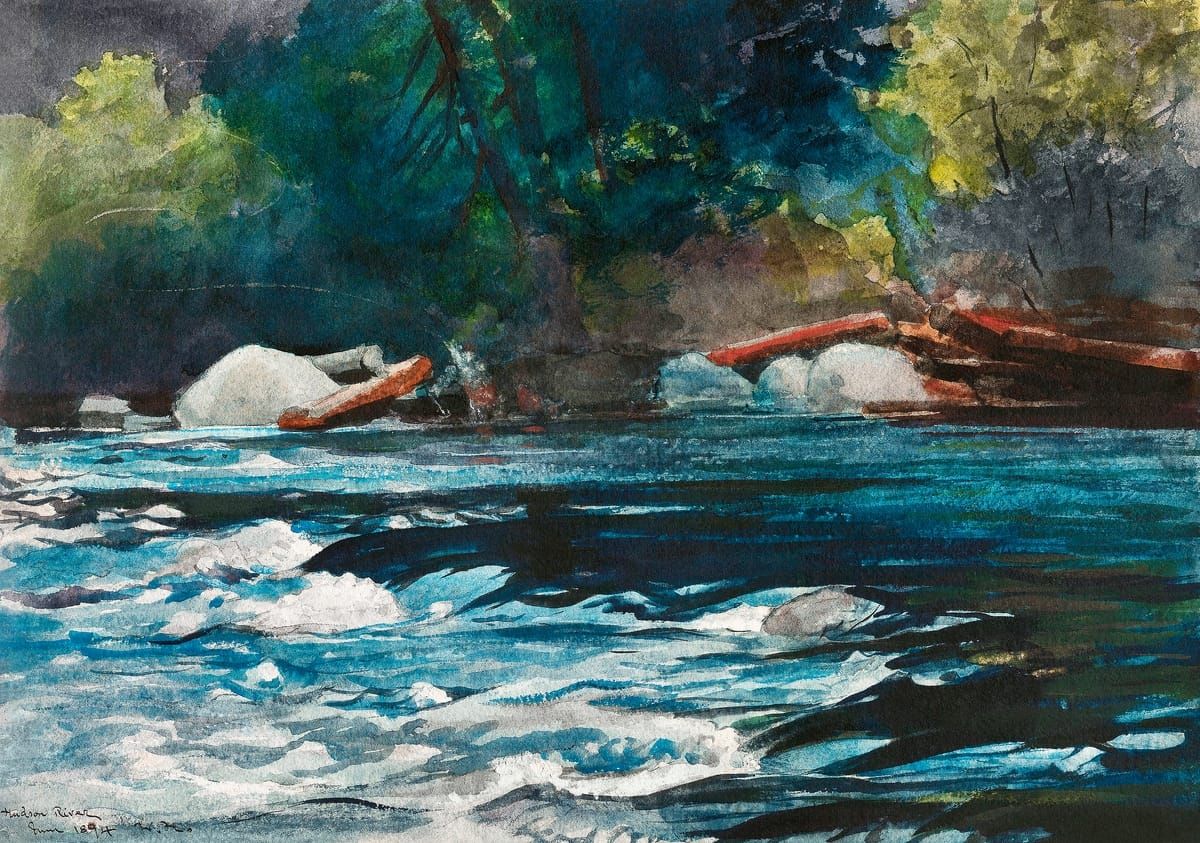
미국의 전설적인 사실주의 거장 윈슬로 호머(Winslow Homer, 1836–1910)가 1894년 6월에 완성한 투명 수채화 명작 <허드슨강의 여울목(Hudson River, Logging / The Hudson River)>은 원시림의 깊은 침묵을 가로지르는 차가운 강물의 역동적인 흐름과 벌목된 통나무들이 빚어내는 야생의 서정미를 가장 맑고 대담한 필치로 포착해 낸 수작입니다.
이 작품은 가로 약 50.8cm, 세로 약 35.6cm 크기의 고급 워브 종이 위에 제작되었으며, 울창한 숲 그늘과 깊은 소의 짙푸른 청록빛 물결에 투명 수채 물감을 촉촉하게 번지게 하는 웨트 온 웨트(wet-on-wet) 기법을 구사하고, 종이 본연의 밝은 흰 여백을 과감히 남겨두거나 날카롭게 긁어내는 스크래칭 기법을 통해 포효하며 부서지는 은백색 급류의 포말과 젖은 바위의 반사광을 완벽히 조형해 냈습니다.
현재 미국 주요 미술관 및 유수 프라이빗 컬렉션에서 높이 평가받는 이 그림은 뉴욕주 북부 애디론댁(Adirondacks) 산악 지대를 흐르는 허드슨강 상류의 거친 여울목에서, 숲속 바위틈에 걸린 붉은 통나무들과 세차게 소용돌이치며 흘러내리는 맑고 시원한 강물의 웅장한 순간을 담고 있습니다.
이 그림 뒤에는 대자연의 거친 호흡을 캔버스에 담기 위해 험준한 계곡 바위 위에 홀로 자리를 잡았던 호머의 뜨거운 집념과 유쾌한 인간적 비하인드가 깃들어 있습니다. 1890년대 호머는 애디론댁의 깊은 숲속을 흐르는 허드슨강 상류에서 낚시와 탐험을 즐기며, 벌목꾼들이 강물에 띄워 보내는 거대한 통나무와 급류의 충돌에 깊은 시각적 흥미를 느꼈습니다.
호머는 물살이 가장 거세게 굽이치는 계곡 바위 위에 휴대용 수채화 도구를 펼쳐두고 물결의 속도감을 관찰했습니다. 당시 물살을 타고 내려오던 거대한 통나무 하나가 바위에 부딪히며 엄청난 물보라를 일으켜 호머의 수채화 용지와 옷을 흠뻑 적시는 돌발 상황이 벌어졌습니다.
물에 젖어 덜덜 떨면서도 호머는 당황하기는커녕 걱정스레 달려온 숲 가이드에게 "이 차가운 강물이 직접 내 종이 위로 뛰어들어 가장 신선한 붓질을 해주고 갔네!"라며 껄껄 웃었습니다. 호머는 젖은 종이 위에 번개처럼 붓을 놀려 붉은 통나무의 묵직한 질감과 강물 아래로 일렁이는 짙은 그림자를 단숨에 새겨 넣었고, 화면 좌측 하단에 'Hudson River June 1894 W.H.'라는 선명한 서명을 힘차게 남겼다는 훈훈한 일화가 전해집니다.
강가에 하얗게 솟아오른 둥근 화강암 바위들과 햇살을 받아 붉게 빛나는 통나무들의 거친 단면, 그리고 짙푸른 녹음 사이로 비치는 영롱한 햇살은 호머가 야생의 생생한 현장감을 온몸으로 느끼며 기록한 불후의 흔적입니다.
미술사학자들은 이 작품을 호머가 1890년대 중반에 완성한 애디론댁 수채화 연작 중에서도 조형적 순도와 즉흥적 표현력이 절정에 달한 명작으로 평가합니다.
인간의 형상을 직접 드러내지 않고도 벌목된 나무와 거센 물살의 대비를 통해 자연의 웅장한 생명력과 인간 노동의 흔적을 완벽한 균형으로 조화시켰으며, 프랑스 인상주의를 뛰어넘는 미국 고유의 맑고 서늘한 빛의 시각 언어를 완성했다는 극찬을 받습니다.
작품을 마주할 때 관람자의 무의식적인 시선은 급류의 유려한 물살을 따라 매우 시원하고 역동적인 S자형 수평 궤적을 그리며 이동합니다. 관람객의 눈길은 가장 먼저 화면 중앙 하단에서 눈부신 은백색으로 부서지며 소용돌이치는 급류의 하얀 포말과 차가운 에메랄드빛 물결에 사로잡힙니다.
이어 시선은 물살의 빠른 속도감을 타고 화면 우측의 깊고 짙푸른 소의 그림자로 미끄러져 들어간 뒤, 강둑 바위틈에 걸터앉아 붉은빛을 뿜어내는 벌목 통나무들의 견고한 선체로 자연스럽게 이동합니다.
통나무의 묵직한 질감을 확인한 시선은 화면 좌측 강변에 둥글게 솟아 있는 거대한 은백색 화강암 바위를 지나, 화면 상단을 짙고 서늘하게 감싸 안은 원시림의 깊푸른 나뭇잎 터널과 그 위로 쏟아져 내리는 황금빛 햇살의 조각들로 부드럽게 상승합니다.
이후 시선은 숲의 깊은 그늘을 훑고 다시 화면 앞쪽에서 힘차게 요동치는 시원한 여울목으로 내려와 완전한 시각적 안착을 이룹니다.
이러한 유려한 시선의 순환은 관람자의 내면에 깊은 심리적 정화와 강력한 청량감을 선물합니다. 차가운 계곡물 소리와 피톤치드 가득한 원시림이 빚어내는 야생의 생생한 공기감은, 복잡한 일상의 번잡함과 피로에 지친 현대인의 무의식에 묵은 스트레스를 단숨에 쓸어내리는 시원한 카타르시스와 마음의 정화를 선사합니다.
바위에 부딪히면서도 맑고 투명하게 길을 내어 힘차게 흘러가는 강물의 의연한 흐름은, 보는 이로 하여금 일상의 번뇌를 내려놓고 삶의 어떤 장애물 앞에서도 맑고 굳세게 전진할 수 있는 내면의 깊은 평정과 활력을 되찾아 주는 든든한 치유의 위로를 건넵니다.
Hudson River, Logging / The Hudson River
Completed in June 1894 by the celebrated American realist master Winslow Homer (1836–1910), the watercolor masterpiece Hudson River, Logging (also known simply as The Hudson River) stands as an extraordinary tour de force capturing the primeval vitality, roaring alpine currents, and rustic poetry of the North American wilderness with peerless atmospheric brilliance.
Measuring approximately 50.8 cm wide by 35.6 cm high on fine wove paper, the work showcases Homer's consummate command of transparent watercolor, laying down rich wet-on-wet washes of deep indigo, emerald, and viridian across the shadowed pools, while employing sharp scraping, wiping, and untouched paper reserves to articulate the blinding white foam of the rapids and the glistening planes of river boulders.
Preserved and celebrated across prominent public and private American art collections, this painting portrays a turbulent bend along the Upper Hudson River in the Adirondack Mountains of northern New York, where rustic red timber logs rest wedged among pale granite boulders amidst churning white water beneath the dense canopy of the ancient forest.
Behind this restorative watercolor lies Homer's deep devotion to the rugged northern woods and a delightfully spirited personal anecdote. During the 1890s, Homer spent extensive seasons exploring the untamed waterways of the Adirondacks, finding endless visual inspiration in the annual river drives where loggers floated freshly felled timber downstream through perilous rapids.
Setting up his field stool upon a slippery boulder right at the water's edge to study the precise kinetic velocity of the currents, Homer was engrossed in his washes when a drifting log struck a submerged ledge, sending a tremendous wave of icy spray cascading over his paper and clothing.
Rather than taking shelter, Homer laughed heartily with his wilderness guide, exclaiming that the wild river had personally blessed the linen sheet with its purest touch. Working with lightning speed before the moisture dried, Homer swept rich russet pigments across the paper to render the glistening bark of the logs and the deep aquatic shadows, proudly inscribing the date 'Hudson River June 1894 W.H.' in the lower left corner.
The pale, sculptural granite boulders resting along the shoreline, the warm ochre tones of the timber, and the incandescent sunlight filtering through the high forest boughs stand as authentic testaments to Homer's visceral immersion in the untamed landscape.
Art historians celebrate this painting as a defining summit of Homer's mature Adirondack watercolors, extolling its radical compositional economy and modern fluidity. By balancing the unyielding mass of riverbed stones against the explosive energy of moving water and the quiet geometry of harvested timber, Homer elevated a wilderness scene into a timeless visual monument of ecological harmony and elemental power.
When engaging with the painting, the viewer's unconscious gaze undertakes an intensely refreshing and grounding visual journey. The eye is initially welcomed by the frothing white crests of water churning in the lower center, lingering upon the crisp, luminous spray bursting over submerged rocks.
The gaze then travels outward along the deep indigo and sapphire eddies on the right, gliding upward toward the rich reddish-brown contours of the fallen logs anchored against the riverbank.
Sweeping across the smooth, sunlit surface of the large pale boulder resting on the left shore, the viewer's attention ascends into the dense, velvety green boughs of the sheltering forest arching overhead, catching the warm yellow flecks of morning sunlight.
Finally, descending naturally through the crystalline blue troughs of the main channel, the eye settles back into the rhythmic, invigorating flow of the mountain river.
This rhythmic visual journey fosters profound psychological reassurance, mental lightness, and deep emotional stillness within the observer. The sensory immersion in rushing mountain waters and resinous pine air acts as an intuitive emotional balm, dispelling ambient modern fatigue and cooling inner tension.
By presenting a world embraced by pristine clarity, unhurried natural majesty, and incandescent woodland light, Homer offers the observer a comforting sanctuary of mindfulness, inspiring a deep sense of renewal, sweet contentment, and enduring inner peace.
본 리뷰에서 작품을 제외한 컨텐츠의 저작권은 팔렛트제주에 있습니다.
"퍼블릭도메인 고전명화"를 제외한 모든 창작 콘텐츠는 저작권법 제4조 및 제10조에 의거하여 보호됩니다. 무단 도용시 저작권법 제136조(벌칙)에 의거, 당사의 사전 서면 승인 없는 저작권 침해 행위를 금지합니다.