햇살 속의 소녀 - Girl in the Sun
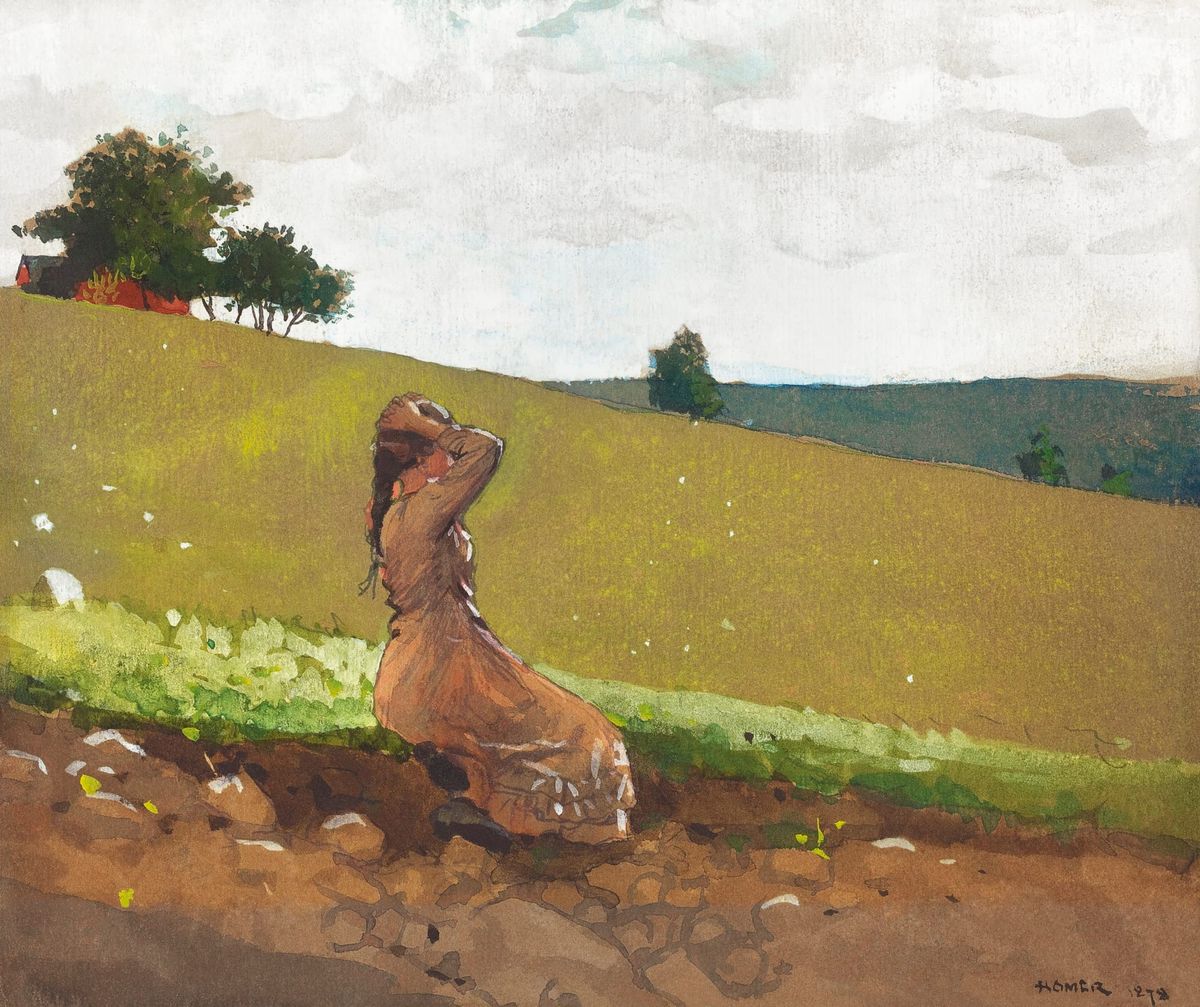
미국 사실주의 미술의 거장 윈슬로 호머(Winslow Homer, 1836–1910)가 1878년에 제작한 서정적인 수채화 걸작입니다. 현재 뉴욕 브루클린 미술관(Brooklyn Museum)에 소장되어 있으며, 실제 크기는 세로 22.4cm, 가로 27.5cm의 아담한 규격입니다.
호머는 직조 화지 위에 흑연 연필로 대상을 정밀하게 스케치한 뒤, 투명 수채물감과 불투명 과슈(Opaque watercolor)를 혼합하여 화면을 구축했습니다. 풀밭 위로 부서지는 햇살과 흩날리는 꽃가루, 드레스의 찰랑이는 밑단은 과슈의 불투명한 터치로 밝게 살려냈고, 완만한 언덕의 황록색 잔디와 흙길은 맑은 투명 수채물감의 젖은 번짐 기법으로 칠해 대자연의 온화한 부피감을 극대화했습니다.
이 작품이 탄생한 1878년 여름, 호머는 복잡한 뉴욕 화단을 떠나 뉴욕주 마운틴빌에 위치한 유서 깊은 휴튼 농장(Houghton Farm)에 머물고 있었습니다. 당시 호머는 농장의 목가적인 전원생활과 어린 소년소녀들의 순수한 일상에 깊이 매료되어 수많은 수채화 연작을 쏟아내고 있었습니다.
특히 이 시기 그림들에 자주 등장하는 땋은 머리의 소녀는 호머가 남몰래 마음에 품었던 마을 처녀이자 그의 평생 미스터리로 남은 '뮤즈'로 전해집니다. 완벽한 은둔자로 살며 평생 독신으로 지냈던 호머가 유일하게 여성 인물을 향해 따스하고 애틋한 시선을 드러낸 드문 순간이 바로 이 1870년대 후반의 농장 체류기였습니다. 훗날 미술사학자들은 호머의 휴튼 농장 수채화들을 두고 미국 남북전쟁 이후 상처 입은 대중의 마음을 어루만져 준 가장 순수하고 서정적인 미국적 목가화의 정수로 평가합니다.
관람자의 무의식적 시선은 화면 하단 흙길의 갈색 톤에서 시작하여 풀밭 턱에 앉아 두 손으로 머리를 매만지는 소녀의 부드러운 옆모습으로 이끌려 들어갑니다. 햇빛을 가리거나 바람에 흩날리는 머릿결을 정돈하는 듯한 소녀의 자연스러운 손동작은 관람객에게 즉각적인 몰입감과 친근한 정서적 온기를 전합니다.
이어 시선은 소녀가 바라보는 방향을 따라 완만하게 굽이치는 언덕의 황록색 능선을 타고 올라가 좌측 상단의 붉은 농가와 울창한 나무를 거쳐 은은한 구름이 흐르는 하늘로 확장됩니다. 거대한 자연의 품 안에 아늑하게 안겨 있는 인물의 구도는 보는 이의 마음에 깊은 정서적 안도감을 심어주며, 바쁜 일상에 쫓기던 마음을 멈추고 햇살 가득한 여름날의 고요한 휴식으로 이끄는 따뜻한 치유의 힘을 발휘합니다.
Girl in the Sun
Created in 1878 by Winslow Homer (1836–1910), a monumental figure in American Realism, this lyrical watercolor is preserved in the permanent collection of the Brooklyn Museum in New York. The delicate piece measures approximately 22.4 cm in height by 27.5 cm in width.
Executing the work on heavy wove paper, Homer laid down graphite underdrawings before layering transparent watercolor alongside delicate touches of opaque gouache. The dazzling flickers of sunlight scattered across the grassy ridge, fluttering blossoms, and the folds of the skirt were rendered with tactile white gouache, while the broad, sun-drenched hill and earthy foreground were established through fluid, warm washes that convey the gentle volume of the pastoral landscape.
During the summer of 1878, seeking refuge from the relentless pressures of the New York art scene, Homer stayed at Houghton Farm in Mountainville, New York. Captivated by the tranquil rhythms of country life, he produced an iconic series of watercolors celebrating the unadorned grace of rural youth.
The braided girl featured in this composition is widely believed to be a local farm girl who captured the artist’s quiet affection—a mysterious muse during a pivotal era in his life. Known as a lifelong bachelor and solitary figure, Homer rarely revealed such intimate tenderness toward female subjects as he did in this brief, golden period at the farm. Art historians universally celebrate this suite of works as the ultimate poetic refuge in nineteenth-century American art, offering profound pastoral solace to a nation healing in the post-Civil War era.
The viewer's subconscious gaze begins at the grounded brown tones of the path below before moving naturally toward the seated profile of the girl adjusting her hair in the warm breeze. Her unposed, intimate gesture evokes immediate warmth and emotional resonance.
From the figure, the eye ascends along the sweeping diagonal crest of the sunlit pasture, moving toward the charming red farmhouse on the crest and drifting into the luminous sky. Cradled harmoniously within the rolling expanse of nature, the composition fosters a deep sense of serenity and emotional shelter, transporting the viewer into a timeless, comforting moment of quiet contemplation under the summer sun.
본 리뷰에서 작품을 제외한 컨텐츠의 저작권은 팔렛트제주에 있습니다.
"퍼블릭도메인 고전명화"를 제외한 모든 창작 콘텐츠는 저작권법 제4조 및 제10조에 의거하여 보호됩니다. 무단 도용시 저작권법 제136조(벌칙)에 의거, 당사의 사전 서면 승인 없는 저작권 침해 행위를 금지합니다.