해먹 위의 휴식 - The Hammock
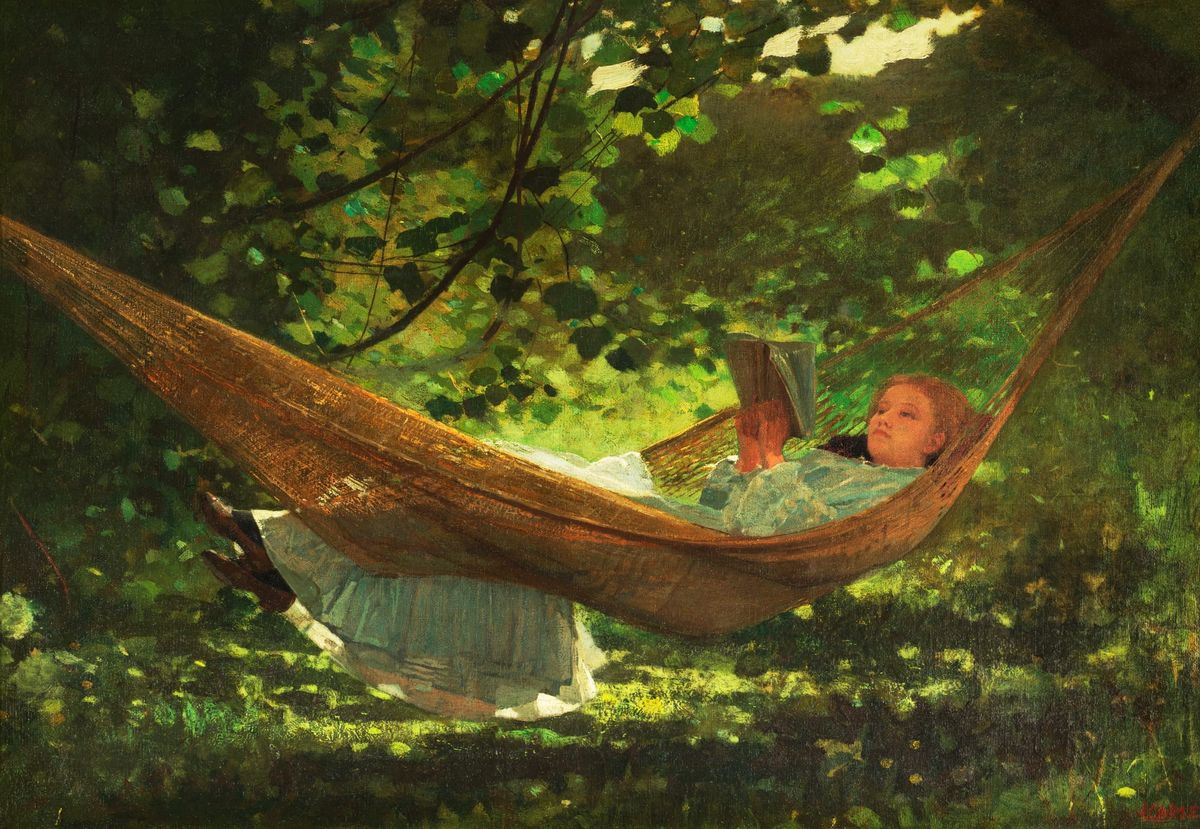
미국의 전설적인 사실주의 거장 윈슬로 호머(Winslow Homer, 1836–1910)가 1873년에 완성한 유화 명작 <해먹 위의 휴식(The Hammock)>은 울창한 여름 숲 그늘 아래서 책을 읽으며 달콤한 사색에 잠긴 여인의 모습을 가장 포근하고 서정적인 필치로 담아낸 대표작입니다.
이 작품은 가로 약 50.8cm, 세로 약 35.6cm 크기의 캔버스 위에 제작되었으며, 나뭇잎 사이로 쏟아져 내리는 영롱한 햇살의 산란과 해먹 그물망의 촘촘한 질감, 그리고 하늘빛 드레스의 주름진 자락을 섬세한 유화 붓 터치와 깊이 있는 명암 조절로 완성해 냈습니다.
현재 미국 주요 미술관 및 유수 프라이빗 컬렉션에서 높이 평가받는 이 그림은 뉴욕주 또는 매사추세츠주의 녹음 우거진 숲속에서, 두 그루의 굵은 나무 사이에 매달린 황갈색 해먹에 몸을 맡긴 채 책을 읽다가 나른한 낮잠의 유혹에 빠져드는 젊은 여인의 평화로운 순간을 포착하고 있습니다.
이 그림에는 복잡한 도시의 소란을 떠나 여름철 자연의 고요한 품에 매료되었던 호머의 따뜻한 인간미와 흥미진진한 비하인드가 깃들어 있습니다. 1870년대 초 호머는 여름 휴양지의 한적한 숲속에 머물며 자연과 인물이 완벽한 조화를 이루는 여가 풍경을 캔버스에 담는 일에 흠뻑 빠져 있었습니다.
호머는 바람에 부드럽게 흔들리는 해먹과 그 위로 떨어지는 얼룩덜룩한 햇살의 조화를 담기 위해 나무 그늘 아래에 이젤을 폈습니다. 당시 모델을 서주던 여인은 솔솔 불어오는 숲바람과 해먹의 규칙적인 흔들림, 그리고 사각거리는 나뭇잎 소리에 취해 책을 든 채 실제로 깊은 잠에 빠져들곤 했습니다.
책이 손에서 스르륵 미끄러져 떨어질 때마다 화들짝 놀라 잠에서 깬 모델이 미안해하자, 호머는 "사과할 필요 없네! 자네가 빠져든 그 달콤한 잠이야말로 이 여름 숲이 베푼 가장 완벽한 축복이라네!"라며 유쾌하게 달래고는, 몽환적인 표정으로 허공을 응시하는 여인의 나른한 눈빛을 놓칠세라 신나게 붓을 놀렸다는 다정한 일화가 전해집니다.
여인의 발끝에 신겨진 단정한 가죽 부츠와 해먹 밑으로 살포시 빠져나온 풍성한 흰색 밑단 주름, 그리고 숲속 바닥에 점점이 부서지는 에메랄드빛 햇살의 조각들은 호머가 현장의 생생한 여름 정취를 얼마나 세심한 애정으로 관찰했는지를 증명합니다.
미술사학자들은 이 작품을 호머가 1870년대에 성취한 야외 광선 연구의 백미이자, 프랑스 인상주의의 빛의 탐구에 필적하면서도 미국적인 따스한 서정과 구조적 안정감을 결합한 걸작으로 평가합니다.
빽빽한 숲의 어둠과 나뭇잎을 뚫고 들어오는 반짝이는 빛의 대비를 통해, 평범한 일상의 쉼을 영원한 평온과 낭만이 깃든 성소로 승화시켰다는 극찬을 받습니다.
작품을 마주할 때 관람자의 무의식적인 시선은 해먹의 부드러운 호를 따라 매우 안락하고 유연한 U자형 궤적을 그리며 이동합니다. 관람객의 눈길은 가장 먼저 화면 우측에서 햇살을 받아 발그레하게 빛나는 여인의 뺨과 그녀가 손에 쥐고 있는 책의 모서리에 머뭅니다.
이어 시선은 여인의 맑은 하늘빛 드레스와 그녀의 몸을 포근하게 감싸 안은 황갈색 해먹의 완만한 곡선을 타고 화면 좌측으로 부드럽게 미끄러져 내려가며, 해먹 밖으로 살포시 드러난 주름진 흰 치마와 단정한 부츠의 실루엣에 가닿습니다.
해먹의 묵직한 균형감을 확인한 시선은 해먹 줄을 따라 화면 좌측 상단의 짙푸른 나뭇가지로 솟아오른 뒤, 숲 전체를 초록빛으로 물들이는 무성한 나뭇잎 터널과 바닥에 쏟아지는 찬란한 황금빛 햇살의 조각들을 훑으며 아늑한 시각적 안착을 이룹니다.
이러한 유려한 시선의 순환은 관람자의 내면에 깊은 심리적 안정감과 무장해제된 평온을 선사합니다. 싱그러운 풀 내음과 서늘한 그늘이 감도는 숲속 해먹의 포근한 공간감은, 복잡한 일상의 긴장과 소음에 지친 현대인의 무의식에 마치 시원한 나무 그늘에 누워 낮잠을 청하는 듯한 깊은 이완과 감각적 휴식을 제공합니다.
바쁜 세상의 속도에서 벗어나 자연의 품에 온전히 몸을 맡긴 채 사색을 즐기는 인물의 고요한 자태는, 보는 이에게 번잡한 걱정을 내려놓고 삶의 가장 소박하고 맑은 행복과 내면의 깊은 평정을 되찾아 주는 따뜻한 치유의 위로를 건넵니다.
The Hammock
Completed in 1873 by the legendary American realist master Winslow Homer (1836–1910), the oil masterpiece The Hammock stands as an extraordinary tour de force capturing the sun-dappled quietude, sweet reverie, and innocent leisure of nineteenth-century American summer life.
Measuring approximately 50.8 cm wide by 35.6 cm high on canvas, the work showcases Homer's sensitive handling of oil technique, weaving delicate dappled sunlight through the dense forest canopy and contrasting rich emerald greens with the warm ochre mesh of the hammock and the soft sky-blue folds of the woman's dress.
Preserved and celebrated across prominent public and private American art collections, this painting portrays a young woman reclining within a woven hammock suspended between two sturdy trees in a sunlit woodland glade, holding an open book as she drifts into a tranquil, daydreaming rest.
Behind this idyllic canvas lies Homer's genuine delight in summertime countryside retreats and a heartwarming personal anecdote. During the early 1870s, Homer spent whole seasons recording the lyricism of vacation life and the quiet harmonies between human figures and sheltering nature.
Setting up his easel beneath the cool canopy of leafy boughs, Homer was determined to capture the rhythmic interplay of breeze and shifting sunlight.
Soothed by the gentle swaying of the woven net and the rustling leaves overhead, the young model repeatedly drifted into a genuine afternoon slumber, letting her book tilt loosely in her hands.
Whenever she woke with a start and apologized for losing her pose, Homer laughed with gentle warmth, reassuring her that her drowsy reverie was nature's finest gift upon the summer day, swiftly dabbing vibrant brushstrokes to immortalize her peaceful expression before the shadows shifted.
The delicate ruffle of the white petticoat spilling below the hammock, the dark leather boots, and the shimmering mosaic of sunlight dancing across the grass attest to Homer's deeply observant eye for the humble poetry of leisure.
Art historians celebrate this painting as a definitive jewel of Homer's early mature plein-air oeuvre, rivaling contemporary French Impressionist light studies in its luminosity while retaining a distinct American structural stability. By harmonizing deep woodland shade with incandescent flecks of daylight, Homer elevated an ordinary afternoon rest into a timeless visual sanctuary of pastoral tranquility.
When engaging with the painting, the viewer's unconscious gaze undertakes an inherently soothing and grounding visual journey. The eye is initially drawn to the gentle, sun-kissed countenance of the young woman resting on the right, lingering upon her soft gaze and the quiet weight of the book held in her hands.
The gaze then travels downward along the sweeping U-shaped curve of the woven hammock, following the crisp sky-blue and white folds of her summer gown toward the neatly laced boots on the left.
Ascending naturally along the diagonal support ropes into the leafy green canopy arching overhead, the viewer's attention sweeps across the sun-dappled glade, settling comfortably into the velvety carpet of grass and clover below.
This rhythmic visual journey fosters profound psychological reassurance, gentle nostalgia, and deep emotional stillness within the observer. The tactile immersion in cool forest shade and sun-warmed foliage acts as an intuitive emotional balm, dissolving modern stress and ambient fatigue.
By presenting a world embraced by unhurried simplicity, fertile stillness, and benevolent summer light, Homer offers the observer a comforting sanctuary of mindfulness, inspiring a deep sense of renewal, sweet contentment, and enduring inner peace.
본 리뷰에서 작품을 제외한 컨텐츠의 저작권은 팔렛트제주에 있습니다.
"퍼블릭도메인 고전명화"를 제외한 모든 창작 콘텐츠는 저작권법 제4조 및 제10조에 의거하여 보호됩니다. 무단 도용시 저작권법 제136조(벌칙)에 의거, 당사의 사전 서면 승인 없는 저작권 침해 행위를 금지합니다.