해변의 쓰러진 나무 - A Marine / Dead Tree, Marine
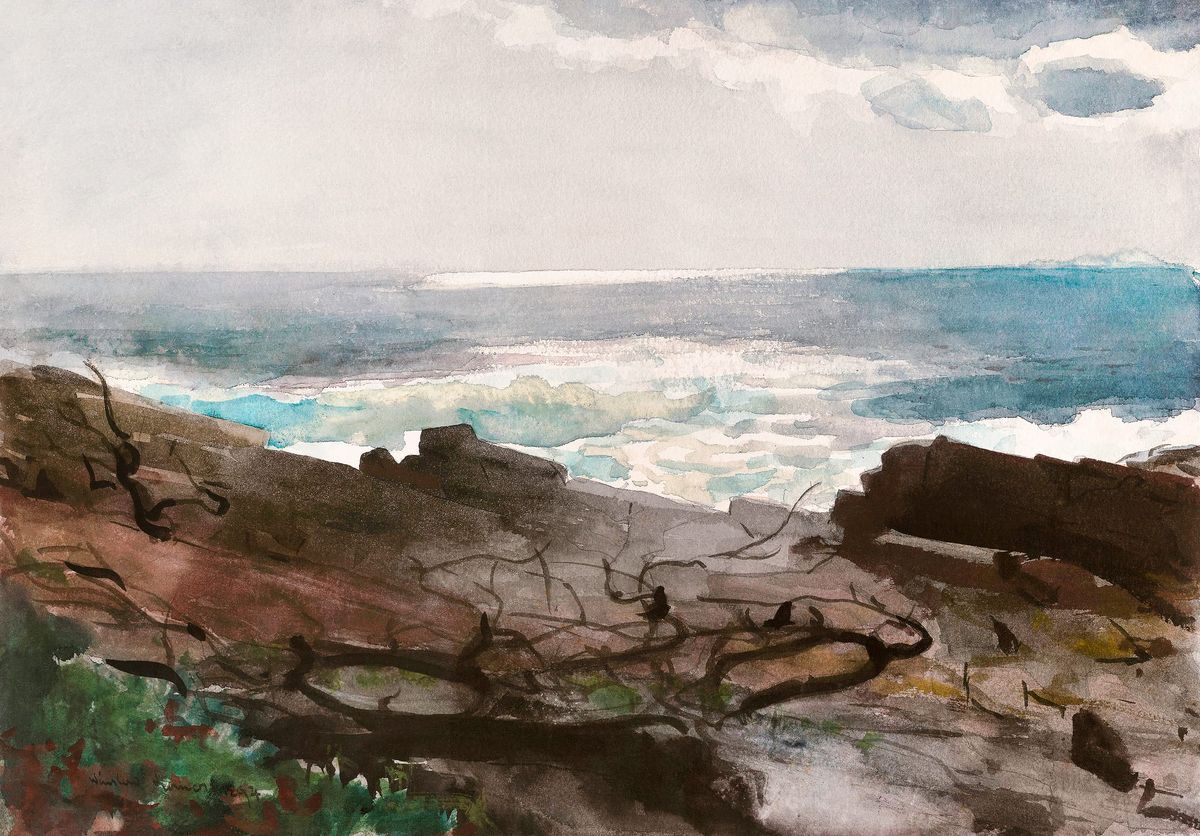
미국의 전설적인 사실주의 거장 윈슬로 호머(Winslow Homer, 1836–1910)가 1894년에 완성한 수채화 명작 <해변의 쓰러진 나무(A Marine / Dead Tree, Marine)>는 북대서양의 거친 파도와 해안 암벽 위에 쓰러진 마른 고목의 조형미를 가장 대담하고 투명한 필치로 포착해 낸 수작입니다.
이 작품은 가로 50.8cm, 세로 35.6cm 크기의 두툼한 고급 워브 종이 위에 흑연 연필로 윤곽을 섬세하게 구축한 후, 투명 수채 물감을 촉촉하게 적셔 번지게 하는 웨트 온 웨트(wet-on-wet) 기법과 물감을 긁어내거나 닦아내어 파도의 포말과 수평선의 빛을 살리는 정교한 수채 기법으로 제작되었습니다.
현재 미국 시카고 미술관(The Art Institute of Chicago)에 소장되어 있는 이 그림은 메인주 프라우츠 넥(Prouts Neck)의 붉은 화강암 절벽 위에서 거센 바닷바람에 꺾여 하얗게 탈색된 고목의 잔가지들과, 그 너머로 부서지는 청록색 파도와 수평선의 은은한 광채를 담고 있습니다.
이 그림에는 메인주의 험준한 해안가에서 고독을 벗 삼아 대자연의 원시성을 화폭에 담았던 호머의 치열하고도 흥미진진한 인간적 에피소드가 깃들어 있습니다. 1883년 프라우츠 넥의 마차 헛간을 개조한 화실로 거처를 옮긴 호머는 주변에 인적이 드문 벼랑 끝을 매일같이 산책하며 파도와 바위의 대화를 관찰했습니다.
호머는 수십 년간 거센 북대서양의 돌풍과 소금기를 견디다 쓰러져 뼈대만 남은 향나무와 삼나무의 마른 뿌리에 깊은 애착을 느꼈습니다. 주변 사람들은 절벽 위에 널브러진 마른 나무들을 땔감으로 치워버리려 했으나, 호머는 "이 꺾인 나무야말로 수천 번의 폭풍을 온몸으로 받아낸 바다의 가장 위대한 훈장"이라며 극구 말리고 그 곁에 이젤을 세웠습니다.
그는 강풍에 캔버스가 날아가는 것을 막기 위해 큰 바위로 화구를 고정하고, 차가운 바닷물이 튀어 종이가 젖는 악천후 속에서도 붓질을 멈추지 않았습니다. 파도가 칠 때마다 하얗게 피어오르는 물보라를 보며 호머는 종이 본연의 흰색을 그대로 남겨두는 천재적인 여백의 미를 발휘하여 거친 해안의 대기감을 완성했습니다.
미술사학자들은 이 작품을 호머의 후기 수채화 중에서도 대담한 구도와 원숙한 필치가 돋보이는 대표적인 해양 풍경화로 평가합니다. 인간이나 배 같은 인공적 서사를 배제하고 붉은 대지와 푸른 바다, 앙상한 나뭇가지만으로 자연의 순환과 실존적 숭고미를 표현하여 현대 수채화의 새로운 미학적 지평을 열었다는 극찬을 받습니다.
작품을 마주할 때 관람자의 무의식적인 시선은 매우 안정적이고 깊이 있는 수평 및 사선 궤적을 그리며 이동합니다. 관람객의 눈길은 가장 먼저 화면 전경의 붉은 바위 위에 용틀임하듯 얽혀 있는 검고 흰 나뭇가지들의 유려한 선묘에 머뭅니다.
이어 시선은 바위 능선 너머에서 맑은 에메랄드빛과 터키석 블루로 부서지며 하얗게 포말을 일으키는 파도의 역동적인 물결로 자연스럽게 미끄러져 갑니다. 청량한 바다를 타고 흐르던 시선은 마침내 저 멀리 수평선 위에서 눈부신 흰빛을 뿜어내는 맑은 햇살의 띠와 부드러운 잿빛 먹구름이 감도는 하늘로 부드럽게 상승하며 탁 트인 개방감을 형성합니다.
이러한 유려한 시선의 순환은 관람자의 내면에 깊은 심리적 정화와 맑은 평온을 선사합니다. 오랜 풍파를 견뎌낸 고목의 고요함과 끝없이 밀려드는 파도의 생명력은 복잡한 일상의 피로와 번뇌에 짓눌린 현대인의 무의식에 차분한 쉼과 마음의 정화를 가져다줍니다.
거친 비바람이 지나간 후에도 여전히 장엄하게 빛나는 대지와 바다의 조화로운 풍경은, 보는 이로 하여금 복잡한 잡념을 내려놓고 내면의 흔들리지 않는 중심과 삶을 지탱하는 단단한 위로를 되찾게 해 줍니다.
A Marine / Dead Tree, Marine
Completed in 1894 by the legendary American realist master Winslow Homer (1836–1910), the watercolor masterpiece A Marine (also celebrated as Dead Tree, Marine) stands as an extraordinary tour de force capturing the primeval grandeur and untamed energy of the North Atlantic coast with breathtaking clarity.
Measuring 50.8 cm wide by 35.6 cm high on heavy wove paper, the work showcases Homer's consummate watercolor technique through fluid wet-on-wet washes, deliberate scraping to articulate foam, and the masterful reservation of the bare white ground to convey the incandescent glow along the maritime horizon.
Preserved in the prestigious permanent collection of The Art Institute of Chicago, this painting dramatically portrays the weathered ledges of Prouts Neck, Maine, where bleached fallen branches rest upon reddish granite against the rhythmic surge of turquoise breakers.
Behind this captivating composition lies Homer's lifelong fascination with coastal solitude and the elemental powers of nature. After establishing his secluded studio on the rocky cliffs of Maine in 1883, Homer spent endless hours walking the wind-swept bluffs, intensely observing the shifting dialogue between sea and stone.
Homer harbored a profound affection for the skeletal cedar and pine trunks that lay prostrate upon the rocks, sculpted by decades of salt spray and gale-force winds. When local neighbors considered clearing the tangled wood for fuel, Homer fiercely intervened, declaring that these resilient branches were nature's most noble monuments to surviving countless ocean tempests.
Undaunted by biting coastal winds and freezing spray, Homer frequently anchored his portable painting kit with heavy stones right beside the jagged ledges. Captivated by the ephemeral brilliance of crashing foam, he boldly utilized the unpainted white paper to evoke the blinding glare of sunlight striking the turbulent surf.
Art historians celebrate this painting as a defining highlight of Homer's mature period, extolling its dynamic structural harmony. By eliminating narrative figures and focusing purely on the dialogue between weathered earth, bare wood, and boundless water, Homer transformed the coastal landscape into a timeless meditation on existential endurance and natural majesty.
When engaging with the painting, the viewer's unconscious gaze undertakes an inherently grounding and restorative visual journey. The eye is initially drawn to the intricate, sculptural calligraphy of the fallen branches anchoring the reddish foreground ledge.
The gaze then travels outward into the luminous expanse of the middle ground, sweeping across the rhythmic swells of turquoise and emerald water cresting in brilliant white foam. Ascending naturally toward the horizon, the viewer's attention meets the radiant band of clear light resting beneath the soft, vaporous grey clouds, instilling a sense of infinite atmospheric space.
This rhythmic visual journey fosters profound psychological reassurance and deep emotional clarity within the observer. The silent endurance of the weathered tree balanced by the continuous vitality of the ocean acts as a natural mental balm, dissolving daily fatigue and ambient anxiety.
By presenting an elemental world where stillness and kinetic motion peacefully coexist, Homer offers the observer a comforting sanctuary of mindfulness, inspiring a deep sense of resilience, inner composure, and enduring tranquility.
본 리뷰에서 작품을 제외한 컨텐츠의 저작권은 팔렛트제주에 있습니다.
"퍼블릭도메인 고전명화"를 제외한 모든 창작 콘텐츠는 저작권법 제4조 및 제10조에 의거하여 보호됩니다. 무단 도용시 저작권법 제136조(벌칙)에 의거, 당사의 사전 서면 승인 없는 저작권 침해 행위를 금지합니다.