해변의 어촌 여인들과 아이들 - Fisherfolk on the Beach, Cullercoats
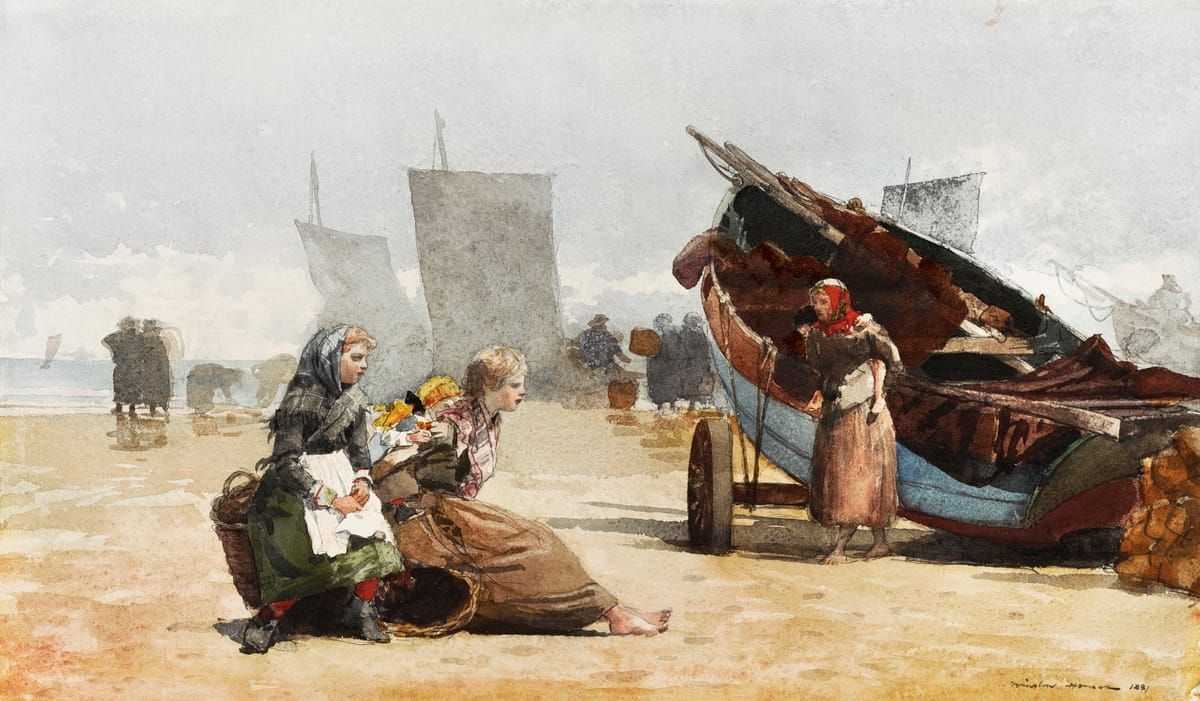
미국의 전설적인 사실주의 거장 윈슬로 호머(Winslow Homer, 1836–1910)가 1881년에 완성한 수채화 명작 <해변의 어촌 여인들과 아이들(Fisherfolk on the Beach, Cullercoats / Mending the Nets, Cullercoats)>은 영국 북동부 해안 어촌 공동체의 끈끈한 가족애와 일상의 숭고한 숨결을 따뜻하고 유려한 필치로 포착해 낸 수작입니다.
이 작품은 가로 약 50.0cm, 세로 약 30.0cm 크기의 고급 워브 종이 위에 연필로 섬세하게 형태를 잡은 후, 투명 수채 물감을 촉촉하게 스며들게 하는 웨트 온 웨트(wet-on-wet) 기법과 물감을 닦아내어 바닷가의 축축한 모래사장의 질감과 하이라이트를 살리는 정교한 수채 기법으로 제작되었습니다.
현재 미국 시카고 미술관(The Art Institute of Chicago)에 소장되어 있는 이 그림은 영국 북동부 요크셔 해안의 외딴 어촌 마을인 컬러코츠의 넓은 해변에서, 고기잡이 배(Coble) 옆에 옹기종기 모여 앉아 아이를 돌보거나 먼바다를 응시하며 가족의 무사 귀환을 기다리는 어촌 여인들과 아이들의 다정한 한때를 담고 있습니다.
이 그림에는 화려한 뉴욕 사교계를 떠나 영국 어촌 마을의 소박하고 강인한 사람들과 깊은 교감을 나누었던 호머의 인간적인 일화가 깃들어 있습니다. 1881년 봄 컬러코츠에 도착한 호머는 바다로 나간 남편과 아들을 묵묵히 기다리며 거친 해변에서 그물을 깁고 어린아이들을 돌보는 어촌 여인들의 건강하고 헌신적인 삶에 완전히 매료되었습니다.
처음에는 낯선 미국인 화가를 쌀쌀맞게 대하던 마을 여인들도, 호머가 거센 북해의 비바람 속에서도 물러서지 않고 모래바람을 맞아가며 묵묵히 스케치북을 채워 나가는 모습을 보며 점차 마음을 열었습니다.
호머는 어린아이들을 등에 업은 어린 누이들과 모래밭에 맨발로 주저앉아 조개를 줍는 아이들의 천진난만한 모습을 그리기 위해 주머니에 항상 달콤한 사탕과 비스킷을 가득 채워 다니곤 했습니다. 아이들이 호머의 주위를 둘러싸고 사탕을 조를 때면, 호머는 "바다를 바라보며 딱 5분만 가만히 있어 주면 세상에서 가장 맛있는 사탕을 주겠다"며 능청스럽게 아이들을 달래어 자연스러운 포즈를 스케치했다는 유쾌한 일화가 전해집니다.
어른 어부들이 작업용 마차에 올려진 배 밑에서 붉은 두건을 쓴 채 아이를 안고 있는 여인의 모습과 모래밭에 놓인 큼직한 수확 바구니는 호머가 현장의 생생한 삶의 정취를 얼마나 진지하고 따뜻한 시선으로 관찰했는지를 증명합니다.
미술사학자들은 이 작품을 호머의 예술 세계가 기존의 가벼운 풍속화에서 벗어나 인간의 원초적인 유대감과 모성애, 그리고 삶의 지속성을 다루는 숭고한 서사로 도약한 핵심적인 분기점으로 평가합니다. 안개 자욱한 해변의 부드러운 빛과 붉은색, 푸른색의 선명한 대비는 영국 수채화의 투명한 전통을 흡수하면서도 호머 특유의 단단한 구조적 안정감을 완성했다는 찬사를 받습니다.
작품을 마주할 때 관람자의 무의식적인 시선은 매우 따뜻하고 유려한 수평적 순환 궤적을 그리며 이동합니다. 관람객의 눈길은 가장 먼저 화면 좌측 전경의 모래밭에 맨발로 편안히 앉아 있는 여인의 단정한 옆모습과 그녀 곁에 다정하게 기댄 어린 소녀, 그리고 등에 업힌 아기의 알록달록한 모자에 가닿습니다.
이어 시선은 그들의 발치에 놓인 묵직한 수확 바구니를 지나, 화면 우측에서 마차 바퀴 위에 든든하게 거치된 푸른빛 목조 보트와 그 아래에서 붉은 두건을 쓰고 아이를 안은 어머니의 포근한 실루엣으로 자연스럽게 미끄러져 갑니다.
배의 돛대와 그물 더미를 훑은 시선은 저 멀리 아스라이 서 있는 거대한 사각형 돛들과 바닷가에서 분주히 일하는 어부들의 아늑한 실루엣을 거쳐, 은은한 바다 안개가 피어오르는 부드러운 하늘로 상승하며 탁 트인 공간감을 만끽하게 합니다.
이러한 유려한 시선의 순환은 관람자의 내면에 깊은 심리적 온기와 무장해제된 평온을 선사합니다. 거친 북해의 환경 속에서도 서로의 체온을 나누며 모래밭 위에 옹기종기 모여 있는 여인들과 아이들의 순수한 모습은, 복잡한 일상의 긴장감과 피로에 지친 현대인의 무의식에 가족의 포근한 품과 같은 정서적 안식처를 마련해 줍니다.
바다의 거친 풍파 속에서도 잃지 않는 인간에 대한 신뢰와 따스한 연대의 온기는, 보는 이에게 번잡한 잡념을 내려놓고 삶의 가장 본질적인 사랑과 내면의 평정을 되찾게 하는 다정한 치유의 위로를 전합니다.
Fisherfolk on the Beach, Cullercoats
Completed in 1881 by the celebrated American realist master Winslow Homer (1836–1910), the watercolor masterpiece Fisherfolk on the Beach, Cullercoats (also celebrated as Mending the Nets, Cullercoats) stands as an evocative tour de force capturing the intimate bonds of family, maternal grace, and the quiet dignity of a coastal seafaring community.
Measuring approximately 50.0 cm wide by 30.0 cm high on fine wove paper, the work showcases Homer's refined mastery of watercolor techniques, utilizing delicate graphite underdrawing, fluid wet-on-wet washes, and precise lifting to render the damp, light-reflecting textures of the tidal sand and morning sea mist.
Preserved in the prestigious permanent collection of The Art Institute of Chicago, this painting lovingly portrays fisherwomen and young children gathered across the expansive shore of Cullercoats in northeastern England, resting beside a beached coble boat on carriage wheels as they watch the distant fishing fleet.
Behind this tender scene lies Homer's deep immersion into the humble rhythms of the Yorkshire coast. Arriving in Cullercoats in the spring of 1881, Homer spent nearly twenty months living among the local families, deeply moved by the quiet strength and fortitude of the women who maintained the village and nurtured their children while the men braved the perilous North Sea.
While the locals were initially reserved toward the quiet American painter, Homer's genuine respect and tireless devotion to working outdoors in the damp sea winds quickly won their affectionate trust.
To capture the unposed innocence of the barefoot village children playing among the fishing gear, Homer kept his pockets perpetually stocked with hard candies and sweet biscuits. Whenever the children gathered around his painting stool, the artist playfully bargained with them, promising treats in exchange for five minutes of patient stillness while he swiftly captured their expressive profiles and colorful bonnets.
The mother resting near the propped wooden hull with a scarlet kerchief framing her child and the substantial wicker creels scattered across the shingle attest to Homer's deeply sympathetic and observant eye for authentic community life.
Art historians celebrate this watercolor as a pivotal turning point in Homer's oeuvre, marking his transition from lighthearted American genre illustration to a monumental vision of human resilience, communal solidarity, and timeless maternal devotion. The subtle tonal balance between the soft atmospheric mists and the vibrant chromatic accents of cobalt, russet, and gold elevates this coastal scene into an enduring tribute to human fortitude.
When engaging with the painting, the viewer's unconscious gaze undertakes an inherently comforting and grounded visual journey. The eye is initially drawn to the seated barefoot young woman in the left foreground, lingering upon her gentle countenance and the colorful bundle of the child nestled closely beside her.
The gaze then travels along the warm expanse of the sandy beach, past the woven creel, toward the commanding form of the blue-and-russet fishing coble elevated on wooden wheels, pausing upon the warm silhouette of the mother holding her toddler.
Ascending past the dark netting and upright masts, the viewer's attention drifts across the shallow surf where distant figures work beside towering square sails, finally settling into the soft, luminous silver mist of the horizon.
This rhythmic visual journey fosters profound psychological reassurance, gentle nostalgia, and deep emotional stillness within the observer. The quiet solidarity of the figures resting peacefully together on the open shore acts as an intuitive emotional tonic, gently dissolving modern stress and ambient anxiety.
By presenting a world embraced by unpretentious love, mutual reliance, and tranquil seaside light, Homer offers the observer a comforting sanctuary of mindfulness, inspiring a deep sense of renewal, sweet contentment, and enduring inner peace.
본 리뷰에서 작품을 제외한 컨텐츠의 저작권은 팔렛트제주에 있습니다.
"퍼블릭도메인 고전명화"를 제외한 모든 창작 콘텐츠는 저작권법 제4조 및 제10조에 의거하여 보호됩니다. 무단 도용시 저작권법 제136조(벌칙)에 의거, 당사의 사전 서면 승인 없는 저작권 침해 행위를 금지합니다.