언덕 위의 양치기 소녀 - The Shepherdess (Warm Afternoon)
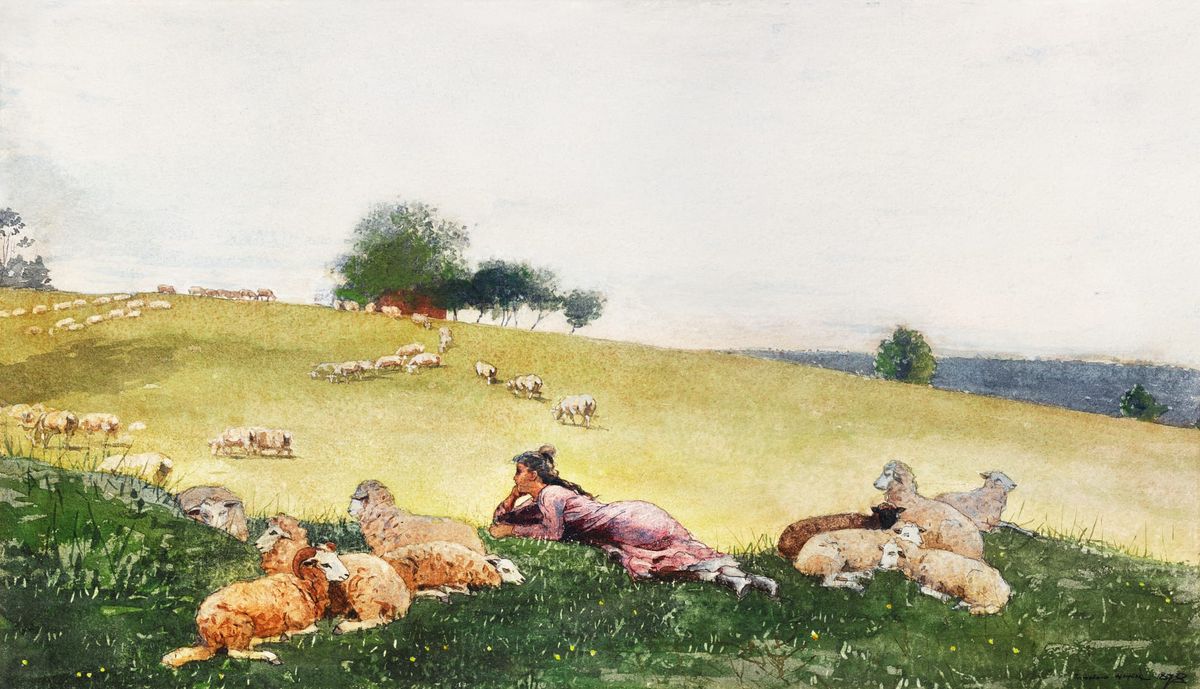
미국의 전설적인 사실주의 거장 윈슬로 호머(Winslow Homer, 1836–1910)가 1878년에 완성한 투명 수채화 명작 <언덕 위의 양치기 소녀(The Shepherdess / Warm Afternoon)>는 19세기 미국 전원의 나른하고 따스한 공기감과 자연 속에서의 사색적인 쉼을 가장 우아한 색채로 담아낸 대표작입니다.
이 작품은 가로 약 57.0cm, 세로 약 32.0cm 크기의 고급 워브 종이 위에 연필로 섬세하게 기초 구도를 잡은 뒤, 햇살이 쏟아지는 언덕의 황금빛과 그늘의 짙은 초록을 투명 수채 물감의 촉촉한 번짐으로 덧칠하고, 종이의 흰 여백을 살려 하늘과 대지의 눈부신 광채를 표현한 혼합 수채 기법으로 제작되었습니다.
현재 미국 주요 미술관 및 유수 개인 컬렉션에서 소중히 다루어지는 이 그림은 뉴욕주 허드슨 밸리의 휴턴 팜(Houghton Farm) 완만한 풀밭 언덕에서 분홍빛 드레스를 입은 양치기 소녀가 턱을 괴고 엎드려 풀을 뜯는 양 떼를 바라보며 달콤한 낮잠 같은 휴식을 즐기는 평화로운 순간을 포착하고 있습니다.
이 그림 뒤에는 복잡한 뉴욕 화단을 떠나 시골 농장의 순박한 일상에 깊이 빠져들었던 호머의 따뜻하고 인간적인 에피소드가 깃들어 있습니다. 1870년대 후반 호머는 농장 소유주인 밸런타인 가문의 초대를 받아 휴턴 팜에 머물며 수채화 작업에 몰두했습니다.
호머는 농장 집 딸과 이웃 처녀들에게 영국 전원풍의 우아한 드레스를 입히고 양 떼를 돌보는 목가적인 양치기 소녀 역할을 부탁했습니다. 따스한 오후 햇살 아래서 풀밭에 엎드려 포즈를 취하던 모델 소녀는 솔솔 불어오는 산들바람과 양들의 나직한 울음소리에 취해 실제로 그 자리에서 새근새근 잠이 들어버렸습니다.
호머는 곤히 잠든 소녀를 깨우는 대신 "자연이 준 가장 완벽하고 솔직한 포즈"라며 숨을 죽이고 스케치북에 붓을 빠르게 놀렸습니다. 그림을 그리는 도중 호기심 많은 어린 양들이 다가와 잠든 소녀의 드레스 자락을 코로 킁킁거리며 간질이자, 잠에서 깬 소녀와 호머가 눈을 마주치며 한바탕 소리 내어 웃었다는 유쾌하고 다정한 일화가 전해집니다.
미술사학자들은 이 작품을 호머가 영국 유학을 떠나기 전 미국 전원주의의 이상을 가장 서정적이고 완성도 높게 구현한 정점으로 평가합니다. 황금빛으로 물든 드넓은 목초지의 개방감과 시원한 풀밭 그늘에 누운 인물의 친밀한 구도는 프랑스 바르비종파의 서정성을 미국 특유의 맑고 실용적인 빛의 감각으로 재해석한 걸작이라는 찬사를 받습니다.
작품을 마주할 때 관람자의 무의식적인 시선은 매우 편안하고 느긋한 수평 나선형 궤적을 그리며 이동합니다. 관람객의 눈길은 가장 먼저 화면 중앙 하단에서 따스한 햇빛을 받아 부드럽게 빛나는 소녀의 분홍빛 드레스와 그녀의 나른한 옆모습, 그리고 턱을 괸 팔꿈치에 머뭅니다.
이어 시선은 소녀의 곁에 옹기종기 엎드려 쉬고 있는 양들의 포근하고 몽글몽글한 갈색 털과 하얀 뿔의 곡선을 지나, 화면 우측에서 평화롭게 몸을 뉘인 양 떼의 무리로 자연스럽게 흘러갑니다.
그늘진 풀밭의 싱그러움을 훑은 시선은 완만하게 솟아오른 황금빛 언덕 능선을 타고 올라가며, 점점이 흩어져 풀을 뜯는 먼 양 떼의 작은 실루엣과 저 멀리 붉은 헛간 지붕, 그리고 맑고 아득한 하늘로 확장되며 눈부신 시각적 해방감을 완성합니다.
이러한 유려한 시선의 순환은 관람자의 내면에 깊은 심리적 이완과 무장해제된 평온을 선사합니다. 나른한 오후의 햇살과 푸른 풀밭의 시원한 그늘이 자아내는 온도감은 복잡한 일상의 긴장과 피로에 지친 현대인의 무의식에 마치 시골 언덕에 누워 바람을 쐬는 듯한 포근한 감각적 휴식을 제공합니다.
세상의 번잡한 소란에서 벗어나 대지의 품에 온몸을 맡긴 채 여유를 누리는 소녀와 양들의 고요한 자태는, 보는 이에게 모든 조급함을 내려놓고 내면의 순수한 평정과 따뜻한 안식을 되찾아 주는 깊은 치유의 위로를 선물합니다.
The Shepherdess (Warm Afternoon)
Completed in 1878 by the legendary American realist master Winslow Homer (1836–1910), the watercolor masterpiece The Shepherdess (also celebrated as Warm Afternoon) stands as an evocative tour de force capturing the sun-drenched languor, pastoral innocence, and contemplative quietude of nineteenth-century American rural life.
Measuring approximately 57.0 cm wide by 32.0 cm high on fine wove paper, the work showcases Homer's consummate watercolor technique, employing radiant wet-on-wet washes across the golden slope, delicate blotting in the shadowed foreground grasses, and the masterful reservation of the white ground to render expansive, incandescent atmospheric light.
Preserved and celebrated across prominent public and private American art collections, this painting portrays a young shepherdess in a soft rose dress reclining gracefully upon a shaded hillside at Houghton Farm in New York's Hudson Valley, resting with chin in hand as her flock rests peacefully beside her.
Behind this idyllic canvas lies Homer's genuine delight in country simplicity and a heartwarming personal anecdote. During the late 1870s, Homer resided as an honored guest of the Valentine family at Houghton Farm, enthusiastically exploring the lyricism of agricultural labor and rural childhood.
Homer asked a local young woman to pose as a pastoral shepherdess, donning a charming country gown amidst the grazing flock. Bathed in the warm afternoon sunshine and soothed by the whispering mountain breeze and the gentle rustle of sheep, the model actually drifted off into a sweet and peaceful slumber.
Rather than disturbing her rest, Homer worked with quiet reverence, capturing the authentic repose and effortless grace of the scene. When curious lambs approached to nuzzle the hem of the sleeping girl's dress, she awoke with a start, leading to shared, affectionate laughter across the sunlit pasture.
Art historians celebrate this painting as a definitive jewel of Homer's pastoral period, demonstrating his mastery of open space and saturated light. The brilliant compositional balance between the vast, sunlit golden meadow stretching toward the horizon and the intimate, cool green sanctuary of the foreground elevates this gentle genre scene into an enduring ode to harmony between humanity and the earth.
When engaging with the painting, the viewer's unconscious gaze undertakes an inherently soothing and restorative visual journey. The eye is initially captivated by the luminous rose gown of the reclining shepherdess in the lower center, lingering upon her thoughtful profile and relaxed posture.
The gaze then travels smoothly along the soft, textured contours of the resting sheep huddled close beside her, before sweeping across the rich emerald turf of the foreground slope.
Ascending naturally into the vast, golden hillside illuminated by midday sun, the viewer's attention follows the scattered flock of distant sheep grazing near the crest, drifting past the rustic red barn roof and solitary trees into the open, tranquil expanse of the pale sky.
This rhythmic visual journey fosters profound psychological reassurance, gentle nostalgia, and deep emotional stillness within the observer. The contrast between warm sunlight and cool shade acts as an intuitive emotional balm, gently dissolving ambient stress, modern hurry, and inner tension.
By presenting a harmonious world where youth, living creatures, and the fertile land rest in sweet, unhurried equilibrium, Homer offers the observer a comforting sanctuary of mindfulness, inspiring a deep sense of renewal, gentle contentment, and enduring inner peace.
본 리뷰에서 작품을 제외한 컨텐츠의 저작권은 팔렛트제주에 있습니다.
"퍼블릭도메인 고전명화"를 제외한 모든 창작 콘텐츠는 저작권법 제4조 및 제10조에 의거하여 보호됩니다. 무단 도용시 저작권법 제136조(벌칙)에 의거, 당사의 사전 서면 승인 없는 저작권 침해 행위를 금지합니다.