독립기념일 밤의 불꽃놀이 구경 - Seeing the Fireworks on the Fourth of July
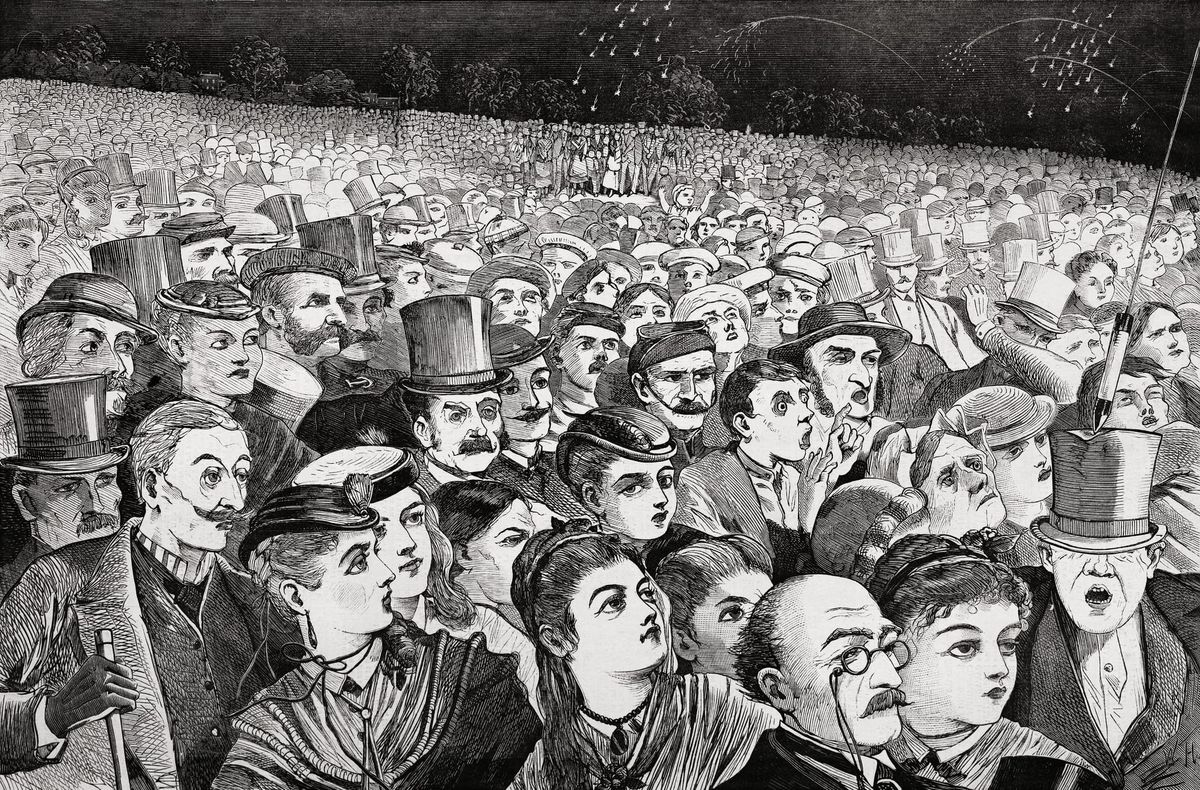
미국의 위대한 사실주의 거장 윈슬로 호머(Winslow Homer, 1836–1910)가 1868년에 발표한 대작 목판화 <독립기념일 밤의 불꽃놀이 구경(Seeing the Fireworks on the Fourth of July)>은 19세기 후반 미국 대중문화의 활기와 인간 군상의 다채로운 표정을 가장 위트 있고 생생하게 포착해 낸 걸작입니다.
이 작품은 가로 약 52.0cm, 세로 약 35.0cm 크기의 목판 인쇄용 고급 종이 위에 정교한 선과 명암을 새겨 넣은 목판화(Wood engraving) 기법으로 제작되었으며, 당대 최고 부수를 자랑하던 시사 주간지 하퍼스 위클리(Harper's Weekly)의 1868년 7월 호에 게재되어 전국적인 화제를 모았습니다.
현재 미국 메트로폴리탄 미술관(The Metropolitan Museum of Art) 및 국회도서관 등에 소장되어 있는 이 그림은 매년 7월 4일 독립기념일을 맞아 밤하늘을 수놓는 화려한 불꽃놀이를 보기 위해 광장에 구름처럼 모여든 수천 명의 시민들이 일제히 고개를 들어 하늘을 바라보는 장관을 담고 있습니다.
이 작품 뒤에는 도시 사람들의 심리와 일상을 매의 눈으로 관찰하던 청년 호머의 날카롭고 유머러스한 시선이 고스란히 담겨 있습니다. 당시 뉴욕의 보스턴 커먼이나 센트럴 파크에는 독립기념일 불꽃놀이를 보려는 인파로 발 디딜 틈이 없었는데, 호머는 정작 화려하게 터지는 밤하늘의 불꽃보다 그 불꽃을 올려다보는 사람들의 기상천외한 얼굴 표정에 완전히 매료되었습니다.
호머는 인파 속에 섞여 들어가 사람들의 반응을 낱낱이 스케치했습니다. 입을 떡 벌린 채 넋을 잃은 신사, 안경 너머로 눈을 가늘게 뜨고 불꽃의 궤적을 쫓는 노학자, 깜짝 놀라 눈을 동그랗게 뜬 소년과 콧수염을 만지작거리는 멋쟁이까지, 호머는 그 어떤 과장된 연출 없이도 군중의 인간적인 순수함과 유쾌한 호기심을 화폭에 가득 채웠습니다.
특히 화면 오른쪽을 보면 발사된 불꽃놀이 로켓 막대가 한 신사의 실크해트 모자 정수리에 푹 꽂히는 아찔하면서도 폭소를 자아내는 만화적 순간이 숨겨져 있습니다. 모자에 로켓이 박힌 줄도 모른 채 입을 벌리고 하늘만 쳐다보는 신사의 능청스러운 모습은 당시 독자들에게 큰 웃음을 선사하며 호머 특유의 재기발랄한 유머 감각을 증명하는 대표적인 장면으로 회자되었습니다.
미술사학자들은 이 작품을 남북전쟁 이후 상처 입은 미국 사회가 일상의 평화와 축제의 기쁨을 회복해 가는 역사적 순간을 기록한 기념비적인 사회 풍속화로 평가합니다. 신분과 계급, 남녀노소를 불문하고 같은 하늘을 올려다보며 함께 탄성을 내지르는 군중의 모습은 미국 민주주의의 역동성과 통합의 에너지를 가장 순수하고 친근한 시각 언어로 형상화했다는 찬사를 받습니다.
작품을 마주할 때 관람자의 무의식적인 시선은 매우 경쾌하고 입체적인 상향 나선형 경로를 따라 움직입니다. 관람객의 눈길은 가장 먼저 화면 전경에 밀집된 인물들의 개성 넘치는 얼굴들과 입을 벌리고 감탄하는 표정, 그리고 실크해트에 머뭅니다.
이어 시선은 화면 우측에서 불꽃 로켓이 꽂힌 모자의 유머러스한 디테일을 포착한 뒤, 인물들이 일제히 바라보는 대각선 시선을 따라 화면 상단의 어두운 밤하늘과 가느다랗게 흩뿌려지는 불꽃의 섬광으로 자연스럽게 상승합니다. 밤하늘의 불꽃을 훑은 시선은 수평선 너머 언덕을 가득 메운 수만 명의 인파가 만들어내는 은은한 물결을 거쳐 다시 전경의 친근한 이웃들의 얼굴로 내려와 편안한 시각적 안착을 이룹니다.
이러한 유려한 시선의 순환은 관람자의 내면에 깊은 심리적 해방감과 긍정적인 축제의 활력을 불어넣어 줍니다. 같은 공간에서 같은 곳을 바라보며 순수한 감탄을 나누는 사람들의 표정은 복잡한 일상의 고독과 긴장감에 지친 현대인의 무의식에 포근한 소속감과 따스한 정서적 유대감을 형성해 줍니다.
어둠 속에서도 하늘을 향해 반짝이는 빛을 쫓으며 순수한 기쁨으로 하나가 되는 군중의 모습은, 보는 이에게 번잡한 일상의 피로를 씻어내고 잃어버렸던 동심과 삶의 따뜻한 환희를 되찾아 주는 유쾌하고 든든한 치유의 울림을 건넵니다.
Seeing the Fireworks on the Fourth of July
Published in 1868 by the legendary American realist master Winslow Homer (1836–1910), the wood engraving masterpiece Seeing the Fireworks on the Fourth of July stands as a delightful and historically significant tour de force that captures the bustling vitality and dynamic social tapestry of nineteenth-century American life.
Measuring approximately 52.0 cm wide by 35.0 cm high on fine wove paper, this wood engraving was masterfully executed for Harper's Weekly, the premier illustrated periodical of the era, bringing Homer's acute observational wit directly into households across the nation.
Preserved in prestigious permanent collections including The Metropolitan Museum of Art and the Library of Congress, this print dramatically depicts a vast sea of thousands of citizens gathered closely in a public park on Independence Day, their upturned faces illuminated by the bursting fireworks illuminating the night sky.
Behind this captivating image lies young Homer's brilliant fascination with urban human psychology and everyday humor. When massive crowds gathered at Boston Common and New York parks to celebrate the Fourth of July, Homer turned his sketchbook away from the pyrotechnics above to focus on the extraordinary variety of expressions among the spectators below.
Weaving through the dense crowd, Homer captured an astonishing spectrum of genuine human emotion: wide-eyed children gasping in awe, scholarly gentlemen peering through spectacles, fashionable ladies gazing upwards, and mustachioed dapper figures lost in contemplation, rendering a rich collective portrait of authentic American life.
In a famously witty detail on the far right of the composition, Homer illustrated a spent firework rocket casing plunging straight into the top of an unsuspecting gentleman's tall silk hat. The man, utterly oblivious to the projectile lodged in his hat as he stares open-mouthed at the sky, provided contemporary readers with delightful comic relief and highlighted Homer's signature brand of observant humor.
Art historians celebrate this work as a monumental genre study capturing a healing nation rebuilding its social bonds and festive traditions in the aftermath of the Civil War. By illustrating citizens of all ages, classes, and walks of life united under a shared sky of wonder, Homer celebrated the enduring democratic spirit and cultural optimism of the American people.
When engaging with the print, the viewer's unconscious gaze undertakes an inherently lively and uplifting psychological journey. The eye is initially drawn to the richly characterized faces in the immediate foreground, wandering across the detailed expressions of awe, amusement, and surprise.
The gaze then travels toward the humorous incident of the rocket-struck top hat on the right, before following the collective upward sightlines of the crowd into the vast expanse of the night sky where delicate trails of fireworks sparkle above the distant canopy. Sweeping across the dense, textured sea of spectators on the horizon, the viewer's attention settles comfortably back upon the expressive faces of the foreground figures.
This rhythmic visual journey fosters profound emotional lightness, cheerful nostalgia, and a comforting sense of communal belonging. The shared sense of childlike wonder animating the crowd acts as a natural mental tonic, dispelling ambient modern fatigue and feelings of isolation.
By capturing a diverse multitude joined in a singular moment of joy and collective fascination, Homer offers the observer a timeless sanctuary of optimism, inviting us to rediscover the rejuvenating power of shared celebration, lighthearted laughter, and heartfelt human connection.
본 리뷰에서 작품을 제외한 컨텐츠의 저작권은 팔렛트제주에 있습니다.
"퍼블릭도메인 고전명화"를 제외한 모든 창작 콘텐츠는 저작권법 제4조 및 제10조에 의거하여 보호됩니다. 무단 도용시 저작권법 제136조(벌칙)에 의거, 당사의 사전 서면 승인 없는 저작권 침해 행위를 금지합니다.