뜨개질과 그물 손질 (컬러코츠의 어촌 여인들) - Knitting and Mending Nets / Fisherwomen at Cullercoats
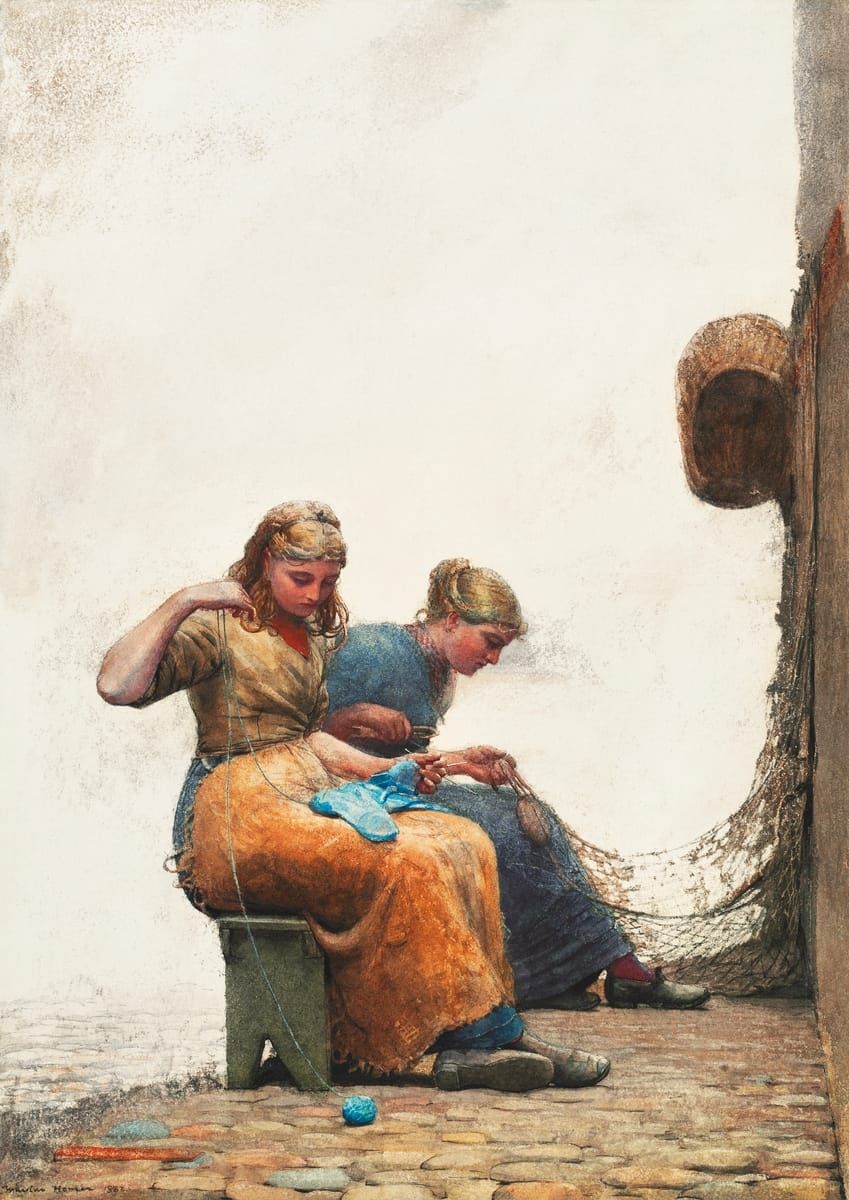
미국의 전설적인 사실주의 거장 윈슬로 호머(Winslow Homer, 1836–1910)가 1882년에 완성한 수채화 명작 <뜨개질과 그물 손질(Knitting and Mending Nets / Fisherwomen at Cullercoats)>은 북해의 서늘한 해풍이 감도는 해안가 벽 아래에서 털실로 양말을 뜨고 그물을 정성스레 손질하는 어촌 여인들의 고요한 집중과 조각 같은 기품을 가장 맑고 숭고한 필치로 포착해 낸 수작입니다.
이 작품은 가로 약 35.6cm, 세로 약 50.8cm의 세로형 구도를 지닌 고급 워브 종이 위에 흑연 연필로 인물들의 단단한 자세와 자갈바닥의 형태를 정밀하게 잡은 후, 투명 수채 물감의 유려한 번짐과 스며듦으로 은은한 바다 안개와 의복의 음영을 표현하고, 종이 본연의 밝은 흰 여백과 얇은 불투명 물감 터치를 활용해 푸른 털실의 영롱한 색채와 돌바닥의 거친 질감을 극대화한 혼합 수채 기법으로 제작되었습니다.
현재 미국 주요 미술관 및 유수 프라이빗 컬렉션에서 소중히 다루어지는 이 그림은 영국 북동부 노섬벌랜드의 어촌 마을 컬러코츠(Cullercoats)의 한적한 벽 곁에서, 황토색 앞치마를 두른 젊은 처녀가 작은 나무 의자에 앉아 파란 털실을 길게 당기며 뜨개질에 몰두하고, 그 곁에 앉은 동료가 바다로 나갈 어망을 묵묵히 깁고 있는 평화롭고 숭고한 노동의 한때를 담고 있습니다.
이 그림 뒤에는 1881년부터 1882년까지 영국 북동부 해안에 머물며 거친 바다와 맞서 삶을 일구는 어촌 공동체의 건강한 인간미에 깊이 매료되었던 호머의 따뜻한 예술혼과 흥미진진한 비하인드가 깃들어 있습니다. 당시 호머는 생선을 나르고 그물을 손질하며 남편과 가족을 든든히 지탱하는 컬러코츠 여인들의 당당한 체구와 침착한 품격에서 고대 조각상과 같은 기념비적인 숭고미를 발견했습니다.
호머는 여인의 손끝에서 풀려나오는 가느다란 실선의 리듬과 돌벽에 드리워진 차분한 그늘을 포착하기 위해 자갈길 한쪽에 이젤을 세웠습니다. 나무 의자에 앉아 진지하게 뜨개질에 몰두하던 앞쪽 처녀의 무릎에서 파란 실타래가 바닥으로 툭 떨어져 데굴데굴 굴러가 호머의 구두 코앞까지 다다르는 유쾌한 소동이 벌어졌습니다.
처녀가 깜짝 놀라 실을 당기며 얼굴을 붉히자, 호머는 털실 뭉치를 조심스레 주워 돌바닥 위에 정성껏 놓아주며 호탕하게 웃음을 터뜨렸습니다. 호머는 "잠깐, 그대로 가만히 계십시오! 바닥으로 길게 이어진 저 푸른 실선과 당신의 야무진 손끝이야말로 오늘 북해의 은은한 햇살이 내 종이 위에 허락한 가장 아름다운 생명의 매듭입니다!"라며 감탄했습니다. 호머는 실타래가 굴러간 바닥의 돌멩이들과 여인들의 조각 같은 옆모습을 놓칠세라 신나게 붓을 놀렸고, 화면 좌측 하단 자갈 틈새에 'Winslow Homer 1882' 서명을 힘차게 새겨 넣었다는 다정한 일화가 전해집니다.
벽면에 걸려 있는 둥근 버들가지 바구니와 길게 늘어진 거친 어망의 섬세한 그물코, 그리고 화면 바닥을 가득 채운 울퉁불퉁한 조약돌 포장길의 생생한 질감은 호머가 북해 어촌의 진솔한 현장감을 얼마나 깊은 애정으로 관찰했는지를 증명합니다.
미술사학자들은 이 작품을 호머가 영국 체류 시절에 이룩한 '기념비적 인물 묘사의 대전환'을 상징하는 최고 걸작 중 하나로 평가합니다.
단순한 풍속화를 넘어 노동하는 인간의 숭고한 존엄성과 내면의 평정을 완벽한 조형적 질서로 구현했으며, 훗날 호머가 미국으로 돌아와 완성하게 되는 대작 해양 회화들의 웅장한 정신적 모태가 되었다는 극찬을 받습니다.
작품을 마주할 때 관람자의 무의식적인 시선은 인물의 단단한 수직선과 바닥으로 이어지는 푸른 실선을 따라 매우 안정적이고 포근한 타원형 순환 궤적을 그리며 이동합니다. 관람객의 눈길은 가장 먼저 화면 중앙 좌측에서 머리띠를 두르고 고개를 숙여 뜨개질에 몰입한 젊은 여인의 단아한 옆모습과 들어 올린 팔의 우아한 곡선에 머뭅니다.
이어 시선은 여인의 손끝에서 팽팽하게 뻗어나간 파란 털실의 섬세한 궤적을 타고 무릎 위의 푸른 양말 편물과 풍성한 황토색 앞치마를 거쳐, 돌바닥 위에 앙증맞게 놓인 둥근 파란 실타래로 자연스럽게 미끄러져 내려옵니다.
바닥의 청량한 푸른 포인트를 확인한 시선은 울퉁불퉁한 조약돌 길의 따스한 흙빛 질감을 훑고 지나, 뒤편에 앉아 나무 셔틀을 쥐고 어망을 손질하는 동료 여인의 차분한 실루엣과 벽에 걸린 거대한 어망의 유려한 그물코로 이어집니다.
이후 시선은 벽에 높게 걸린 갈색 바구니의 묵직한 양감과 화면 상단을 은은하게 감싸 안은 북해의 맑고 안개 낀 회백색 하늘의 광활한 대기감을 만끽한 뒤, 다시 앞쪽 여인의 지적인 얼굴과 고요한 눈빛으로 돌아와 깊고 아늑한 시각적 안착을 이룹니다.
이러한 유려한 시선의 순환은 관람자의 내면에 깊은 심리적 안정감과 포근한 내적 평온을 선물합니다. 은은한 바다 안개와 조용한 골목길이 자아내는 서늘하면서도 아늑한 공간감은, 복잡한 일상의 번잡함과 피로에 지친 현대인의 무의식에 마치 바닷가 돌벽 그늘 아래 앉아 잔잔한 파도 소리를 들으며 휴식을 취하는 듯한 깊은 이완과 감각적 회복을 선사합니다.
세상의 소란에서 벗어나 한 땀 한 땀 정성을 다해 일상을 엮어나가는 여인들의 건강하고 의연한 자태는, 보는 이에게 일상의 번뇌를 내려놓고 삶의 가장 소박하고 맑은 행복과 내면의 깊은 평정을 되찾아 주는 든든한 치유의 위로를 건냅니다.
Knitting and Mending Nets / Fisherwomen at Cullercoats
Completed in 1882 by the celebrated American realist master Winslow Homer (1836–1910), the watercolor masterpiece Knitting and Mending Nets (also widely known as Fisherwomen at Cullercoats) stands as an extraordinary tour de force capturing the sculptural dignity, domestic serenity, and quiet fortitude of northern coastal women with peerless chromatic sobriety.
Measuring approximately 35.6 cm wide by 50.8 cm high on fine wove paper, the work showcases Homer's consummate mastery of transparent watercolor developed during his transformative English residency, applying fluid wet-on-wet washes of raw umber, warm ochre, and slate across the misty atmosphere, while utilizing delicate paper reserves and sharp scraping to articulate the vibrant blue yarn, the cobblestone pavement, and the intricate mesh of the hanging fishing nets.
Preserved and celebrated across prominent public and private American art collections, this painting portrays a quiet morning in the fishing village of Cullercoats in northeastern England, where a young fisher girl seated upon a low wooden bench draws a long strand of blue wool as she knits a sock, while her seated companion diligently mends the working nets beside a stone wall beneath the pale North Sea sky.
Behind this captivating watercolor lies Homer's profound admiration for the resilient women of Cullercoats during his extended stay from 1881 to 1882. Moving beyond conventional Victorian sentimentality, Homer was deeply inspired by the unvarnished strength and classical poise of these coastal women whose steadfast labor sustained the fishing community against the perils of the sea.
Setting up his portable stool along the cobblestone lane to record the interplay of soft coastal light and focused human concentration, Homer watched the maidens work.
When the ball of vibrant blue yarn slipped from the young woman's lap and rolled across the stones directly to Homer's feet, the maiden blushed with shy embarrassment as she gently drew the thread taut.
Amused and enchanted by the spontaneous grace of the scene, Homer carefully retrieved the yarn, laughing with hearty warmth. He remarked that the long blue line connecting her nimble fingers to the cobblestones was the loveliest thread of living poetry the sea could ever offer an artist's paper. Homer swiftly applied fluid washes of cobalt, amber, and terracotta to capture the unposed dignity of the figures, proudly inscribing 'Winslow Homer 1882' in the lower left foreground.
The large wicker creel hanging against the masonry wall, the draped cascades of hemp netting, and the tactile texture of the sun-warmed cobbles serve as authentic testaments to Homer's deeply observant eye for the humble grandeur of coastal life.
Art historians celebrate this painting as a defining pinnacle of Homer's English period, praising its monumental compositional clarity and profound emotional stillness. By elevating an everyday domestic chore into a timeless study of physical composure and moral resilience, Homer created an enduring visual sanctuary of artisanal dedication, feminine strength, and contemplative peace.
When engaging with the painting, the viewer's unconscious gaze undertakes an inherently soothing and grounding visual journey. The eye is initially welcomed by the sun-drenched silhouette of the young woman in the foreground, lingering upon her braided hair, serene downward gaze, and the rhythmic poise of her raised hand holding the knitting needle.
The gaze then travels along the slender, vibrant blue thread cascading across her ochre apron, descending to the neat blue skein resting upon the sunlit cobblestones below.
Following the tactile stones across the foreground, the viewer's attention meets the sturdy boots of the workers before rising to the companion mending the heavy nets with her wooden needle on the right.
Finally, ascending past the massive wicker basket and into the vast, luminous expanse of the pale ocean sky above, the eye settles comfortably back into the calm, anchored presence of the knitting maiden.
This rhythmic visual journey fosters profound psychological reassurance, sensory grounding, and deep emotional stillness within the observer. The tactile immersion in cool sea breezes, quiet stone streets, and rhythmic needlework acts as an intuitive emotional balm, dispelling ambient modern fatigue and soothing inner tension.
By presenting an idyllic world where patient craftsmanship exists in pure harmony with the rhythm of life, Homer offers the observer a comforting sanctuary of mindfulness, inspiring a deep sense of renewal, sweet contentment, and enduring inner peace.
본 리뷰에서 작품을 제외한 컨텐츠의 저작권은 팔렛트제주에 있습니다.
"퍼블릭도메인 고전명화"를 제외한 모든 창작 콘텐츠는 저작권법 제4조 및 제10조에 의거하여 보호됩니다. 무단 도용시 저작권법 제136조(벌칙)에 의거, 당사의 사전 서면 승인 없는 저작권 침해 행위를 금지합니다.