단풍 든 가을 산 - Autumn Foliage / Fall Foliage
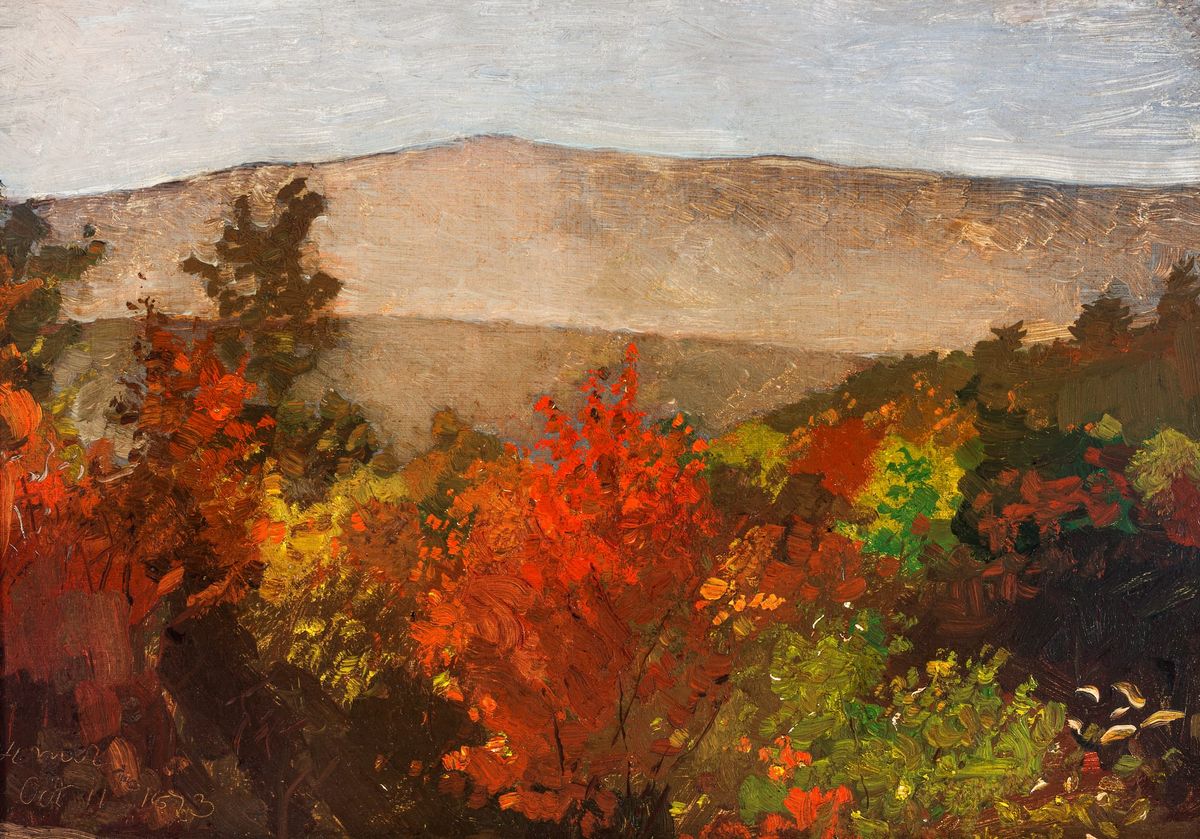
미국의 전설적인 사실주의 거장 윈슬로 호머(Winslow Homer, 1836–1910)가 1878년 10월 11일에 완성한 유화 명작 <단풍 든 가을 산(Autumn Foliage / Fall Foliage)>은 북미 가을 산야를 수놓은 타오르는 듯한 원색의 단풍과 웅장한 능선의 대기감을 가장 대담하고 직관적인 필치로 포착해 낸 수작입니다.
이 작품은 가로 약 30.5cm, 세로 약 20.3cm 크기의 튼튼한 나무 화판(oil on wood panel) 위에 제작되었으며, 불타오르는 진홍빛과 황금빛 단풍의 질감에 두터운 유화 임파스토를 밀도 있게 얹고, 저 멀리 안개 속에 잠긴 산등성이와 가을 하늘은 투명하고 넓은 수평 붓질로 대비시켜 완성했습니다.
현재 미국 주요 미술관 및 유수 프라이빗 컬렉션에서 높이 평가받는 이 그림은 뉴욕주 허드슨 밸리의 휴턴 팜 인근 고지대나 애디론댁 산자락에서 마주한 가을 절경으로, 전경에 불타오르듯 무성한 단풍나무 덤불과 완만하게 솟아오른 웅장한 가을 산의 고즈넉한 순간을 담고 있습니다.
이 그림 뒤에는 순식간에 지나가 버리는 가을의 빛과 색채를 붙잡기 위해 산등성이를 뛰어다녔던 호머의 열정적인 비하인드가 깃들어 있습니다. 1878년 10월, 단풍이 가장 화려하게 물든 절정의 날에 호머는 작은 나무 패널과 휴대용 화구를 챙겨 들고 홀로 가을 숲속 깊숙이 올랐습니다.
호머는 단풍이 햇빛을 받아 불꽃처럼 이글거리는 순간의 감동을 그대로 담아내기 위해 스케치 단계조차 거치지 않고, 튜브에서 갓 짜낸 선명한 주홍색과 노란색 물감을 나이프와 붓으로 패널 위에 거침없이 짓이겨 발랐습니다.
단풍나무 아래서 숨을 헐떡이며 작업하던 호머에게 지나가던 사냥꾼이 다가와 "화가 양반, 붓이 아니라 나이프로 캔버스를 난도질하는 것 같소!"라며 농담을 건네자, 호머는 "이 산이 온몸으로 태우고 있는 불꽃을 담으려면 얌전한 붓질로는 어림도 없다네!"라며 호탕하게 웃어넘겼습니다.
호머는 해가 지기 전 단풍의 붉은 기운이 사라질까 염려하여 패널 좌측 하단에 완성 날짜인 'Oct 11 1878'을 붓끝으로 힘차게 새겨 넣으며 대자연과의 짜릿한 교감을 영원히 기록했습니다.
미술사학자들은 이 작품을 호머가 남긴 야외 유화 스케치 중에서도 가장 원초적인 표현주의적 에너지가 폭발한 걸작으로 평가합니다.
세부적인 형태 묘사에 얽매이지 않고 대담한 색채 덩어리와 물감의 거친 질감만으로 자연의 생명력을 포착한 기법은, 프랑스 후기 인상주의 및 20세기 초 야수파의 미학을 앞서 예고한 혁신적인 조형 실험으로 찬사를 받습니다.
작품을 마주할 때 관람자의 무의식적인 시선은 매우 따뜻하고 풍성한 수평 및 상하 나선형 궤적을 그리며 이동합니다. 관람객의 눈길은 가장 먼저 화면 중앙 하단에서 마치 불꽃이 피어오르듯 선명하고 강렬하게 빛나는 붉은 단풍나무 덤불의 두터운 유화 질감에 사로잡힙니다.
이어 시선은 좌우로 뻗어 나간 황금빛과 연두색, 짙은 암갈색 잎사귀들의 다채로운 색채 향연을 따라 미끄러져 가며, 전경을 빽빽하게 채운 가을 숲의 생동감 넘치는 호흡을 만끽합니다.
숲의 풍성한 온기를 훑은 시선은 자연스럽게 화면 상단을 묵직하게 가로지르는 은은한 황갈색 산등성이의 완만한 곡선을 타고 올라간 뒤, 부드러운 잿빛과 연하늘빛이 감도는 가을 하늘로 확장되며 탁 트인 공간적 안정감을 얻습니다.
이러한 유려한 시선의 순환은 관람자의 내면에 깊은 심리적 정화와 포근한 계절의 안식을 선사합니다. 온 산을 물들인 단풍의 깊고 따뜻한 붉은빛과 황금빛은 복잡한 일상의 번잡함과 피로에 지친 현대인의 무의식에 마치 따스한 모닥불 곁에 앉아 있는 듯한 정서적 위안과 생명력을 불어넣어 줍니다.
한 해의 결실을 맺으며 온몸으로 찬란한 빛을 뿜어내는 대자연의 의연한 모습은, 보는 이로 하여금 번잡한 걱정을 내려놓고 삶의 성숙한 아름다움과 내면의 깊은 평정을 되찾아 주는 든든한 치유의 위로를 건넵니다.
Autumn Foliage / Fall Foliage
Completed on October 11, 1878 by the celebrated American realist master Winslow Homer (1836–1910), the oil masterpiece Autumn Foliage (also known as Fall Foliage) stands as an extraordinary tour de force capturing the blazing chromatic intensity and elemental majesty of the North American autumn with exhilarating painterly directness.
Measuring approximately 30.5 cm wide by 20.3 cm high on a sturdy wood panel, the work showcases Homer's bold plein-air technique, applying thick impasto and assertive, directional brushstrokes to render the fiery scarlet and amber foliage, contrasted against the broad, horizontal washes of the distant mountain ridge and cool autumnal sky.
Preserved and celebrated across prominent public and private American art collections, this painting portrays an expansive panorama near Houghton Farm in the Hudson Valley or the Adirondack foothills, where flaming autumn shrubs in the foreground surge against the serene, monumental presence of a distant mountain under a soft October sky.
Behind this captivating study lies Homer's passionate race against time to seize the fleeting brilliance of peak foliage. On a crisp October morning when the hills were ablaze with color, Homer carried his wooden panels and field box high onto the slopes to paint directly from the living landscape.
Working with furious speed to record the incandescent glow before the shifting light faded, Homer applied saturated vermilion, ochre, and deep russet pigments directly to the panel with brush and palette knife, bypassing preliminary drawing entirely.
When a passing hunter remarked with amusement that the master appeared to be attacking the board with a knife rather than painting gently, Homer laughed heartily, replying that capturing the fiery soul of the burning mountain required nothing less than raw, uncompromising vigor.
Eager to immortalize the precise day of this elemental encounter, Homer scratched the date 'Oct 11 1878' directly into the wet paint at the lower left, preserving the spontaneous vitality of that single golden afternoon.
Art historians celebrate this panel as a definitive triumph of Homer's outdoor studies, extolling its radical chromatic purity and expressive freedom. By transcending rigid botanical delineation in favor of pure masses of vibrant color and tactile paint, Homer created an extraordinarily modern composition that prefigured early twentieth-century Expressionism and Fauvism.
When engaging with the painting, the viewer's unconscious gaze undertakes an inherently warming and restorative visual journey. The eye is initially seized by the blazing scarlet cluster of foliage in the lower center, lingering upon the rich, raised textures of the fiery brushwork.
The gaze then travels outward across the rich mosaic of golden yellow, lime green, and deep umber leaves carpeting the lower slopes, absorbing the dense vitality of the forest undergrowth.
Ascending naturally toward the middle ground, the viewer's attention meets the broad, sweeping horizon of the warm ochre mountain ridge, finally rising into the expansive, cool grey-blue atmosphere of the autumnal sky.
This rhythmic visual journey fosters profound psychological reassurance, sensory warmth, and deep emotional stillness within the observer. The radiant embrace of saturated autumn hues acts as an intuitive emotional tonic, dispelling ambient modern fatigue and warming inner tension.
By presenting a primeval world illuminated by nature's most magnificent seasonal crescendo, Homer offers the observer a comforting sanctuary of mindfulness, inspiring a deep sense of renewal, sweet contentment, and enduring inner peace.
본 리뷰에서 작품을 제외한 컨텐츠의 저작권은 팔렛트제주에 있습니다.
"퍼블릭도메인 고전명화"를 제외한 모든 창작 콘텐츠는 저작권법 제4조 및 제10조에 의거하여 보호됩니다. 무단 도용시 저작권법 제136조(벌칙)에 의거, 당사의 사전 서면 승인 없는 저작권 침해 행위를 금지합니다.