칠면조에게 먹이를 주는 여인 - Feeding the Turkeys
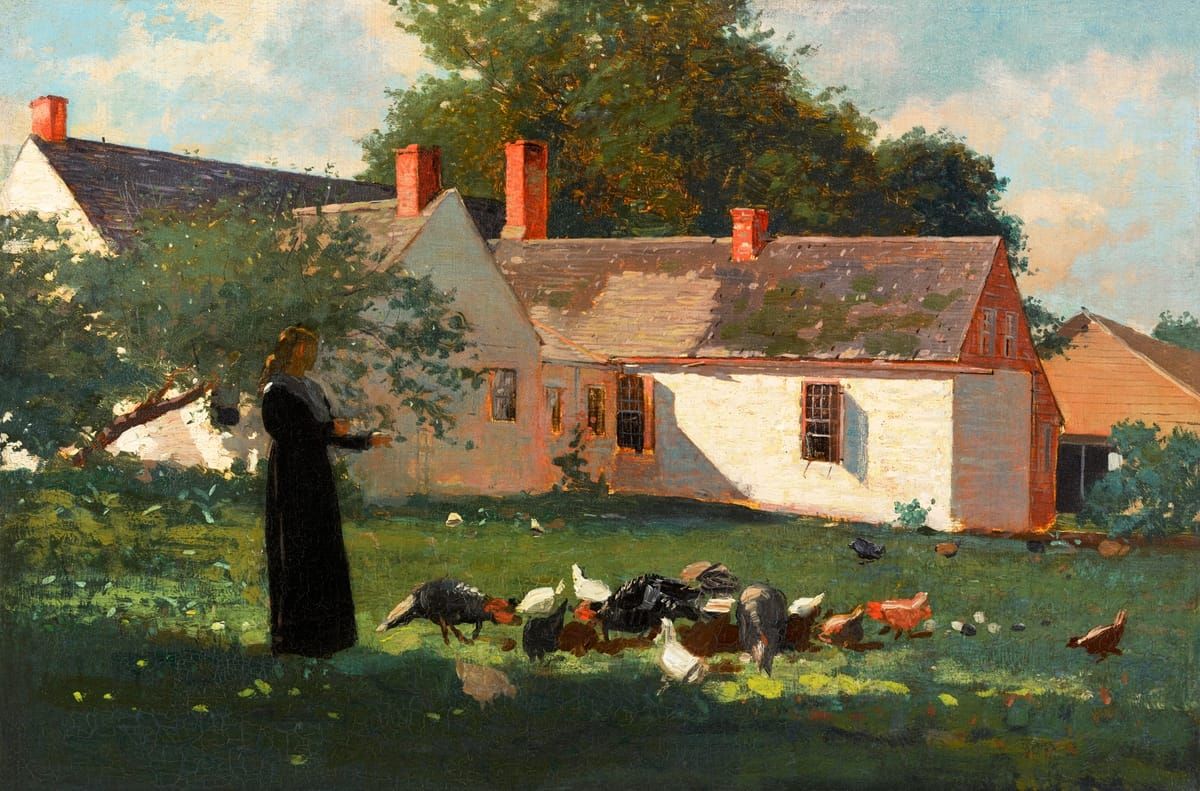
미국의 전설적인 사실주의 거장 윈슬로 호머(Winslow Homer, 1836–1910)가 1873년에서 1874년 사이에 완성한 유화 걸작 <칠면조에게 먹이를 주는 여인(Feeding the Turkeys)>은 19세기 미국 전원의 소박한 일상과 눈부신 자연광의 조화를 가장 서정적으로 담아낸 대표작입니다.
이 작품은 가로 79.1cm, 세로 52.4cm 크기의 캔버스 위에 탄탄한 유화 기법으로 제작되었으며, 햇빛을 직접 받는 흰 벽면과 지붕의 이끼 질감, 그리고 인물과 가금류의 실루엣에 풍부한 유화 물감 층을 얹어 생동감 넘치는 명암 대비를 구현했습니다.
현재 미국 매사추세츠주 클라크 아트 인스티튜트(Clark Art Institute)와 보스턴 미술관(Museum of Fine Arts, Boston) 관련 컬렉션 등에서 중요하게 다루어지는 이 그림은 뉴욕주 북부 헐리(Hurley)의 한 농가 뒤뜰에서 검은 드레스를 입은 젊은 여인이 정오의 따스한 햇살 아래 칠면조와 닭들에게 모이를 흩뿌려주는 평화로운 풍경을 담고 있습니다.
이 그림에는 도심을 벗어나 농촌의 순수한 숨결을 사랑했던 호머의 따뜻한 인간적 면모와 재미있는 일화가 가득합니다. 1870년대 초반 호머는 뉴욕 허드슨 밸리의 유서 깊은 네덜란드식 석조 농가가 보존된 마을인 헐리를 자주 방문해 머물렀습니다.
호머는 농장 마당에서 칠면조들이 모이를 쪼아먹는 역동적인 움직임과 햇빛에 반사되어 검붉게 빛나는 깃털의 색채에 푹 빠져 있었습니다. 하지만 호머가 이젤을 펴고 자리에 앉기만 하면 모이를 기대한 수십 마리의 칠면조와 닭들이 화구 통 주위로 몰려들어 물감 튜브를 쪼아대고 캔버스를 툭툭 건드리는 통에 작업이 엉망이 되기 일쑤였습니다.
호머는 결국 농장 집 딸에게 칠면조들이 가장 좋아하는 곡식을 치마폭에 담아 저만치 서서 천천히 모이를 뿌려달라고 부탁했습니다. 모이를 향해 앞다투어 달려가는 새들의 우스꽝스럽고 활기찬 몸짓과, 그들을 다정하게 내려다보는 여인의 고요한 자세가 만들어내는 완벽한 대비를 본 호머는 "농장의 칠면조들이야말로 최고의 살아있는 모델"이라며 크게 기뻐했다는 유쾌한 일화가 전해집니다.
미술사학자들은 이 작품을 남북전쟁의 상흔을 씻어내고 평화로운 전원적 이상향을 구축해 가던 1870년대 미국 미술의 정수를 보여주는 명작으로 평가합니다. 붉은 벽돌 굴뚝과 눈부신 흰색 농가 벽, 짙푸른 녹음이 만들어내는 탁월한 색채의 조화는 프랑스 인상주의의 빛에 대한 탐구를 미국 특유의 사실주의적 감성으로 승화시킨 걸작이라는 찬사를 받습니다.
작품을 마주할 때 관람자의 무의식적인 시선은 매우 안정적이고 따스한 순환 궤적을 그리며 이동합니다. 관람객의 눈길은 가장 먼저 화면 좌측에 우아하게 서 있는 여인의 검은 드레스 실루엣과 그녀의 손끝에서 풀밭으로 흩뿌려지는 모이의 궤적에 머뭅니다.
이어 시선은 여인의 발아래에서 알록달록한 깃털을 뽐내며 모이를 쪼아먹는 칠면조들과 흰 닭들의 경쾌한 무리로 자연스럽게 내려갑니다. 활기찬 생명력을 훑은 시선은 정오의 햇살을 받아 하얗게 빛나는 농가의 벽면과 붉은 지붕, 굴뚝을 타고 올라간 뒤 뒤편의 웅장한 여름 나무와 푸른 하늘로 부드럽게 확장됩니다.
이러한 유려한 시선의 순환은 관람자의 내면에 깊은 심리적 평온과 무장해제된 온기를 선사합니다. 복잡한 도심의 소음과 일상의 긴장감에 지친 현대인의 무의식에 풀잎 향기 가득한 시골 마당의 따사로운 햇살과 가금류들의 정겨운 소리가 스며들어 굳어 있던 피로를 다정하게 녹여줍니다.
생명을 돌보는 여인의 따스한 손길과 햇살 아래 평화롭게 모이를 나누는 동물들의 순수한 자태는, 보는 이에게 번잡한 일상을 내려놓고 삶의 가장 본질적인 안식과 맑은 행복을 되찾아 주는 든든한 치유의 위로를 선물합니다.
Feeding the Turkeys
Completed between 1873 and 1874 by the legendary American realist master Winslow Homer (1836–1910), the oil masterpiece Feeding the Turkeys stands as an extraordinary pastoral tour de force, harmonizing the unhurried grace of nineteenth-century rural life with the incandescent brilliance of outdoor light.
Measuring 79.1 cm wide by 52.4 cm high on canvas, the work showcases Homer's robust command of oil painting techniques, building rich textures across the sun-drenched whitewashed farmhouse walls, weathered roof shingles, and the shimmering plumage of the flock through bold impasto and subtle tonal layering.
Esteemed within prominent institutional holdings and collections celebrated alongside the Clark Art Institute and the Museum of Fine Arts, Boston, this painting captures a serene afternoon in the historic hamlet of Hurley in upstate New York, where a young woman in an elegant dark dress scatters grain to an eager flock of turkeys and chickens in a lush, sun-dappled farmyard.
Behind this idyllic canvas lies Homer's genuine affection for country living and a delightful array of humorous anecdotes. In the early 1870s, seeking an escape from Manhattan's congested streets, Homer spent his summers immersed in the rural beauty of the Hudson Valley, enchanted by the historic Dutch-style stone houses and rustic homesteads.
Homer was deeply fascinated by the kinetic energy and iridescent plumages of the farm turkeys foraging in the bright sunlight. However, whenever he positioned his easel on the grass, the greedy birds consistently swarmed his painting box, pecking inquisitively at his paint tubes and jostling the canvas in search of an easy meal.
To restore order, Homer enlisted the farmhouse daughter to gather grain in her apron and stand gracefully beneath the apple tree, scattering handfuls of feed to keep the unruly flock in a dynamic yet contained grouping. Delighted by the charming contrast between the woman's tranquil silhouette and the bustling, comic movements of the feeding birds, Homer affectionately joked that these lively turkeys made the finest and most entertaining models he had ever hired.
Art historians celebrate this painting as a monumental milestone of Homer's pastoral period, offering profound psychological comfort to a post-Civil War America yearning for innocence, rural purity, and domestic tranquility. The luminous interplay between the whitewashed clapboard walls, warm red chimneys, and vibrant verdant lawn is widely hailed as an American counterpart to French Impressionism, capturing direct sunlight with unyielding realist fidelity.
When engaging with the painting, the viewer's unconscious gaze undertakes an inherently restorative and grounding visual journey. The eye is initially drawn to the noble, dark silhouette of the young woman standing in the gentle shade on the left, lingering upon the tender gesture of her outstretched hand.
The gaze then travels downward into the vibrant cluster of feeding turkeys and white hens bustling upon the bright grass, savoring the rich contrasts of black, scarlet, and crisp white feathers. Ascending naturally through the incandescent light striking the farmhouse walls and weathered gables, the viewer's attention sweeps upward into the towering, leafy canopy of the summer trees and open azure sky.
This rhythmic visual journey fosters profound emotional lightness, comforting nostalgia, and deep mental stillness within the observer. The pastoral warmth and gentle sunlight act as an intuitive emotional balm, dispelling modern stress and ambient anxiety.
By presenting a harmonious world where human care and natural life coexist in gentle rhythm under the midday sun, Homer offers the observer a comforting sanctuary of mindfulness, inspiring a deep sense of renewal, sweet contentment, and enduring inner peace.
본 리뷰에서 작품을 제외한 컨텐츠의 저작권은 팔렛트제주에 있습니다.
"퍼블릭도메인 고전명화"를 제외한 모든 창작 콘텐츠는 저작권법 제4조 및 제10조에 의거하여 보호됩니다. 무단 도용시 저작권법 제136조(벌칙)에 의거, 당사의 사전 서면 승인 없는 저작권 침해 행위를 금지합니다.