청어잡이 - The Herring Net
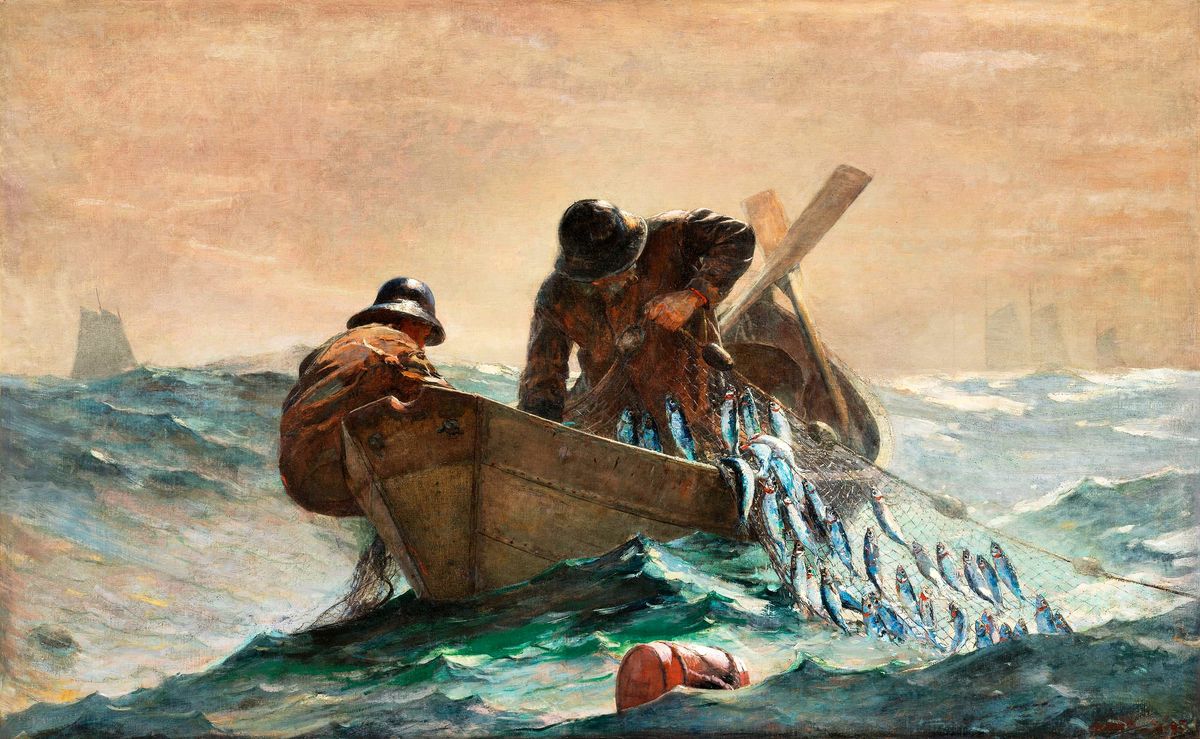
미국의 전설적인 사실주의 거장 윈슬로 호머(Winslow Homer, 1836–1910)가 1885년에 완성한 유화 걸작 <청어잡이(The Herring Net)>는 거친 바다와 당당히 맞서는 인간의 노동과 숭고한 생명력을 장엄한 조형미로 담아낸 대표작입니다.
이 작품은 가로 122.9cm, 세로 76.5cm 크기의 대형 캔버스 위에 묵직한 유화 물감을 두텁게 쌓아 올리는 임파스토 기법과 거친 붓 터치, 섬세한 톤 조절을 혼용하여 제작되었습니다.
현재 미국 시카고 미술관(The Art Institute of Chicago)에 소장되어 있는 이 그림은 매서운 너울성 파도가 출렁이는 북대서양의 메인주 연안에서 작은 목조 도리(Dory) 보트에 몸을 싣고 은빛으로 퍼덕이는 청어 떼를 그물로 끌어올리는 두 어부의 치열하고도 경건한 순간을 포착하고 있습니다.
이 그림에는 메인주의 거친 바다에 매료되어 어부들의 삶 속으로 직접 뛰어들었던 호머의 인간적인 열정과 흥미진진한 비하인드 스토리가 가득합니다. 1883년 메인주의 외딴 해안 절벽인 프라우츠 넥(Prouts Neck)으로 이주한 호머는 작업실에만 머물지 않고 현지 어부들과 함께 작은 보트를 타고 차가운 바다로 나갔습니다.
당시 어부들은 파도가 덮치면 당장이라도 전복될 수 있는 작은 도리 보트 위에서 균형을 잡으며 청어를 건져 올리는 험난한 작업을 매일 반복했습니다. 호머는 어부들의 생생한 근육의 움직임과 젖은 비옷의 질감을 캔버스에 온전히 담기 위해 육지의 모래밭에 실제 도리 보트를 거치해 두고, 현지 어부들에게 작업복과 기름 모자를 씌운 채 온종일 포즈를 취하게 했습니다.
바람이 거세게 불던 어느 날, 포즈를 취하던 젊은 어부가 한겨울 칼바람에 덜덜 떨며 언제 끝나느냐고 묻자 호머는 "바다의 추위와 소금기를 온몸으로 느껴야 진짜 어부의 얼굴이 나온다"라며 그를 달래면서도, 미안한 마음에 자신이 아껴둔 따뜻한 럼주와 두툼한 빵을 건네며 함께 껄껄 웃었다는 유쾌한 일화가 전해집니다.
화면 속 그물 가득 낚여 올라오는 청어들의 비늘은 호머가 수산 시장에서 갓 잡아 온 싱싱한 생선들을 직접 구해와 작업실 바닥에 쏟아놓고, 은빛과 무지개색으로 산란하는 광채를 한 획 한 획 치밀하게 관찰하며 덧칠해 완성한 결과물입니다.
미술사학자들은 이 작품을 호머의 해양 회화 중에서도 노동의 숭고함과 자연의 위대함이 가장 완벽한 화음을 이루는 정점으로 평가합니다. 얼굴을 가린 채 묵묵히 그물을 당기는 인물들은 특정 개인이 아닌 거친 운명에 굴하지 않고 묵묵히 하루를 일구는 보편적 인류의 당당한 표상으로 승화되었습니다.
작품을 마주할 때 관람자의 무의식적인 시선은 매우 역동적이면서도 완벽한 균형을 이루는 원형 궤적을 그리며 이동합니다. 관람객의 눈길은 가장 먼저 화면 우측에서 햇빛을 받아 눈부신 은백색과 푸른빛으로 파닥거리는 청어 떼와 팽팽하게 당겨진 그물의 곡선에 머뭅니다.
이어 시선은 그물을 끌어올리는 굳센 어부의 다부진 어깨와 비옷의 묵직한 주름을 타고 올라간 뒤, 균형을 맞추기 위해 배의 반대편 모서리를 짓누르고 있는 또 다른 동료의 웅크린 자세로 자연스럽게 이동합니다.
단단한 인간의 노동을 훑은 시선은 작은 목조 보트 아래에서 서늘한 에메랄드빛으로 넘실거리는 파도와 화면 하단에 둥둥 떠 있는 붉은 부표를 지나, 저 멀리 수평선 안개 너머로 희미하게 보이는 모선의 실루엣과 은은한 노을빛 하늘로 확장됩니다.
이러한 유려한 시선의 순환은 관람자의 내면에 깊은 심리적 안정감과 묵직한 내적 활력을 불어넣어 줍니다. 언제 뒤집힐지 모르는 거친 파도 속에서도 서로 호흡을 맞추며 굳건하게 중심을 잡는 두 어부의 모습은, 복잡한 일상의 불안과 피로에 지친 현대인의 무의식에 강력한 안정감과 삶의 무게를 지탱하는 든든한 용기를 선사합니다.
생명의 빛으로 가득 찬 풍성한 수확의 순간과 자연에 순응하며 묵묵히 나아가는 인간의 건강한 에너지는, 보는 이에게 번잡한 잡념을 씻어내고 자신의 내면에 잠재된 강인한 회복탄력성과 삶에 대한 긍정적인 희망을 되찾게 해 줍니다.
The Herring Net
Completed in 1885 by the celebrated American realist master Winslow Homer (1836–1910), the oil masterpiece The Herring Net stands as a monumental tour de force that captures the heroic labor of fishermen and the majestic vitality of the sea with unparalleled sculptural power.
Measuring 122.9 cm wide by 76.5 cm high on canvas, the work showcases Homer's robust mastery of dense impasto, dynamic directional brushwork, and subtle tonal modulations that brilliantly render the churning crests of the North Atlantic swells and the slick textures of wet oilskins.
Preserved in the prestigious permanent collection of The Art Institute of Chicago, this painting masterfully portrays two resilient fishermen aboard a fragile wooden dory off the coast of Maine, working in seamless harmony to haul a shimmering net laden with silver herring from the rolling deep.
Behind this iconic canvas lies Homer's deep fascination with maritime life and a delightful array of personal anecdotes. After establishing his secluded coastal studio at Prouts Neck, Maine, in 1883, Homer immersed himself in the austere realities of the local seafaring community, often braving rough waters alongside working crews.
To capture the anatomical tension and authenticity of the fishermen's grueling labor, Homer had an actual dory propped up on the beach dunes and hired local mariners to pose in heavy sou'westers and oilskins.
According to local lore, when a young model shivered under the biting winter gales and asked when the session would end, Homer warmly encouraged him by stating that the biting salt wind was essential to capturing the true soul of a mariner, promptly sharing his treasured hot rum and hearty bread to warm their spirits in lively camaraderie.
The iridescent herring cascading from the mesh were painted from fresh catches Homer had delivered directly to his studio, where he meticulously studied the prismatic play of silver, pearl, and ultramarine reflections dancing across their scales.
Art historians celebrate this painting as a defining pinnacle in American realism, extolling its profound thematic universality. By obscuring the faces of the mariners, Homer transformed ordinary laborers into monumental archetypes of human endurance, fortitude, and respectful coexistence with the formidable powers of nature.
When engaging with the painting, the viewer's unconscious gaze undertakes an intensely invigorating yet stabilizing visual journey. The eye is initially captivated by the luminous cascade of silver and turquoise herring glistening against the taut web of the net on the right.
The gaze then ascends through the muscular shoulders and weathered coats of the standing fisherman, moving organically across to his partner leaning vigilantly over the gunwale to counterbalance the rolling boat.
Descending naturally through the translucent emerald water and the weathered red buoy floating in the immediate foreground, the viewer's attention sweeps across the sweeping horizon where the ghostly sails of the mother schooner emerge through the warm, mist-laden sky.
This rhythmic visual journey fosters profound psychological reassurance and deep emotional grounding within the observer. The steadfast balance maintained by the two companions amidst the volatile ocean swells acts as a natural anchor, dispelling modern stress and ambient anxiety.
By presenting a harmonious moment of abundant harvest achieved through mutual trust, quiet courage, and honest labor, Homer offers the observer a comforting sanctuary of mindfulness, inspiring a deep sense of resilience, inner strength, and enduring tranquility.
본 리뷰에서 작품을 제외한 컨텐츠의 저작권은 팔렛트제주에 있습니다.
"퍼블릭도메인 고전명화"를 제외한 모든 창작 콘텐츠는 저작권법 제4조 및 제10조에 의거하여 보호됩니다. 무단 도용시 저작권법 제136조(벌칙)에 의거, 당사의 사전 서면 승인 없는 저작권 침해 행위를 금지합니다.