북동풍 - Northeaster
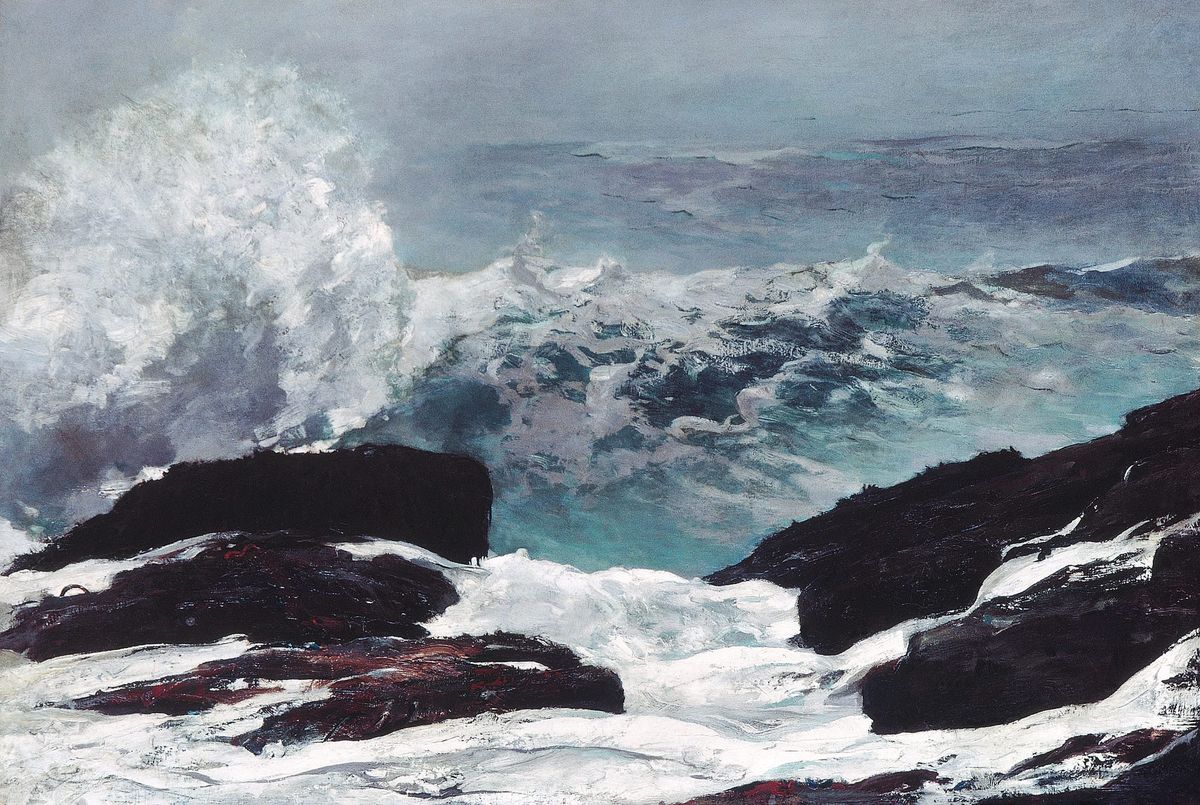
미국의 전설적인 사실주의 거장 윈슬로 호머(Winslow Homer, 1836–1910)가 1895년에 완성하고 1901년에 재작업을 거쳐 완성도를 극대화한 기념비적 유화 걸작 <북동풍(Northeaster)>은 북대서양의 거친 파도와 해안 암벽의 충돌을 가장 웅장하고 압도적인 힘으로 표현해 낸 대표작입니다.
이 작품은 가로 127.0cm, 세로 87.6cm 크기의 묵직한 대형 캔버스 위에 두껍게 물감을 얹어낸 임파스토(impasto) 기법과 팔레트 나이프 터치를 대담하게 구사하여 제작되었습니다. 솟구치는 물보라의 하얀 포말과 차가운 터키석 블루빛 파도, 그리고 오랜 세월 풍파를 견뎌낸 흑갈색 화강암 암벽의 거친 질감을 완벽한 명암과 밀도로 살려냈습니다.
현재 미국 뉴욕 메트로폴리탄 미술관(The Metropolitan Museum of Art)에 소장되어 있는 이 그림은 메인주 프라우츠 넥(Prouts Neck)의 벼랑 끝에서 거대한 북동풍 폭풍우가 몰아칠 때, 육중한 바위를 집어삼킬 듯 맹렬하게 솟구쳐 오르는 거대한 파도의 폭발적인 에너지를 포착하고 있습니다.
이 그림에는 메인주의 험준한 절벽 위에 은둔하며 오직 바다의 순수한 원초성에 모든 영혼을 바쳤던 호머의 치열하고도 집념 어린 비하인드 스토리가 깃들어 있습니다. 호머는 마을 사람 모두가 거센 폭풍우를 피해 문을 걸어 잠그는 날이면 오히려 환호성을 지르며 방수 외투와 장화를 챙겨 벼랑 끝으로 뛰쳐나갔습니다.
호머는 날아갈 듯 몰아치는 비바람 속에서 캔버스를 고정하기 위해 바퀴가 달린 이동식 목재 부스(화실)를 직접 절벽 위에 세우고, 작은 창문 틈으로 바닷물이 튀어 들어와 안경과 얼굴을 적셔도 아랑곳하지 않고 성난 바다와 정면으로 마주하며 붓을 휘둘렀습니다.
재미있는 사실은 1895년 첫 완성 당시 화면 좌측 전경의 바위 위에 거친 파도를 지켜보는 두 명의 인물이 작게 그려져 있었다는 점입니다. 하지만 전시 이후 호머는 "바다 앞에서는 인간의 어떤 서사도 사족에 불과하다"며 단호하게 결단을 내리고, 1901년 작업실에서 인물들을 짙은 파도와 바위의 물감으로 완전히 덮어 지워버렸습니다.
주변 화상들이 그림 속 인물을 지우면 대중적인 인기가 떨어질 것이라며 만류했으나, 호머는 "인간이 사라져야 자연의 진짜 위대함이 온전히 드러난다"라고 호탕하게 쏘아붙이며 오직 바다와 바위의 실존적 충돌만을 남겨두는 파격을 감행했습니다.
미술사학자들은 이 작품을 미국 해양 회화의 최고봉이자 대자연의 숭고미를 현대적인 조형 언어로 완성한 걸작으로 극찬합니다. 인간적인 내러티브를 완벽히 배제하고 자연의 원초적 질서와 거대한 생명력만을 응축한 구성은, 훗날 20세기 미국 추상표현주의 화가들에게도 지대한 시각적 영감을 건넸습니다.
작품을 마주할 때 관람자의 무의식적인 시선은 매우 역동적이고 웅장한 대각선 상승 궤적을 그리며 이동합니다. 관람객의 눈길은 가장 먼저 화면 좌측에서 마치 거대한 폭발처럼 하늘 높이 솟구쳐 오르는 하얀 물보라의 거대한 기둥에 단숨에 사로잡힙니다.
이어 시선은 화면 앞쪽에서 소용돌이치며 쏟아져 내리는 우윳빛 파도의 포말을 타고 우측 하단의 단단하고 묵직한 흑갈색 화강암 암벽으로 빠르게 미끄러져 내려갑니다.
바위의 단단한 질감을 확인한 시선은 다시 거대한 파도가 굽이치는 짙푸른 에메랄드빛 바다 한가운데로 이동하여, 수평선 너머 짙은 안개와 비구름이 드리운 차가운 잿빛 하늘로 부드럽게 상승하며 무한한 대기의 공간감을 체감하게 됩니다.
이러한 유려한 시선의 순환은 관람자의 내면에 깊은 심리적 정화와 강력한 내적 카타르시스를 선물합니다. 화면 가득 맹렬하게 부서지는 거대한 파도의 분출은 복잡한 일상의 번잡함과 억눌린 스트레스에 지친 현대인의 무의식에 묵은 피로를 단숨에 쓸어내리는 시원한 해방감을 불어넣어 줍니다.
어떤 거친 파도의 습격 속에서도 미동조차 없이 굳건하게 자리를 지키는 거대한 암벽의 존재감은, 보는 이에게 번뇌를 내려놓고 어떤 삶의 풍파 앞에서도 흔들리지 않는 내면의 중심과 단단한 용기를 되찾아 주는 깊은 치유의 위로를 건넵니다.
Northeaster
Completed in 1895 and masterfully reworked in 1901 by the celebrated American realist master Winslow Homer (1836–1910), the oil masterpiece Northeaster stands as a monumental tour de force capturing the primeval power and untamed majesty of the North Atlantic Ocean with peerless sculptural force.
Measuring 127.0 cm wide by 87.6 cm high on canvas, the work showcases Homer's consummate mastery of heavy impasto and assertive palette knife application, rendering the volcanic explosion of crashing white foam, the translucent depths of turquoise swells, and the weathered granite ledges with breathtaking fidelity.
Preserved in the prestigious permanent collection of The Metropolitan Museum of Art in New York, this painting dramatically portrays the rocky cliffs of Prouts Neck, Maine, during a ferocious gale, where monumental ocean swells erupt against ancient bedrock in an awe-inspiring collision of elemental forces.
Behind this iconic canvas lies Homer's solitary hermitage along the Maine coast and a fascinating array of artistic anecdotes. While villagers sheltered securely indoors during fierce coastal storms, Homer eagerly ventured out into the howling winds, donning heavy storm boots and oilskins to confront the roaring sea.
To paint directly amidst flying salt spray, Homer designed a portable wooden painting shelter on wheels, bracing himself against the wind as waves battered the nearby ledges, determined to seize the raw vitality of the tempest in living paint.
Remarkably, when first exhibited in 1895, the painting featured two figures huddled in spray upon the rocks in the left foreground. Recognizing that narrative details compromised the cosmic purity of the scene, Homer took the canvas back into his studio in 1901 and fearlessly painted over the human figures with churning surf and rock.
When art dealers cautioned that removing the human element might lessen its sentimental appeal, Homer brusquely dismissed their concerns, declaring that the absence of human interference allowed nature to reveal its purest, most monumental grandeur without distraction.
Art historians celebrate Northeaster as the supreme pinnacle of American marine painting, extolling its extraordinary structural equilibrium. By paring the composition down to bedrock, ocean swells, and turbulent atmosphere, Homer transformed a coastal view into a timeless visual monument to cosmic endurance that profoundly influenced twentieth-century modernism.
When engaging with the painting, the viewer's unconscious gaze undertakes an intensely exhilarating yet stabilizing visual journey. The eye is initially seized by the monumental column of brilliant white spray erupting dramatically on the left, soaring high into the brooding grey atmosphere.
The gaze then cascades downward along the churning white torrents in the foreground, sliding across to the massive, dark granite ledge anchoring the right side of the composition.
Sweeping across the rich ultramarine and turquoise depths of the surging wave crests, the viewer's attention rises through the heavy, mist-laden sky, absorbing the boundless spatial power of the open sea.
This rhythmic visual journey fosters profound psychological reassurance, cathartic release, and deep emotional clarity within the observer. The roaring spectacle of water and wind acts as a natural mental tonic, sweeping away ambient modern stress and accumulated inner fatigue.
By presenting the eternal balance between the furious kinetic energy of the waves and the silent fortitude of ancient stone, Homer offers the observer a comforting sanctuary of mindfulness, inspiring a deep sense of resilience, inner composure, and enduring peace.
본 리뷰에서 작품을 제외한 컨텐츠의 저작권은 팔렛트제주에 있습니다.
"퍼블릭도메인 고전명화"를 제외한 모든 창작 콘텐츠는 저작권법 제4조 및 제10조에 의거하여 보호됩니다. 무단 도용시 저작권법 제136조(벌칙)에 의거, 당사의 사전 서면 승인 없는 저작권 침해 행위를 금지합니다.