봄의 언덕 위 양 떼 - Sheep on a Hillside, Pastoral
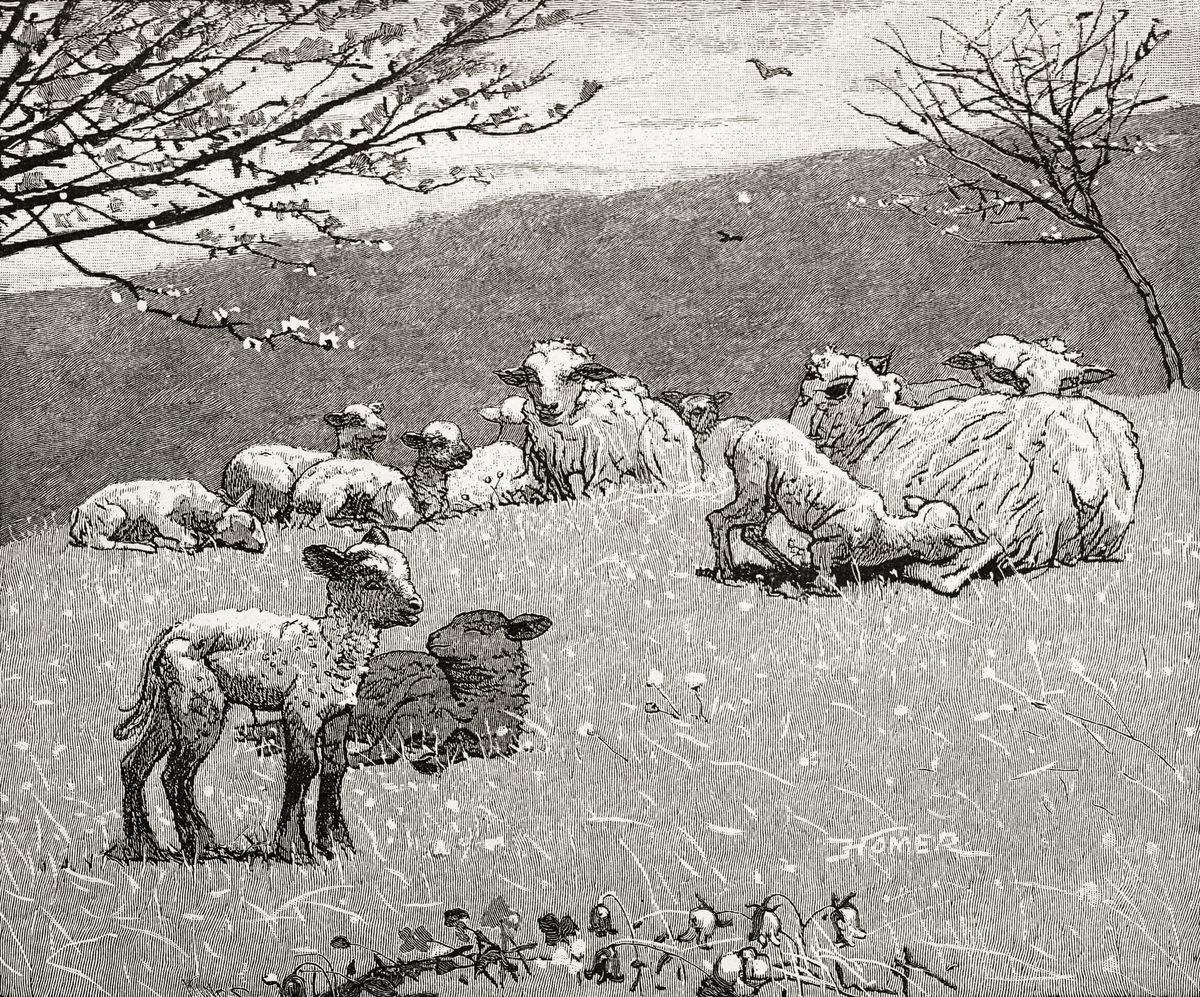
미국의 전설적인 사실주의 거장 윈슬로 호머(Winslow Homer, 1836–1910)가 1878년에 발표한 목판화 명작 <봄의 언덕 위 양 떼(Sheep on a Hillside, Pastoral / Spring Lambs)>는 19세기 미국 시골 풍경의 포근한 서정과 생명의 움틈을 가장 순수하고 정감 어린 시선으로 포착해 낸 목가적 걸작입니다.
이 작품은 가로 약 24.5cm, 세로 약 22.0cm 크기의 목판 인쇄용 고급 종이 위에 정교한 선과 명암을 새겨 넣은 목판화(Wood engraving) 기법으로 제작되었으며, 당대 최고의 문예 주간지였던 하퍼스 바자(Harper's Bazar)의 1878년 봄 호에 게재되어 전국적인 사랑을 받았습니다.
현재 미국 메트로폴리탄 미술관(The Metropolitan Museum of Art) 및 국회도서관 등에 소장되어 있는 이 판화는 화사한 봄기운이 감도는 완만한 언덕배기에서 어미 양과 갓 태어난 어린 양들이 따스한 햇볕을 쬐며 뒹굴고 어미의 젖을 빠는 평화로운 일상을 섬세하게 담아내고 있습니다.
이 작품 뒤에는 뉴욕의 번잡함을 벗어나 자연의 소박한 아름다움에 흠뻑 빠져 지내던 호머의 따뜻하고 인간적인 에피소드가 가득합니다. 1870년대 중후반 호머는 뉴욕주 허드슨 밸리의 외딴 농촌 마을인 휴턴 팜(Houghton Farm)에 머물며 농장 주인 밸런타인 가족과 격의 없이 어울렸습니다.
호머는 농장의 방목지를 온종일 서성이며 양들의 사랑스러운 몸짓을 관찰하는 일에 푹 빠져 있었습니다. 그는 갓 태어나 다리가 후들거리는 어린 양들의 귀여운 균형감각과 어미 양 곁을 파고드는 천진난만한 행동을 스케치북에 담기 위해 풀밭에 엎드려 몇 시간이고 꼼짝하지 않곤 했습니다.
농장의 양치기 소년들은 유명한 뉴욕 화가가 양 떼 사이에 파묻혀 옷에 흙과 풀물을 묻혀가며 그림을 그리는 모습을 보고 낄낄거렸지만, 호머는 오히려 "이 어린 양들의 눈망울과 부드러운 털이야말로 세상에서 가장 완벽한 예술"이라며 흐뭇한 미소를 지었다는 유쾌한 일화가 전해집니다.
특히 호머는 어미의 젖을 힘차게 빨고 있는 어린 양의 엉덩이 꼬익거림과, 턱을 바닥에 괴고 졸고 있는 검은 양, 호기심 어린 눈빛으로 정면을 응시하는 새끼 양의 개성 넘치는 표정 하나하나를 살아있는 듯한 선묘로 살려냈습니다.
미술사학자들은 이 작품을 남북전쟁 이후 상처와 피로에 젖어 있던 미국인들에게 깊은 정서적 치유와 희망을 선사한 대표적인 1870년대 전원풍 명작으로 평가합니다. 복잡한 기교나 작위적인 서사를 배제하고, 자연의 순환과 생명의 탄생이 주는 순수한 기쁨을 정직하게 담아내어 미국 시골의 따스한 정체성을 시각적으로 완성했다는 극찬을 받습니다.
작품을 마주할 때 관람자의 무의식적인 시선은 매우 포근하고 부드러운 나선형 궤적을 그리며 이동합니다. 관람객의 눈길은 가장 먼저 화면 좌측 하단에서 풀잎 사이로 돋아난 작은 야생화들 위로 앙증맞게 서 있는 어린 새끼 양의 귀여운 실루엣과 그의 곁에 편안히 엎드린 검은 양의 단잠에 머뭅니다.
이어 시선은 화면 중앙으로 비스듬히 올라가 따스한 털을 뽐내며 옹기종기 모여 앉은 양 떼의 완만한 둔덕을 훑은 뒤, 우측에서 덩치 큰 어미의 품에 고개를 파묻고 젖을 빠는 어린 양의 역동적인 모습에 가닿습니다. 이후 시선은 언덕 너머로 완만하게 펼쳐진 능선과 봄날의 아지랑이처럼 몽환적인 하늘, 그리고 화면 가장자리를 액자처럼 감싸는 섬세한 나뭇가지들로 확장되며 아늑한 공간감을 완성합니다.
이러한 유려한 시선의 순환은 관람자의 내면에 깊은 심리적 이완과 무장해제된 평온을 선사합니다. 복잡한 도심의 소음과 일상의 긴장감에 짓눌린 현대인의 무의식에 포근한 봄 햇살과 풀잎 냄새, 그리고 어미의 품처럼 따뜻한 생명의 온기가 스며들어 지친 마음을 다정하게 감싸 안아 줍니다.
세상의 번잡한 소란과는 무관하게 평화로운 언덕 위에서 서로의 온기를 나누며 봄을 맞이하는 양 떼의 순수한 자태는, 보는 이에게 번민을 내려놓고 삶의 가장 본질적인 안식과 맑은 행복을 되찾아 주는 따뜻한 치유의 선물을 건넵니다.
Sheep on a Hillside, Pastoral
Published in 1878 by the legendary American realist master Winslow Homer (1836–1910), the wood engraving masterpiece Sheep on a Hillside, Pastoral (also widely known as Spring Lambs) stands as an evocative tour de force capturing the idyllic serenity and tender vitality of nineteenth-century American rural life.
Measuring approximately 24.5 cm wide by 22.0 cm high on fine wove paper, this wood engraving was masterfully executed for Harper's Bazar, capturing Homer's remarkable eye for natural detail and distributing his heartwarming vision across the country.
Preserved in prestigious permanent collections including The Metropolitan Museum of Art and the Library of Congress, this print lovingly portrays a pastoral hillside bathed in springtime warmth, where a resting flock of ewes and playful, newborn lambs graze, snooze, and nurse peacefully upon the sun-drenched pasture.
Behind this enchanting composition lies Homer's cherished immersion in the pastoral simplicity of rural New York. During the late 1870s, Homer spent significant time at Houghton Farm in the scenic Hudson Valley, enjoying the warm hospitality of the Valentine family and seeking solace from the relentless bustle of Manhattan.
Homer spent entire days roaming the rolling pastures, entirely captivated by the endearing antics of the sheep and their newborn lambs. He would lie prone in the tall grass for hours, remaining utterly motionless to sketch the wobbly steps of the youngsters and the nurturing patience of the maternal ewes.
The young farmhands often chuckled at the sight of this celebrated New York artist lying in the dirt with grass stains across his trousers, but Homer delightfully brushed off their teasing, remarking with affectionate warmth that the gentle eyes and soft fleece of the lambs were the most perfect art nature could offer.
Homer rendered each creature with extraordinary personality: the vigorous tilt of a lamb eagerly nursing from its mother, the drowsy contentment of a dark fleece resting on the turf, and the curious, wide-eyed innocence of a young lamb standing alert in the foreground.
Art historians celebrate this work as an essential highlight of Homer's pastoral period, which provided immense emotional healing and quiet optimism to a post-Civil War nation longing for simpler, peaceful times. By celebrating the regenerative beauty of nature and maternal devotion without sentimentality, Homer elevated humble pastoral illustration into timeless fine art.
When engaging with the print, the viewer's unconscious gaze undertakes an inherently soothing and restorative visual journey. The eye is initially drawn to the upright lamb in the lower left, standing gracefully above the delicate meadow blossoms beside its sleeping companion.
The gaze then travels along the gentle diagonal ascent of the hillside, taking in the huddled textures of the flock before pausing over the charming scene of the hungry lamb nursing against the large ewe on the right. Sweeping upward through the soft mountain ridge and the delicate filigree of budding tree branches that frame the composition, the viewer absorbs an expansive, tranquil atmosphere.
This rhythmic visual journey fosters profound psychological reassurance and emotional lightness within the observer. The idyllic setting and innocent animal bonds act as an intuitive emotional balm, dissolving ambient fatigue and modern stress.
By presenting a world embraced by gentle sunshine, maternal warmth, and natural harmony, Homer offers the observer a comforting sanctuary of mindfulness, inspiring a deep sense of renewal, sweet contentment, and enduring inner peace.
본 리뷰에서 작품을 제외한 컨텐츠의 저작권은 팔렛트제주에 있습니다.
"퍼블릭도메인 고전명화"를 제외한 모든 창작 콘텐츠는 저작권법 제4조 및 제10조에 의거하여 보호됩니다. 무단 도용시 저작권법 제136조(벌칙)에 의거, 당사의 사전 서면 승인 없는 저작권 침해 행위를 금지합니다.