보행기 속의 아이 - Child in a Go-Cart
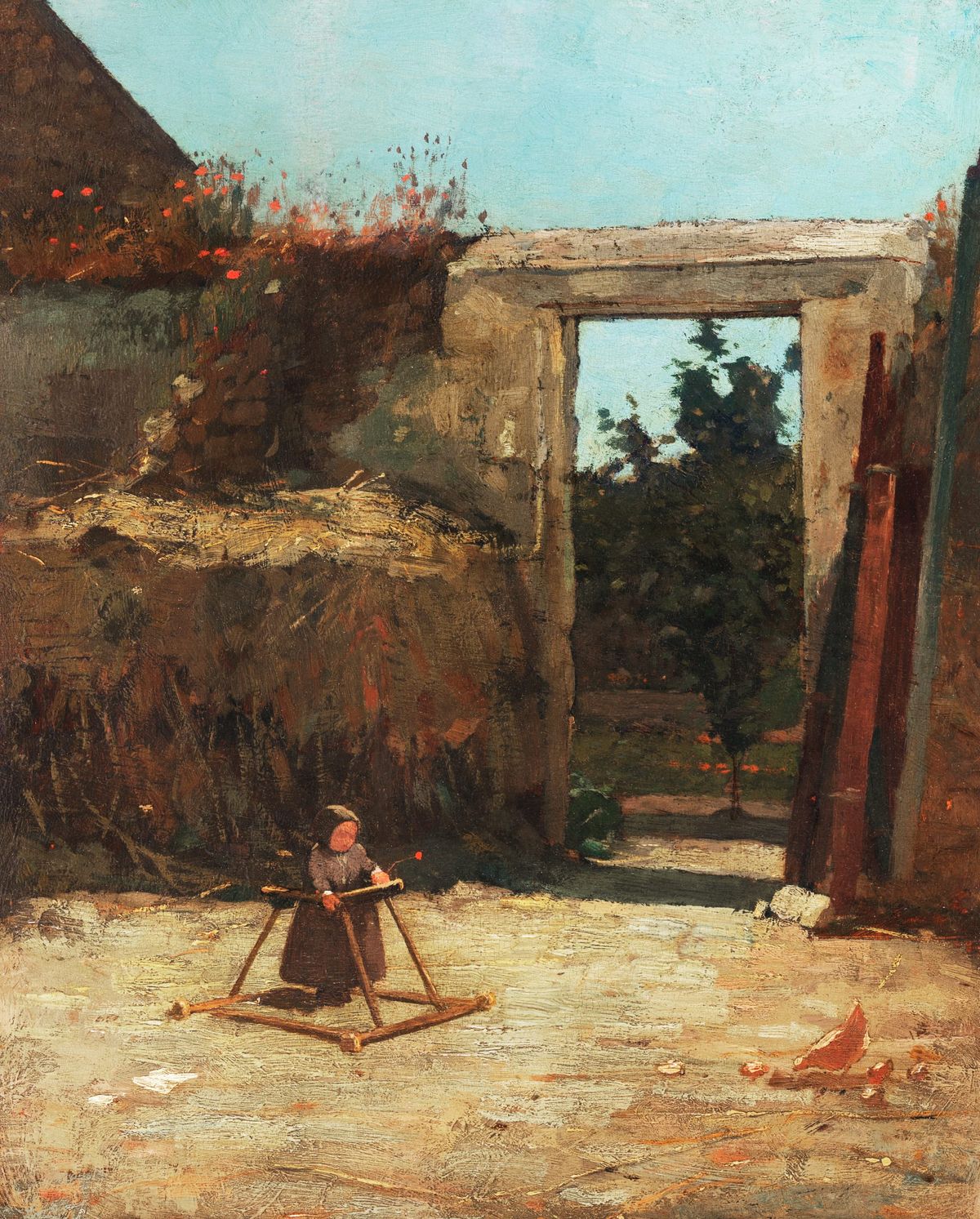
미국 사실주의 미술의 독보적인 거장 윈슬로 호머(Winslow Homer, 1836–1910)가 1867년에 제작한 사랑스러운 유화 명작입니다. 현재 미국 브루클린 미술관(Brooklyn Museum)에 소장되어 있으며, 나무 패널 위에 유채(Oil on wood)로 정교하게 완성된 실제 크기는 세로 30.5cm, 가로 24.1cm의 단아한 소품입니다.
호머는 유럽 유학 시절 바르비종파 화가들의 야외 광선 묘사와 프랑스 농촌의 소박한 풍광에 영감을 받아 이 작은 화폭을 구축했습니다. 거친 볏짚 더미와 낡은 석조 담벽의 질감은 흙빛 갈색과 황토색 물감을 두텁게 쌓아 올린 임파스토로 무게감을 주었고, 햇살이 쏟아지는 안마당 바닥은 밝은 크림색과 베이지 톤을 빠른 붓질로 펴 발라 따스한 온기를 표현했습니다. 특히 담벽 위로 흐드러지게 핀 붉은 양귀비꽃들과 석조 문틀 너머로 내다보이는 푸른 과수원 풍경은 맑은 청록색으로 대비를 이루어 화면에 싱그러운 공간감을 불어넣습니다.
이 작품은 1867년 호머가 파리 만국박람회에 출품된 자신의 그림들을 확인하기 위해 프랑스에 10개월간 체류하던 시기에 탄생했습니다. 당시 호머는 파리의 화려한 도심 대신 파리 근교 퐁텐블로 숲과 시골 마을들을 자전거와 도보로 여행하며 농민들의 소박한 일상을 관찰하는 데 푹 빠져 있었습니다.
비하인드 스토리로, 호머는 어느 농가 마당을 지나치다 피라미드 모양으로 투박하게 깎아 만든 나무 보행기(Go-cart)에 몸을 맡긴 채 아장아장 걸음마를 떼고 있는 시골 아기의 모습을 발견했습니다. 당시 미국 도시에서는 볼 수 없었던 유럽 시골 특유의 수제 나무 보행기와, 그 안에 갇힌 듯하면서도 신기한 표정으로 붉은 꽃 한 송이를 쥐고 조심스레 발을 내딛는 꼬마의 천진난만한 모습에 매료된 호머는 그 자리에서 스케치북을 펼쳐 들었습니다. 훗날 미술사학자들은 이 작품을 두고 "프랑스 농촌의 투박한 현실과 유아기의 순수한 첫걸음을 과장 없는 따뜻한 시선으로 포착해 낸 호머의 유럽 체류기 중 가장 독창적이고 인간미 넘치는 수작"으로 평가합니다.
관람자의 무의식적 시선은 햇빛이 내리쬐는 마당 한가운데에서 나무 보행기를 붙잡고 서 있는 꼬마의 앙증맞은 실루엣에 가장 먼저 머뭅니다. 보닛을 쓰고 조심스럽게 첫 발걸음을 떼는 아이의 무구한 모습은 보는 이의 경계심을 단숨에 무장 해제시키며 즉각적인 미소와 따뜻한 정서적 온기를 전합니다.
이어서 시선은 아이가 서 있는 밝은 바닥을 지나 화면을 웅장하게 가로지르는 석조 문틀로 상승하며, 문 너머로 시원하게 펼쳐진 푸른 정원의 빛을 따라 화면 상단의 맑은 여름 하늘로 기분 좋게 확장됩니다. 거친 벽과 볏짚 더미가 감싸주는 아늑한 보호막 속에서 안전하게 세상 밖으로 발을 내딛는 아이의 구도는 보는 이의 마음에 깊은 심리적 안정감을 심어주며, 새로운 시작을 앞둔 이들에게 두려움을 씻어내고 온화한 용기와 평온을 선사합니다.
Child in a Go-Cart
Created in 1867 by Winslow Homer (1836–1910), a paramount master of American Realism, this endearing oil painting is preserved in the permanent collection of the Brooklyn Museum in New York. Rendered in oil on wood panel, the intimate vertical work measures approximately 30.5 cm in height by 24.1 cm in width.
Homer drew inspiration from the naturalistic light and rural honesty of the French Barbizon painters during his transformative stay in Europe. The weathered textures of the massive stone wall and the towering haystack are sculpted with rich impasto in earthy umbers and warm ochres, creating a sturdy architectural envelope. In contrast, the sun-baked courtyard floor is rendered in luminous cream and beige tones, punctuated by vivid crimson poppies atop the wall and the vibrant turquoise foliage of an orchard glimpsed through the open stone archway.
This painting was conceived during Homer's ten-month stay in France in 1867, following the exhibition of his Civil War paintings at the Exposition Universelle in Paris. Rather than immersing himself in metropolitan academic circles, Homer spent months exploring the rural villages around the Forest of Fontainebleau, fascinated by the unvarnished rhythms of agrarian life.
A captivating narrative surrounds this encounter: while wandering through a rustic French farmyard, Homer was charmed by the sight of a peasant toddler taking cautious first steps within a primitive, pyramid-shaped wooden walking frame known as a go-cart. Intrigued by the ingenious handmade contraption and the baby's solemn concentration while clutching a tiny red blossom, Homer immediately set to work capturing the candid scene. Modern art historians widely acclaim this panel as one of the most tender and charming achievements of Homer's French period, praising its quiet dignity, lack of sentimental artifice, and genuine human warmth.
The viewer's subconscious gaze immediately alights upon the solitary toddler standing anchored within the triangular wooden go-cart under the brilliant sunlight. The baby's bonneted profile and hesitant, concentrated posture instantly dissolve external stress, awakening an immediate sense of tenderness and nostalgic affection.
The eye then travels upward through the heavy stone portal into the verdant depth of the sunlit garden beyond, before drifting across the rustic haystack and into the open blue sky above. This protective architectural framing creates an unconscious sense of safety and shelter, comforting the spirit with the timeless, innocent wonder of taking one's very first steps into the wider world.
본 리뷰에서 작품을 제외한 컨텐츠의 저작권은 팔렛트제주에 있습니다.
"퍼블릭도메인 고전명화"를 제외한 모든 창작 콘텐츠는 저작권법 제4조 및 제10조에 의거하여 보호됩니다. 무단 도용시 저작권법 제136조(벌칙)에 의거, 당사의 사전 서면 승인 없는 저작권 침해 행위를 금지합니다.