바하마의 오두막 (열대의 초가집과 아이들) - A Bahamian Cabin / A Nassau Native Hut
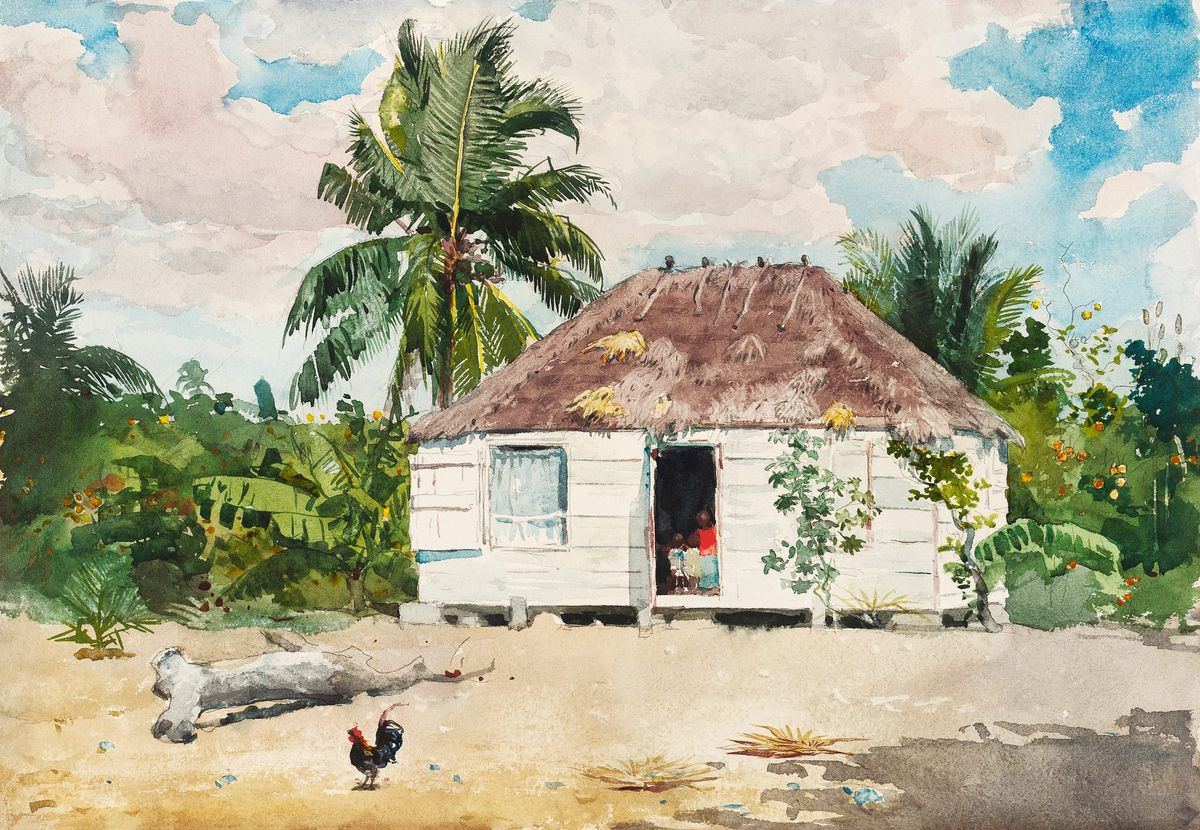
미국의 전설적인 사실주의 거장 윈슬로 호머(Winslow Homer, 1836–1910)가 1898년(또는 1898–1899년경)에 완성한 수채화 명작 <바하마의 오두막(A Bahamian Cabin / A Nassau Native Hut / Native Hut at Nassau)>은 눈이 시리도록 투명한 카리브해의 햇살 아래 짙푸른 야자수와 바나나 나무에 둘러싸인 아늑한 하얀 초가 오두막의 고즈넉한 풍경과 그늘 속에 옹기종기 모인 원주민 아이들의 순박한 일상을 가장 청량하고 따뜻한 필치로 포착해 낸 수작입니다.
이 작품은 가로 약 54.6cm, 세로 약 37.8cm(약 21.5 x 14.8인치) 크기의 고급 워브 종이 위에 흑연 연필로 가옥의 윤곽과 울창한 열대 식물들의 형태를 정갈하게 잡은 후, 투명 수채 물감의 유려한 번짐과 스며듦으로 푸른 하늘과 뭉게구름, 그리고 짙은 에메랄드빛 녹음을 칠하고, 종이 본연의 밝은 흰 여백을 절묘하게 남겨두어 햇살을 받아 눈부시게 빛나는 오두막의 흰색 판자벽과 마당의 은빛 모래펄을 극대화한 혼합 수채 기법으로 완성되었습니다.
현재 미국 주요 미술관 및 유수 프라이빗 컬렉션에서 높이 평가받는 이 그림은 바하마 나소(Nassau)의 한적한 마을에서, 짚을 얹은 소박한 오두막 문간 그늘 속에 붉은 옷을 입은 아이들이 모여 밖을 내다보고, 마당 한쪽에는 깃털이 화려한 수탉 한 마리와 쓰러진 고목 밑동이 자리 잡은 평화롭고 나른한 열대의 오후 한때를 담고 있습니다.
이 그림 뒤에는 북부의 매서운 겨울 추위를 피해 바하마와 서인도 제도를 찾았던 호머의 깊은 예술적 통찰과 유쾌한 인간적 비하인드가 깃들어 있습니다. 당시 호머는 관광객들이 붐비는 화려한 휴양지가 아닌, 현지 주민들이 자연의 순리에 순응하며 소박하게 살아가는 소담한 마을 풍경에 깊은 시각적 애정을 품고 있었습니다.
호머는 마당 위로 쏟아지는 찬란한 태양광선과 짙푸른 야자수의 싱그러운 그늘을 담기 위해 모래마당 한쪽에 야외 이젤을 펼치고 자리를 잡았습니다. 문간 어둠 속에서 화가를 호기심 어린 눈으로 훔쳐보던 작은 아이들이 스케치북을 구경하려 발소리를 죽이고 살금살금 다가오다, 마당에서 모이를 쪼던 수탉이 갑자기 푸드덕 날갯짓을 하며 홰를 치자 깜짝 놀라 문 안쪽으로 우르르 숨어버리는 유쾌한 소동이 벌어졌습니다.
문 뒤에 숨어 까르르 웃음을 터뜨리는 아이들을 본 호머는 껄껄 웃으며 "잠깐, 그대로 거기 서 있게! 문간 어둠 속에서 반짝이는 자네들의 그 동그란 눈망울과 저 당당한 수탉이야말로 오늘 바하마의 태양이 내 종이 위에 선물한 가장 눈부신 생명의 보석이라네!"라며 환호했습니다. 호머는 열대의 화사한 빛과 문간 그늘 속에 어린 아이들의 정겨운 실루엣을 번개처럼 종이 위에 포착해 냈고, 화면 구석구석에 살아 숨 쉬는 열대의 온기를 온전히 새겨 넣었다는 다정한 일화가 전해집니다.
오두막 뒤편으로 웅장하게 솟아오른 거대한 코코넛 야자나무와 잎사귀 사이로 탐스럽게 매달린 열매들, 푸른 바나나 잎과 마당 구석에 피어난 오렌지빛 꽃덤불, 그리고 마당 한가운데 의연하게 서 있는 수탉의 앙증맞은 디테일은 호머가 카리브해의 생생한 현장감을 얼마나 진솔하고 세심한 애정으로 관찰했는지를 증명합니다.
미술사학자들은 이 작품을 호머가 만년에 도달한 수채화 기법의 절대적인 완숙미와 빛의 즉흥성이 가장 완벽하게 조화된 대표 걸작으로 평가합니다.
프랑스 인상주의의 색채 연구를 뛰어넘어 투명 수채화의 맑은 여백을 통해 열대 태양빛의 눈부신 광학적 효과를 완벽히 구현했으며, 소박한 원주민 가옥의 일상을 대자연과 인간의 평화로운 공존이 깃든 시각적 안식처로 승화시켰다는 극찬을 받습니다.
작품을 마주할 때 관람자의 무의식적인 시선은 오두막의 단단한 지붕선을 따라 매우 안정적이고 포근한 원형 및 삼각형 순환 궤적을 그리며 이동합니다. 관람객의 눈길은 가장 먼저 화면 중앙에서 눈부신 백색으로 빛나는 오두막의 흰 판자벽과 짙은 어둠이 드리워진 문간 속에서 붉은 옷을 입고 호기심을 반짝이는 아이들의 실루엣에 머뭅니다.
이어 시선은 오두막 지붕 위로 뻗어나간 거대한 야자나무의 시원한 잎사귀들을 타고 화면 상단으로 올라가, 맑고 투명한 하늘과 엷은 분홍빛이 감도는 웅장한 열대 구름의 시원한 대기감을 만끽합니다.
대기의 청량함을 확인한 시선은 화면 좌우를 풍성하게 감싸 안은 싱그러운 바나나 잎과 오렌지빛 꽃나무들의 짙은 녹음을 훑고 내려와, 햇살을 받아 따스한 모래빛으로 반짝이는 전경의 마당으로 자연스럽게 미끄러져 내려옵니다.
이후 시선은 마당 좌측에 비스듬히 누워 있는 은빛 고목 밑동과 그 곁에서 당당하게 고개를 치켜든 붉은 볏 수탉의 귀여운 모습, 그리고 마당에 드리워진 시원한 보랏빛 나무 그늘을 거쳐, 다시 아늑한 오두막의 문간으로 돌아와 완전하고 편안한 시각적 안착을 이룹니다.
이러한 유려한 시선의 순환은 관람자의 내면에 깊은 심리적 정화와 포근한 안도감을 선물합니다. 눈부신 햇살과 싱그러운 풀 내음, 그리고 조용한 열대 오두막이 자아내는 평화로운 공간감은, 복잡한 일상의 번잡함과 피로에 지친 현대인의 무의식에 마치 따스한 남쪽 섬의 그늘 아래 누워 맑은 바람을 깊게 들이마시는 듯한 깊은 이완과 감각적 휴식을 선사합니다.
세상의 번잡함을 잊은 채 대자연의 품속에서 소박하고 맑은 하루를 살아가는 사람들의 평화로운 정경은, 보는 이에게 일상의 번뇌를 내려놓고 삶의 가장 소박하고 따뜻한 행복과 내면의 깊은 평정을 되찾아 주는 든든한 치유의 위로를 건냅니다.
A Bahamian Cabin / A Nassau Native Hut
Completed in 1898 by the celebrated American realist master Winslow Homer (1836–1910), the watercolor masterpiece A Bahamian Cabin (also known as A Nassau Native Hut / Native Hut at Nassau) stands as an extraordinary tour de force capturing the crystalline luminescence, sun-drenched pastoral serenity, and refreshing intimacy of the Caribbean with peerless chromatic brilliance.
Measuring approximately 54.6 cm wide by 37.8 cm high on fine wove paper, the work showcases Homer's absolute command of transparent watercolor in his mature period, laying down fluid wet-on-wet washes of viridian, sap green, and cerulean across the lush tropical foliage and breezy sky, while utilizing pristine paper reserves to articulate the blinding white clapboards of the cabin and the sun-bleached coral sand in the yard.
Preserved and celebrated across prominent public and private American art collections, this painting portrays a tranquil morning in Nassau, Bahamas, where children in a bright red shirt peek from the cool doorway of a thatched wooden cabin nestled beneath swaying coconut palms, while a rooster struts across the warm yard beside a weathered log.
Behind this restorative watercolor lies Homer's winter retreat to the Bahamas, where the master sought solace from the northern cold and became deeply inspired by the unhurried grace of the native communities living in complete harmony with the sea and fertile soil.
Setting up his portable stool directly upon the coral sand to record the interplay of intense equatorial light and deep foliage shadows, Homer observed the quiet rhythm of the homestead.
When the curious children crept near the doorway to watch the artist at work and the foraging rooster suddenly flapped its wings with a spirited crow, the startled little ones scrambled back into the dark interior with breathless giggles.
Delighted by their innocent reaction, Homer laughed with hearty warmth, calling out that their shining eyes peering from the doorway and the proud strut of the rooster were the finest living poetry the Bahamian sun could ever grant an artist's paper. Homer swiftly applied fluid washes of cadmium orange, cobalt, and raw umber before the tropical light could shift, immortalizing the vibrant atmosphere and the gentle domestic quiet of the island.
The towering coconut palm spreading its fronds across the thatched roof peak, the broad banana leaves screening the left yard, and the small fruit trees dotted with orange blossoms serve as authentic testaments to Homer's deeply observant eye for the humble paradise of the Caribbean.
Art historians celebrate this painting as a defining highlight of Homer's late watercolor oeuvre, praising its extraordinary compositional balance and modern economy of means. Moving far beyond picturesque travel illustration, Homer elevated a humble island dwelling into a timeless visual sanctuary of natural abundance, innocent wonder, and contemplative peace.
When engaging with the painting, the viewer's unconscious gaze undertakes an inherently soothing and grounding visual journey. The eye is initially welcomed by the sun-bleached white facade of the cabin in the center, lingering upon the deep, cool shadows of the open door where the children gather.
The gaze then travels upward into the expansive green canopy of the sheltering coconut palm, ascending toward the sun-warmed sky and soft billowing clouds drifting above.
Sweeping down through the lush, emerald groves of banana plants and orange trees framing the homestead, the viewer's attention glides into the warm, luminous basin of the sandy yard in the foreground.
Finally, passing the weathered silver trunk resting on the left and the spirited form of the rooster standing against the sunlight, the eye settles comfortably back into the sheltered, anchored presence of the home.
This rhythmic visual journey fosters profound psychological reassurance, gentle nostalgia, and deep emotional stillness within the observer. The tactile immersion in warm sunshine, fragrant tropical blossoms, and unhurried ocean breezes acts as an intuitive emotional balm, dispelling ambient modern fatigue and soothing inner tension.
By presenting an idyllic world where simple life exists in pure harmony with the rhythm of flourishing nature, Homer offers the observer a comforting sanctuary of mindfulness, inspiring a deep sense of renewal, sweet contentment, and enduring inner peace.
본 리뷰에서 작품을 제외한 컨텐츠의 저작권은 팔렛트제주에 있습니다.
"퍼블릭도메인 고전명화"를 제외한 모든 창작 콘텐츠는 저작권법 제4조 및 제10조에 의거하여 보호됩니다. 무단 도용시 저작권법 제136조(벌칙)에 의거, 당사의 사전 서면 승인 없는 저작권 침해 행위를 금지합니다.