바닷가 풍경 (해변의 파도와 곶) - Beach Scene / Coast Scene
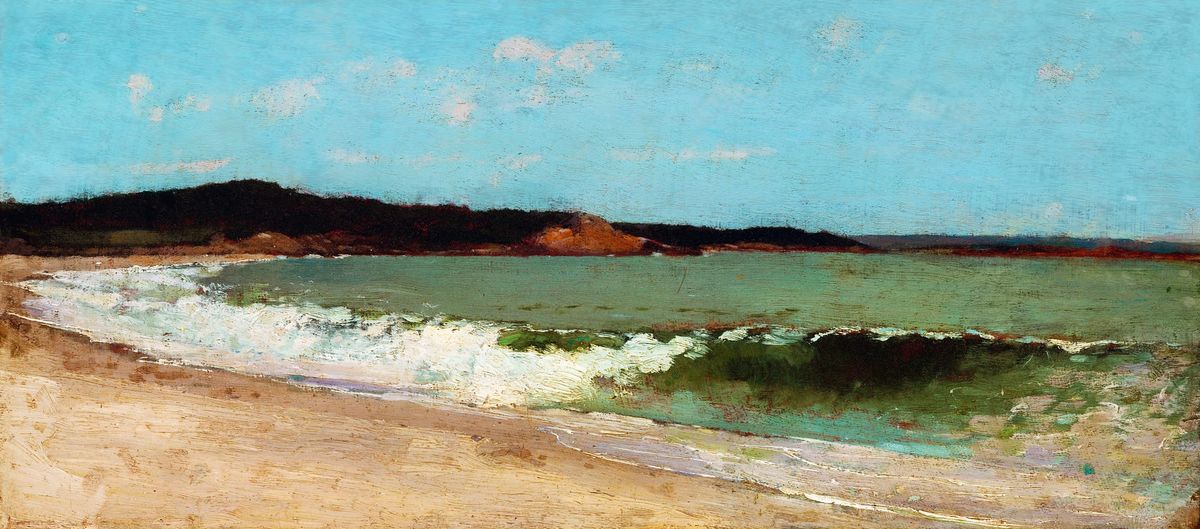
미국의 전설적인 사실주의 거장 윈슬로 호머(Winslow Homer, 1836–1910)가 1869년경에 완성한 유화 소품 걸작 <바닷가 풍경(Beach Scene / Coast Scene)>은 눈이 시리도록 푸른 여름 하늘 아래 완만하게 굽이치는 황금빛 모래사장과 잔잔한 에메랄드빛 파도가 해안 곶을 감싸 안는 순간의 청량한 정적을 가장 대담하고 서정적인 필치로 포착해 낸 수작입니다.
이 작품은 가로 약 26.0cm, 세로 약 11.4cm의 파노라마 가로형 목판 패널 위에 정교한 유화 기법으로 제작되었으며, 해변으로 밀려드는 백색 파도 포말과 전경의 모래펄에는 나이프와 붓으로 도톰한 임파스토를 밀도 있게 얹고, 옥빛 바다의 투명한 물결과 저 멀리 짙은 암회색 곶의 능선, 맑은 하늘의 터키블루빛을 대담한 색면 구성과 절제된 명암 대비로 완벽히 구현해 냈습니다.
현재 미국 주요 미술관 및 유수 프라이빗 컬렉션에서 소중히 다루어지는 이 그림은 매사추세츠주 맨체스터 바이 더 씨(Manchester-by-the-Sea) 또는 롱아일랜드 해변에서, 인적이 드문 한적한 모래사장을 따라 포말을 일으키며 밀려오는 파도와 맑은 여름 하늘이 빚어내는 장엄하면서도 고즈넉한 대자연의 호흡을 담고 있습니다.
이 그림 뒤에는 1860년대 후반 프랑스 유학에서 돌아와 야외 광선 묘사의 새로운 지평을 열고자 대서양 해변을 찾아다녔던 호머의 순수한 예술적 열정과 유쾌한 인간미가 깃들어 있습니다. 당시 호머는 번잡한 도시 생활에서 벗어나 파도 소리만이 가득한 해안가에서 자연의 순수한 빛과 색채를 목판 위에 즉흥적으로 담아내는 작업에 깊이 몰두했습니다.
호머는 모래펄을 핥고 지나가는 바닷물의 투명한 젖은 자국과 수평선의 파노라마를 담기 위해 해변 모래밭에 작은 야외 화구 상자를 펼쳐놓고 자리를 잡았습니다.
붓을 놀리며 작업에 열중하던 중 갑자기 밀려든 큰 파도가 호머의 발치까지 차올라 신고 있던 구두가 바닷물에 푹 젖고 모래밭에 놓아둔 붓 한 자루가 물결에 둥둥 떠내려가는 유쾌한 소동이 벌어졌습니다.
물에 젖은 구두를 털며 웃음을 터뜨린 호머는 "대서양이 내 그림이 마음에 들었는지 붓값을 대신 치르겠다며 붓을 가져가 버렸군!"이라며 껄껄 웃었습니다. 호머는 파도가 물러가며 모래 위에 남긴 은빛 윤슬과 짙은 옥빛 물마루의 질감을 놓칠세라 신나게 붓과 페인팅 나이프를 놀려 단숨에 목판 위에 바다의 숨결을 새겨 넣었다는 훈훈한 일화가 전해집니다.
화면 뒤편으로 완만한 곡선을 그리며 바다를 포근하게 감싸 안은 짙푸른 해안 언덕과 화면 상단을 가득 메운 맑고 청명한 하늘, 그리고 해변으로 부드럽게 잦아드는 은빛 파도의 궤적은 호머가 북미 해안의 생생한 여름 정취를 얼마나 진솔하고 세심한 애정으로 관찰했는지를 증명합니다.
미술사학자들은 이 작품을 호머가 1860년대 말에 이룩한 초기 해양 풍경화의 정수이자, 프랑스 인상주의의 태동과 궤를 같이하는 대담한 모더니즘적 시각 혁신의 결정체로 평가합니다.
인간의 서사나 복잡한 장식을 완전히 배제한 채 오직 하늘, 바다, 모래라는 자연의 근원적인 세 가지 요소만으로 완벽한 조형적 균형을 이룩했으며, 소박한 목판 위에 광활한 대서양의 숭고한 침묵을 담아냈다는 극찬을 받습니다.
작품을 마주할 때 관람자의 무의식적인 시선은 파노라마로 펼쳐진 해안선의 완만한 호를 따라 매우 매끄럽고 안정적인 수평 순환 궤적을 그리며 이동합니다. 관람객의 눈길은 가장 먼저 화면 중앙 하단에서 눈부신 백색으로 부서져 내리는 파도의 물마루와 짙은 옥빛 물결의 묵직한 질감에 머뭅니다.
이어 시선은 하얀 거품을 일으키며 밀려드는 파도의 능선을 타고 화면 좌측으로 완만하게 미끄러져 가, 젖은 모래사장에 은은한 반사광을 남기며 부드럽게 잦아드는 물결의 끝자락으로 자연스럽게 흘러갑니다.
전경 해변의 따스한 모래밭을 확인한 시선은 화면 좌측에서 시작되어 우측으로 길게 뻗어나간 짙은 갈색 해안 언덕의 듬직한 능선을 타고 바다 건너편으로 시원하게 확장됩니다.
이후 시선은 에메랄드빛 바다 수평선을 건너 화면 상단을 맑고 청량하게 가득 채운 터키블루빛 여름 하늘과 엷은 흰 구름의 광활한 공간감 속으로 상승한 뒤, 다시 해변을 향해 밀려드는 은빛 파도의 청량한 포말로 돌아와 깊고 완전한 시각적 안착을 이룹니다.
이러한 유려한 시선의 순환은 관람자의 내면에 깊은 심리적 정화와 탁 트인 해방감을 선물합니다. 화면 가득 쏟아지는 맑은 햇살과 찰랑이는 바닷물이 자아내는 여유로운 공간감은, 복잡한 일상의 번잡함과 피로에 지친 현대인의 무의식에 마치 아무도 없는 고요한 해변 모래사장을 홀로 거닐며 맑은 바닷바람을 깊게 들이마시는 듯한 깊은 이완과 감각적 휴식을 선사합니다.
세상의 소란에서 벗어나 영원한 시간의 리듬에 맞춰 밀려오고 밀려가는 파도의 순수한 생명력은, 보는 이로 하여금 일상의 번뇌를 내려놓고 삶의 본질적인 아름다움과 내면의 깊은 평정을 되찾아 주는 든든한 치유의 위로를 건냅니다.
Beach Scene / Coast Scene
Completed circa 1869 by the celebrated American realist master Winslow Homer (1836–1910), the luminous oil sketch Beach Scene (also known as Coast Scene) stands as an extraordinary tour de force capturing the crystalline expanse, tranquil solitude, and refreshing coastal luminescence of the Atlantic shore with peerless modern economy.
Measuring approximately 26.0 cm wide by 11.4 cm high across a horizontal wood panel, the work showcases Homer's refined mastery of direct oil sketching, applying thick, tactile impasto to the frothing crests of breaking surf and the sunlit sand in the foreground, while modulating the rich emerald tide, the dark silhouette of the distant headland, and the radiant turquoise sky with bold planar harmony.
Preserved and celebrated across prominent public and private American art collections, this painting portrays a pristine summer day along the coast of Manchester-by-the-Sea or Long Island, where a low green wave curls and breaks along a sweeping curve of sandy beach beneath an open, cloud-dappled sky.
Behind this captivating panel lies Homer's artistic journey during the late 1860s, following his return from France, as he embraced direct outdoor painting to explore the purest harmonies of natural light, sea air, and open space away from the noise of the metropolis.
Setting up his small wooden paint box directly upon the warm sand to capture the horizontal panorama of the tide, Homer worked with spontaneous brushwork.
As he focused upon the rhythm of the waves, a sudden surging swell swept across the flats, soaking his boots in cold foam and carrying one of his spare brushes bobbing out to sea.
Amused by the ocean's intrusion, Homer laughed heartily, remarking that the Atlantic must have admired the work enough to demand a brush as its tribute. Homer swiftly worked with brush and palette knife to capture the glistening wet sheen left upon the sand and the dense viridian heart of the curling breaker before the tide could alter its form.
The dark, protective promontory curving gently around the bay, the expansive wash of bright cerulean atmosphere, and the delicate ribbons of white water dissipating across the shallows serve as authentic testaments to Homer's deeply observant eye for the elemental poetry of coastal nature.
Art historians celebrate this panel as a definitive gem of Homer's early plein-air oeuvre, praising its breathtaking tonal balance and avant-garde compositional daring. By omitting narrative figures and sentimental anecdote to focus purely upon the sacred dialogue between sky, sea, and sand, Homer created a timeless visual sanctuary of atmospheric purity, quiet fortitude, and contemplative peace.
When engaging with the painting, the viewer's unconscious gaze undertakes an inherently soothing and grounding visual journey. The eye is initially welcomed by the sunlit crest of the green wave breaking across the center, lingering upon the tactile white foam and the deep shadow cast beneath its curling lip.
The gaze then travels smoothly along the curving shoreline toward the left, following the gentle wash of translucent water spreading thin across the warm, sandy beach.
Tracing the sweeping horizontal contour of the dark wooded headland in the background, the viewer's attention glides across the tranquil emerald waters of the bay toward the open sea.
Finally, ascending into the vast, luminous expanse of the cerulean sky above, the eye embraces the boundless spatial clarity and fresh coolness of the ocean before returning comfortably to the rhythmic whisper of the breaking surf.
This rhythmic visual journey fosters profound psychological reassurance, sensory awakening, and deep emotional stillness within the observer. The tactile immersion in warm sunshine, salty sea air, and unhurried ocean rhythms acts as an intuitive emotional balm, dispelling ambient modern fatigue and soothing inner tension.
By presenting an idyllic world where natural elements exist in pure harmony with eternal time, Homer offers the observer a comforting sanctuary of mindfulness, inspiring a deep sense of renewal, sweet contentment, and enduring inner peace.
본 리뷰에서 작품을 제외한 컨텐츠의 저작권은 팔렛트제주에 있습니다.
"퍼블릭도메인 고전명화"를 제외한 모든 창작 콘텐츠는 저작권법 제4조 및 제10조에 의거하여 보호됩니다. 무단 도용시 저작권법 제136조(벌칙)에 의거, 당사의 사전 서면 승인 없는 저작권 침해 행위를 금지합니다.