아침 종소리 (방적공장의 출근길) - The Morning Bell
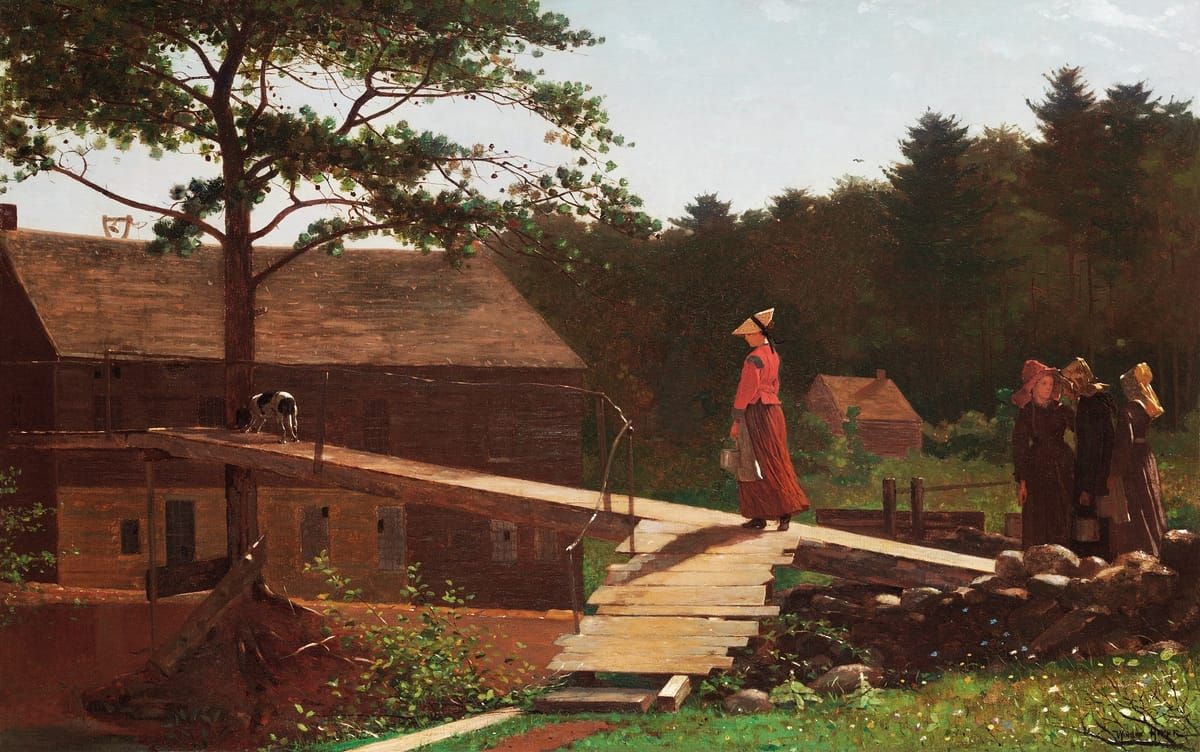
미국의 전설적인 사실주의 거장 윈슬로 호머(Winslow Homer, 1836–1910)가 1871년경(또는 1872년경 완성)에 제작한 유화 걸작 <아침 종소리(The Morning Bell)>는 싱그러운 아침 햇살이 부서지는 시골 방적공장의 목조 구름다리를 건너 출근하는 젊은 여공의 단아하고 당당한 발걸음과 19세기 미국 근대 노동의 서정을 가장 맑고 따뜻한 필치로 포착해 낸 수작입니다.
이 작품은 가로 약 91.4cm, 세로 약 61.0cm(또는 약 39.4 x 61.6cm 계열 판본 및 캔버스) 크기의 캔버스 위에 정교한 유화 기법으로 제작되었으며, 목조 건물과 나무다리의 거친 나뭇결, 들꽃이 만발한 전경의 풀밭에는 도톰한 임파스토를 밀도 있게 얹고, 눈부신 아침 햇살을 받아 빛나는 여인의 붉은 셔츠와 밀짚모자, 그리고 울창한 솔숲의 짙은 음영을 섬세한 명암 대비와 사실적인 붓 터치로 완벽히 구현해 냈습니다.
현재 미국 주요 미술관 및 유수 프라이빗 컬렉션에서 높이 평가받는 이 그림은 뉴욕주 또는 뉴잉글랜드 시골 마을의 한적한 방적공장(Spinning Mill) 입구에서, 독특한 챙 모자와 붉은 재킷을 입은 젊은 여인이 점심 도시락 통을 손에 쥐고 긴 나무 판자 다리를 건너며 아침 출근 종소리를 향해 나아가는 평화롭고도 진솔한 삶의 한때를 담고 있습니다.
이 그림 뒤에는 남북전쟁 이후 급격한 산업화의 물결 속에서도 자신의 삶을 주체적으로 일구어나가던 북미 여성 노동자들의 건강하고 순수한 생명력에 깊은 경의를 표했던 호머의 따뜻한 시선과 흥미진진한 비하인드가 깃들어 있습니다. 당시 호머는 거대하고 삭막한 도시 공장이 아닌, 자연의 품속에 자리 잡은 시골 수력 방적공장에서 일하는 사람들의 인간적인 온기에 깊이 매료되어 있었습니다.
호머는 다리를 건너는 여인의 조각 같은 실루엣과 아침 햇살이 나무 판자에 드리우는 긴 그림자를 화폭에 담기 위해 다리 앞 풀밭에 이젤을 세웠습니다. 다리 끝에서 사냥개 한 마리가 꼬리를 흔들며 여인을 마중 나오다가, 다리 위로 쏟아진 햇살에 비친 자기 그림자를 보고 깜짝 놀라 펄쩍 뛰며 멍멍 짖는 유쾌한 소동이 벌어졌습니다.
다리 건너편에서 모여 수다를 떨던 동료 여공들이 그 모습을 보고 까르르 웃음을 터뜨리자, 호머 역시 껄껄 웃음을 터뜨렸습니다. 호머는 "잠깐, 그대로 가만히 있게! 햇살을 받으며 다리를 건너는 자네의 그 꼿꼿한 발걸음과 붉은 셔츠야말로 오늘 아침 햇살이 이 숲속에 선물한 가장 눈부신 희망의 노래라네!"라며 환호했습니다. 호머는 여인의 당당한 자태와 풀밭에 핀 야생화의 조화를 놓칠세라 신나게 붓을 놀렸고, 화면 우측 하단 풀밭 어둠 속에 'Winslow Homer' 서명을 힘차게 새겨 넣었다는 훈훈한 일화가 전해집니다.
공장 지붕 위에서 맑은 소리로 아침을 깨우는 작은 종탑과 화면 우측 길가에서 보닛을 쓰고 담소를 나누는 세 명의 동료 여공들, 그리고 화면을 푸르게 덮은 거대한 소나무와 맑은 아침 하늘의 대기감은 호머가 북미 전원의 생생한 풍경을 얼마나 진솔하고 세심한 애정으로 관찰했는지를 증명합니다.
미술사학자들은 이 작품을 호머가 1870년대 초반에 이룩한 초기 산업 풍속화의 대표 걸작이자, 미국 근대 여성의 경제적 자립과 전원적 서정주의를 가장 완벽하게 조화시킨 수작으로 평가합니다.
프랑스 바르비종파의 서정성을 뛰어넘어 맑은 야외 직사광선과 그림자의 광학적 효과를 완벽히 구현했으며, 고된 공장 노동의 현장을 어둡고 비참하게 그리지 않고 건강한 생명력과 평화로운 자연의 조화가 깃든 시각적 안식처로 승화시켰다는 극찬을 받습니다.
작품을 마주할 때 관람자의 무의식적인 시선은 나무다리의 대각선 축을 따라 매우 안정적이고 포근한 좌우 순환 궤적을 그리며 이동합니다. 관람객의 눈길은 가장 먼저 화면 중앙에서 독특한 밀짚모자를 쓰고 붉은 셔츠와 긴 치마를 펄럭이며 다리 위에 우뚝 선 여인의 단아하고 듬직한 옆모습에 머뭅니다.
이어 시선은 여인의 발아래로 길게 드리워진 짙고 투명한 그림자와 손에 든 작은 양동이를 타고 다리의 완만한 경사면을 따라 화면 좌측으로 자연스럽게 미끄러져 내려갑니다.
다리 끝에서 반갑게 마중 나온 얼룩 사냥개의 귀여운 몸짓과 묵직한 목조 공장 건물의 갈색 벽면을 확인한 시선은, 공장 지붕 위로 솟아오른 웅장한 소나무의 푸른 잎사귀와 지붕 끝의 작은 종탑을 타고 화면 상단으로 시원하게 상승합니다.
이후 시선은 화면 우측 뒤편의 울창한 전나무 숲과 길가에 모여 서서 다정한 대화를 나누는 세 여인의 정겨운 실루엣을 지나, 전경에 노랗고 하얗게 피어난 싱그러운 야생화 풀밭을 거쳐 다시 다리를 딛고 선 여인의 굳건한 발걸음으로 돌아와 깊고 아늑한 시각적 안착을 이룹니다.
이러한 유려한 시선의 순환은 관람자의 내면에 깊은 심리적 안정감과 맑고 상쾌한 하루의 활력을 선물합니다. 싱그러운 솔잎 향기와 따스한 아침 햇살, 그리고 고즈넉한 숲속 공장이 빚어내는 공간감은, 복잡한 일상의 번잡함과 피로에 지친 현대인의 무의식에 마치 맑은 아침 숲길을 걸으며 신선한 공기를 깊게 들이마시는 듯한 깊은 이완과 감각적 휴식을 선사합니다.
새로운 하루를 맞이하여 묵묵히 자신의 자리를 향해 씩씩하게 걸어가는 여인의 건강하고 주체적인 자태는, 보는 이에게 일상의 번뇌를 내려놓고 삶의 어떤 새로운 시작 앞에서도 당당하게 나아갈 수 있는 내면의 단단한 용기와 맑은 평정을 되찾아 주는 든든한 치유의 위로를 건냅니다.
The Morning Bell
Completed circa 1871–1872 by the celebrated American realist master Winslow Homer (1836–1910), the monumental oil masterpiece The Morning Bell stands as an extraordinary tour de force capturing the sunlit dignity, quiet independence, and pastoral poetry of nineteenth-century American female labor with peerless tonal richness.
Measuring approximately 91.4 cm wide by 61.0 cm high on canvas, the work showcases Homer's consummate command of plein-air oil technique, applying thick, tactile impasto to the weathered wooden bridge planks, stone foundations, and wildflower-studded meadow, while modulating the radiant morning sunlight striking the young woman's crimson jacket, homespun skirt, and straw sunbonnet with crisp atmospheric precision.
Preserved and celebrated across prominent public and private American art collections, this painting portrays an idyllic rural textile mill in upstate New York or New England, where a poised mill girl carrying a tin lunch pail ascends a long wooden catwalk leading to the weathered factory building as the morning bell tolls in the distance.
Behind this captivating canvas lies Homer's deep appreciation for the emerging role of independent working women in post-Civil War America, finding in the quiet routines of rural industry a harmonious communion between human purpose and the grand silence of nature.
Setting up his easel directly in the foreground clearing to record the interplay of early sunlight and long cast shadows across the wooden span, Homer observed the workers arriving.
When a black-and-white farm dog trotted onto the bridge to greet the maiden and playfully barked at its own elongated shadow stretching across the sunlit planks, the solemn quiet of the morning broke into spontaneous mirth.
As the cluster of women chatting by the roadside burst into cheerful laughter, Homer laughed warmly in return, remarking that the young woman's resolute stride and vibrant red jacket were the finest verse of morning poetry nature could ever grant an artist's canvas. Homer swiftly applied rich strokes of vermilion, burnt umber, and viridian to capture the unposed dignity of the scene, proudly inscribing 'Winslow Homer' within the dark grassy shadows in the lower right foreground.
The small bell cot perched upon the wooden roof peak, the three country women in calico bonnets conversing on the right, and the towering white pine tree spreading its leafy branches across the sky serve as authentic testaments to Homer's deeply observant eye for the humble poetry of rural community life.
Art historians celebrate this painting as a defining pinnacle of Homer's early mature genre oeuvre, praising its profound compositional balance and atmospheric freshness. Preceding the widespread adoption of Impressionism through its bold handling of outdoor light and structural clarity, Homer elevated an everyday walk to work into a timeless visual sanctuary of self-reliance, communal warmth, and serene peace.
When engaging with the painting, the viewer's unconscious gaze undertakes an inherently soothing and grounding visual journey. The eye is initially welcomed by the sun-drenched silhouette of the young woman in the center, lingering upon her unique peaked hat, vibrant red jacket, and focused forward stride.
The gaze then travels downward along the long shadow cast across the wooden bridge, following the elevated ramp toward the left to meet the playful dog awaiting her arrival before the rustic mill house.
Sweeping upward into the sheltering boughs of the great pine tree and discovering the humble bell tower on the roof peak, the viewer's attention glides across the dark wall of northern forest framing the background.
Finally, descending past the companionable trio of women standing along the stone wall on the right and exploring the bright scatter of daisies in the foreground meadow, the eye settles comfortably back into the steady, poised presence of the solitary worker.
This rhythmic visual journey fosters profound psychological reassurance, gentle nostalgia, and deep emotional stillness within the observer. The tactile immersion in crisp morning air, fragrant pine needles, and sun-warmed wood acts as an intuitive emotional balm, dispelling ambient modern fatigue and soothing inner tension.
By presenting an idyllic world where purposeful labor exists in pure harmony with the rhythm of the flourishing landscape, Homer offers the observer a comforting sanctuary of mindfulness, inspiring a deep sense of renewal, sweet contentment, and enduring inner peace.
본 리뷰에서 작품을 제외한 컨텐츠의 저작권은 팔렛트제주에 있습니다.
"퍼블릭도메인 고전명화"를 제외한 모든 창작 콘텐츠는 저작권법 제4조 및 제10조에 의거하여 보호됩니다. 무단 도용시 저작권법 제136조(벌칙)에 의거, 당사의 사전 서면 승인 없는 저작권 침해 행위를 금지합니다.