요양원의 정원 Garden of the Asylum
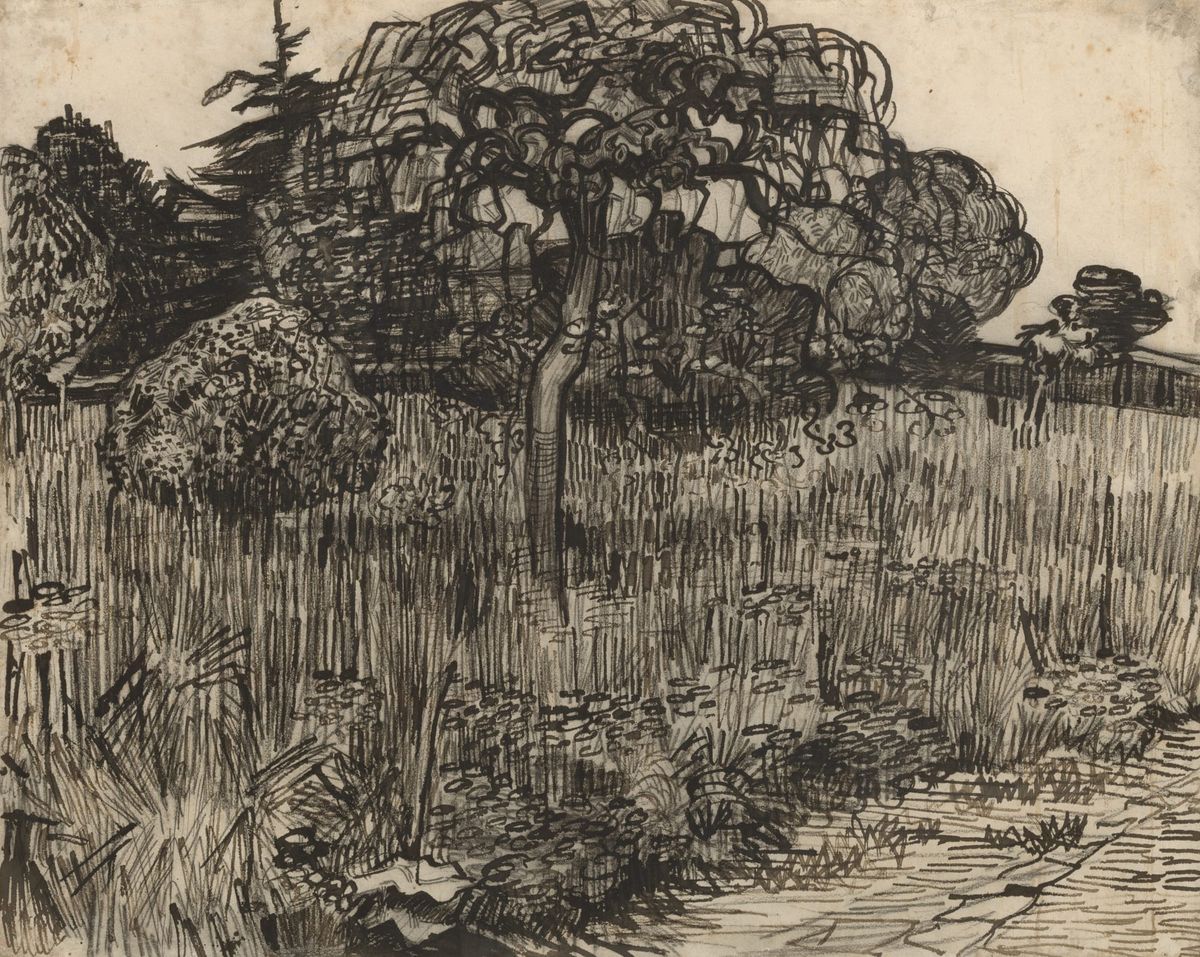
이 작품은 네덜란드의 후기 인상주의 거장 빈센트 반 고흐(Vincent van Gogh)가 1889년 11월 프랑스 생레미드프로방스의 생폴 요양원에 머물던 시기에 제작한 유화입니다. 공식 소장품 등록번호는 F659(전작 도록 기준)이며, 캔버스 위에 유채로 그려진 실제 실측 규격은 72 x 91 cm입니다. 현재 이 작품은 네덜란드 암스테르담에 위치한 반 고흐 미술관(Van Gogh Museum)에 공식적으로 소장되어 있습니다.
작가의 고뇌와 창작 비하인드
생레미 요양원 시절 반 고흐는 발작 증세로 인해 외출이 엄격히 통제되었으며, 주로 요양원 내부의 정원에서 예술적 영감을 찾았습니다. 그는 동생 테오와 친구 에밀 베르나르에게 보낸 편지에서 이 정원의 풍경이 자신과 처우를 함께하는 동료 환자들이 겪는 불안과 고독을 고스란히 담고 있다고 언급한 바 있습니다.
화면 전경에는 불에 탄 듯 붉은 황토색을 띤 대지와 낙엽이 깔린 땅이 펼쳐져 있으며, 그 위로 거칠고 두꺼운 붓터치가 얽혀 있습니다. 중앙에는 번개를 맞아 꺾인 채 흉측하게 서 있는 거대한 소나무가 버티고 서서 뒤틀린 가지와 어두운 잎사귀들을 사방으로 뻗어내고 있습니다.
중경에는 삭막한 붉은빛의 돌담이 가로놓여 시선을 가로막고 있으며, 그 너머로 스산한 기운을 풍기는 산맥과 차가운 저녁 하늘이 불안정한 조화를 이룹니다. 전체적으로 화면을 지배하는 어두운 녹색과 검은 윤곽선, 그리고 붉은 황토색의 대비는 작가가 마주했던 심리적 고립감과 요양원 생활의 적막함을 대변합니다.
무의식 속 시선 및 심리 흐름
관람객의 시선은 가장 먼저 화면 중앙을 묵직하게 가로막는 거칠고 기괴한 형태의 소나무 줄기로 향하며, 꺾인 채 자라난 나무가 뿜어내는 기이한 긴장감에 사로잡히게 됩니다. 이어지는 시선은 소나무 아래로 펼쳐진 붉은 황토색의 전경과 불규칙하게 흩어진 낙엽들로 이동하며, 황폐한 대지가 주는 쓸쓸함과 무거운 침묵을 체감하게 됩니다.
시선을 조금 더 뒤로 옮겨 중경의 나지막한 돌담과 차가운 하늘에 도달하면, 갇힌 공간 속에서 벗어날 수 없는 답답함과 깊은 우울감이 밀려옵니다. 마지막으로 화면 상단을 채운 노란빛과 보라빛이 섞인 저녁 하늘을 마주할 때, 관람객은 고흐가 치열하게 앓았던 내면의 불안과 영혼의 흔적을 고스란히 느끼며 깊은 심리적 동요를 경험하게 됩니다.
미술계의 평가 및 조형미
미술사학계와 평단은 본 작품을 고흐가 생레미 시기에 도달한 심리적 표현주의의 정수이자, 객관적 풍경을 주관적 정서로 완벽하게 변모시킨 대표작으로 높이 평가합니다. 물감을 두껍게 얹는 임파스토 기법과 대담하고 어두운 윤곽선은 시각적인 율동감을 부여하는 동시에, 자연의 외양보다 작가의 내부에서 요동치는 불안의 실체를 생생하게 증언합니다.
황토색과 회색빛이 감도는 초록색, 그리고 검은색의 극적인 배색은 화면 전체에 짓눌리는 듯한 긴장감을 유발하며 공간의 깊이감을 더해줍니다. 자연의 생명력과 파멸의 이미지를 동시에 품은 이 작품은, 극한의 고통 속에서도 예술혼을 놓지 않았던 거장의 비극적이면서도 찬란한 예술적 성취를 영원히 증명하고 있습니다.
Garden of the Asylum
This painting, executed in November 1889, is a monumental work by the Dutch Post-Impressionist master Vincent van Gogh during his confinement at the Saint-Paul Asylum in Saint-Rémy-de-Provence, France. Officially cataloged under the inventory number F659, the oil painting on canvas measures 72 x 91 cm and is currently housed in the permanent collection of the Van Gogh Museum in Amsterdam.
The Artist's Turmoil and Creative Background
During his months at the Saint-Rémy asylum, Van Gogh's movements were severely restricted due to recurring bouts of illness, forcing him to seek artistic motifs primarily within the enclosed hospital grounds. In his correspondence with his brother Theo and fellow artist Émile Bernard, he noted that the dense, melancholic atmosphere of the asylum garden mirrored the deep anxiety and isolation suffered by his fellow patients.
The foreground of the composition is dominated by sun-scorched earth of red ochre, strewn with fallen twigs and leaves under heavy, expressive brushwork. At the center stands a massive, lightning-struck pine tree, its sawn-off trunk and twisted, dark-green foliage erupting in a chaotic yet powerful display of survival against the odds.
In the middle distance, a heavy red-ochre wall blocks the horizon, separating the immediate garden from the austere hills beyond under a turbulent evening sky. The deliberate use of gloomy greens, stark black outlines, and oppressive earth tones visually articulates the psychological claustrophobia and quiet despair that characterized the artist's daily reality.
Psychological Flow and the Unconscious Gaze
The viewer's gaze is immediately captured by the towering, distorted trunk of the central pine tree, whose aggressive forms and jagged contours project an immediate sense of psychological tension. The eye then migrates downward to the rough, red-ochre foreground, where the chaotic arrangement of soil and debris evokes a visceral feeling of desolation and heaviness.
As the gaze travels further toward the enclosing stone wall and the distant hills, a profound sense of confinement takes hold, reflecting the rigid boundaries of the asylum. Finally, the viewer confronts the striated evening sky above, where shifting bands of yellow and violet evoke the artist's inner emotional storms, completing a deeply immersive journey into psychological vulnerability.
Critical Acclaim and Formal Analysis
Art historians widely celebrate this painting as a high-water mark of Van Gogh's psychological expressionism during his southern French period, transforming an ordinary institutional garden into an intense projection of subjective emotion. The heavy application of paint through a vigorous impasto technique, combined with thick black outlines, emphasizes the tactile quality of the medium while conveying a rhythmic, pulsating anxiety.
The somber orchestration of red ochre, gray-muddied greens, and dark contours creates a powerful visual dissonance that animates the entire surface. By fusing naturalistic observation with raw emotional turmoil, Van Gogh immortalized his harrowing yet sublime struggle, leaving behind an enduring testament to his artistic genius.
본 컨텐트의 저작권은 팔렛트제주에 있습니다. 허가없는 무단전제를 금지합니다.
Copyright © Palette Jeju. All rights reserved. Unauthorized reproduction or redistribution is strictly prohibited.