요셉과 보디발의 아내 Joseph and Potiphar's Wife
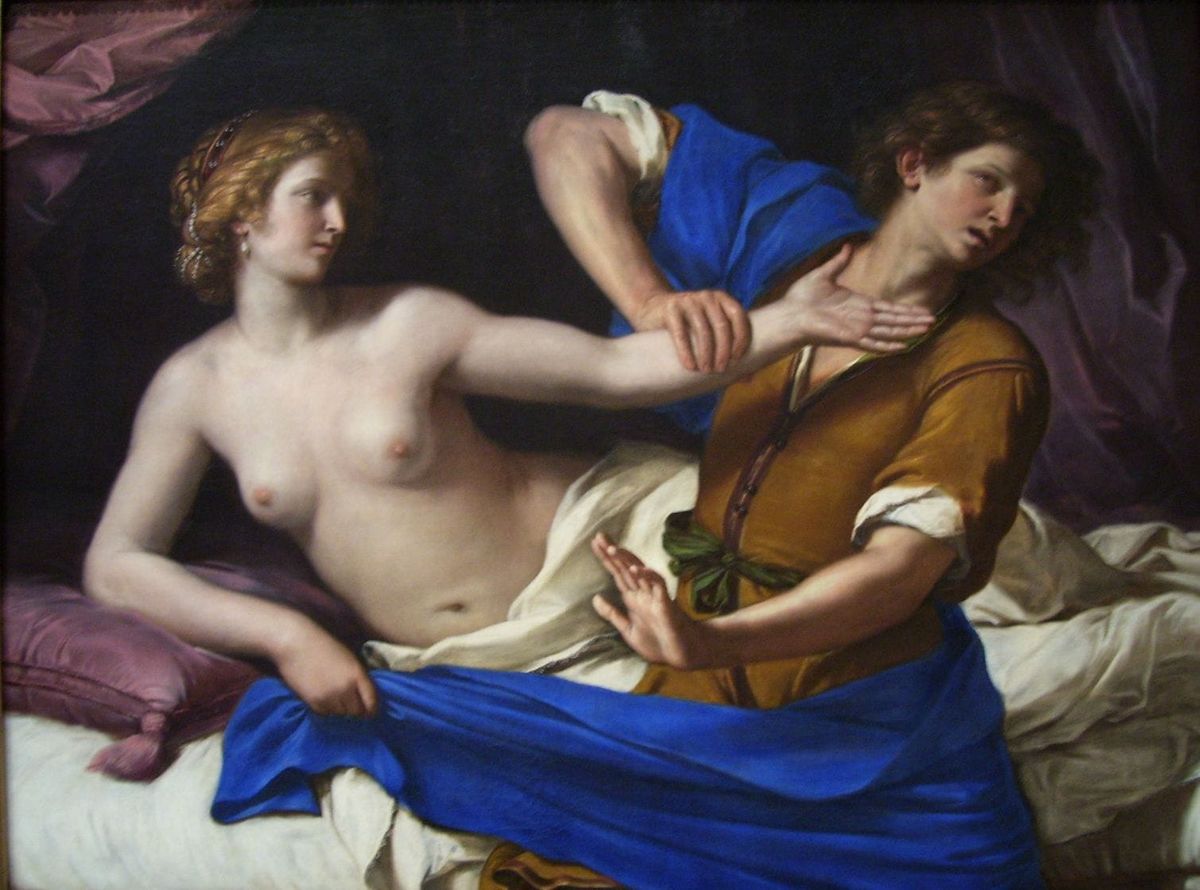
17세기 이탈리아 바로크 회화의 거장 조반니 프란체스코 바르비에리, 널리 귀에르치노(Guercino, 1591–1666)로 불리는 화가가 1649년에 완성한 유화 요셉과 보디발의 아내(Joseph and Potiphar's Wife, 이탈리아어: Giuseppe e la moglie di Putifarre)는 152.0 cm × 195.0 cm 크기의 캔버스에 유채로 그린 대표적인 구약성경 역사화 최고 걸작입니다. 현재 미국 워싱턴 D.C.의 국립미술관(National Gallery of Art, Washington, D.C.)에 소장되어 있습니다.
계정록에 기록된 체제나 백작의 주문과 성적 유혹을 물리친 도덕적 결단
귀에르치노의 작업 장부인 계정록에는 1649년 7월 6일 체제나의 귀족 카를로 세자레 말바시아(또는 로마냐의 유력 후원자 가문)로부터 이 작품의 대금으로 100두카트를 지급받았다는 기록이 정확하게 남아 있습니다. 당시 50대 후반의 나이로 볼로냐 화단을 이끌던 귀에르치노는 구약성경 창세기 39장에 등장하는 요셉의 극적인 유혹 일화를 그려달라는 주문을 받고 깊은 조형적 고민에 빠졌습니다. 이집트 친위대장 보디발의 아내가 젊고 준수한 집사 요셉을 침실로 끌어들이려 하자, 요셉이 자신의 겉옷을 버려둔 채 뿌리치고 달아나는 순간을 그려야 했습니다.
귀에르치노는 이전 세대 화가들이 관능미만을 강조하던 방식에서 벗어나, 유혹하는 여인의 집요한 물리적 힘과 이에 맞서 순결과 신앙을 지켜내려는 청년의 격렬한 심리적 저항을 팽팽한 힘의 균형으로 연출했습니다. 침대에 비스듬히 누운 여인은 오른팔을 길게 뻗어 요셉의 목덜미와 겉옷을 억세게 낚아채고, 요셉은 왼손으로 그녀의 손목을 쳐내며 오른손으로는 단호하게 거절의 손짓을 취한 채 고개를 돌립니다. 침대를 덮은 눈부신 코발트 블루빛 비단 천과 헝클어진 흰색 침구, 그리고 어두운 방 안으로 쏟아지는 극적인 조명은 한순간에 벌어진 도덕적 투쟁의 긴박함을 손에 땀을 쥐게 할 만큼 생생하게 웅변합니다.
집요하게 뻗은 여인의 팔에서 뿌리치는 요셉의 거절 손짓과 푸른 천으로, 시선의 심리적 여정
그림을 마주하는 순간 관람객의 무의식적 시선은 화면 왼쪽 짙은 어둠 속에서 은은한 자연광을 받아 눈부시게 밝게 빛나는 여인의 우윳빛 상체와 길게 뻗은 오른팔로 가장 먼저 빨려 들어갑니다. 머리에 붉은 띠를 두르고 침대에 기대어 집요하게 청년을 끌어당기는 여인의 꺾이지 않는 욕망의 눈빛은 보는 이에게 깊은 시각적 충격과 함께 숨 막히는 긴장감을 선사합니다.
이어 시선은 여인의 손가락이 닿아 있는 요셉의 목덜미를 지나, 몸을 뒤로 젖히며 완강하게 거부하는 청년의 놀란 얼굴과 앞으로 내민 오른손의 단호한 손짓으로 이동합니다. 주인을 배신할 수 없다는 굳은 신념으로 유혹을 거절하며 입술을 굳게 다문 요셉의 창백한 표정을 확인하는 순간, 관람객은 죄악의 유혹 앞에서 흔들리지 않는 한 인간의 처절한 도덕적 승리의 현장 속으로 온몸이 빨려 들어가게 됩니다.
마지막으로 시선은 요셉의 어깨에서 미끄러져 내려 침대 위로 흘러내리는 화려한 울트라마린 푸른색 겉옷의 풍성한 주름을 지나, 헝클어진 보랏빛 베개와 하얀 린넨 침대보에 멈춥니다. 칠흑 같은 침실의 어둠을 뚫고 솟아오른 빛과 두 인물의 격렬한 신체적 대립을 마주하며, 관람객은 유혹을 물리치는 숭고한 믿음의 가치와 귀에르치노가 건네는 묵직한 조형적 감동을 가슴 깊이 마주하게 됩니다.
17세기 볼로냐 바로크 구약 역사화의 정점과 조형적 완성도, 미술계의 평가
미술계는 워싱턴 국립미술관의 요셉과 보디발의 아내를 귀에르치노가 만년에 완성한 가장 역동적이면서도 품격 높은 고전주의 서사화로 손꼽습니다.
어두운 배경과 대비되는 여인의 부드러운 살결, 요셉의 갈색 조끼와 팽팽한 근육, 선명한 푸른색 비단 천의 촉각적 질감을 극도로 섬세한 명암법으로 완벽하게 구현했을 뿐만 아니라, 성경의 유혹 일화를 관능과 절제라는 상반된 감정의 극적인 충돌로 승화시켰기 때문입니다. 인간 내면의 치열한 도덕적 갈등을 숭고한 시각 예술로 완성해 낸 귀에르치노의 이 걸작 화폭은, 오늘날까지도 전 세계 수많은 감상자들에게 깊은 감탄과 잊을 수 없는 시각적 전율을 전해주는 불멸의 명작으로 평가받고 있습니다.
Joseph and Potiphar's Wife
Painted in 1649 in Bologna by the preeminent Italian Baroque master Giovanni Francesco Barbieri, universally celebrated as Guercino (1591–1666), Joseph and Potiphar's Wife (Italian: Giuseppe e la moglie di Putifarre) is a monumental oil on canvas measuring 152.0 cm × 195.0 cm (59.8 in × 76.8 in), preserved in the distinguished permanent collection of the National Gallery of Art in Washington, D.C., United States.
The Account Book Record and the Dramatic Struggle Between Seduction and Virtue
Documented with precision in Guercino’s workshop account ledger, the Libro dei Conti, this masterwork was completed in July 1649 following a commission from a prominent nobleman in Romagna for the payment of 100 silver ducats. Approaching his sixtieth year in Bologna, Guercino undertook the renowned Old Testament narrative from Genesis 39, depicting the critical moment when the wife of Potiphar, the captain of Pharaoh's guard, attempts to entice the young Hebrew steward Joseph into her bedchamber. Choosing moral integrity and faith over immediate surrender, Joseph flees, leaving his outer garment behind in her grasp.
Guercino elevated the composition beyond mere sensual display into a complex psychological and physical collision. Reclining upon a bed draped in plush fabrics, the temptress extends her pale right arm with unyielding grip, grasping the neck of Joseph's mantle. Joseph recoils violently, throwing his torso backward, using his left hand to push away her wrist while extending his right palm in an unmistakable gesture of refusal. The vivid chord of the royal ultramarine mantle sliding into her grasp against the crumpled white bedsheets creates an intense compositional friction, translating an ancient scriptural trial into an immediate human drama.
Subconscious Trajectory of the Gaze: From Enticing Reach to the Gesture of Rejection
The observer's subconscious gaze is immediately magnetized by the left-central register, drawn to the luminous, alabaster skin of Potiphar's wife reclining against the dark canopy. Her extended arm, intent profile framed by braided auburn hair, and resolute gaze establish an instant focal point of physical desire, predatory resolve, and dramatic tension.
The visual path then travels along the horizontal thrust of her arm to the right register, arriving at the recoiling countenance of Joseph. Taking in his parted lips, his averted head, and the defensive posture of his raised right hand, the viewer directly experiences the sensory shock of the confrontation and the moral conviction governing his refusal.
Finally, the visual trajectory sweeps downward across the rich ochre doublet and gathered white sleeve to the brilliant, voluminous folds of the lapis-lazuli mantle sliding into her left hand, before resting upon the rumpled purple velvet pillow and white linen sheets. Observing the harmonious equilibrium between classical monumental clarity, warm directional light, and psychological truth, the spectator perceives the timeless nobility of sacred virtue and the profound aesthetic solace Guercino embedded within the monumental canvas.
The Monument of Bolognese Historical Realism: Critical Legacy
Art historians revere Joseph and Potiphar's Wife as a consummate masterpiece of Guercino’s mature career, demonstrating his synthesis of Bolognese classical poise with the dynamic physical immediacy of Caravaggesque naturalism.
By orchestrating delicate textural contrasts between porcelain skin, supple draperies, shimmering ultramarine silk, and rumpled linens within a unified lighting scheme, Guercino elevated a traditional narrative into an exquisite aesthetic meditation. This magnificent historical canvas endures as an inspiring testament to the master's creative fortitude, celebrating the victory of moral resilience and the transformative grace of living art.
본 컨텐트의 저작권은 팔렛트제주에 있습니다. 허가없는 무단전제를 금지합니다.
Copyright © Palette Jeju. All rights reserved. Unauthorized reproduction or redistribution is strictly prohibited.