영원한 침묵 속으로 노 저어 가는 영혼의 안식처, 죽음의 섬 Die Toteninsel
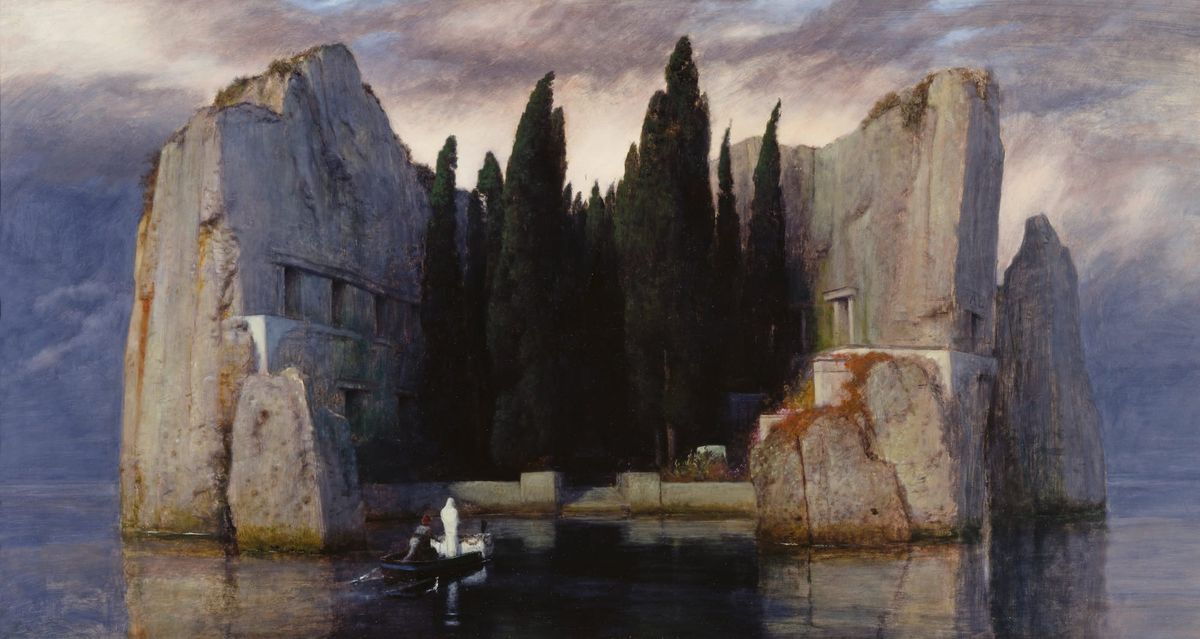
스위스 출신의 상징주의 거장 아놀드 뵈클린(Arnold Böcklin, 1827–1901)이 1880년에 피렌체에서 완성한 대표작 죽음의 섬(Die Toteninsel, Isle of the Dead) 제1버전은 111.0 cm × 155.0 cm 크기의 캔버스에 유채로 그린 걸작입니다. 현재 스위스 바젤 미술관(Kunstmuseum Basel)을 비롯해 뉴욕 메트로폴리탄 미술관, 베를린 구 국립미술관 등에 총 5개의 버전으로 전해지고 있습니다.
8명의 자식을 묻은 아버지의 한과 과부의 슬픔이 빚어낸 환상
이 신비롭고 서늘한 그림의 이면에는 화가 자신의 뼈아픈 개인적 비극이 짙게 깔려 있습니다. 뵈클린은 평생 동안 14명의 자녀를 낳았으나, 그중 무려 8명의 자식을 질병과 사고로 먼저 떠나보내는 참척의 고통을 겪었습니다. 특히 피렌체 영국인 공동묘지에 묻힌 어린 딸 마리아의 무덤은 그에게 지울 수 없는 상처였습니다.
1880년 4월, 남편을 잃고 깊은 비탄에 빠져 있던 젊은 과부 마리 베르나(Marie Berna)가 피렌체에 있던 뵈클린의 화실을 방문했습니다. 그녀는 미완성 상태로 놓여 있던 바위 섬 풍경을 보고 깊은 감명을 받았으며, 자신을 위해 "꿈을 꿀 수 있는 그림(A picture to dream over)"을 그려달라고 간청했습니다. 이에 뵈클린은 섬으로 향하는 작은 나룻배 위에 흰 수의를 입은 망자의 실루엣과 꽃으로 장식된 관을 추가해 넣었습니다. 뵈클린은 완성된 그림을 보내며 "이 그림을 보는 사람은 문을 두드리는 소리조차 두려워할 만큼 고요한 침묵에 빠져들 것"이라고 적었습니다.
역사상 가장 위험하고 매혹적인 그림: 프로이트, 라흐마니노프, 그리고 히틀러
뵈클린의 '죽음의 섬'은 19세기 말과 20세기 초 유럽 지성계를 광기 어린 열풍으로 몰아넣었습니다. 수많은 유럽 중산층 가정의 거실마다 이 그림의 복제 판화가 걸렸고, 역사적 인물들의 운명을 뒤흔들었습니다.
정신분석학의 창시자 지그문트 프로이트와 블라디미르 레닌은 자신의 서재에 이 그림을 걸어두고 사색에 잠겼으며, 러시아의 대작곡가 세르게이 라흐마니노프는 이 흑백 판화를 보고 받은 거대한 시각적 충격에 사로잡혀 동명의 웅장한 교향시 <죽음의 섬(Op. 29)>을 작곡했습니다. 살바도르 달리는 이 그림을 오마주한 작품을 남겼습니다. 심지어 아돌프 히틀러는 이 그림에 광적으로 집착한 나머지, 1933년 경매에 나온 제3버전을 막대한 국가 자금을 들여 직접 구매한 뒤 베를린 총리 관저 자신의 집무실 벽에 걸어두고 매일 응시했습니다.
칠흑 같은 사이프러스 숲과 하얀 수의, 시선의 심리적 여정
그림을 마주하는 순간 관람객의 무의식적 시선은 거울처럼 잔잔하고 어두운 수면 위를 미끄러지듯 나아가는 작은 나룻배와 그 위에 서 있는 하얀 수의 차림의 인물로 가장 먼저 향합니다. 순백의 옷을 입고 관 곁에 미동도 없이 서 있는 망자의 뒷모습은 보는 이에게 영원한 이별의 쓸쓸함과 서늘한 경외감을 동시에 불러일으킵니다.
이어 시선은 물결 하나 일지 않는 암갈색 바다를 지나, 나룻배가 향하고 있는 섬 한가운데의 빽빽한 '사이프러스(Cypress) 나무 숲'으로 빨려 들어갑니다. 서양에서 죽음과 애도를 상징하는 사이프러스 나무들이 하늘을 찌를 듯 솟아 있는 어두운 숲의 심연을 확인하는 순간 관람객은 속세와의 완벽한 단절과 깊은 적막감을 맛보게 됩니다.
마지막으로 시선은 숲을 병풍처럼 둘러싸고 있는 거대한 절벽 바위와 그 암벽에 깎여 만들어진 납골당의 석조 입구들로 확장됩니다. 거친 풍파를 막아서며 영원한 안식을 품고 있는 섬의 장엄한 요새 구조를 마주하면서, 관람객은 죽음이란 공포스러운 종말이 아니라 모든 고통을 내려놓고 침묵 속으로 침잠하는 궁극의 평화이자 안식처임을 뼈저리게 직관하게 됩니다.
19세기 상징주의의 정점이자 현대 판타지의 원형, 미술계의 평가
미술계는 죽음의 섬을 사실주의와 인상주의의 시대를 넘어 인간 무의식의 심연과 낭만적 죽음관을 완벽하게 형상화한 상징주의 회화의 기념비적인 최고봉으로 평가합니다.
눈에 보이는 현실을 묘사하는 대신, 침묵과 고독, 영원이라는 추상적 정서를 하나의 완벽한 시각적 신화로 창조했기 때문입니다. 서양 문명사의 거대한 전환기 속에서 수많은 철학자, 음악가, 정치가들을 매혹시켰던 뵈클린의 이 어두운 환상성은 오늘날 현대 판타지 예술과 영화적 미장센의 시원(始原)으로 영원히 빛나고 있습니다.
The Sanctuary of Eternal Silence, Die Toteninsel (Isle of the Dead)
Painted in 1880 in Florence by the preeminent Swiss Symbolist master Arnold Böcklin (1827–1901), Die Toteninsel (Isle of the Dead, Version I) is an oil on canvas measuring 111.0 cm × 155.0 cm (43.7 in × 61.0 in), preserved in the Kunstmuseum Basel, Switzerland, alongside later versions housed at the Metropolitan Museum of Art and the Alte Nationalgalerie in Berlin.
The Loss of Eight Children and a Widow’s Grief
Beneath the haunting stillness of the canvas lies profound autobiographical grief. Throughout his tumultuous life, Böcklin fathered fourteen children, burying eight of them in early childhood—including his beloved infant daughter Maria, laid to rest in the English Cemetery in Florence.
In April 1880, Marie Berna, a wealthy American widow mourning the untimely death of her husband, visited Böcklin’s Florentine studio. Captivated by an unfinished composition of a desolate rocky island, she commissioned the artist to create "a picture to dream over." Böcklin introduced the solemn rowboat bearing a flower-draped coffin and a standing figure draped in immaculate white shroud. Presenting the completed canvas, Böcklin declared that the viewer would be enveloped in a silence so absolute that "the mere knock on the door would cause a fright."
The Dangerous Allure: Freud, Rachmaninoff, and Hitler
By the fin-de-siècle, Isle of the Dead had achieved unprecedented cultural prominence, its atmospheric gravure prints adorning bourgeois parlors across Europe.
Sigmund Freud, Vladimir Lenin, and Georges Clemenceau kept prints in their private studies. Mesmerized by a monochrome reproduction, Russian composer Sergei Rachmaninoff composed his sweeping orchestral symphonic poem Isle of the Dead, Op. 29 in 1908. Salvador Dalí created surrealist homages to its topography. Most notoriously, Adolf Hitler harbored a fanatical obsession with the work; in 1933, the Nazi regime acquired the third version (1883) at an exorbitant auction, hanging it directly within Hitler’s personal office at the Reich Chancellery in Berlin.
Subconscious Trajectory of the Gaze and the Cypresses of Mourning
The observer's subconscious gaze is immediately snared by the small rowboat gliding across the glassy, mirror-like expanse of dark water, drawn specifically to the luminous, shrouded figure standing motionless beside the coffin. The stark white silhouette evokes an immediate visceral contemplation of the final crossing into the underworld.
The visual path follows the oarsman’s trajectory into the fortified heart of the island, dominated by a dense, soaring grove of dark cypress trees—the classical Western emblem of mourning, immortality, and death. Confronted with the impenetrable darkness of the sacred grove, the viewer experiences profound isolation from the terrestrial world.
Finally, the gaze expands to the monumental, sheer limestone cliffs walling the grove, noting the neoclassical portal openings carved into the living rock as burial chambers. Realizing that the island is an inviolable sanctuary sheltering the departed from worldly turbulence, the viewer grasps Böcklin’s central thesis: death is not mere annihilation, but the ultimate, serene return to primordial tranquility.
The Summit of European Symbolism: Critical Legacy
Art historians recognize Die Toteninsel as the definitive masterpiece of 19th-century European Symbolism and a vital precursor to modern atmospheric fantasy.
By abandoning literal topographical realism in favor of evocative psychological landscapes, Böcklin anticipated Surrealist dreamscapes and cinematic staging. This haunting island remains one of Western civilization's most enduring visual meditations on mortality, memory, and the longing for peace.
본 컨텐트의 저작권은 팔렛트제주에 있습니다. 허가없는 무단전제를 금지합니다.
Copyright © Palette Jeju. All rights reserved. Unauthorized reproduction or redistribution is strictly prohibited.