영혼들이 머무는 영원한 낙원의 평화, 축복받은 자들의 들판 The Elysian Fields
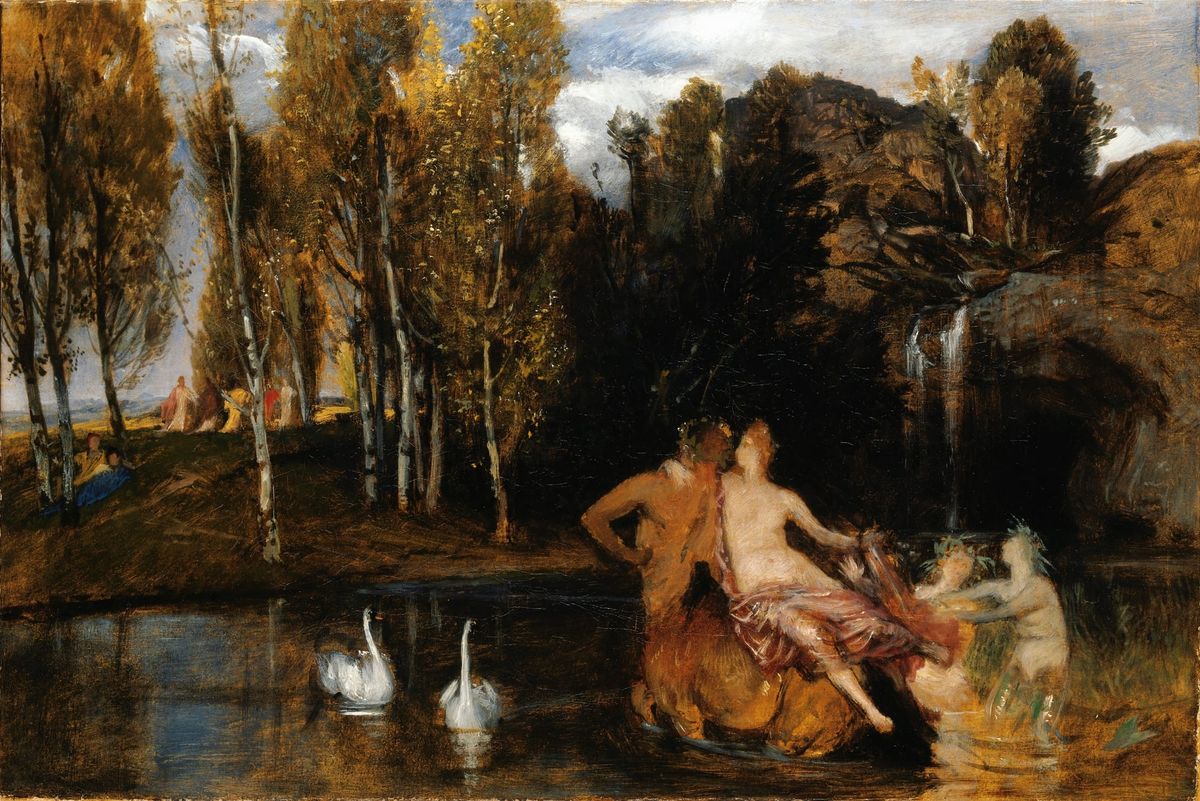
스위스 출신의 상징주의 거장 아놀드 뵈클린(Arnold Böcklin, 1827–1901)이 1878년에 피렌체에서 완성한 유화 축복받은 자들의 들판(The Elysian Fields, 독일어: Die Gefilde der Seligen)은 72.0 cm × 100.0 cm 크기의 나무 패널에 유채로 그린 대표적인 이상향 풍경화입니다. 현재 독일 베를린의 구 국립미술관(Alte Nationalgalerie, Berlin)에 소장되어 있습니다.
피렌체의 안식 속에서 꿈꾼 고대 그리스의 영원한 이상향
1870년대 후반 뵈클린은 독일 화단의 삭막한 비평과 가난을 피해 햇살이 눈부신 이탈리아 피렌체에 정착하여 새로운 예술적 전성기를 맞이하고 있었습니다. 그러나 평생 14명의 자녀 중 무려 8명을 어린 나이에 질병과 사고로 먼저 떠나보내야 했던 화가의 가슴속에는 언제나 지울 수 없는 깊은 슬픔과 상실의 상처가 자리 잡고 있었습니다. 죽음에 대한 공포와 슬픔에 짓눌려 살던 화가는, 세상을 떠난 영혼들이 모든 고통과 눈물을 잊고 영원한 평화를 누릴 수 있는 고대 그리스 신화 속 영혼의 안식처인 엘리시온(축복받은 자들의 들판)을 화폭에 그리기 시작했습니다.
황금빛 가을 숲과 잔잔한 호수가 어우러진 신비로운 숲속에서, 반인반마 켄타우로스는 아름다운 님프를 등 뒤에 태우고 얕은 물가를 부드럽게 건너가고 있습니다. 물속에서 장난을 치며 님프를 맞이하는 물의 정령들과, 호숫가를 우아하게 떠다니는 두 마리의 백조, 그리고 언덕 위에서 평화롭게 거니는 고대 옷차림의 사람들은 지상의 모든 고통과 번뇌가 사라진 완벽한 천국의 조화를 보여줍니다. 뵈클린에게 이 그림은 단순한 고대 신화의 재현이 아니라, 먼저 떠나보낸 자식들이 영원히 고통 없는 평화 속에서 살아가기를 바랐던 아버지의 간절한 기도이자 영혼의 상처를 보듬는 따뜻한 치유의 노래였습니다.
물가를 건너는 켄타우로스에서 호숫가의 백조로, 시선의 심리적 여정
그림을 마주하는 순간 관람객의 무의식적 시선은 화면 오른쪽 아래 잔잔한 물살을 가르며 건너오는 켄타우로스의 갈색 등과, 그 위에 비스듬히 앉아 붉은 천을 두르고 있는 님프의 눈부신 나체로 가장 먼저 빨려 들어갑니다. 두 신화적 존재가 나누는 은은한 교감과 부드러운 물결의 감촉은 보는 이에게 깊은 평온함과 낭만적인 긴장감을 동시에 선사합니다.
이어 시선은 물속에서 상체를 드러내고 님프의 옷자락을 붙잡으며 환영하는 물의 정령들의 맑은 미소를 지나, 왼쪽 호수 위를 고요하게 떠다니는 두 마리 하얀 백조의 우아한 자태로 이동합니다. 거울처럼 맑은 수면에 비친 백조의 하얀 깃털과 잔잔한 물그림자를 확인하는 순간, 관람객은 속세의 소음이 완벽하게 차단된 성스러운 낙원의 침묵을 체감합니다.
마지막으로 시선은 호숫가를 따라 하늘 높이 솟아오른 황금빛 자작나무 숲을 지나, 화면 왼쪽 언덕 위에서 붉은 옷과 흰 옷을 입고 평화롭게 대화를 나누며 거니는 사람들과 저 멀리 바위산 아래로 쏟아지는 작은 폭포수에 멈춥니다. 가을빛으로 물든 풍요로운 숲과 영원한 안식을 누리는 사람들의 온화한 뒷모습을 바라보며, 관람객은 죽음 너머에 존재할 것만 같은 영원한 평화와 생명의 따스한 위로를 가슴 깊이 마주하게 됩니다.
신화적 풍경화와 상징주의 이상향의 정점, 미술계의 평가
미술계는 축복받은 자들의 들판을 고대 그리스 신화의 세계관을 19세기 낭만주의적 자연관과 완벽하게 결합하여 풍경화 자체를 하나의 위대한 철학적 안식처로 승화시킨 걸작으로 평가합니다.
단순한 상상화의 틀을 깨고, 햇살에 반짝이는 나뭇잎의 질감과 물의 투명함, 그리고 신화 속 존재들의 생명력을 독창적인 색채와 빛으로 생생하게 시각화했기 때문입니다. 죽음의 섬과 함께 뵈클린이 남긴 영혼과 사후 세계에 대한 가장 감동적인 탐구로 손꼽히는 이 아름다운 화폭은 오늘날까지도 수많은 감상자들에게 깊은 내면의 평안과 숭고한 감동을 선사하고 있습니다.
The Serene Haven of Eternal Rest, The Elysian Fields
Painted in 1878 in Florence by the preeminent Swiss Symbolist master Arnold Böcklin (1827–1901), The Elysian Fields (German: Die Gefilde der Seligen) is an oil on wood panel measuring 72.0 cm × 100.0 cm (28.3 in × 39.4 in), preserved in the permanent collection of the Alte Nationalgalerie in Berlin, Germany.
Florentine Serenity, Mythological Paradise, and the Healing of Parental Grief
During the late 1870s, Arnold Böcklin enjoyed a fertile creative period in Florence, having escaped the bitter aesthetic battles and crushing poverty of his earlier years in Germany. Yet, having buried eight of his fourteen children due to infant illnesses, the master remained haunted by private bereavement. Turning away from the somber horrors of the underworld, Böcklin sought to envision the Elysian Fields of classical Greek mythology—the blessed realm where departed souls find perpetual youth, harmony, and liberation from mortal sorrow.
Within an idyllic autumn landscape bathed in amber sunlight, a noble centaur wades gently through a shallow forest lake, carrying a graceful nymph draped in flowing vermilion fabric upon his back. Water maidens emerge from the crystal shallows to greet the arriving traveler, while a pair of pristine white swans glides peacefully across the calm surface. On the distant meadow, figures in classical robes promenade beneath golden poplars. For Böcklin, this radiant vision was not merely an academic illustration of antiquity, but a deeply personal spiritual prayer—a comforting sanctuary where his lost children might dwell in eternal tranquility.
Subconscious Trajectory of the Gaze: From River Crossing to the Sacred Swans
The observer's subconscious gaze is immediately captivated by the muscular form of the centaur wading through the shallows in the lower right, drawn to the luminous, bare shoulders of the nymph seated upon his flank. The gentle communion between the mythological beings and the soft ripples of the golden water establish an immediate aura of mythic harmony.
The visual path then shifts past the smiling water sprites grasping the trailing drapery, gliding across the serene surface of the pool toward the pair of immaculate white swans drifting near the dark embankment. Taking in the mirror-like reflections of the birds against the shadowed waters, the viewer experiences the profound stillness and auditory quietude of an untainted sacred grove.
Finally, the trajectory ascends the slender, vertical trunks of the golden birch and poplar trees, taking in the small classical figures conversing peacefully atop the sun-drenched hill before resting upon the gentle cascade tumbling from the rocky bluff on the right. Observing the seamless union of classical myth and fertile nature, the spectator perceives the comforting promise of eternal peace that transcends the fleeting tribulations of mortal life.
The Pinnacle of Mythological Arcadia: Critical Legacy
Art historians revere The Elysian Fields as one of Böcklin’s most sublime achievements, serving as the radiant spiritual counterpart to his famous Isle of the Dead.
By uniting exquisite atmospheric luminosity, warm seasonal color harmonies, and psychological serenity, Böcklin revitalized the classical ideal of Arcadia through a modern Symbolist sensibility. This breathtaking masterpiece endures as a luminous monument to the artist's poetic genius, offering an everlasting vision of hope, beauty, and transcendent peace.
본 컨텐트의 저작권은 팔렛트제주에 있습니다. 허가없는 무단전제를 금지합니다.
Copyright © Palette Jeju. All rights reserved. Unauthorized reproduction or redistribution is strictly prohibited.