열대 풍경 - Tropical Landscape (Paisaje tropical)
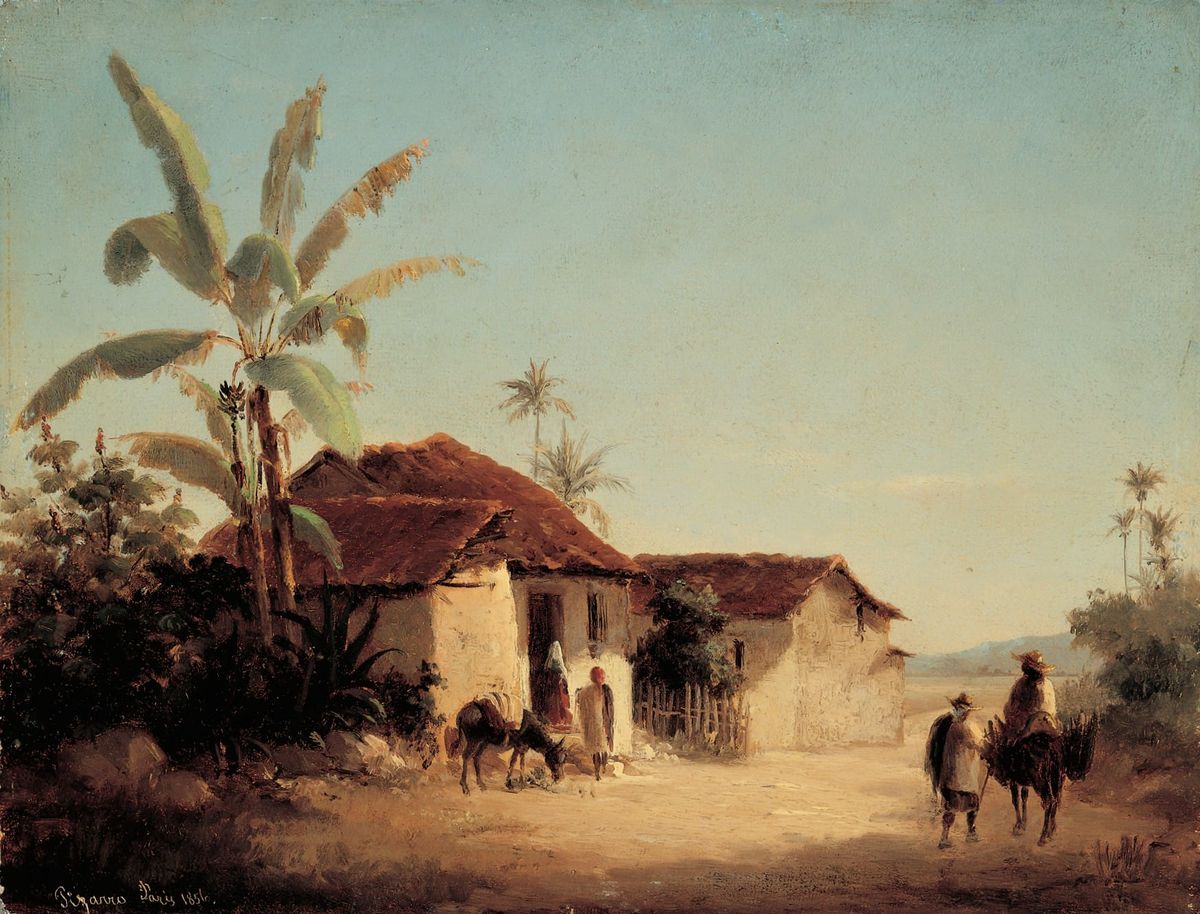
카미유 피사로(Camille Pissarro)가 1856년에 제작한 캔버스 유화 작품입니다. 실제 크기는 약 24 x 32 cm의 아담한 크기이며, 현재 베네수엘라 카라카스 국립미술관(Galería de Arte Nacional, Caracas)에 소장되어 있습니다. 화면 좌측 하단에는 파리에 갓 정착했던 청년 시절의 서명인 'Pizarro Paris 1856'이 또렷하게 새겨져 있습니다.
피사로는 짙푸른 열대 야자수와 바나나 나무의 거대한 잎사귀, 그리고 강렬한 햇살을 받아 하얗게 빛나는 흙벽의 질감을 부드럽고 섬세한 전통적 붓터치로 구현했습니다. 흙먼지가 날리는 건조한 도로와 그늘진 수풀의 명암 대비, 그리고 은은한 파스텔 톤의 청명한 하늘은 당시 청년 피사로가 지니고 있던 뛰어난 빛에 대한 감수성을 증명합니다.
이 작품에는 안락한 삶을 뿌리치고 예술을 향해 모험을 떠났던 피사로의 극적인 청년 시절 비하인드 스토리가 담겨 있습니다. 피사로는 카리브해의 작은 섬 세인트토머스(St. Thomas)에서 부유한 상인 가문의 아들로 태어났습니다. 가업을 잇기를 바랐던 부모님의 완강한 반대에도 불구하고 그림에 대한 열정을 주체할 수 없었던 그는, 1852년 덴마크 화가 프리츠 멜비(Fritz Melbye)를 만나 집을 뛰쳐나와 베네수엘라의 카라카스로 탈출했습니다.
그곳에서 2년 동안 피사로는 산과 들판, 시장과 골목길을 쏘아다니며 열대의 눈부신 햇살과 원주민들의 소박한 일상을 스케치북에 무수히 담았습니다. 이 작품은 그가 베네수엘라에서의 모험을 마치고 본격적인 화가의 길을 걷기 위해 1855년 파리로 건너간 직후, 현지에서 남겼던 스케치와 생생한 기억을 바탕으로 파리 작업실에서 완성한 초기 역작입니다. 나귀에 짐을 싣고 길을 나서는 농부들과 오두막 문간에 서서 인사를 나누는 여인들의 정겨운 풍경에는, 제도권 아카데미의 규율에 얽매이지 않고 야생의 자연과 서민들의 삶을 가장 사랑했던 청년 피사로의 순수한 예술적 원초성이 깃들어 있습니다.
미술사적으로 이 작품은 프랑스 인상주의의 위대한 맏형이 되기 전, 피사로의 시각적 뿌리가 카리브해와 남미의 강렬한 열대 태양 아래에서 형성되었음을 보여주는 귀중한 역사적 이정표입니다. 폴 고갱이 훗날 타히티로 떠나 원시적인 생명력을 찾기 수십 년 전, 피사로는 이미 열대 지방의 자연광과 토속적인 삶의 진정성을 화폭에 담아내고 있었습니다.
평단과 후대의 비평가들은 화려한 파리 중심의 화풍에서 벗어나 이국적인 대지의 숨결과 평범한 인간의 삶을 따뜻한 휴머니즘으로 엮어낸 피사로의 탁월한 감각에 깊은 찬사를 보내고 있습니다.
관람자의 무의식적인 시선은 화면 좌측에서 시원하게 잎을 펼치고 있는 거대한 바나나 나무의 이국적인 형태와 짙은 녹음에서 흥미롭게 출발합니다.
이어 시선은 따스한 햇살을 머금은 황톳빛 흙길을 따라 자연스럽게 중앙으로 이동하며, 오두막 앞마당에서 풀을 뜯는 당나귀와 문 앞에 서서 온기를 나누는 주민들의 소박한 몸짓에 머뭅니다.
이 유려한 시각적 흐름은 빽빽한 도심 속에서 과열되어 있던 관람객의 뇌파를 순식간에 차분하게 이완시키며, 이국적인 시골 마을의 한낮처럼 고요하고 나른한 심리적 안도감을 선사합니다.
마지막으로 길을 따라 유유히 걸어가는 나귀를 탄 여행자의 뒷모습과 저 멀리 아스라하게 솟은 야자수, 그리고 맑은 하늘의 수평선으로 뻗어나가는 시선의 순환은, 복잡한 일상을 벗어나 따뜻한 햇살과 바람이 머무는 미지의 전원을 여행하는 듯한 깊은 해방감과 정서적 정화를 이끌어냅니다.
Tropical Landscape - Tropical Landscape (Paisaje tropical)
Painted in 1856 by Camille Pissarro, this oil on canvas measures approximately 24 by 32 centimeters and is preserved in the permanent collection of the Galería de Arte Nacional in Caracas, Venezuela. Inscribed in the lower left corner is the distinct signature of his early Parisian period, 'Pizarro Paris 1856'.
With refined tonal sensitivity and fluid brushwork, Pissarro captures the expansive fronds of tropical banana trees and the sun-bleached texture of adobe cottages. The delicate balance between sunlit dirt roads, deep jungle shadows, and an expansive azure sky illustrates the young artist's instinctive fascination with the warmth and vibrancy of natural illumination.
Behind this idyllic canvas lies the dramatic story of Pissarro's youthful rebellion and artistic awakening. Born to a prosperous merchant family on the Caribbean island of St. Thomas, Pissarro was groomed to inherit the family trade. Defying his parents' wishes to pursue his irrepressible passion for art, he fled in 1852 alongside Danish painter Fritz Melbye to Caracas, Venezuela.
For two adventurous years, Pissarro wandered tropical valleys and bustling villages, filling sketchbooks with studies of brilliant sunlight and the humble daily life of local inhabitants. This painting was completed in his Paris studio shortly after his arrival in 1855, synthesized from the vivid memories and field sketches of his South American travels. The figures loading burros and conversing by the rustic doorway reflect the unpretentious warmth and independent spirit that would define Pissarro's lifelong artistic philosophy.
Art historians celebrate this work as an invaluable chronicle revealing that the foundational eye of Impressionism was nurtured under the radiant sun of the tropics. Decades before Paul Gauguin sought primitive authenticity in the South Pacific, Pissarro was already translating the organic truth of tropical landscapes onto canvas.
Modern critics praise the composition for its unadorned emotional sincerity, honoring Pissarro's enduring humanist vision that embraced the quiet nobility of ordinary people and the wild beauty of the earth.
The viewer's subconscious gaze is first welcomed by the towering banana tree anchoring the left foreground, its broad leaves radiating a sense of tropical vitality.
The eye then glides naturally along the sun-drenched earthen pathway toward the center, taking in the tranquil vignette of the resting donkey and the figures lingering before the warm adobe cottage.
This unhurried visual pacing dissolves modern tension, guiding the mind into a state of restorative relaxation akin to pausing in the gentle shade of a tropical afternoon.
As the visual path travels past the travelers continuing down the path toward the distant palms and the soft horizon, the observer experiences a soothing sensory escape, enveloped in the enduring warmth, freedom, and timeless calm of the open landscape.
본 리뷰에서 작품을 제외한 컨텐츠의 저작권은 팔렛트제주에 있습니다.
"퍼블릭도메인 고전명화"를 제외한 모든 창작 콘텐츠는 저작권법 제4조 및 제10조에 의거하여 보호됩니다. 무단 도용시 저작권법 제136조(벌칙)에 의거, 당사의 사전 서면 승인 없는 저작권 침해 행위를 금지합니다.