여인의 머리 습작 (Head of a Young Woman)
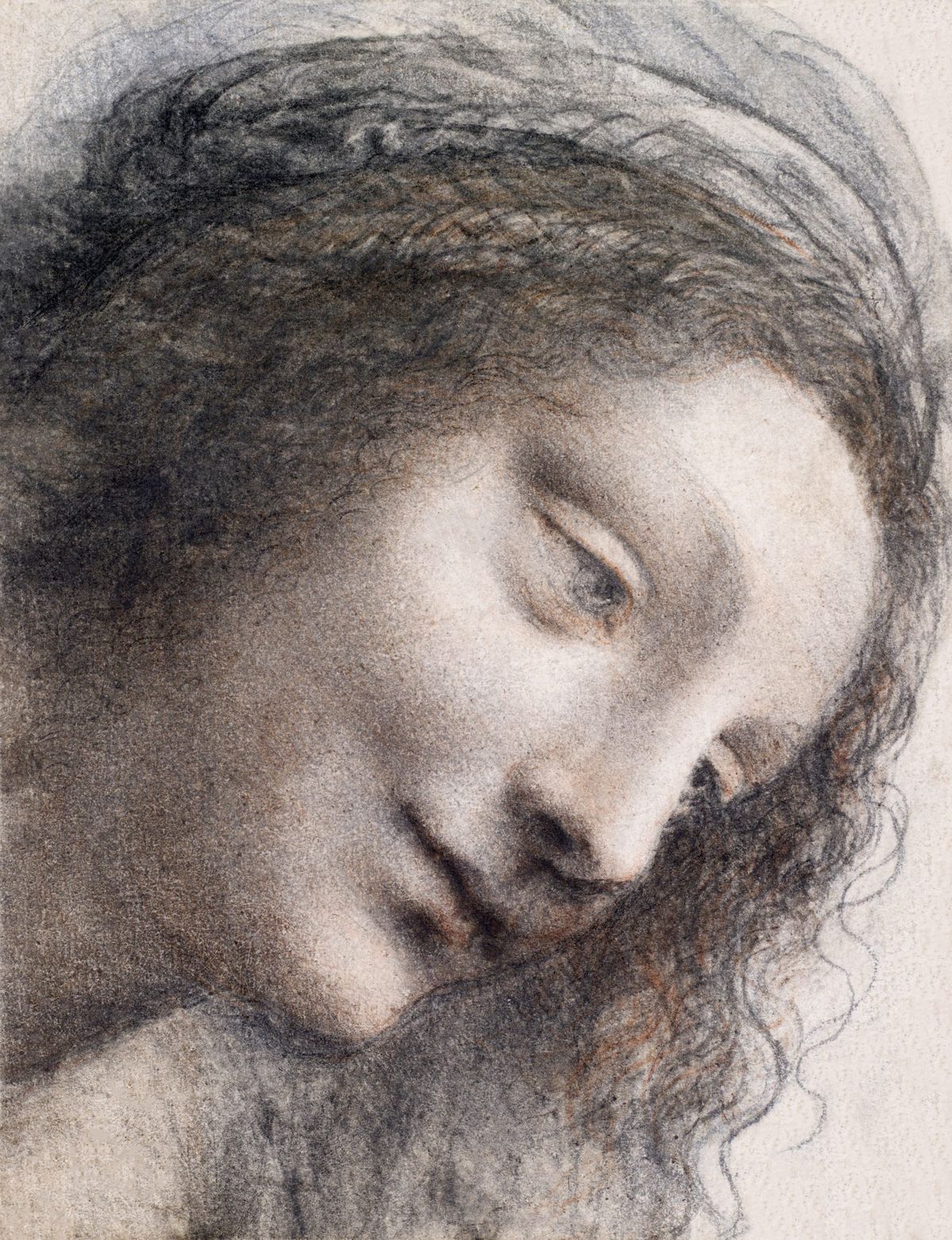
이 작품은 르네상스 시기 천재 거장 레오나르도 다 빈치(Leonardo da Vinci, 1452–1519)가 1500–1508년경 완성한 걸작 유화 습작 <여인의 머리 (Head of a Woman / La Scapigliata)>로, 실제 규격은 가로 21cm, 세로 24.7cm 크기이며 현재 이탈리아 파르마 국립미술관(Galleria Nazionale di Parma)에 소장되어 있습니다. 작은 목판 위에 갈색 안료와 암갈색 템페라, 흰색 수성 안료를 사용해 머리카락을 흐트러뜨린 채 고개를 다소곳이 내리깐 여인의 신비롭고 고요한 표정을 정교하게 담아낸 소묘 및 유화 수작입니다.
미술사학계의 도상학적 분석에 따르면, 작품의 이탈리아어 제목인 '라 스카필리아타(La Scapigliata)'는 '머리카락이 흐트러진 여인'을 의미합니다. 레오나르도는 거칠고 자유롭게 흩날리는 머리카락의 동적인 필선과 대조적으로, 여인의 이목구비에는 완벽할 정도로 부드럽고 섬세한 스푸마토(Sfumato) 명암법을 적용했습니다. 내리깐 눈꺼풀과 살짝 머금은 미소, 그리고 부드러운 턱선은 내면의 신성한 평정심과 모성애, 혹은 숭고한 순결함을 상징하며, 정제된 인체 미학의 극치를 보여줍니다.
이 화폭에는 완성 여부를 둘러싼 흥미로운 미학적 비하인드 스토리와 역사적 평가가 담겨 있습니다. 이 작품은 완성된 단독 작품인지, 혹은 대작을 위한 준비 단계의 미완성 습작인지에 대해 오랜 기간 미술사학자들 사이에서 열띤 논쟁이 이어졌습니다. 하지만 현대 학계는 이 의도적인 미완성(Non-finito) 기법이야말로 빛과 어둠, 그리고 인물의 영적인 내면을 강조하기 위한 레오나르도만의 독창적인 조형적 실험이라고 평가합니다. 과거 곤자가 가문의 소장품을 거쳐 보존되어 온 이 작품은 소형 목판화임에도 불구하고 다 빈치 특유의 몽환적인 스푸마토 기법과 인간 심리 묘사의 정수를 보여주는 르네상스 미술사의 결정적 유산으로 높이 평가받습니다.
이 그림을 가만히 바라보고 있으면 보는 이의 무의식 속에서 은은한 대각선 시선 순환 구조가 부드럽게 작동합니다. 가장 먼저 여인의 자애롭게 내리깐 눈매와 살짝 다물어진 입술의 부드러운 윤곽에 시선이 닿은 뒤, 왼쪽으로 흐르듯 연출된 턱선과 목선의 차분한 그늘을 따라 내려갑니다. 이후 우측 하단에서 바람에 날리듯 자유롭게 그려진 곱슬머리 타래의 자유로운 펜선을 타고 위로 올라가, 다시 그녀의 온화하고 고요한 얼굴 표정으로 되돌아오는 유연한 시선 흐름을 완성합니다. 이러한 시각적 순환 유도는 대뇌 인지 영역에서 찰나의 긴장감을 해쇄하고, 거장의 날것 그대로의 필선 속에서 깊은 내면의 평온과 안식을 선사합니다.
This masterpiece, titled Head of a Woman (famously known as La Scapigliata), was created around 1500–1508 by Renaissance genius Leonardo da Vinci (1452–1519). Measuring 21 cm in width by 24.7 cm in height, this exquisite painting in raw umber, amber, and white lead on a small poplar panel is currently preserved in the Galleria Nazionale in Parma, Italy. Depicting a young woman with disheveled hair casting her gaze gently downward, the work stands as a supreme monument of High Renaissance delicacy and psychological poise.
Art historical scholarship highlights the striking iconographic contrast between structure and spontaneity embedded in the work. The Italian title La Scapigliata translates to "The Lady with Disheveled Hair," referencing the wild, energetic brushstrokes that form her cascading curls. In dramatic contrast to this untamed hair, her face is rendered with Leonardo's legendary sfumato technique, achieving imperceptible transitions of light and shade. Her downcast eyelids and faint, introspective smile convey a sense of divine serenity, ethereal purity, and quiet spiritual grace.
Fascinating historical backstories and glowing post-Renaissance evaluations elevate the renown of this panel. Long debated as either an unfinished study for a larger altarpiece or a deliberately completed work in non-finito style, modern scholars revere the panel as a revolutionary demonstration of Leonardo's mastery over tone and form. Historically documented in the prestigious collection of the House of Gonzaga in Mantua, art historians celebrate this small panel as one of Leonardo's most intimate triumphs, praising its ability to evoke profound human emotion through minimal yet flawless painterly means.
Gazing upon this ethereal portrait gently awakens a subtle subconscious visual rhythm. The viewer’s eye originates at her tender, downcast gaze and soft lips, descends along the delicate shadow framing her chin, and sweeps upward through the dynamic, gestural curls floating on the right. The gaze then fluidly returns across her smooth forehead back to her eyes, completing a soft, circular loop. This harmonious visual movement dissolves inner cognitive tension, inviting the mind into a quiet sanctuary of serene elegance and tranquil contemplation.
본 리뷰에서 작품을 제외한 컨텐츠의 저작권은 팔렛트제주에 있습니다.
"퍼블릭도메인 고전명화"를 제외한 모든 창작 콘텐츠는 저작권법 제4조 및 제10조에 의거하여 보호됩니다. 무단 도용시 저작권법 제136조(벌칙)에 의거, 당사의 사전 서면 승인 없는 저작권 침해 행위를 금지합니다.