양과 염소가 있는 양치기 소년의 초상 Shepherd's boy with sheep and goats
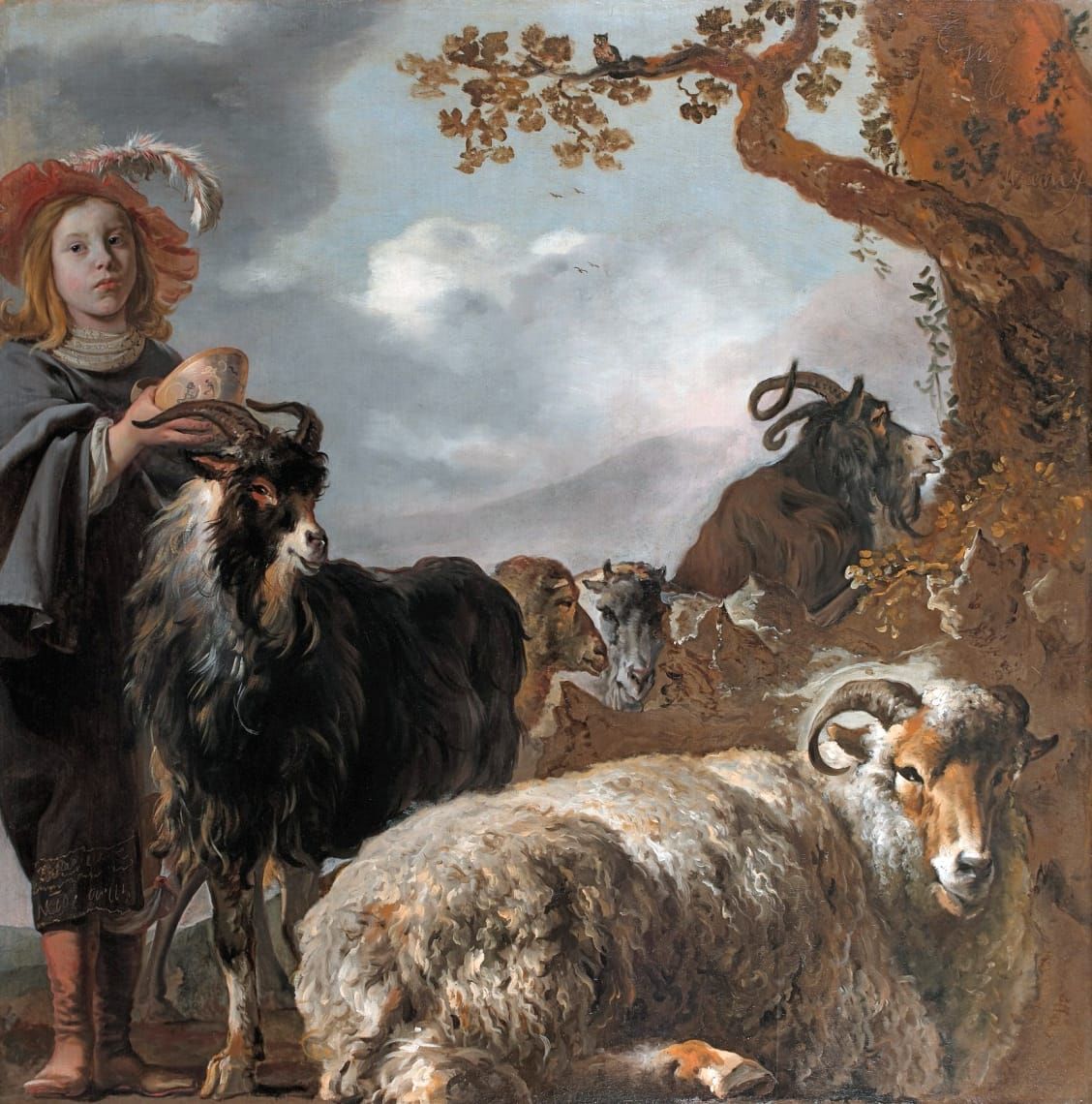
17세기 중반에 네덜란드의 화가 얀 밥티스트 베닉스와 바르톨로메우스 판 데르 헬스트(Jan Baptist Weenix and Bartholomeus van der Helst)가 협업하여 제작한 이 작품은, 당시 네덜란드 황금시대 회화에 유행하던 목가적이고 평화로운 전원 풍경을 차분하게 투영합니다.
미술 소장처의 역사적 아카이브 기록에 따르는 이 작품은, 실제 작품의 실측 규격과 함께 당대 네덜란드 거장들의 협업을 통한 정교한 풍경 및 초상화 기법을 온전히 전하고 있습니다.
작가의 고뇌/비하인드
작품의 전면에는 깃털 장식이 달린 모자를 쓰고 그릇을 든 소년과 그의 곁을 지키는 뿔 달린 염소, 그리고 바닥에 엎드려 있는 양의 모습이 묘사되어 있으며, 자연 속에서 순박하게 살아가는 목동의 평화로운 일상을 고스란히 드러냅니다.
소년의 차분하면서도 맑은 눈빛과 동물들의 털 질감을 살린 세밀한 묘사는 전원생활의 소박한 아름다움을 화면 위에 재현하려는 작가들의 예술적 구상을 가감 없이 보여줍니다.
특히 중경에는 검은 염소의 짙은 털과 앞쪽에 누운 양의 풍성한 양털이 선명한 명암 대비를 이루어 입체적인 볼륨감을 형성하고 있으며, 원경의 굽이치는 언덕과 구름 낀 하늘을 통해 깊고 탁 트인 대기감을 자아냅니다.
무의식 속 시선 및 심리 흐름
관람객의 시선은 가장 먼저 화면 좌측 상단에서 깃털 모자를 쓰고 정면을 바라보는 소년의 앳된 얼굴과 차분한 눈빛으로 자연스럽게 꽂힙니다.
이어 시선은 소년이 두 손으로 감싸 쥔 그릇을 거쳐, 화면 중앙에서 당당하게 서 있는 검은 염소와 우측 하단에 편안하게 엎드려 있는 둥근 양의 질감으로 부드럽게 이동한다.
마지막으로 시선은 화면 우측의 굵은 나무 줄기와 멀리 펼쳐진 구름 낀 하늘의 배경으로 확장되며, 자연과 교감하는 전원의 평온함이 주는 깊은 안정감의 울림을 체감하게 된다.
미술계의 평가 및 조형미
미술사학계는 이 작품을 17세기 네덜란드 황금시대 전원 풍경화와 인물화의 뛰어난 협업 작이자, 동물과 인물의 사실적인 질감을 조화로운 광원 효과로 포착한 수작으로 평가합니다.
캔버스 위에 겹겹이 쌓아 올린 유채 물감은 양털의 곱슬거리는 촉감, 염소 뿔의 단단한 결, 그리고 소년의 자연스러운 피부 톤을 살아나게 만듭니다.
자연을 향한 순수한 동경과 전원의 목가적 정취를 예술의 경지로 조화롭게 녹여낸 이 작품은, 오랜 시간이 지나도 변함없는 미술사적 가치를 지니고 있다.
Shepherd's Boy with Sheep and Goats
Created in the mid-seventeenth century through the collaboration of Dutch masters Jan Baptist Weenix and Bartholomeus van der Helst, this work quietly reflects the pastoral and peaceful rural landscapes popular in the painting circles of the seventeenth-century Dutch Golden Age.
Following historical museum archives regarding its collection details, this piece preserves the precise physical dimensions and the refined landscape and portraiture techniques characteristic of contemporary master collaborations.
The Artist's Struggle and Behind-the-Scenes
In the immediate foreground, a boy wearing a feathered hat and holding a bowl is depicted alongside a horned goat and a sheep resting upon the ground, vividly exposing the serene and rustic reality of a shepherd living simply amidst nature.
The boy's composed yet innocent gaze, combined with the meticulous rendering of the tactile fur textures of the animals, unsparingly reveals the artists' creative ambition to reproduce the unadorned beauty of rural life upon the canvas.
In the middle ground, a strong volumetric presence is established through the sharp contrast between the dark fur of the goat and the thick, curly fleece of the resting sheep, while the rolling hills and cloudy sky in the distance generate a deep, open atmospheric depth.
Subconscious Gaze and Psychological Flow
The viewer's gaze is initially drawn directly to the youthful face and calm eyes of the boy at the upper left, adorned with a feathered hat as he looks toward the observer.
The eye then shifts smoothly past the bowl held gently in his hands toward the prominent black goat standing centrally and the textured fleece of the sheep resting comfortably at the lower right.
Finally, the gaze drifts outward into the thick tree trunk on the right and the wide, cloud-filled sky of the background, evoking a profound sense of stability and the resonant peace delivered by a pastoral existence in harmony with nature.
Art World Evaluation and Formal Beauty
Art historians evaluate this work as a masterpiece representing the successful collaboration between landscape and figure painting during the seventeenth-century Dutch Golden Age, capturing the realistic textures of animals and human subjects through harmonious lighting effects.
The layered application of oil paint on canvas brings the tactile softness of the wool, the hard surface of the goat's horns, and the natural flesh tones of the boy to breathtaking life.
Successfully fusing a pure admiration for nature and pastoral sentiment into the pinnacle of artistic mastery, this creation retains an enduring value in art history.
본 컨텐트의 저작권은 팔렛트제주에 있습니다. 허가없는 무단전제를 금지합니다.
Copyright © Palette Jeju. All rights reserved. Unauthorized reproduction or redistribution is strictly prohibited.