반 고흐의 의자 - Van Gogh's Chair
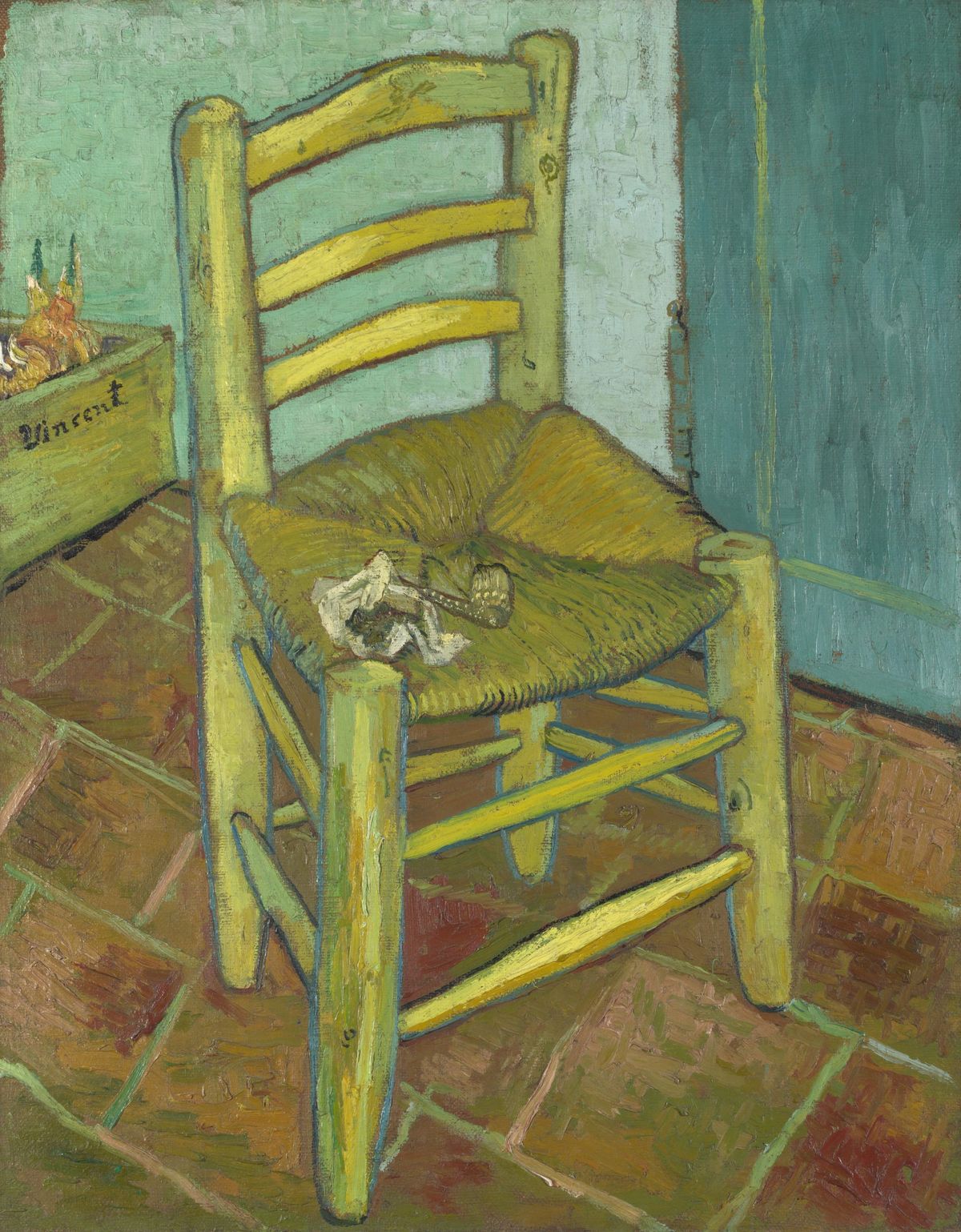
빈센트 반 고흐(Vincent van Gogh)가 1888년 12월 프랑스 아를(Arles)에서 착수하여 1889년 초에 완성한 대표적인 유화 걸작입니다. 현재 영국 런던의 내셔널 갤러리(The National Gallery, London)에 소장되어 있으며, 캔버스 위에 유채로 제작된 이 작품의 실제 크기는 약 91.8 × 73.0 cm입니다. 고흐 특유의 두텁고 조각적인 임파스토(Impasto) 기법과 강렬한 보색 대비, 그리고 과감한 원근법적 왜곡을 통해 소박한 일상의 사물을 상징적인 자화상으로 승화시킨 명작입니다. 91.8 × 73.0 cm
고흐는 물감을 캔버스 위에 두껍게 쌓아 올려 짚으로 엮은 방석의 거친 결, 각진 목재 다리의 단단한 골조, 붉은 테라코타 타일 바닥의 묵직한 질감을 촉각적으로 구현했습니다. 의자의 선명한 노란색과 연둣빛 톤은 배경을 이루는 청록색 벽면 및 푸른색 문과 눈부신 보색 대비를 이루며, 화면 좌측 상단에는 화가의 서명이 새겨진 양파 상자가 소박하게 자리 잡고 있습니다. 투박한 외곽선과 꺾이는 시점의 배치는 정적인 실내 가구에 살아 숨 쉬는 듯한 실존적 부피감을 불어넣습니다.
이 작품은 1888년 말 아를의 '노란 집'에서 폴 고갱과 함께 생활하던 결정적인 시기에 제작되었습니다. 고흐는 붉은 팔걸이의자에 촛불과 책이 놓인 어둡고 세련된 『고갱의 의자』와 짝을 이루도록 이 작품을 구상했습니다. 화려한 장식 대신 소박한 짚 방석 의자 위에 자신의 파이프와 담뱃잎 쌈지를 얹어둠으로써, 대지와 노동의 순수성을 지키려 했던 자신의 검소한 삶과 예술적 신념을 담아냈습니다.
동생 테오에게 보낸 편지에서 고흐는 이 의자가 단순한 가구가 아니라 낮의 빛과 소박한 안식을 대변하는 자신의 분신임을 밝혔습니다. 후대 미술사에서는 부재하는 인간의 존재감을 사물의 초상을 통해 탁월하게 웅축해낸 후기 인상주의의 기념비적 성취로 평가하며, 고갱과의 이상주의적 예술가 공동체가 균열을 맞이하던 격동의 순간 속에서 탄생한 현대 상징주의 회화의 최고봉으로 기리고 있습니다.
관람객의 무의식적인 시선은 화면 중심의 짚 방석 위에 다소곳이 놓여 있는 투박한 파이프와 구겨진 흰 종이 쌈지의 담뱃잎에서 자연스럽게 출발합니다. 주인의 온기가 여전히 남아 있는 듯한 소박한 일상 소품에 시선이 머무는 순간, 보는 이는 찰나의 침묵과 함께 화가의 인간적인 고독과 진솔한 숨결 속으로 단숨에 몰입하게 됩니다.
이어 시선은 짚 방석의 촘촘한 노란 붓질을 타고 바깥으로 뻗어나가, 의자를 견고하게 떠받치고 있는 네 개의 두터운 나무 다리와 등받이의 직선적 골조로 이동합니다. 대지를 향해 굳건하게 뻗은 목재 구조물의 안정감 있는 질감에 시선이 머물며, 흔들리지 않는 삶의 태도와 묵직한 조형적 균형미를 체감하게 됩니다.
이후 시선은 의자 다리 아래로 붉고 따스하게 펼쳐진 테라코타 타일 바닥의 격자무늬를 지나, 좌측의 'Vincent' 서명이 적힌 양파 상자와 뒤편의 청록빛 벽면, 그리고 닫힌 푸른 문으로 부드럽게 확장됩니다.
빛을 머금은 노란 의자와 차분한 푸른 배경의 보색 조화를 따라 순환한 시선이 다시금 의자 방석의 따뜻한 파이프로 편안히 회귀할 때, 관람객의 내면에는 복잡한 일상의 번뇌와 피로가 정돈되고, 소박한 안식처가 건네는 묵직한 위로와 함께 흔들리지 않는 깊은 심리적 안도감이 가득 차오르게 됩니다.
Van Gogh's Chair
Painted by Vincent van Gogh between December 1888 and early 1889 during his momentous stay in Arles, France, this celebrated masterpiece is preserved in the permanent collection of The National Gallery in London. Executed in oil on canvas measuring approximately 91.8 × 73.0 cm, the work elevates an unadorned rustic chair into a powerful symbolic portrait, utilizing Van Gogh’s signature sculptural impasto, dramatic linear contours, and bold complementary color harmonies.
Van Gogh applied unmixed paint in dense, directional layers, vigorously carving out the woven texture of the straw seat, the solid wooden legs, and the heavy earthenware tiles of the studio floor. The luminous yellow and lime-green tones of the chair establish an intense optical vibration against the cool turquoise walls and muted teal door in the background. In the upper left corner, a wooden crate filled with sprouting onions bears the artist’s bold signature, further anchoring the space in the tactile reality of everyday life.
The composition was conceived as a deliberate pendant to Gauguin's Chair, which depicted his companion's more ornate armchair with a lit candle and modern novels under dark, nocturnal lighting. By contrast, Van Gogh portrayed his own modest daylight chair bearing only his humble smoking pipe and a packet of coarse tobacco on a handkerchief, asserting his lifelong identification with working-class simplicity, honesty, and grounded domestic stability.
In correspondence with his brother Theo, Van Gogh described this painting as a manifestation of quiet daylight, honest labor, and personal contemplation. Art historians celebrate this iconic work as an extraordinary Post-Impressionist milestone where inanimate objects are transformed into profound psychological emblems, capturing a bittersweet chapter of artistic companionship and personal resilience that fundamentally shaped modern Expressionism.
A viewer's subconscious gaze is intuitively anchored first upon the weathered pipe and rumpled packet of tobacco resting upon the woven straw seat at the center of the canvas. Lingering on these intimate personal artifacts that still seem to carry the warmth of their owner, the observer is drawn into an immediate atmosphere of solemn presence, domestic quietude, and emotional authenticity.
The eye is then carried along the woven strands of golden ochre across the seat, moving downward along the sturdy, thick-set wooden legs and the upright slats of the chair's back. Absorbing the physical solidity and grounded architecture of the furniture, the viewer experiences a reassuring sense of structure, permanence, and quiet strength.
The gaze continues outward across the warm, rustic grid of the terracotta tiled floor, glancing past the signed onion crate on the left before ascending into the tranquil, flat expanse of the pale turquoise wall and deep blue door.
Completing this visual and psychological circulation, the observer's gaze returns to the luminous yellow frame of the chair. The superficial tensions of modern life recede, leaving the viewer restored with a profound sense of grounded serenity, spiritual clarity, and enduring psychological comfort.
본 리뷰에서 작품을 제외한 컨텐츠의 저작권은 팔렛트제주에 있습니다.
"퍼블릭도메인 고전명화"를 제외한 모든 창작 콘텐츠는 저작권법 제4조 및 제10조에 의거하여 보호됩니다. 무단 도용시 저작권법 제136조(벌칙)에 의거, 당사의 사전 서면 승인 없는 저작권 침해 행위를 금지합니다.