성 아우구스티누스가 수도원장을 치유하다 Saint Augustine Healing the Provost
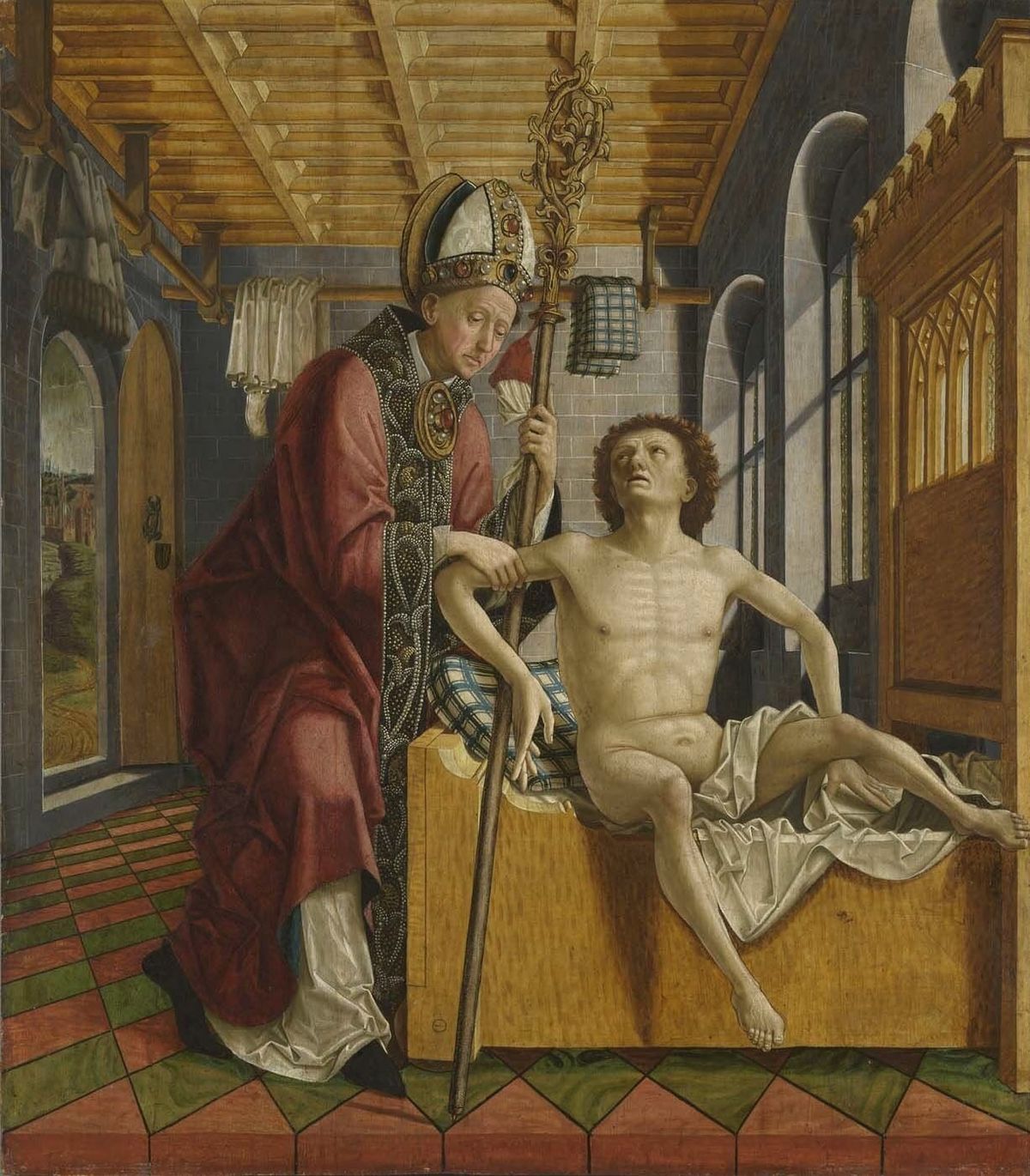
1471년부터 1475년 사이에 오스트리아의 거장 미하엘 파허(Michael Pacher)가 제작한 이 작품은, 화려한 종교적 서사 뒤에 가려진 인간 육체의 취약함과 치유를 갈구하는 처절한 구원의 열망을 투영합니다.
독일 뮌헨의 알테 피나코테크(Alte Pinakothek, Munich)에 소장된 이 작품의 공식 소장품 등록번호는 WAF 2600이며, 실제 작품의 실측 규격은 높이 213 cm, 너비 206 cm의 목판 유채 및 템페라 패널입니다.
작가의 고뇌/비하인드
작품의 전면 좌측에는 화려한 보석과 금실로 수놓아진 붉은 주교 예복을 입고 주교관을 쓴 성 아우구스티누스가 등장하며, 그의 온화하면서도 엄숙한 손길이 고통에 지친 환자의 팔을 감싸 안고 있습니다.
그의 오른손에 쥐어진 화려한 지팡이는 세속의 권위와 영적 치유의 힘을 동시에 상징하며, 침상에 처연하게 앉아 있는 병든 수도원장의 앙상한 육신은 삶과 죽음의 경계에 선 인간의 실상을 가감 없이 보여줍니다.
특히 중경에는 정교하게 조각된 목제 가구와 격자무늬 바닥이 깊이 있는 실내 공간을 완성하고 있으며, 원경의 열린 문틈으로 보이는 삭풍이 부는 황량한 풍경은 육체적 고통이 깃든 공간의 냉혹한 현실을 소리 없이 대변합니다.
무의식 속 시선 및 심리 흐름
관람객의 시선은 가장 먼저 침상에 걸터앉아 뼈만 남은 채 고통으로 일그러진 수도원장의 창백한 상반신과 움푹 패인 눈빛으로 강렬하게 꽂힙니다.
이어 시선은 그의 팔을 부드럽게 감싸 쥐는 성 아우구스티누스의 묵직한 손길과 화려한 주교복의 질감을 따라 자연스럽게 이동합니다.
마지막으로 시선은 방 안의 정교한 목제 기물들을 거쳐 배경의 열린 문 바깥으로 확장되며, 질병이라는 가혹한 운명 앞에서 치유의 기적을 바라는 인간의 처절하고도 간절한 심리적 울림을 깊이 있게 체감하게 됩니다.
미술계의 평가 및 조형미
미술사학계는 이 작품을 교부들 제단화(Kirchenväteraltar) 연작 중에서도 북유럽 고딕의 정교한 사실주의와 이탈리아 르네상스의 공간감이 가장 완벽하게 융합된 최고 걸작으로 평가합니다.
목판 위에 겹겹이 쌓아 올린 템페라와 유채는 주교 예복의 금사 자수와 환자의 메마른 피부 결, 그리고 실내 공간의 질감을 경이로울 정도로 생생하게 살려냅니다.
인간의 가장 연약한 고통과 성스러운 치유의 손길을 예술의 경지로 승화시킨 이 작품은, 영원토록 미술사에서 깊은 생명력을 지니는 가치를 지니고 있습니다.
영문 번역본 구성
Saint Augustine Healing the Provost
Created between 1471 and 1475 by the Austrian master Michael Pacher, this work reflects the fragility of the human body hidden behind grand religious narratives and the desperate yearning for salvation that craves divine healing.
Housed in the Alte Pinakothek in Munich, Germany, this piece bears the official inventory number WAF 2600, and the actual physical dimensions of the oil and tempera wood panel measure 213 cm in height and 206 cm in width.
The Artist's Struggle and Behind-the-Scenes
In the immediate foreground on the left, Saint Augustine appears wearing a richly jeweled and gold-embroidered red episcopal vestment and mitre, his solemn yet gentle hand wrapping around the arm of a suffering patient.
The ornate crozier held in his hand symbolizes both secular authority and the power of spiritual healing, while the emaciated body of the sick provost sitting pitifully upon the bed exposes the stark reality of humanity standing on the boundary between life and death.
In the middle ground, meticulously carved wooden furniture and a checkered floor complete a deeply structured interior space, while the desolate landscape buffeted by cold winds glimpsed through the open doorway in the distance silently conveys the harsh reality of a space laden with physical suffering.
Subconscious Gaze and Psychological Flow
The viewer's gaze is initially drawn directly to the pale, skeletal upper body and sunken, pain-ridden expression of the provost perched upon the bed.
The eye then shifts naturally along the steadying grip of Saint Augustine's hand and the rich textures of his episcopal robes.
Finally, the gaze extends past the refined wooden furnishings of the room and out through the open doorway into the background, evoking a profound and desperate psychological resonance of human yearning for miraculous healing in the face of the harsh fate of disease.
Art World Evaluation and Formal Beauty
Art historians evaluate this work as a supreme masterpiece within the Church Fathers Altarpiece series, successfully fusing the meticulous realism of Northern Gothic art with the spatial depth of the Italian Renaissance.
The layered application of tempera and oil on wood brings the gold-threaded embroidery of the episcopal vestments, the dry skin texture of the patient, and the tactile qualities of the interior space to breathtaking life.
Elevating humanity's most vulnerable suffering and the touch of sacred healing to the pinnacle of visual art, this creation retains an enduring and vital value in art history.
본 컨텐트의 저작권은 팔렛트제주에 있습니다. 허가없는 무단전제를 금지합니다.
Copyright © Palette Jeju. All rights reserved. Unauthorized reproduction or redistribution is strictly prohibited.